Categories
Brandon Blog Post

Facing an Agonizing 2027 Mortgage Loan Renewal in Toronto? Do You Really Need to Sell, or Is There Another Way?

I hope you and your family are safe and well. If your Toronto or GTA mortgage loan is renewing in 2027, it is understandable to feel anxious, especially if your home has lost value, your mortgage loan balance remains high, or your income and other debts have changed. But such a renewal situation does not automatically mean that you must sell. We can look at the situation calmly, understand what is actually happening, and identify the least damaging path forward.

Key Takeaways

  • A straight mortgage loan renewal with your existing lender generally does not require you to requalify under the mortgage stress test if you remain in good standing.
  • The more serious problem usually arises when you need to refinance, switch lenders, add a second mortgage, or borrow more money.
  • Bank of Canada analysis reported in June 2026 suggested that roughly 9% to 10% of GTA borrowers renewing in 2027 may not qualify to refinance or switch lenders at current prices, compared with about 4% nationally. This does not mean that all of those homeowners will lose their homes.
  • Your realistic choices may include renewing, renegotiating, extending amortization, refinancing, using alternative financing temporarily, selling voluntarily, or addressing unsecured debt through a consumer proposal or bankruptcy.
  • If you are already behind on payments, acting before a Notice of Sale gives you more control and more choices.
  • A consumer proposal may allow you to keep your home if you can maintain the mortgage and address the proposal payments. Both a consumer proposal and personal bankruptcy require a careful review of your home equity and other assets.

Highlights

Why is the 2027 Toronto mortgage loan renewal wave causing concern?

Homeowners who bought or refinanced during 2022 and 2023 may have less equity than expected. Some also have variable-rate mortgages, extended amortizations, HELOCs, credit cards, or personal loans layered onto their housing costs.

The Bank of Canada’s June 2026 analysis, as reported by Canadian Mortgage Trends and CTV News, estimated that approximately 9% to 10% of GTA borrowers renewing in 2027 may not qualify to refinance at current home prices. The comparable national estimate was about 4%.

That statistic is often misunderstood. It concerns the ability to obtain a new or larger mortgage, not necessarily the ability to renew the existing mortgage loan with the same lender.

CMHC’s Spring 2026 Residential Mortgage Industry Report identified Ontario and Toronto as areas where mortgage arrears were increasing, while also describing the broader system as structurally stable. CMHC reported Toronto’s 90-plus-day mortgage delinquency rate rising from 0.20% to 0.29% year over year, an increase of approximately 45%.

Meanwhile, TD Economics estimated that average renewal payment increases were approximately 10% in 2025 and about 6% in 2026. The pressure is real, but it is not a reason to assume that every homeowner must sell immediately.

What actually happens when a mortgage loan renews?

A mortgage term is the period covered by your current mortgage contract. At the end of that term, you must either pay the mortgage loan off in full, renew it, or arrange another form of financing.

A straight renewal usually means:

  • You remain with your existing lender.
  • You do not increase the principal balance.
  • You do not materially change the mortgage structure.
  • You sign a new term at the lender’s offered rate.

If you are current on payments, a straight renewal with your existing lender generally does not require you to pass the mortgage stress test again. The Financial Consumer Agency of Canada recommends contacting your lender several months before renewal, negotiating the rate, and comparing available options.

A refinance is different. It generally involves increasing the mortgage loan, extending the amortization, consolidating other debts, adding a second charge, or changing lenders. The lender will assess your income, debts, property value, credit history, and debt-service ratios. The proportion of your income required to pay housing and other debts.

This is where thin equity, negative equity, arrears, or reduced income can become serious obstacles.

What are your realistic options if you cannot requalify?

1. Renew and stay put.
If the mortgage is affordable and you are current, a simple renewal may be the least disruptive option. Ask for the best available rate rather than accepting the first renewal offer.

2. Renegotiate or extend the amortization with your current lender.
A longer amortization can reduce the monthly payment. However, it also increases total interest and may keep you in debt for much longer. Use this as a measured affordability tool, not as a way to hide an unsustainable budget.

3. Refinance with a different lender.
A broker or another financial institution may offer a solution, particularly if your income and equity support it. A lender switch may involve appraisal, legal, registration, discharge, and administrative costs. Approval is not automatic.

4. Use a private or alternative lender as a stopgap.
Alternative lenders may consider borrowers who do not fit conventional bank criteria. The cost can be substantially higher, and fees, interest-only payments, short terms, and renewal charges can make the problem worse. This should be a temporary bridge supported by a credible exit plan.

5. Sell on your own terms.
Selling is not necessarily failure. If the mortgage loan is no longer affordable, an orderly sale may protect more of your equity, credit standing, and decision-making power than waiting for enforcement. Obtain a current market valuation and calculate the likely net proceeds after mortgages, commissions, legal costs, taxes, and other charges.

6. Address unsecured debt separately.
If the mortgage loan itself is manageable but credit cards, lines of credit, tax debt, or personal loans are consuming your income, a consumer proposal or bankruptcy may be a more responsible lifeline than placing more debt against your home.

Which mortgage loan renewal path may fit your situation?

PathWhat it isWho it may suitWhat happens to the home?Typical costHow long it takesMain risk
Stay and renewRenew the existing mortgage without increasing the balanceHomeowners current on payments with manageable housing costsUsually remains in the homeRate and ordinary lender chargesOften days to weeksAccepting an uncompetitive rate or payment
Renegotiate or extend amortizationChange payment structure or lengthen repayment periodOwners needing lower payments but with a viable long-term budgetUsually retainedMore total interest; possible lender or legal feesWeeksPaying more interest and postponing the underlying problem
Refinance elsewhereReplace or transfer the mortgage to another lenderOwners with sufficient equity, income, and creditUsually retainedAppraisal, legal, discharge, registration, and lender feesSeveral weeks or longerFailing approval or incurring new secured debt
Private or alternative lenderShort-term financing outside conventional bank lendingOwners with a temporary financing gap and credible exit planUsually retained temporarilyHigher interest, lender fees, broker fees, and legal costsOften weeksThe bridge becomes unaffordable or cannot be renewed
Sell on your own termsVoluntary listing and sale before forced enforcementOwners whose mortgage is no longer sustainableHome is sold voluntarilyCommission, legal costs, moving costs, and mortgage payout costsOften several weeks to monthsMarket conditions and a possible shortfall
Consumer proposalFormal settlement of eligible unsecured debts through a Licensed Insolvency TrusteeOwners whose mortgage is manageable but unsecured debt is notMay be retained if mortgage payments continue; equity affects the proposalTrustee and proposal administration costsUsually several weeks to file; payments may continue up to five yearsMortgage arrears remain outside the proposal
Personal bankruptcyFormal liquidation process for eligible unsecured debtsOwners who cannot reasonably repay debts and need a fresh startHome equity above applicable exemptions may be exposedAdministration costs and possible equity or income obligationsDepends on the circumstancesLoss or required buyout of non-exempt equity

The right answer depends on your cash flow, mortgage loan balance, home value, arrears, equity, your credit score and your other debts. It is not your hope or your worth that is being measured. It is the sustainability of the financial structure.

Toronto homeowner considering several calm, practical mortgage loan and debt-relief paths

How does power of sale work in Ontario?

A power of sale is a mortgage enforcement remedy that can allow the lender to sell the property after default without first obtaining a full court order for sale.

Under Ontario’s Mortgages Act:

  1. The lender must generally wait for the required period of default before proceeding.
  2. The lender serves a Notice of Sale setting out the default, amounts claimed, and deadline.
  3. A redemption period follows. For many mortgages with a contractual power-of-sale clause, the sale cannot occur for at least 35 days after notice. A statutory power of sale may involve 45 days’ notice.
  4. If the default is not cured, the lender may proceed with marketing and selling the property.
  5. The lender must apply sale proceeds according to legal priorities. Any remaining equity may belong to the homeowner, while a shortfall will create further liability to you, as residential mortgages tend to be “full recourse”.

A judicial sale is different. It is court-supervised, and the timeline is controlled by court proceedings and orders rather than the standard power-of-sale timetable.

Do not ignore a Notice of Sale. The precise deadline and amount required to redeem should be reviewed promptly by an Ontario lawyer. An orderly voluntary sale generally provides more control over the listing, timing, condition of the property, and communications than a forced sale.

Toronto home with a calm legal-document and calendar motif representing early mortgage loan enforcement planning

When is a consumer proposal or bankruptcy the responsible answer?

A consumer proposal may be appropriate where the mortgage loan is fundamentally affordable, but unsecured debt is making the household budget impossible. The mortgage loan remains a secured debt, meaning it is tied to the home and is not eliminated by the proposal. You must continue making mortgage loan payments.

Your Licensed Insolvency Trustee will review the home’s value, mortgage loan balance, HELOCs, other charges, income, expenses, and unsecured debts. Home equity affects what creditors expect to receive in the proposal.

Bankruptcy requires a more detailed asset analysis. Non-exempt home equity may need to be paid into the bankruptcy estate or realized through a sale. The mortgage loan also remains separate, and missed mortgage payments can still lead to enforcement.

The Ira Smith Trustee & Receiver Inc. personal bankruptcy services page explains that bankruptcy is not the only option. A confidential assessment is essential before borrowing against the home or deciding to sell.

Which options look like help but are not?

Be cautious about:

  • Debt consultants charging large upfront fees while offering no legally binding protection from creditors.
  • Private mortgages used to pay credit cards, without a realistic plan to reduce spending and debt.
  • Borrowing to keep the lights on, make minimum payments, or cover ordinary living costs.
  • Signing a second mortgage without understanding the interest rate, lender fees, renewal terms, broker fees, and enforcement rights.
  • Assuming that a consumer proposal will stop mortgage enforcement. It does not cure mortgage arrears.

We know the tension put upon you can make any immediate relief look attractive. Before signing, calculate the total repayment cost and obtain independent professional advice.

What should you do in the first 30 days?

  • Find your renewal date, current balance, interest rate, amortization, and payment history.
  • Request a current mortgage loan statement and identify every HELOC, second mortgage, lien, or secured charge.
  • Prepare a complete monthly budget, including property tax, insurance, utilities, childcare, transportation, and unsecured debt payments.
  • Obtain a realistic property valuation, not only an optimistic realtor or online estimate.
  • Speak with your existing lender early and ask what renewal, amortization, and hardship options are available.
  • Obtain independent mortgage advice before applying to multiple lenders.
  • Stop using credit to fund ordinary living expenses where possible.
  • If you have received a demand letter or Notice of Sale, speak with an Ontario lawyer promptly.
  • If unsecured debt is the main problem, book a free consultation with a Licensed Insolvency Trustee before taking on more secured debt.

The purpose of these steps is simple: early information creates choices. Delay removes them.

Frequently Asked Questions (FAQ)

Can my lender refuse to renew my mortgage loan in Ontario?
Yes, a lender may decline to renew or may require a different arrangement, although a current borrower seeking a straightforward renewal is generally in a stronger position than someone seeking new money or who is in arrears. A federally regulated lender must provide renewal information and notify you if it will not renew within the required timeframe. Ask for the decision and reasons in writing.

Will I lose my house if I cannot renew?
Not automatically. You may be able to renew with the existing lender, negotiate, refinance, sell voluntarily, or address unsecured debt separately. The risk becomes more immediate if the mortgage is in default and enforcement begins.

Can I renew my mortgage loan if I am behind on payments?
It may be possible, but arrears make the situation more difficult. Contact the lender immediately. A consumer proposal does not erase mortgage loan arrears, and a lender retains its secured-creditor rights.

Does a consumer proposal affect my mortgage?
The mortgage loan is not included in the proposal. You must continue paying it. The proposal may affect your credit and future borrowing, and your home equity can affect the amount creditors expect.

Should I sell before I go into default?
If the mortgage loan is not sustainable, selling before default may provide more control and reduce enforcement costs. But do not sell without calculating the payout amounts, selling costs, taxes, and whether there may be a shortfall.

How long does a power of sale take in Ontario?
The timeline varies. A contractual power of sale commonly has a minimum 35-day period after the Notice of Sale, while a statutory power of sale may involve 45 days. Marketing, court applications, redemption attempts, and the property’s condition can lengthen the overall process.

What if my home is worth less than my mortgage loan balance?
That is negative equity. Refinancing may be difficult, but a straight renewal with the existing lender may still be possible if you remain current. If you sell, there may be a shortfall requiring separate advice.

Starting Over, Starting Now

Don’t let financial uncertainty dictate your future. If you or your business is struggling with debt, losing sleep, or facing legal action, contact Ira Smith Trustee & Receiver Inc. today.

We offer a free, confidential consultation to discuss your situation, explain your options in plain language, and help you develop a clear, actionable plan. Our team of Licensed Insolvency Trustees is dedicated to providing the compassionate, professional support you need to regain control and achieve a debt-free life.

Take the first step towards a brighter financial future; call us now.

  • Phone: 905.738.4167
  • Toronto Line: 647.799.3312
  • Evening and Weekends: 289.670.7500
  • Website: irasmithinc.com
  • Email: ira@irasmithinc.com
    Ira Smith Trustee & Receiver Inc. is licensed by the Office of the Superintendent of Bankruptcy. Ira and Brandon Smith are members of the Canadian Association of Insolvency and Restructuring Professionals.

————————––

Disclaimer: This analysis is for educational purposes only and is based on the cited sources and professional expertise as a Licensed Insolvency Trustee. The information provided does not constitute legal or financial advice for your specific circumstances. Every situation is unique; the outcomes discussed may not apply to your particular case. Please contact Ira Smith Trustee & Receiver Inc. to discuss your specific needs.

About the Author:

Ira Smith is President of Ira Smith Trustee & Receiver Inc. and a Licensed Insolvency Trustee serving individuals and businesses across Ontario. Ira provides practical guidance on personal bankruptcy, consumer proposals, corporate restructuring, receiverships, and other complex financial situations. His approach centres on helping clients understand their options, reduce uncertainty, and begin Starting Over, Starting Now.

Toronto homeowner reviewing a mortgage loan renewal letter and household budget at a kitchen table

#MortgageLoan #TorontoMortgage #MortgageRenewal #GTAHomeowners #MortgageStress #OntarioPowerOfSale #ConsumerProposal #PersonalBankruptcy #DebtRelief #FinancialFreshStart #StartingOverStartingNow

Categories
Brandon Blog Post

Financial Reorganization Services vs. Small Business Bankruptcy in Ontario: Which Is Undeniably Right for Your Company?


I hope you, your team and your business are safe and well. If your company is under financial pressure, please know that this situation is not a personal failure. Many capable business owners face periods when cash flow, debt and creditor demands become difficult to manage. Seeking advice early is an act of responsible stewardship, not a cause for shame.

When a business is in financial trouble, the instinctive question is often, “Is this bankruptcy?” The more useful first question is, “Is this business viable so that it can have a successful financial reorganization?” At Ira Smith Trustee & Receiver Inc., we help owners examine both possibilities calmly and practically so they can make informed decisions before their options narrow.

Reorganization Key Takeaways

  • Informal reorganization may provide the fastest and least expensive solution, but it depends on creditor co-operation and does not provide a legal stay of proceedings.
  • A Division I Proposal in Ontario is a formal reorganization process under the Bankruptcy and Insolvency Act that can allow a viable corporation to continue operating while compromising eligible debts.
  • Corporate bankruptcy generally involves the sale or liquidation of company assets and normally brings the company’s operations to an end unless a purchaser acquires the business assets in order to carry on the business in a new corporation.
  • A corporation’s insolvency does not automatically eliminate the owner’s personal exposure. Personal guarantees and certain director liabilities must be reviewed separately.
  • Early advice from your accountant and a Licensed Insolvency Trustee can help preserve lifelines that may not be available later.

Reorganization Highlights

Is this bankruptcy, or is it a reorganization?

Insolvency means a company cannot meet its obligations as they become due, and/or its assets are not sufficient to pay its liabilities. Insolvency does not always mean that the underlying business has no future.

A company may have loyal customers, valuable employees, a sound product and a realistic path to profitability, but still be overwhelmed by accumulated debt, rising costs or a temporary cash-flow crisis. In that situation, financial reorganization services may help separate a viable operating business from an unsustainable debt structure.

Bankruptcy is different. It is generally a liquidation process. The company’s assets are placed under the control of a Licensed Insolvency Trustee, realized or sold, and the proceeds are distributed to creditors according to the statutory priority rules.

The earlier we assess the facts, the more clearly we can distinguish a temporary cash-flow problem from a business model that is no longer viable. That distinction matters because reorganization works best when there is still something worth preserving.

What are financial reorganization services?

Financial reorganization services can include informal negotiations, formal proceedings or a combination of both. The right approach depends on the company’s cash flow, assets, operations, creditor relationships and future prospects.

Informal reorganization

An informal reorganization does not involve filing a formal proceeding under insolvency legislation. The company may negotiate directly, or with the assistance of an advisor, with:

  • Lenders and other secured creditors;
  • The Canada Revenue Agency;
  • Landlords;
  • Suppliers;
  • Employees and other stakeholders.

Possible arrangements may include revised payment terms, interest relief, a standstill, a rent deferral, a new financing arrangement or a negotiated settlement.

This is often the fastest and least expensive path. However, it depends on creditor goodwill. A creditor can generally change its position, continue collection activity or enforce its rights if no binding formal protection is in place. There is also no automatic legal stay of proceedings.

Informal reorganization can be an effective lifeline when creditors believe the company has a credible plan and the business communicates openly. It becomes much harder when negotiations begin only after enforcement has started.

Professionals reviewing a cash-flow forecast and strategic recovery plan for a financial reorganization

Reorganization: What does a Division I Proposal actually do for my company?

A Division I Proposal, also called a commercial proposal in Ontario, is a formal offer to creditors under Part III, Division I of the Bankruptcy and Insolvency Act. A corporation files the proposal through a Licensed Insolvency Trustee.

The proposal may offer creditors a portion of what they are owed, paid over time or through another arrangement. If it is accepted by creditors and approved by the court, the company may continue operating while completing the proposal.

A company may begin by filing a Notice of Intention to Make a Proposal. In general terms, this provides a period of protection while the company develops its proposal. A proposal can also be filed directly in appropriate circumstances.

The filing triggers an automatic stay of proceedings under the BIA. The relevant stay provisions include section 69(1) for a Notice of Intention and section 69.1 for a filed proposal. Subject to statutory exceptions and court orders, the stay generally halts collection activity, garnishments and most enforcement action against the company and its property.

Creditors vote on the proposal. In general, acceptance requires:

  • A majority in number of the voting unsecured creditors; and
  • At least two-thirds in value of the voting unsecured creditors.

Creditor approval is not the only step. The court must also approve, or sanction, the proposal before it becomes binding under the legislation.

A Division I Proposal can be a powerful option, but it is not risk-free. If creditors reject the proposal, the court fails to approve it, or if the proposal fails to proceed as required, usually because the company fails to perform the entire accepted and approved proposal, the company is generally deemed bankrupt. That is why the proposal must be based on realistic cash-flow forecasts rather than optimism alone.

The Companies’ Creditors Arrangement Act, or CCAA, is another reorganization tool. It is used for larger and more complex insolvencies, involving at least $5 million in debt, and is typically outside the reach of a small business. A Division I Proposal is more commonly considered for small and mid-sized Ontario corporations.

When is small business bankruptcy rather than financial reorganization in Ontario the more realistic answer?

Small business bankruptcy in Ontario may be appropriate when the underlying business is not viable, and there is no realistic path to stable operations.

In a corporate bankruptcy, the Licensed Insolvency Trustee takes control of the company’s assets, subject to the rights of secured creditors and other legal considerations. Assets may be sold individually or as an operating business. The proceeds are distributed to creditors according to the statutory priority order.

The company normally ceases operating as its own business. However, a purchaser may acquire some or all of the assets and continue the business in a new ownership structure. The outcome depends on the assets, contracts, employees, financing, market and available buyers.

Bankruptcy does not mean that the owner automatically loses everything personally. A corporation is a separate legal entity. However, the owner’s personal exposure is a separate and important question that must be examined carefully.

Organised financial documents and a practical reorganization checklist

Comparison of the main paths

DimensionInformal reorganizationBIA Division I ProposalCorporate bankruptcy
What it isDirect negotiations or an advisor-supported arrangement with creditors and stakeholders.A formal offer to compromise corporate debts under the Bankruptcy and Insolvency Act.A formal liquidation and realization process administered under the BIA.
Legal protectionNo automatic stay of proceedings. Protection depends on negotiated agreements.An automatic stay generally applies under the BIA, subject to statutory exceptions and court orders.A stay may apply in the bankruptcy, but the trustee administers the estate and realizes assets for creditors.
Who approves or controls it?The company and participating creditors negotiate the terms.Creditors vote, and court approval is required. A Licensed Insolvency Trustee administers the process.A Licensed Insolvency Trustee administers the estate, subject to the BIA and creditor and court processes where applicable.
What happens to the business?The company continues if negotiations succeed and cash flow can be stabilised.The company may continue operating while completing the approved proposal.The company generally stops operating unless assets or the business are sold to a purchaser.
Typical cost and timelineUsually the least expensive and fastest, but highly dependent on creditor co-operation.More formal, with professional, filing and court-related costs; timing varies with complexity.Costs and timing depend on the assets, claims, investigations, litigation and distribution process.
Who it generally suitsA business with a credible plan and creditors willing to co-operate.A viable or potentially viable business needing legal protection and a formal compromise of debt.A business with no realistic reorganization path or where liquidation is the most responsible outcome.

CCAA proceedings are a separate, court-supervised reorganization regime generally used for larger companies that meet the statutory requirements, commonly including at least $5 million in debt.

Reorganization: Could I be personally liable for company debt?

This is one of the most important questions for an owner. Corporate insolvency and personal insolvency are not the same thing.

Personal exposure may arise from:

  • Personal guarantees given to banks, equipment financiers, landlords or suppliers;
  • Joint debts or co-signed obligations;
  • Director liability for certain unremitted source deductions under the Income Tax Act;
  • Director liability for certain amounts owing under the Excise Tax Act, including some HST obligations;
  • Other statutory obligations that may survive the corporation’s insolvency.

A corporate reorganization may therefore need to be coordinated with a personal solution for the owner. Depending on the facts, that could include a consumer proposal or another personal insolvency option.

Do not assume that incorporating your business eliminates every personal risk. Do not assume that a personal guarantee will disappear because the company files. We recommend reviewing guarantees, tax accounts, shareholder loans and personal assets with your accountant and a Licensed Insolvency Trustee before taking further steps.

Which option may fit my business?

Reorganization may fit better when:

  • The business has positive cash flow or a credible plan to reach it;
  • Key customers, contracts and revenue remain intact;
  • The core products or services are commercially sound and sought after;
  • Employees and management can continue operating the business;
  • Creditors are likely to support a reasonable plan.

Bankruptcy may be the more honest answer when:

  • The company is losing money with no credible turnaround plan;
  • The owner is funding ongoing losses with personal savings or credit;
  • Major customers or revenue sources have disappeared;
  • The business cannot maintain payroll, taxes or essential suppliers;
  • Creditor support is unrealistic.

The goal is not to preserve a business at any cost. The goal is to make a responsible decision that protects value, reduces uncertainty and gives the owner a path forward based on business viability.

Reorganization: What warning signs should I not ignore?

Please seek advice promptly if your company:

  • Cannot pay payroll or source deductions on time;
  • Uses HST collected from customers and employee source deductions to fund operations;
  • Has maxed-out revolving credit or a lender that has stopped advancing funds;
  • Has received a CRA demand, requirement to pay or garnishment;
  • Is being moved to cash-on-delivery terms or cut off by suppliers;
  • Faces a landlord’s threat of distress or lease termination;
  • Is losing key employees because of financial uncertainty; or
  • Has received demands under personal guarantees.

These signs do not automatically determine the answer. They do indicate that time is running out and the company’s options should be assessed now rather than later.

Reorganization: What should I do if my company may be in trouble?

I suggest the following general steps:

  1. Gather the records. Assemble current financial statements, bank statements, tax filings, aged receivables and payables, loan documents, leases, payroll records and creditor correspondence.
  2. Understand the real numbers. Prepare a realistic short-term cash-flow forecast. Identify what must be paid to keep the business operating and what debts are already overdue.
  3. Speak with your accountant. Your accountant can help assess profitability, tax reporting, working capital and whether the operating business is fundamentally viable.
  4. Consult a Licensed Insolvency Trustee early. A trustee can explain informal reorganization, a Division I Proposal, bankruptcy and the potential consequences of each.
  5. Review personal exposure. Identify every personal guarantee, shareholder loan, tax obligation and jointly held asset.
  6. Be cautious with personal funds. Before using personal savings, credit cards or a second mortgage to fund ongoing losses, obtain advice about whether that money is likely to change the outcome.

Taking these steps does not commit you to bankruptcy. It gives you information. Information restores control.

Reorganization Frequently Asked Questions (FAQ)

Can I file bankruptcy and keep my business?

A corporation can technically continue operating in limited circumstances, but corporate bankruptcy generally involves the trustee realizing on company assets and the business ceasing as the existing legal entity. A purchaser may acquire the assets and continue operations. The answer depends on the company’s structure, assets, contracts and creditor rights.

Does bankruptcy personally wipe out my guarantees?

No. A company’s bankruptcy does not automatically eliminate personal guarantees. The lender or supplier may pursue the guarantor according to the guarantee and applicable law. Personal exposure should be reviewed separately.

What happens if creditors reject my proposal?

A rejected Division I Proposal results in the company being deemed bankrupt. There are important procedural and legal details, so the proposal process should be planned carefully with a Licensed Insolvency Trustee.

Can I reorganize CRA debt?

Some CRA debts may be addressed through a formal proposal, but tax debts can involve trust claims, director liability and other statutory issues. Do not assume that all CRA debt is treated the same way. Obtain advice based on the company’s tax accounts and payment history.

Will my employees be paid?

Payroll obligations should be assessed immediately. In a bankruptcy or receivership, eligible employees may have claims under the Wage Earner Protection Program, subject to its rules and limits. A trustee can explain the process, but owners should not delay addressing unpaid wages or source deductions.

How long does the process take?

There is no single answer. Informal negotiations may move quickly, while a Division I Proposal involves preparation, creditor voting and court approval. Bankruptcy timelines depend on the company’s assets, claims, investigations, litigation and distribution issues.

Should I wait until a creditor sues?

Usually, no. Waiting may reduce the available options and make an orderly reorganization more difficult. Early advice is not an admission of defeat. It is good business judgment.

Starting Over, Starting Now

Don’t let financial uncertainty dictate your future. If you or your business is struggling with debt, losing sleep, or facing legal action, contact Ira Smith Trustee & Receiver Inc. today.

We offer a free, confidential consultation to discuss your situation, explain your options in plain language, and help you develop a clear, actionable plan. Our team of Licensed Insolvency Trustees is dedicated to providing the compassionate, professional support you need to regain control and achieve a debt-free life.

Take the first step towards a brighter financial future, call us now.

Ira Smith Trustee & Receiver Inc. is licensed by the Office of the Superintendent of Bankruptcy. Ira and Brandon Smith are members of the Canadian Association of Insolvency and Restructuring Professionals.

————————––

Disclaimer: This analysis is for educational purposes only and is based on the cited sources and professional expertise as a Licensed Insolvency Trustee. The information provided does not constitute legal or financial advice for your specific circumstances. Every situation is unique; the outcomes discussed may not apply to your particular case. Please contact Ira Smith Trustee & Receiver Inc. to discuss your specific needs.

About the Author:

IRA SMITH is President of Ira Smith Trustee & Receiver Inc., a CPA CA and a Licensed Insolvency Trustee serving clients across Ontario. His experience includes consumer insolvency and complex court-ordered receivership and corporate bankruptcy administration, giving him practical insight into navigating challenging financial situations to achieve optimal outcomes for businesses, creditors and professionals. Ira and Brandon Smith stay current with landmark developments in Canadian insolvency law, ensuring his clients benefit from a cutting-edge understanding of their rights and options.Business owner and financial advisor reviewing reorganization options in a Toronto office

#FinancialReorganization #Reorganization #SmallBusinessBankruptcy #OntarioBusiness #CorporateReorganization #DivisionIProposal #BusinessDebt #InsolvencyAdvice #GTAEntrepreneurs #StartingOverStartingNow

Categories
Brandon Blog Post

The Prince Harry Effect: How Lifestyle Creep Tanks Even Royal-Sized Fortunes

A concerned high-earner in a Toronto office facing financial stress just like Prince Harry

At Ira Smith Trustee & Receiver Inc., we hope you are safe, well, and in good spirits. We understand that financial stress does not discriminate based on your bank balance or your social standing. Just look at the recently reported Prince Harry financial problems, which we discuss below.

Whether you are navigating the complexities of a family budget or managing a high-net-worth portfolio, the pressure of mounting debt can be overwhelming. We are here to tell you that there is always a path forward, and you do not have to walk it alone.

Prince Harry Key Takeaways

  • Definition: Lifestyle creep (or lifestyle inflation) occurs when your spending increases at the same rate as, or faster than, your income.
  • The Royal Hook: The recently reported financial struggles of Prince Harry serve as a warning that even multi-million dollar inheritances can be depleted by high fixed costs and a lack of sustainable income.
  • GTA Vulnerability: Toronto high-earners, including Bay Street executives and tech founders, are particularly susceptible due to the high cost of maintaining status and “Golden Cage” debt.
  • The Solution: For those with debts exceeding $250,000, a Division I Proposal offers a legal mechanism to restructure debt, protect assets, and preserve professional reputation.
  • Professional Support: Consulting a Licensed Insolvency Trustee is the first step toward “Starting Over, Starting Now.”

Highlights


What is Lifestyle Creep?

In the world of financial restructuring, we often encounter a phenomenon known as lifestyle creep. Simply put, it is the tendency for discretionary spending to increase as your income rises. What were once considered “luxuries”, such as first-class travel, private schooling, or a secondary property in Muskoka, gradually become baseline expectations.

This process is often invisible. It doesn’t happen overnight; it happens with every promotion, every successful exit, and every year-end bonus. The danger is that these upgrades often come with permanent, high-fixed costs. When your income is high, these costs are manageable. However, if that income stream is interrupted by a market downturn, a failed business venture, or a legal battle, the lifestyle remains, but the means to support it vanishes.

The Prince Harry Cautionary Tale

Recent news reports have highlighted the precarious financial situation of Prince Harry and Meghan Markle. Despite a combined fortune once estimated at upwards of $60 million, fueled by inheritances from Princess Diana and the Queen Mother, alongside lucrative media deals, insiders suggest they are facing a “humiliating bankruptcy.”

How does a Prince “blow through” $60 million? The answer lies in the burn rate. Between a $14.5 million Montecito mansion (with a substantial mortgage), a $4 million annual bill for private security, and mounting legal fees from high-profile court cases, the couple’s expenses have allegedly outpaced their income.

This is the “Prince Harry Problem”: relying on finite assets (inheritances) to fund an infinite, high-luxury lifestyle without a consistent, high-yield “occupation” or business model to replenish the coffers. Reports suggest this could lead to a Prince Harry bankruptcy.

A businessman waist-deep in water, symbolizing overwhelming debt, just like Prince Harry

Why GTA High-Earners Face Unique Risks

In the Greater Toronto Area (GTA), the pressure to maintain a certain standard of living is intense. Whether you are a partner at a top-tier law firm, a high-performing Realtor, or a professional athlete, the “Toronto Trap” is real. These factors can all contribute to someone having a Prince Harry Problem.

  1. Housing Concentration: In Toronto, home value is often a stronger predictor of consumption than actual net worth. An oversized mortgage on a Bridle Path or Rosedale home isn’t just a monthly payment; it’s a gateway to higher taxes, maintenance, and social expectations.
  2. Status-Driven Consumption: The need to “keep up” with the ultra-rich in one’s social circle leads to lifestyle inflation. This includes club memberships, luxury vehicle leases, and expensive philanthropic commitments that are hard to scale back without “losing face.”
  3. Variable Income: Many high-earners in the GTA rely on bonuses, commissions, or stock options. When these fluctuate, but the lifestyle costs remain fixed, the gap is often filled with high-interest consumer credit.

The “Golden Cage” of High-Net-Worth Debt

We often refer to this as the “Golden Cage.” You have the appearance of wealth, the cars, the home, the designer wardrobe, but you are trapped by the debt required to maintain it. For many, the stress is compounded by the fear of professional repercussions. If the board of directors or your clients find out about your Prince Harry Problem of financial instability, will it damage your career?

This fear often prevents high-earners from seeking help until the situation is catastrophic. At Ira Smith Trustee & Receiver Inc., we know the tension put upon you. We provide a compassionate, confidential environment where we focus on solutions, not judgment.

Division I Proposals: The Lifeline for High-Earners

If you find yourself in a Prince Harry Problem situation where your debts (excluding the mortgage on your principal residence) exceed $250,000, a standard Consumer Proposal is not an option. Instead, you must look toward a Division I Proposal.

A Division I Proposal is a formal procedure under the Bankruptcy and Insolvency Act (BIA) that allows an individual to make a settlement offer to their creditors.

Why it works for High-Earners:

  • Asset Protection: Unlike bankruptcy, where certain assets may be liquidated, a proposal allows you to keep your assets (such as your home or professional practice) while paying creditors a portion of what is owed over time.
  • Reputation Management: While it is a public record, a proposal is viewed far more favourably than a bankruptcy. It shows a proactive attempt to honour your obligations.
  • Immediate Stay of Proceedings: Once filed, all legal actions and collection efforts stop immediately, giving you the breathing room to restructure your life.

Two professionals reviewing a debt restructuring strategy for Prince Harry

Healthy Planning vs. Lifestyle Creep Warning Signs

FeatureHealthy Financial PlanningLifestyle Creep Warning Signs
Income IncreaseAt least 50% of any raise goes to savings or debt.100% of the raise is absorbed by new recurring bills.
Fixed CostsHousing and car payments stay below 30% of income.Fixed costs exceed 50% of monthly take-home pay.
Credit UsageCredit cards are paid in full every month.Carrying balances to fund ‘standard’ living expenses.
Emergency Fund6–12 months of expenses held in liquid assets.Less than 1 month of cushion; relying on a Line of Credit.
Savings RateIncreases proportionally with income growth.Savings rate remains flat or decreases as you earn more.

Frequently Asked Questions (FAQ)

What is the main difference between a Consumer Proposal and a Division I Proposal?

The primary difference is the debt threshold. A Consumer Proposal is for individuals with total debts (excluding their mortgage) under $250,000. If your debt exceeds this amount, you must file a Division I Proposal. The rules for approval are also stricter in a Division I Proposal, requiring a higher percentage of creditor support.

Will my employer or business partners find out?

Generally, there is no requirement to notify your employer. However, if your professional body (e.g., Law Society, CPA Ontario) has specific bylaws regarding insolvency filings, you may have a duty to report. We can help you navigate these specific professional requirements.

Can I keep my house and car?

In most proposals, yes. The goal is to negotiate a payment plan that satisfies your creditors without forcing the sale of your primary residence or essential vehicles, provided you can continue to make the secured payments (mortgage/lease).

How does “financial crisis management” help me?

Financial crisis management is about more than just filing paperwork. It involves a holistic review of your cash flow, identifying the “leakage” in your lifestyle, and creating a sustainable plan that restores your quality of life while satisfying legal obligations.

Breaking the Chains of Debt

The path back to financial stability begins with a single, courageous step. Whether you are facing a “Prince Harry” level of exposure or simply feel the weight of Toronto’s high cost of living pressing down on you, remember: it is not your fault that the economic landscape shifted. It is, however, within your power to take control.

By addressing lifestyle creep head-on and utilizing tools like the Division I Proposal, you can transition from the “Golden Cage” to true financial freedom.

Steel chains shattering against a white background, symbolizing freedom from debt that hopefully Prince Harry will find

Starting Over, Starting Now

Don’t let financial uncertainty dictate your future. If you or your business is struggling with debt, losing sleep, or facing legal action, contact Ira Smith Trustee & Receiver Inc. today.

We offer a free, confidential consultation to discuss your situation, explain your options in plain language, and help you develop a clear, actionable plan. Our team of Licensed Insolvency Trustees is dedicated to providing the compassionate, professional support you need to regain control and achieve a debt-free life.

Take the first step towards a brighter financial future, call us now.

Ira Smith Trustee & Receiver Inc. is licensed by the Office of the Superintendent of Bankruptcy. Ira and Brandon Smith are members of the Canadian Association of Insolvency and Restructuring Professionals.

, , , , , , , , , , , , , , , , , , , , , , , , , , –

Disclaimer: This analysis is for educational purposes only and is based on the cited sources and professional expertise as a Licensed Insolvency Trustee. The information provided does not constitute legal or financial advice for your specific circumstances. Every situation is unique; the outcomes discussed may not apply to your particular case. Please contact Ira Smith Trustee & Receiver Inc. to discuss your specific needs.

About the Author:

Brandon Smith is a Senior Vice-President at Ira Smith Trustee & Receiver Inc. and a Licensed Insolvency Trustee serving clients across Ontario. His experience includes consumer insolvency and complex court-ordered receivership and corporate bankruptcy administration, giving him practical insight into navigating challenging financial situations to achieve optimal outcomes for businesses, creditors, and professionals. Brandon stays current with landmark developments in Canadian insolvency law, ensuring his clients benefit from a cutting-edge understanding of their rights and options.

#LifestyleCreep #FinancialRestructuring #TorontoRealEstate #DebtRelief #PrinceHarry #InsolvencyOntario #DivisionIProposal #IraSmithTrustee #PrinceHarryfinancialproblems #PrinceHarrybankruptcy #StartingOverStartingNow #DebtFree #TorontoLife #WealthManagement #FinancialFreedom #ProfessionalAdvice

Categories
Brandon Blog Post

The Peel Infrastructure Freeze: A Developer’s Guide to Surviving the Deep $700M Gap

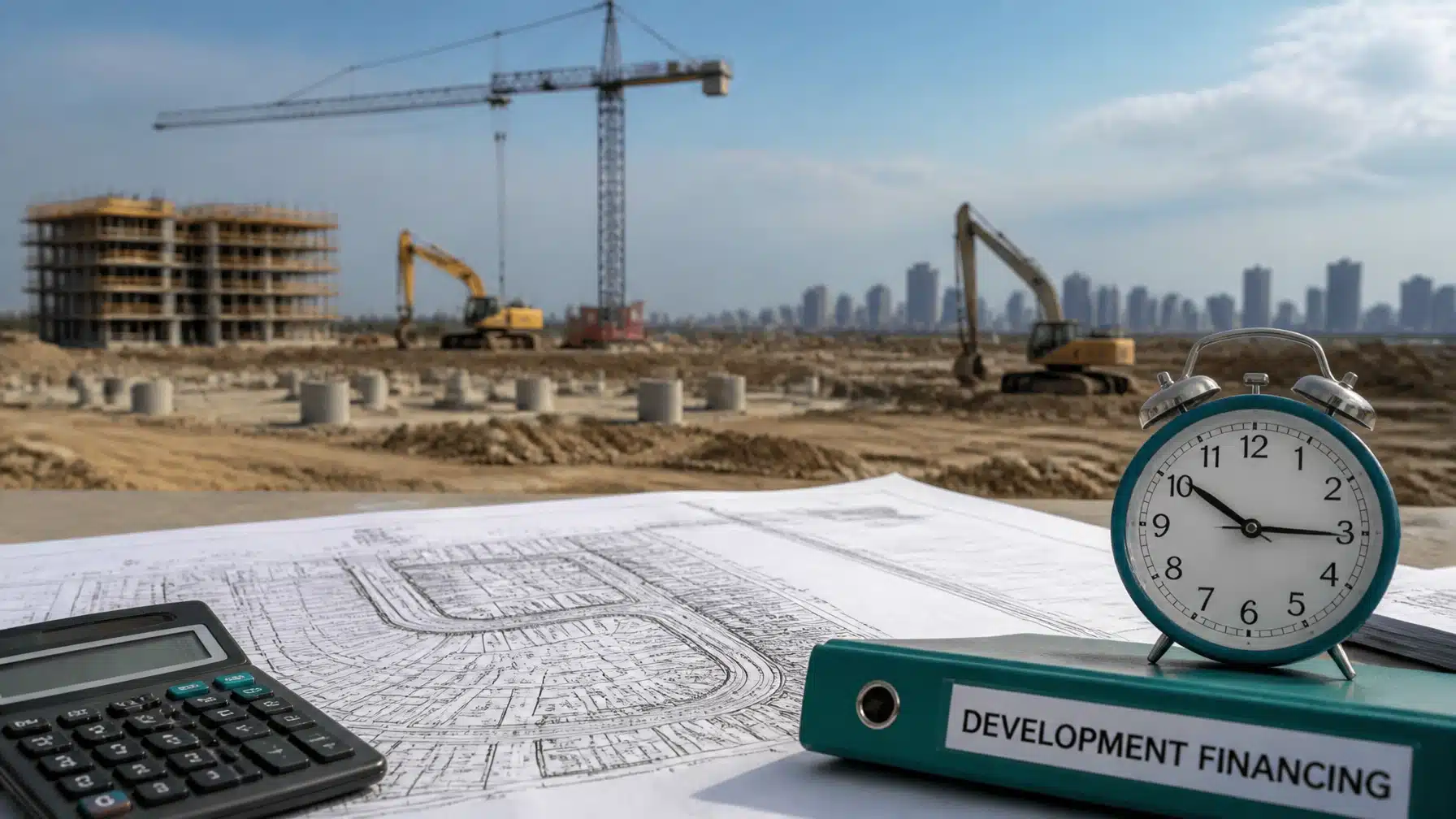
We hope that you, your family, and your team are staying safe and resilient during these increasingly turbulent times in the Ontario development sector. We understand the immense pressure the current economic climate places on your shoulders, and we are here to offer clarity and support.Stalled housing development construction site in Peel Region due to the infrastructure gap with idle cranes and professional blueprint.

Infrastructure Key Takeaways

  • The June 11 Trigger: The looming $700 million infrastructure funding gap in Peel Region is more than a headline; it is a potential distress trigger for active credit facilities.
  • Invisible Costs: Beyond the “freeze,” developers face escalating interest-carrying costs on land assemblies that are no longer generating progress-based draws.
  • Director Vulnerability: Site dormancy does not pause statutory obligations; directors remain personally liable for unpaid HST, source deductions, and provincial wages.
  • Caledon at Risk: With 64% of at-risk housing units located in Caledon, specialized strategic restructuring is now a necessity, not an option.
  • Proactive vs. Reactive: Engaging a Licensed Insolvency Trustee for a 30-minute stress test can prevent a receivership and preserve your equity.

Highlights


Why the Infrastructure June 11 Deadline is a Distress Trigger

The $700 million funding gap in Peel Region has moved from a municipal budget concern to a direct threat to GTA developers. If the provincial funding does not materialize by the June 11 deadline, the “freeze” on critical infrastructure, water, wastewater, and roads becomes a functional reality.

For many developers, this date serves as a distress trigger. This is a specific event or condition that allows a lender to re-evaluate a loan’s risk profile, potentially leading to a demand for repayment or a refusal to extend further credit. Lenders do not wait for a provincial bailout; they act in response to the immediate reality of stalled timelines. If your project relies on the next phase of infrastructure to trigger a construction draw, you may find yourself in a liquidity crunch before the summer is out.

The Infrastructure Hidden Danger: Interest-Carrying Costs and Dormancy

One of the most dangerous blind spots for construction firms is the interest-carrying cost. When a site goes dormant due to an infrastructure freeze, the clock doesn’t stop. The interest on your land loans, mezzanine financing, and equipment leases continues to accrue daily.

In a high-interest-rate environment, a six-month delay is not just a scheduling inconvenience; it can erode millions of dollars in project equity. When revenue-generating milestones are missed, the project enters a state of negative carry, where the cost of holding the asset exceeds the appreciation or progress being made. We know the tension this puts upon you, as you watch your hard-earned capital being swallowed by debt service while the site sits silent.

Director liability for unpaid taxes and wages illustrated by chains around financial documents. The construction company is in trouble due to the Peel infrastructure gap.

Director Liability: The Trap of Unpaid Project Taxes and Wages

A significant risk that often goes unaddressed until it is too late is Director Liability. Even if a development project is held within a specific corporation, the directors can be held personally responsible for certain corporate debts if the project fails.

If your site goes dormant and cash flow dries up, you must be extremely cautious about which bills are being paid. Under Canadian law, directors are personally liable for:

  • Source Deductions: Unpaid employee income tax, CPP, and EI.
  • GST/HST: Collected but unremitted sales tax.
  • Wages: Unpaid vacation pay and statutory wages (varies by province, but is highly strictly enforced in Ontario).

When a project is “frozen” due to the Peel infrastructure gap, the temptation may be to use remaining cash to pay suppliers or keep a lender happy. However, neglecting these statutory obligations can result in the Canada Revenue Agency (CRA) pursuing your personal assets, including your home or savings. This is why immediate, professional advice is vital.

Why Caledon is the Epicentre of the GTA Infrastructure Development Crisis

While Brampton and Mississauga are certainly feeling the pinch, Caledon is the hardest hit by this $700 million shortfall. Statistics indicate that roughly 64% of the units currently stalled or at risk are located within Caledon.

Map of Peel Region showing Caledon as the epicentre of the infrastructure freeze.

The town was positioned for massive growth, but that growth was predicated on a delicate balance of provincial and regional infrastructure spending. With that balance tipped, Caledon developers are facing a unique “perfect storm” of high-leverage land assemblies and a total lack of municipal serviceability. If you are operating in this area, you are not just facing a market dip; you are facing a structural blockage that may require a formal reorganization. Call to survive.

Restructuring as a Lifeline: Solvent vs. Insolvent Options

At Ira Smith Trustee & Receiver Inc., we believe in the “Starting Over, Starting Now” philosophy. Waiting for a government bailout that may never arrive is a reactive strategy that often leads to total loss. A proactive move is to stress-test your project and consider restructuring.

A restructuring is a formal or informal process to modify the financial or operational structure of a company to make it more viable. For a developer, this might mean renegotiating loan terms, seeking new equity partners, or utilizing the Bankruptcy and Insolvency Act (BIA) to pause creditor actions while a new plan is developed.

FeatureSolvent Restructuring (Informal)Insolvent Restructuring (Proposal/CCAA)
Creditor ConsentMust be unanimous or negotiated individually.Can be forced if a majority/two-thirds of creditors agree.
Legal StayNo automatic protection from lawsuits.Stay of Proceedings stops all legal and collection actions.
TimelineCan be slow and prone to “hold-out” creditors.Strictly governed by court-ordered or statutory timelines.
ComplexityHigh negotiation burden on the developer.Managed by a Licensed Insolvency Trustee who is the Monitor.
CostFlexible, but risks escalating if negotiations fail.Higher upfront costs but offers a final, binding resolution.

Professional debt restructuring session in a Toronto office overlooking the GTA for a construction company suffering due to the Peel infrastructure gap.

Taking 30 minutes now to consult with a Licensed Insolvency Trustee in Toronto can save a multi-million dollar land assembly from being seized by a receiver. We help you look at the cold legal facts while providing the supportive guide you need to navigate these high-stakes decisions.

Peel Infrastructure Frequently Asked Questions (FAQ)

What exactly is an “infrastructure freeze”?
In this context, it refers to the Peel Region’s inability to commit to new water, wastewater, and road projects required to service new developments because of a $700 million funding shortfall. Without these services, building permits for new phases cannot be issued.

Can a lender call my loan just because of the Peel funding gap?
Most commercial loan agreements have “Material Adverse Change” (MAC) clauses. If a lender determines that the infrastructure freeze significantly impairs the project’s viability or your ability to repay, they may use the June 11 deadline as a reason to review or call the loan.

Is it my fault if my project fails due to this freeze?
No. It is not your fault that regional politics and provincial funding gaps have created a barrier to your development. However, it is your responsibility to take proactive steps to protect your stakeholders and your personal liability.

How does a “Stay of Proceedings” help a developer?
A Stay of Proceedings is a legal “pause button.” It prevents lenders from seizing land, suppliers from suing, and the CRA from freezing accounts. This gives you the breathing room to find new financing or restructure your debt without the threat of immediate collapse.


Starting Over, Starting Now

Don’t let financial uncertainty dictate your future. If you or your business is struggling with debt, losing sleep, or facing legal action due to the Peel infrastructure freeze, contact Ira Smith Trustee & Receiver Inc. today.

We offer a free, confidential consultation to discuss your situation, explain your options in plain language, and help you develop a clear, actionable plan. Our team of Licensed Insolvency Trustees is dedicated to providing the compassionate, professional support you need to regain control and achieve a debt-free life.

Take the first step towards a brighter financial future. Call us now.

Ira Smith Trustee & Receiver Inc. is licensed by the Office of the Superintendent of Bankruptcy. Ira and Brandon Smith are members of the Canadian Association of Insolvency and Restructuring Professionals.

, , , , , , , , , , , , , , , , , , , , , , , , , , –

Disclaimer: This analysis is for educational purposes only and is based on the cited sources and professional expertise as a Licensed Insolvency Trustee. The information provided does not constitute legal or financial advice for your specific circumstances. Every situation is unique; the outcomes discussed may not apply to your particular case. Please contact Ira Smith Trustee & Receiver Inc. to discuss your specific needs.

About the Author:

Brandon Smith is a Senior Vice-President at Ira Smith Trustee & Receiver Inc. and a Licensed Insolvency Trustee serving clients across Ontario. His experience includes consumer insolvency and complex court-ordered receivership and corporate bankruptcy administration, giving him practical insight into navigating challenging financial situations to achieve optimal outcomes for businesses, creditors, and professionals. Brandon stays current with landmark developments in Canadian insolvency law, ensuring his clients benefit from a cutting-edge understanding of their rights and options.

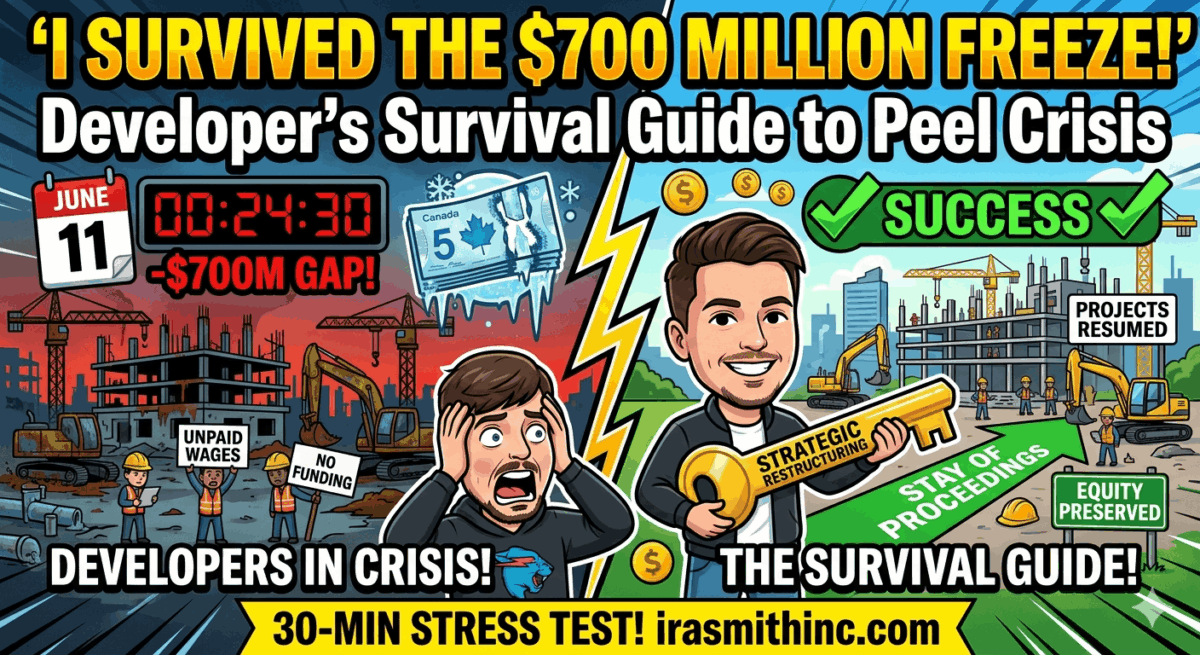
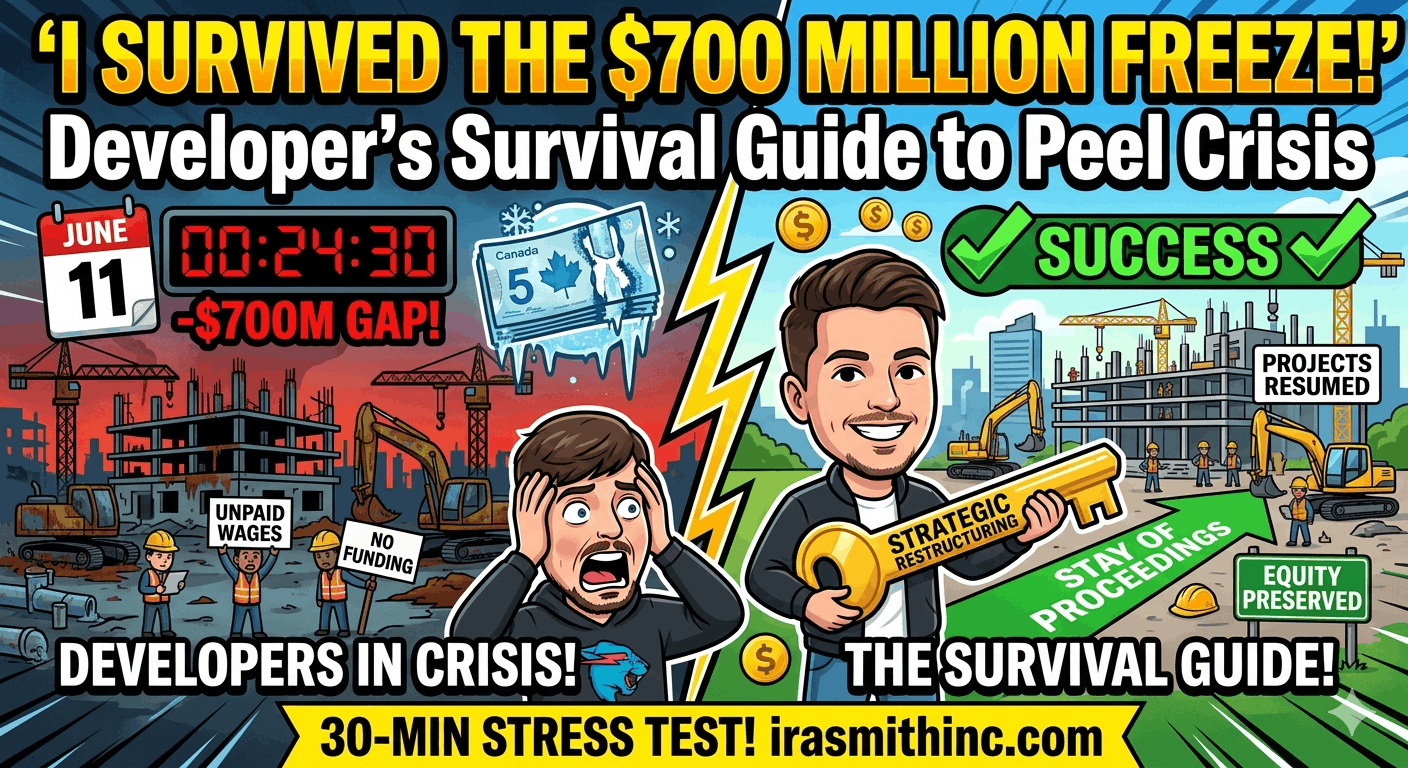
#GTARealEstate #ConstructionInsolvency #PeelRegion #DebtRestructuring #ProjectManagement #OntarioLaw #FinancialCrisisManagementThis is a split image where on the left, you see a construction project stalled and insolvent due to the Peel infrastructure gap and on the right, is a restructured viable construction company who survived this.

Call a Trustee Now!