Categories
Brandon Blog Post

Office of the Superintendent of Bankruptcy Predicts 2026–2027 Insolvency Surge

Man reviewing all his unpaid bills alone at home at the kitchen table thinking he needs an insolvency process approved by the Office of the Superintendent of Bankruptcy

Hello and welcome. If you are reading this today, you may be carrying a heavy burden of worry about your financial future, wondering how long you can keep juggling mounting bills, escalating mortgage payments, and growing credit card balances. We want you to take a deep, calming breath. You are safe here, and you are not alone in what you are experiencing. We know the tension you’re under in today’s economic climate, and it is entirely natural to feel overwhelmed.

Office of the Superintendent of Bankruptcy Key Takeaways

  • Rising Insolvency Trends: The Office of the Superintendent of Bankruptcy has signalled clear warnings regarding record household debt and affordability pressures shaping the 2026–2027 economic landscape.
  • Early Intervention is Critical: Waiting until creditors take legal action drastically narrows your choices; acting early removes stress and restores control over your life.
  • The Starting Over, Starting Now Philosophy: Practical, compassionate decision-making transforms catastrophic financial distress into manageable, debt-free outcomes.
  • Tailored Solutions: Formal and informal debt relief options, such as a consumer proposal, protect your home, your family, and your peace of mind.

Office of the Superintendent of Bankruptcy Highlights


Office of the Superintendent of Bankruptcy: Understanding the Office of the Superintendent of Bankruptcy’s 2026–2027 OSB Forecast

Each year, regulatory bodies examine macroeconomic indicators to gauge the financial health of Canadians. Recently, Superintendent Elisabeth Lang and the Office of the Superintendent of Bankruptcy released key messages highlighting a projected surge in insolvency filings across Canada for 2026 and 2027. When we examine these regulatory insights alongside day-to-day realities in the Greater Toronto Area, a clear picture emerges: ordinary households and businesses are stretched to their absolute limits.

It is not your fault if you feel like you are running on a treadmill that keeps speeding up. Inflationary pressures, fluctuating interest rates, and the lingering cost-of-living crisis have eroded personal savings. When an individual or corporation is unable to pay its debts as they come due, it is legally considered insolvent. Recognizing this state is not a sign of personal failure; rather, it is the first courageous step toward reclaiming your financial health.

A mountain top overlooking a lake which is barren other than for a rock of debt representing big trouble and a small plant growing representing taking the responsible move of reducing debt through an insolvency process approved by the Office of the Superintendent of Bankruptcy


Office of the Superintendent of Bankruptcy: Why Household Debt and Affordability Pressures Are Reaching a Breaking Point

Canadian household debt-to-income ratios remain among the highest in the developed world. For years, homeowners relied on housing market equity to cushion against financial shocks. However, as refinancing costs surged and variable-rate mortgages reset, monthly housing expenses absorbed a staggering share of family take-home pay.

When income no longer covers basic necessities like groceries, utilities, and debt servicing, people often turn to high-interest credit cards or payday loans as a temporary bridge. This trap compounds the crisis. Unsecured debts snowball rapidly under double-digit interest rates, turning manageable balances into insurmountable mountains.

We often speak with clients who have spent months hiding their mail or skipping meals just to make minimum payments. We want to remind you: financial distress does not define your worth. The system is heavily strained, and acknowledging that you need expert guidance is an act of profound strength.

Professional in a modern office reviewing data-driven debt solutions with a husband and wife which are approved by the Office of the Superintendent of Bankruptcy


Office of the Superintendent of Bankruptcy: Rising Economic Pressure vs. Personal Action Steps

To help you visualize how to transition from paralysis to proactive problem-solving, consider the following comparison between passive endurance and active restructuring:

Economic Pressure IndicatorPassive Reaction (“Wait and See”)Proactive Action (Starting Over, Starting Now)
Rising Interest RatesPaying minimum balances while debt grows exponentially.Consulting a Licensed Insolvency Trustee to freeze interest via a legal framework.
Aggressive Creditor CallsAvoiding phone calls, living in fear of wage garnishments or legal action.Utilizing an automatic stay of proceedings to halt all creditor collection actions immediately.
Depleted SavingsBorrowing from high-interest lenders to buy groceries or pay other loans.Restructuring finances into a single, affordable monthly payment tailored to your budget.
Emotional TollSevere anxiety, sleepless nights, and a lingering sense of shame.Gaining clarity, regaining control, and charting a clear, legal path to a fresh start.

Office of the Superintendent of Bankruptcy: How Early Intervention Changes Everything (Starting Over, Starting Now)

The core message from the Office of the Superintendent of Bankruptcy’s recent reports is simple: waiting until the eleventh hour limits your options. When legal remedies like a consumer proposal or personal bankruptcy are explored proactively, you retain maximum flexibility over your assets and lifestyle.

Assets of certain types are protected under provincial and federal legislation and are called exempt assets (such as basic household furnishings, necessary clothing, and tools of your trade). A qualified Licensed Insolvency Trustee (LIT), the only professionals in Canada federally licensed by the Office of the Superintendent of Bankruptcy to administer bankruptcies and proposals, will review your unique situation with complete confidentiality and zero judgment.

When you partner with us, we look beyond the raw numbers. We listen to your concerns, assess your family’s actual living requirements, and build a customized action plan. Our philosophy, Starting Over, Starting Now, is designed to strip away the overwhelming stress of debt and replace it with immediate, actionable relief.

Silhouette of a business professional standing before a downward trend graph in a corporate setting desperately in need of an insolvency solution approved by the Office of the Superintendent of Bankruptcy


Office of the Superintendent of Bankruptcy Frequently Asked Questions (FAQ)

1. Why are insolvency volumes projected to rise significantly in 2026–2027?

Persistent inflation, high borrowing costs, and elevated household debt have exhausted the financial buffers of many Canadians. As fixed-rate mortgages renew at higher rates and living expenses remain elevated, more individuals and families find themselves unable to service their ordinary financial obligations.

2. What is the role of a Licensed Insolvency Trustee in this economic environment?

A Licensed Insolvency Trustee (LIT) is an officer of the court who acts as an impartial facilitator between you and your creditors. We administer formal insolvency processes, ensure legal compliance, provide objective financial counselling, and help you legally restructure or eliminate overwhelming debt.

3. Will filing a consumer proposal mean I lose my home?

Not necessarily. In many cases, a consumer proposal allows you to retain your home and other valuable assets by offering your unsecured creditors a structured settlement percentage of what you owe, paid over a manageable period of up to five years, without triggering a bankruptcy liquidation.

4. How can early intervention protect my quality of life?

Acting before creditors initiate legal action or wage garnishments allows you to take control on your own terms. It prevents emergency asset sales, stops harassing collection calls instantly through a legal stay of proceedings, and preserves your mental health and family stability.


Starting Over, Starting Now
Don’t let financial uncertainty dictate your future. If you or your business is struggling with debt, losing sleep, or facing legal action, contact Ira Smith Trustee & Receiver Inc. today. We offer a free, confidential consultation to discuss your situation, explain your options in plain language, and help you develop a clear, actionable plan. Our team of Licensed Insolvency Trustees is dedicated to providing the compassionate, professional support you need to regain control and achieve a debt-free life.

Take the first step towards a brighter financial future; call us now.

  • Phone: 905.738.4167
  • Toronto Line: 647.799.3312
  • Evening and Weekends: 289.670.7500
  • Website: irasmithinc.com
  • Email: brandon@irasmithinc.com
  • Ira Smith Trustee & Receiver Inc. is licensed by the Office of the Superintendent of Bankruptcy. Ira and Brandon Smith are members of the Canadian Association of Insolvency and Restructuring Professionals.
    , , , , , , , , , , , , , , , , , , , , , , , , , , –
    Disclaimer: This analysis is for educational purposes only and is based on the cited sources and professional expertise as a Licensed Insolvency Trustee. The information provided does not constitute legal or financial advice for your specific circumstances. Every situation is unique; the outcomes discussed may not apply to your particular case. Please contact Ira Smith Trustee & Receiver Inc. to discuss your specific needs.
  • About the Author:
    Brandon Smith is a Senior Vice-President at Ira Smith Trustee & Receiver Inc. and a Licensed Insolvency Trustee serving clients across Ontario. His experience includes consumer insolvency and complex court-ordered receivership and corporate bankruptcy administration, giving him practical insight into navigating challenging financial situations to achieve optimal outcomes for businesses, creditors, and professionals. Brandon stays current with landmark developments in Canadian insolvency law, ensuring his clients benefit from a cutting-edge understanding of their rights and options.

A professional looking at a financial chart on a computer screen showing large financial improvement after a financial restructuring through an insolvency process approved by the Office of the Superintendent of Bankruptcy

#InsolvencyTrends #OSB #OSBForecast #DebtRelief #ConsumerProposal #LicensedInsolvencyTrustee #FinancialRestructuring #StartingOverStartingNow #IraSmithInc

Categories
Brandon Blog Post

Gambling Sites, Debt, and Desperation: What Ontario’s $103B Betting Boom Means for Your Finances

Close-up of a modern smartphone with sports gambling sites betting apps and Canadian bills, representing the growth of online gambling in Ontario.Gambling Sites: Introduction

Hello, I hope you are doing well and finding a moment of peace today. At Ira Smith Trustee & Receiver Inc., we understand that discussing financial struggles can be incredibly difficult, especially when they involve the weight of gambling losses from online gambling sites or other gambling opportunities. Please know that you are in a safe, non-judgmental space here. Our goal is to provide you with the clarity and support you need to navigate these challenging waters and find your way back to stability.

Gambling Sites: Key Takeaways

  • The Boom is Real: Ontario’s iGaming market saw a staggering $103 billion in wagers last year across 76 licensed gambling sites.
  • Insolvency is Rising: Gambling-related bankruptcies in Ontario quadrupled in 2025, with 604 filings specifically citing betting losses.
  • Youth at Risk: Help-seeking calls among young men aged 15-24 have skyrocketed by ~317% since the privatization of online gambling Ontario.
  • Legal Relief Exists: Gambling debt is considered unsecured debt and can be legally discharged through a consumer proposal or bankruptcy.
  • Actionable Support: We offer a “Starting Over, Starting Now” approach to help you reclaim your life from the cycle of debt.

Gambling Sites: The $103 Billion Betting Spree

As reported in the National Post feature, “Sports betting sparks a gambling spree in Ontario” (July 9, 2026), the landscape of our province has shifted dramatically. Since the launch of the regulated iGaming Ontario market on April 4, 2022, following the passage of the Federal Bill C-218, which enabled single-event sports betting, the accessibility of gambling sites has exploded.

Last year alone, Ontarians placed $103 billion in online wagers. This massive volume generated $4.3 billion in revenue, with approximately 20% flowing directly to the government. While these figures represent a windfall for the treasury, the human cost is becoming impossible to ignore. With gambling sites Ontario now available in every pocket via smartphone, the barrier to entry has vanished, and for many, the “fun” has turned into a financial nightmare.

A compassionate professional consultation at Ira Smith Trustee & Receiver Inc., showing support for a client facing financial crisis from debt incurred because of gambling sites.

“Phil’s” Gambling Sites Story: The Hidden Face of Debt

To understand the gravity of this crisis, we look at stories like “Phil’s.” Phil was a high-achieving medical student in Toronto with a bright future. What started as a few casual bets on NHL games through popular gambling sites quickly spiralled. Over four years, Phil managed to rack up a soul-crushing $400,000 in gambling debt, all from the palm of his hand.

Phil’s story is not an isolated incident. He represents a growing demographic of young, educated professionals who find themselves trapped by the high-speed, 24/7 nature of modern betting. The shame of his situation kept him silent for years, but it is important to remember: It is not your fault. The system is designed to be addictive, and reaching out for help is a sign of strength, not failure.

Gambling Sites: Highlights

  • Rapid Expansion: With 76 licensed operators, Ontario has become one of the largest regulated gambling jurisdictions in North America.
  • Public Health Crisis: Calls to help lines have nearly doubled, yet funding for services like ConnexOntario remains stagnant at approximately $4.2 million.
  • Cross-Country Growth: Alberta is set to launch its own regulated market on July 13, 2026, likely mirroring Ontario’s growth and challenges.
  • Debt Solutions: A Consumer Proposal or Bankruptcy can provide a legal “stay of proceedings,” stopping interest and creditor harassment immediately.

The Hard Truth: Bankruptcies and Helplines

The data paints a sobering picture of the “spree.” In 2025, Ontario recorded 604 bankruptcies that specifically cited gambling as a primary factor, a fourfold increase from previous years. This sports betting bankruptcy trend is particularly visible among men aged 15-24, a group that has seen a ~317% increase in helpline contacts since privatization began.

While the Ford government is reportedly “looking very closely” at tightening advertising restrictions to protect vulnerable residents, the tide of debt continues to rise. For many, the financial pressure feels like a set of heavy chains, dragging down every aspect of their lives, from mental health to professional performance.

A realistic rendering of heavy metallic chains on a white background, with one link breaking to symbolize freedom from gambling sites debt.

Gambling Sites: Is Gambling Debt Forgivable?

A common question we hear is, “Can I actually get rid of gambling debt through bankruptcy?” The answer is yes. In the eyes of the Bankruptcy and Insolvency Act, debts incurred through online gambling Ontario are generally treated as unsecured debts (debts not backed by collateral like a house or car). This means they can be included in a Consumer Proposal or a Bankruptcy filing.

Gambling Sites: Comparing Your Options for Relief

When you are drowning in debt from gambling sites Ontario, it is vital to understand which path offers the best “fresh start.”

FeatureConsumer ProposalPersonal Bankruptcy
Asset RetentionYou keep all your assets (house, car, RRSPs).Some non-exempt assets may be sold to pay creditors.
Monthly PaymentsOne fixed, interest-free payment based on what you can afford.Payments based on your surplus income and family size.
Impact on CreditR7 rating; removed 3 years after completion.R9 rating; removed 6 or 7 years after discharge.
Legal ProtectionImmediate stay of proceedings stops lawsuits and garnishments.Immediate stay of proceedings stops lawsuits and garnishments.
Public RecordYes, it is a matter of public record.Yes, it is a matter of public record.

Gambling Sites: Why Professional Guidance Matters

Navigating a sports betting bankruptcy or proposal requires more than just filling out forms; it requires a strategy that addresses the root of the problem while protecting your future. At Ira Smith Trustee & Receiver Inc., we don’t just look at the numbers. We look at the person behind the debt. We know the tension put upon you and your family, and we are here to help you break the cycle.

The “Starting Over, Starting Now” philosophy is about taking immediate action to remove the weight of the past. Whether it is dealing with aggressive collectors or understanding the legal nuances of Bill C-218, we provide the expert hand you need to steady the ship.

A bright, hopeful office view of the Toronto skyline at sunrise, representing a fresh financial start after discharging gambline sites debt.

Gambling Sites Frequently Asked Questions (FAQ)

Can my employer find out if I file for bankruptcy due to gambling?
Generally, no. While bankruptcy is a public record, your employer is only notified if we need to stop a wage garnishment already in place.

Will I lose my professional license if I file?
In most cases, filing for a Consumer Proposal or Bankruptcy does not automatically disqualify you from professional practice, though you should check with your specific licensing body.

How do I stop the “urge” while I am fixing my finances?
We strongly recommend using “self-exclusion” programs provided by iGaming Ontario to block your access to all licensed gambling sites while we work on your debt solution.

Is my gambling debt treated differently if I won some money back?
No. The total amount you owe to creditors is what matters. Any “winnings” that were subsequently lost are gone, but the remaining debt is still eligible for discharge.

Gambling Sites: Starting Over, Starting Now

Don’t let financial uncertainty dictate your future. If you or your business is struggling with debt, losing sleep, or facing legal action, contact Ira Smith Trustee & Receiver Inc. today.

We offer a free, confidential consultation to discuss your situation, explain your options in plain language, and help you develop a clear, actionable plan. Our team of Licensed Insolvency Trustees is dedicated to providing the compassionate, professional support you need to regain control and achieve a debt-free life.

Take the first step towards a brighter financial future, call us now.

Ira Smith Trustee & Receiver Inc. is licensed by the Office of the Superintendent of Bankruptcy. Ira and Brandon Smith are members of the Canadian Association of Insolvency and Restructuring Professionals.

, , , , , , , , , , , , , , , , , , , , , , , , , , –

Disclaimer: This analysis is for educational purposes only and is based on the cited sources and professional expertise as a Licensed Insolvency Trustee. The information provided does not constitute legal or financial advice for your specific circumstances. Every situation is unique; the outcomes discussed may not apply to your particular case. Please contact Ira Smith Trustee & Receiver Inc. to discuss your specific needs.

About the Author:

Brandon Smith is a Senior Vice-President at Ira Smith Trustee & Receiver Inc. and a Licensed Insolvency Trustee serving clients across Ontario. His experience includes consumer insolvency and complex court-ordered receivership and corporate bankruptcy administration, giving him practical insight into navigating challenging financial situations to achieve optimal outcomes for businesses, creditors, and professionals. Brandon stays current with landmark developments in Canadian insolvency law, ensuring his clients benefit from a cutting-edge understanding of their rights and options.

An image of a university student who is stressed out because he has amassed $400K in debt from gambling sites and needs to make an insolvency filing with Ira Smith Trustee & Receiver Inc.

#GamblingDebt #OntarioInsolvency #iGamingOntario #SportsBetting #DebtRelief #ConsumerProposal #BankruptcyOntario #IraSmithTrustee

Categories
Brandon Blog Post

Hidden Assets & Bankruptcy: Our Complete Guide On Creditor Rights And Recovery Under BIA Section 38

Professional legal desk with gavel and documents representing the Section 38 BIA process to find hidden assets

Hidden Assets Introduction

At Ira Smith Trustee & Receiver Inc., we understand that the discovery of hidden assets during a bankruptcy can be both a shock and a source of deep frustration. Whether you are a creditor trying to recover what is rightfully yours or an individual seeking a fair and transparent process, your peace of mind and financial security are our primary concerns. We are here to guide you through the complexities of the law with compassion and expertise.

Hidden Assets Key Takeaways

  • Creditor Empowerment: Section 38 of the Bankruptcy and Insolvency Act (BIA) allows creditors to pursue legal actions that a Trustee has declined or neglected to take.
  • Uncovering Hidden Assets: This provision is a powerful tool for addressing a transfer under value, a transfer of property intended to keep it out of the reach of creditors.
  • The TCC v. Rohland Case: A recent BC Supreme Court decision highlights how creditors can continue to fight for recovery even years after a bankruptcy filing.
  • Self-Funded Recovery: Creditors using Section 38 assume the costs and risks of litigation but gain the primary right to any assets recovered.
  • Professional Guidance is Essential: Navigating Section 38 requires precise legal timing and a deep understanding of insolvency rules.

Hidden Assets: What is Section 38 of the BIA?

In a typical bankruptcy, the Licensed Insolvency Trustee is the only person authorized to manage the debtor’s assets and bring lawsuits to recover property. However, what happens if the Trustee decides not to act? Perhaps the estate has no funds to pay for a lawyer, or the Trustee believes the risk of losing is too high.

This is where Section 38 comes into play. It acts as a “safety valve” for the system. If a Trustee refuses or neglects to take a specific action, a creditor can apply to the court for an order to step into the Trustee’s shoes. This process effectively grants the creditor the right to pursue the claim at their own expense and for their own benefit (up to the amount of their claim plus costs).

Assets of this type are called “property of the bankrupt estate,” and Section 38 ensures that they aren’t lost simply because a Trustee is unable to pursue them.

A coastal property on Bowen Island representing the type of hidden assets involved in the TCC v. Rohland case

Hidden Assets Highlights: The Story of TCC Mortgage Holdings Inc. v. Rohland

The recent case of TCC Mortgage Holdings Inc. v. Rohland, 2026 BCSC 1101, provides a perfect example of Section 38 in action. The details of this case read like a financial thriller, involving multi-million dollar judgments and allegations of hidden properties.

Hidden Assets: The Background

In 2009, TCC Mortgage Holdings Inc. (“TCC”) obtained a judgment against Gregory Rohland for nearly $13 million. By 2020, with interest, that figure had grown to over $16.5 million. Mr. Rohland filed for bankruptcy in 2013 and remains an undischarged bankrupt, meaning he has not yet been released from his legal obligation to pay his debts through the bankruptcy process.

Interestingly, the Trustee in his case was discharged back in 2015. Many people believe that once a Trustee is discharged, the file is closed. However, as this case shows, the bankruptcy itself continues until the debtor is discharged.

The Allegation of Hidden Assets

TCC discovered that a property on Bowen Island, British Columbia, had been purchased in 2016 for approximately $2.5 million. While the property was not in Mr. Rohland’s name, TCC alleged it was being held by nominees, individuals or entities acting on his behalf to hide his true ownership.

TCC argued that this was a fraudulent conveyance, a term used when a person transfers property to another party with the intent to defeat, hinder, or delay their creditors.

The Court’s Hidden Assets Decision

TCC applied under Section 38 for permission to sue the nominees directly to bring the Bowen Island property (or the money used to buy it) into the bankruptcy estate. Justice Coval of the BC Supreme Court granted TCC’s application to amend their legal claims. The court ruled that TCC had a right to pursue these claims, even though the Trustee was long gone and the original bankruptcy had happened years prior.

Hidden Assets: Why Does Section 38 Matter to You?

If you are a creditor, Section 38 is your “Plan B.” It ensures that a debtor cannot simply wait out the Trustee’s patience or take advantage of an estate that lacks the funds to litigate.

For the person in debt, it is a reminder that bankruptcy is a process of “honesty for relief.” The system is designed to provide a fresh start only to those who have fully disclosed their assets. Attempting to hide property can lead to long-term legal battles that persist for decades.

Chains being broken, symbolizing the uncovering of hidden financial structures and hidden assets

Hidden Assets: Comparing the Paths to Recovery

To help you understand the difference between the standard process and the Section 38 route, we have prepared this comparison table:

FeatureTrustee-Led ActionSection 38 Creditor Action
Who Controls the Case?The Licensed Insolvency TrusteeThe Creditor who applied for the order, and any other creditors who choose to join in
Who Pays the Legal Fees?The Bankrupt Estate (if funds exist)The Creditor (out of their own pocket)
Who Takes the Risk?The Estate / TrusteeThe Creditor personally
Who Gets the Recovery?Distributed among all creditorsFirst to the acting creditor (costs + claim), then surplus to the estate
Court Permission Required?Usually not (standard duty)Yes, a Section 38 Order is mandatory

Hidden Assets: How to Navigate a Section 38 Application

If you suspect there are hidden assets in a bankruptcy file, you cannot simply sue on your own. You must follow a specific legal path:

  1. Request Action: You must first formally ask the Trustee to pursue the asset or the claim.
  2. Wait for Refusal: The Trustee must either refuse or fail to act within a reasonable timeframe.
  3. Apply to Court: You must obtain a Section 38 Order. The court will check if your claim is “prima facie” (on its face) valid and not frivolous.
  4. Notify Other Creditors: You are generally required to give other creditors the chance to join your action and share the costs (and the rewards).

We know the tension put upon you when you feel the system isn’t working as it should. Whether you are a creditor or a debtor, our role is to bring clarity to these “grey areas” of the law.

Ira Smith professionals collaborating to provide guidance and support to find hidden assets

Hidden Assets Frequently Asked Questions (FAQ)

Can I use Section 38 if the Trustee has already been discharged?
Yes. As seen in the TCC v. Rohland case, a creditor can still apply for a Section 38 order even after the Trustee is discharged, provided the bankrupt individual themselves is not yet discharged.

What is a “Money Had and Received” claim?
This is a legal term for a claim where one party has received money that, in fairness and justice, belongs to another. In bankruptcy, this is often used when a debtor’s money was funnelled into someone else’s bank account or property.

What happens if I lose a Section 38 lawsuit?
Because you are stepping into the Trustee’s shoes, you are responsible for the costs. If the lawsuit is unsuccessful, you, not the Trustee or the estate, will be responsible for your own legal fees and potentially the legal costs of the winning side.

Is there a time limit for these claims?
Yes. Limitation periods apply to all legal actions. In the TCC v. Rohland case, the question of whether too much time had passed was a major point of debate, which the judge ultimately left for the trial phase to decide. It is vital to act as soon as you suspect foul play.

Hidden Assets: Moving Forward with Confidence

The takeaway from the BC Supreme Court’s decision is clear: the law provides pathways to justice, even in the most complex and long-running bankruptcy cases. At Ira Smith Trustee & Receiver Inc., we believe that “Starting Over, Starting Now” applies to everyone involved in a financial crisis. For creditors, it means finding a new way to pursue recovery. For debtors, it means resolving the past honestly to secure a better future.

It is not your fault that the legal system is complex, but it is our job to make it manageable for you. We provide the expertise of a Licensed Insolvency Trustee combined with the heart of a supportive guide.

Starting Over, Starting Now

Don’t let financial uncertainty dictate your future. If you or your business is struggling with debt, losing sleep, or facing legal action, contact Ira Smith Trustee & Receiver Inc. today.

We offer a free, confidential consultation to discuss your situation, explain your options in plain language, and help you develop a clear, actionable plan. Our team of Licensed Insolvency Trustees is dedicated to providing the compassionate, professional support you need to regain control and achieve a debt-free life.

Take the first step towards a brighter financial future. Call us now.

Ira Smith Trustee & Receiver Inc. is licensed by the Office of the Superintendent of Bankruptcy. Ira and Brandon Smith are members of the Canadian Association of Insolvency and Restructuring Professionals.

, , , , , , , , , , , , , , , , , , , , , , , , , , –

Disclaimer: This analysis is for educational purposes only and is based on the cited sources and professional expertise as a Licensed Insolvency Trustee. The information provided does not constitute legal or financial advice for your specific circumstances. Every situation is unique; the outcomes discussed may not apply to your particular case. Please contact Ira Smith Trustee & Receiver Inc. to discuss your specific needs.

About the Author:

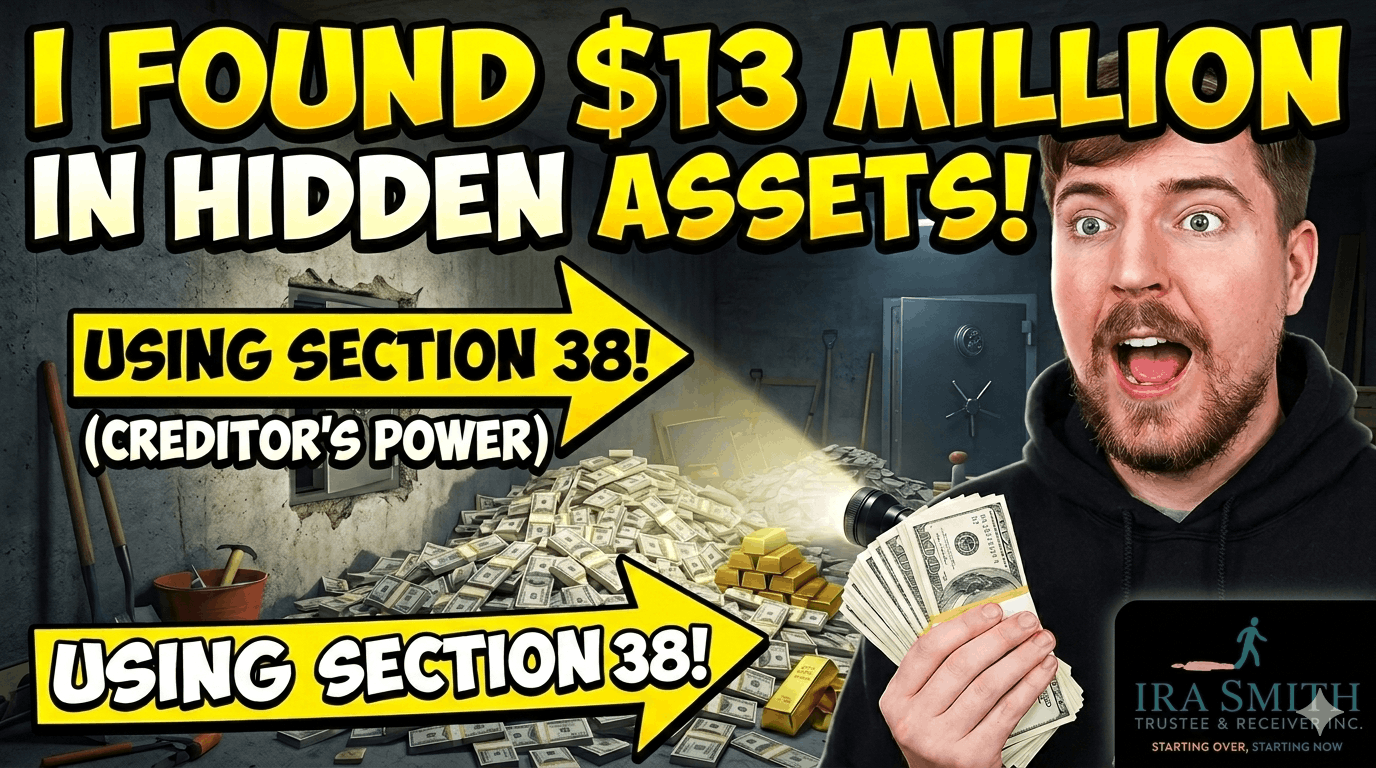
Brandon Smith is a Senior Vice-President at Ira Smith Trustee & Receiver Inc. and a Licensed Insolvency Trustee serving clients across Ontario. His experience includes consumer insolvency and complex court-ordered receivership and corporate bankruptcy administration, giving him practical insight into navigating challenging financial situations to achieve optimal outcomes for businesses, creditors, and professionals. Brandon stays current with landmark developments in Canadian insolvency law, ensuring his clients benefit from a cutting-edge understanding of their rights and options.An exuberant creditor who just found $13 million of hidden assets of an undischarged bankruptcy using section 38 of the Bankruptcy and Insolvency Act Canada

#BankruptcyLaw #Section38BIA #CreditorRights #FraudulentConveyance #InsolvencyRestructuring #IraSmithTrustee #TorontoFinancialHelp #DebtRecovery #LegalCaseStudy #StartingOverStartingNow

Categories
Brandon Blog Post

WHAT TO DO WHEN CRA COLLECTIONS IS PURSUING YOU: THE ULTIMATE COMPREHENSIVE GUIDE TO STOPPING TAX DEBT

CRA collections

CRA Collections: Introduction

Our income tax returns are filed for another year. Most of us paid any tax owing. But what if you do not have the money to pay your tax liability? That is when the CRA collections department springs into action.

When most people think of debt collection, they imagine pesky phone calls or letters from agencies trying to negotiate a settlement. Undoubtedly, the CRA collections department is the most lethal collection agency in Canada. It has superpowers that no other collection agency has, whether located in Toronto, Vaughan, Woodbridge, anywhere in Ontario or the rest of Canada.

It doesn’t need a court order to freeze your bank account or garnish your wages—but you don’t need a miracle to stop them. However, most people panic when tax collectors call, completely missing the powerful legal strategies that can immediately halt aggressive enforcement actions. Consequently, in this comprehensive guide from Brandon’s Blog, I will show you exactly how to protect your assets, navigate director liability or personal tax liability, and permanently solve your tax nightmare.

CRA Collections Key Takeaways

Initially, here are the most critical points you must understand before dealing with government tax collectors:

  • Do not ignore the CRA: Collection agents possess extraordinary powers and do not need a court order to freeze your bank accounts or garnish your employment income.
  • Know your liability: If you are a corporate director, the government can hold you personally responsible for unpaid corporate GST/HST and employee payroll deductions.
  • Payment plans only go so far: You can negotiate short-term payment plans with collections agents, but they will never reduce the total principal amount you owe.
  • There is a legal way out: Filing a Consumer Proposal through a Licensed Insolvency Trustee immediately stops CRA collection actions and allows you to settle your tax debt for substantially less than you owe.

What Are CRA Collections?

Specifically, CRA collections refers to the highly aggressive enforcement department of the Canada Revenue Agency tasked with recovering unpaid personal taxes, corporate taxes, and government trust funds. Furthermore, this specific branch possesses extraordinary legal powers that standard debt collectors simply do not have. For example, they can seize your money or place binding liens on your property without ever taking you to a judge. Consequently, understanding how this overwhelming system works is your first line of defence against total financial ruin.

Importantly, recognizing the severe reality of these CRA collections department powers is essential for anyone carrying substantial tax debt, be it personal tax or a director liability for trust claims against your corporation.

If you’ve noticed a shift in how the Canada Revenue Agency handles outstanding balances, you aren’t imagining things. The CRA collections group has been noticeably tightening the screws on both individual taxpayers and business owners lately.

Over the last year, there has been a major uptick in enforcement actions, specifically the use of ‘Requirement to Pay’ notices. These aren’t just polite reminders; they are legal tools that allow the agency to step in and garnish wages or seize funds directly from bank accounts. It’s a clear signal that the tax man is moving away from simple requests and toward more direct, impactful recovery methods. — Source: [Debt collection at the CRA, 2026].

If you cannot afford to pay the CRA, either all at once or through an agreed-upon payment plan, then partnering with a Licensed Insolvency Trustee is the most effective way to understand the specific enforcement actions being weaponized against you and how to stop them. Ultimately, knowing your adversary is the best way to prepare an unbreakable defence.

The CRA Collections Team vs. Standard Debt Collectors: Why They Hold All the Cards

1. No Judge, No Jury: Bypassing the Court System

If a credit card company wants to freeze your bank account, they have to sue you first, win a judgment, and then get a court order. It is a slow, public, and expensive process.

The CRA doesn’t have to deal with that red tape. They can bypass the judicial system entirely. Without a single minute spent in front of a judge, they can move directly to aggressive enforcement actions that can paralyze your personal finances overnight.

2. The “Requirement to Pay”: Direct Access to Your Income

One of the CRA’s most potent tools is the “Requirement to Pay.” This is essentially a legal demand sent directly to third parties.

  • Garnishing Wages: They can instruct your employer to send them up to 50% of your gross pay—before you even see your paycheque.
  • Freezing Accounts: They can tell your bank to stop all activity or hand over every cent in your account to satisfy the tax debt.

Unlike private collectors, the CRA doesn’t need to prove its case to a court before pulling these triggers.

3. Silent Liens on Your Property

If you owe money to a contractor or a lender, they usually need to jump through significant legal hoops to put a lien on your home. The CRA can register a restrictive tax lien against your real estate (like your family home) without ever setting foot in a courtroom. This secures their interest in your assets, making it nearly impossible to sell or refinance your property without paying them off first.

4. Piercing the Corporate Veil

In the business world, a corporation usually acts as a shield, protecting the individual owners from the company’s debts. The CRA, however, has the power to punch right through that shield.

Under specific rules regarding “trust funds” (like GST/HST or employee payroll deductions), the CRA can hold corporate directors personally liable for the company’s unpaid taxes. Your personal assets are suddenly at risk of a business failure.

5. Hunting Transferred Funds (Section 160)

Think you can move money out of a struggling company to a spouse or child to keep it safe from the taxman? Think again. Under Section 160 of the Income Tax Act, the CRA can pursue individuals personally if they received dividends or assets from a company that still owed taxes. They follow the money wherever it goes, regardless of who holds it now.

6. The Math of Compounding Interest

While some private debts might stop growing once they are sent to collections, tax debt is a living, breathing entity. The CRA applies compounding interest and heavy penalties to the principal balance every single day. Because the rates are often higher than standard market rates, a manageable debt can snowball into an insurmountable mountain of stress in a very short amount of time.

The Bottom Line

The CRA collections team isn’t just another collector—it is a government entity with extraordinary reach. Understanding these powers is the first step in navigating a tax dispute, as the rules of the game are heavily tilted in their favour.

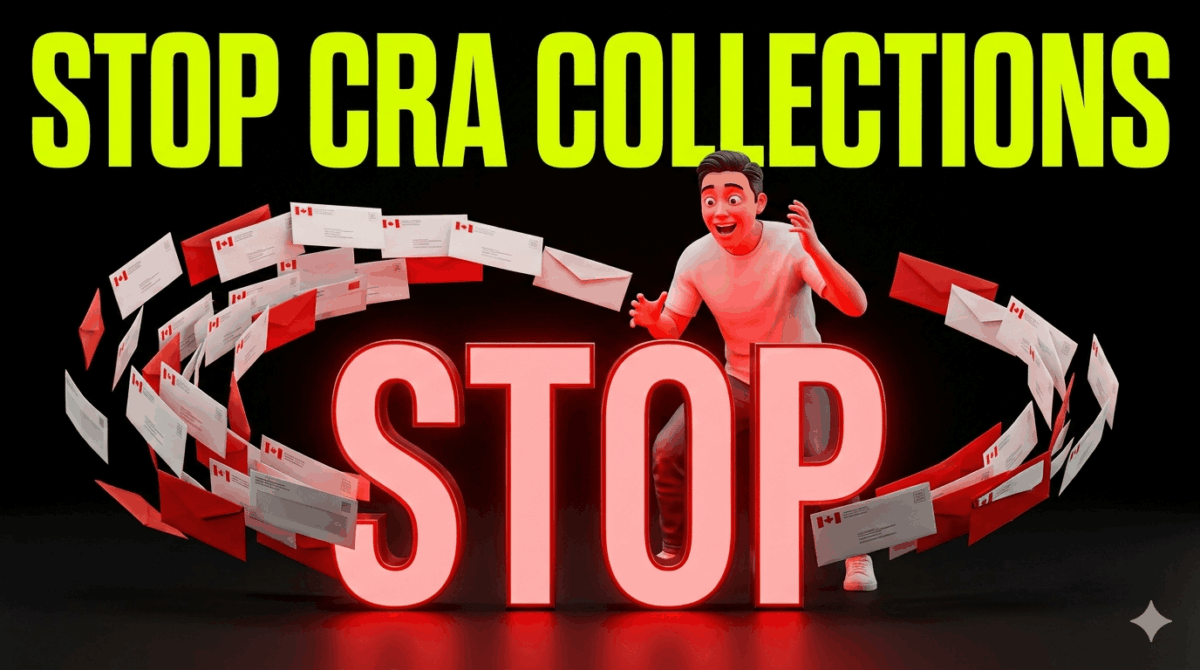
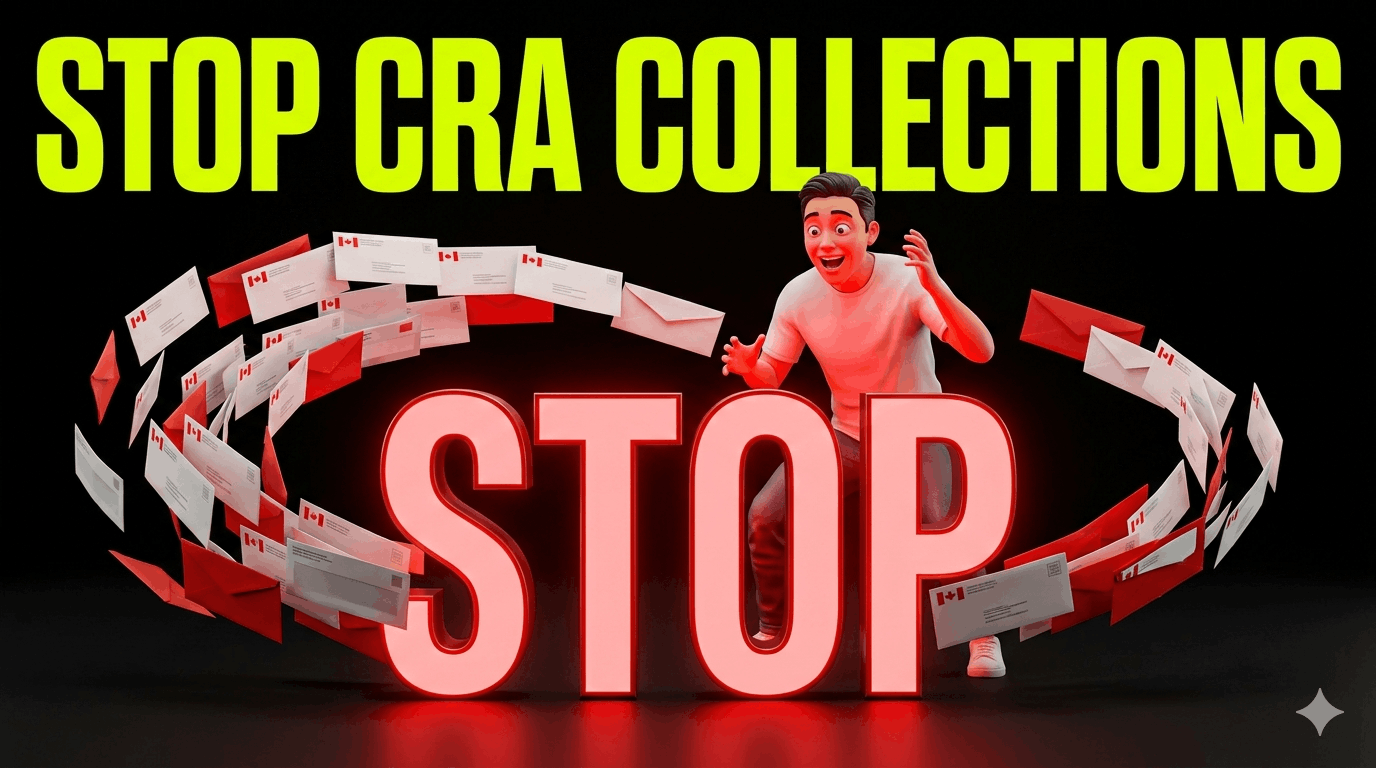
A swirling tornado of CRA collections notices and garnishments, with a person reacting with extreme relief after an insolvency filing with Ira Smith Trustee & Receiver Inc. with a stop sign representing the stay of proceedings.
cra collections

Why Are CRA Collections Important to Address Immediately?

Crucially, addressing CRA collections matters immediately because ignoring them inevitably leads to the devastating loss of your income, livelihood, and assets. Indeed, unlike regular unsecured creditors, the federal government can completely bypass the judicial system to lock down your personal finances. Therefore, taking proactive steps is the only way to retain control over your daily income, living expenses and assets.

Ever wonder how much tax debt is actually floating around in Canada? According to the latest 2024-25 Departmental Plan from the Canada Revenue Agency (CRA), the numbers are pretty eye-opening. During the 2022–2023 fiscal year alone, the agency managed to resolve a staggering $89.1 billion in outstanding tax debt.. — Source: [Canada Revenue Agency’s 2024–25 Departmental results report].

Additionally, pretending the problem does not exist will never make it miraculously disappear. Surprisingly, many desperate individuals falsely assume the government will eventually forget about older debts or stop calling. Actually, the collections department will systematically add compounding interest and severe financial penalties to your principal balance every single day. Thus, you must address this growing crisis head-on to protect your family’s future stability.

Personal Income Tax Debt vs. Director Liability: What is the Difference?

Primarily, the main difference is that personal tax debt belongs solely to you as an individual, whereas director liability transfers a corporation’s unpaid trust funds directly onto your personal shoulders. Significantly, many small business owners falsely believe their corporate structure automatically shields them from all company financial obligations. However, the government has enacted strict rules explicitly designed to pierce the corporate veil when unremitted trust funds are involved. Unquestionably, understanding this critical legal distinction is vital for any Canadian entrepreneur.

Your Personal Tax Debt

Generally, your personal tax debt consists of unpaid income taxes tied directly to your unique Social Insurance Number. Furthermore, if you are operating as a sole proprietor, your business revenues and personal income are treated as the same entity by the government. Consequently, any failure to pay these assessed amounts will trigger aggressive enforcement against your personal bank accounts and physical assets. Fortunately, a structured Consumer Proposal, or Division I Proposal for debts greater than the Consumer Proposal maximum debt threshold amount, can effectively address and eliminate these exact personal liabilities if filed in time.

Equally, it is important to recognize that receiving a Notice of Assessment is merely the beginning of the government’s enforcement timeline. Eventually, if you consistently fail to respond or establish a payment arrangement, the collections department severely escalates the file. Furthermore, they can register a restrictive tax lien against your family home, which legally secures their financial interest in your property. Therefore, addressing personal tax balances before they morph into secured debts is paramount. That is exactly what I meant in the above paragraph when I said the insolvency proceeding can eliminate the tax debt “if filed on time”. Once the CRA collections group liens your property, an insolvency proceeding cannot eliminate that secured debt.

Director Liability for Corporate Taxes (GST/HST & Payroll)

Critically, corporate directors in Canada can also be held personally liable for a company’s unpaid GST/HST and payroll source deductions under Section 227.1 of the Income Tax Act. Namely, these specific amounts are considered “trust funds” that the business legally collected on behalf of the federal government. Many corporate insolvencies I have been involved with have significant director liability for unremitted trust funds. Therefore, exploring a Corporate Restructuring early can definitely prevent these corporate debts from becoming devastating personal burdens.

FeaturePersonal Income Tax DebtDirector Liability (Trust Funds)
Source of DebtPersonal income, sole proprietorship revenues, or capital gains.Unremitted corporate GST/HST and employee payroll deductions.
Who is Responsible?The individual taxpayer (tied to SIN).The legally appointed directors of the corporation.
Corporate Income TaxNot applicable.Directors are generally not liable for regular corporate income tax.
Best Resolution MethodRestructuring Proposal or Personal Bankruptcy.Corporate Restructuring followed by personal insolvency protection if assessed.

Non-Insolvency Recommendations: Can You Negotiate with the CRA Collections Group?

Typically, negotiating with the CRA outside of formal insolvency involves establishing a voluntary payment plan or requesting penalty relief, but neither reduces the actual principal balance. Specifically, you can offer a detailed payment plan to pay off the full debt over a relatively short period. Nevertheless, the CRA collections agent will usually demand complete disclosure of your household income and living expenses before agreeing to anything. Also, they will aggressively expect you to borrow money from banks or family members if you have the borrowing capacity.

Moreover, attempting to negotiate a massive reduction of your principal debt entirely by yourself will always fail. Surprisingly, many taxpayers waste thousands of dollars on unregulated debt consultants who falsely promise to slash government tax bills. Realistically, these questionable consultants simply charge you exorbitant upfront fees to fill out basic forms that the government frequently rejects anyway. Thus, avoiding these costly emotional scams is crucial when seeking legitimate tax relief.

Furthermore, you might carefully consider applying for Taxpayer Relief if your tax issues stem from extraordinary, uncontrollable circumstances like severe illness. Admittedly, Taxpayer Relief requests can result in a partial or full waiver of penalties, but I could not find any statistics on what percentage of requests are successful. — Source: [Canada Revenue Agency (CRA) Objections, appeals, disputes, and relief measures]. However, this specific government program legally cannot forgive the principal tax amount you owe under any circumstance. Ultimately, non-insolvency options only work if you actually have the future cash flow to pay back the entire debt.

A swirling tornado of CRA collections notices and garnishments, with a person reacting with extreme relief after an insolvency filing with Ira Smith Trustee & Receiver Inc. with a stop sign representing the stay of proceedings.
cra collections

Insolvency Recommendations: The Only Way to Legally Reduce CRA Debt

Undeniably, filing a formal insolvency proceeding is the only government-approved method to legally reduce or eliminate your CRA principal tax debt. Historically, many desperate Canadians have tried informal debt settlement companies, only to discover that those private companies have absolutely no legal power over the CRA.

In Canada, the only legally binding way to force the Canada Revenue Agency to accept less than the full amount of your principal tax debt is by filing a Restructuring Proposal or Personal Bankruptcy through a Licensed Insolvency Trustee. Consequently, these robust federal procedures provide unmatched legal protection.

Stopping the CRA with a Consumer Proposal or a Division I Proposal

Specifically, a Consumer Proposal or Division I Proposal is a binding legal agreement where you formally offer to pay the CRA and your other creditors a percentage of what you owe over a maximum of five years. If the CRA collections department freezes your bank account or garnishes your wages, filing a Consumer Proposal or Division I Proposal triggers an automatic stay of proceedings, which immediately halts all CRA collection actions. Moreover, this incredible option allows you to keep all your personal assets, including your valuable home equity.

Consequently, you can reduce your CRA tax debt safely, privately, and predictably.

Additionally, a Restructuring Proposal brilliantly consolidates your tax obligations with all your other unsecured debts, such as outstanding credit cards and payday loans. Emphatically, this means you make only one affordable monthly payment to your Trustee, who then accurately distributes the funds to your creditors. Subsequently, upon successful completion of the proposal, you receive a Certificate of Full Performance, legally clearing the remaining balances forever. Unquestionably, this proven process provides unparalleled peace of mind for stressed taxpayers.

Erasing Tax Debt with Personal Bankruptcy

Alternatively, filing for bankruptcy is a legal process that eliminates your unsecured debts, including tax debts, when you mathematically cannot afford a Consumer Proposal or Division I Proposal. Occasionally, a historical tax burden becomes so enormous that making any meaningful repayment over time is completely impossible. Therefore, bankruptcy provides an absolute, immediate fresh start, albeit with more strict financial reporting rules and potential asset liquidations.

Overwhelmingly, people fear bankruptcy because they misunderstand how the modern system actually functions. Admittedly, it is considered a last resort, but it remains a highly effective, legally enshrined tool for navigating financial crises when no other options exist. Furthermore, over 80% of personal insolvencies in Canada are now filed as Consumer Proposals rather than bankruptcies. — Source: [Canadian Association of Insolvency and Restructuring Professionals, May 2025]. Thus, you likely have more protective options available than you currently realize.

Tools for Managing Tax Debt: Practical Applications

Practically, managing your tax debt requires you to actively use digital tools like the CRA My Account portal to monitor your exact, up-to-date balances. First, you should log in regularly to thoroughly review your Notices of Assessment and carefully verify any newly applied penalties or interest charges. Second, organizing your personal financial statements using basic spreadsheet software will dramatically help you evaluate your realistic ability to repay. Finally, keeping meticulously detailed records is crucial when we evaluate your unique situation during a free consultation.

Additionally, if you are a corporate director, you must religiously maintain impeccable records of all trust fund remittances made to the government. Actionable Suggestion: Take a digital screenshot of your payroll software’s tax remittance confirmation screen every single month. Assuredly, having clear, undeniable documentation proves to the CRA that you acted with proper due diligence, which is a key legal defence against personal liability assessments. Thus, strong, consistent administration directly protects your hard-earned personal wealth.

CRA Collections: Why You Need Ira Smith Trustee & Receiver Inc. Right Now

Next, your absolute immediate step must be to Contact Us at Ira Smith Trustee & Receiver Inc. before CRA collections recklessly escalates its enforcement actions against you. Naturally, attempting to fight an incredibly powerful government agency entirely on your own is an intimidating and often futile endeavour. However, we understand exactly how to expertly navigate their complex bureaucracies and legally protect your rights.

Furthermore, we proudly offer a completely safe, confidential, and non-judgmental environment to openly discuss your most pressing financial fears. Obviously, carrying a massive tax debt causes immense emotional distress, but we have successfully solved these exact, terrifying problems for countless Ontarians. Ultimately, scheduling a free, no-obligation consultation with our firm is the absolute fastest way to regain your peace of mind and permanently secure your financial future.

Frequently Asked Questions (FAQs) About CRA Collections

Generally, people suddenly facing severe tax enforcement have numerous urgent questions about their fundamental rights and available options. Accordingly, here are a few of the most common inquiries we receive regarding these highly stressful financial situations.

Q: Can the CRA Collections Group garnish my wages or freeze my bank account without a court order?

A: The short answer is yes. Unlike a credit card company or a private lender, the CRA doesn’t need to sue you or get a judge’s permission to take action. They use a powerful tool called a “Requirement to Pay.” This allows them to go straight to your employer and take up to 50% of your gross pay before it even hits your pocket. They can also instruct your bank to freeze your accounts or hand over whatever funds are currently available to cover your balance.

Q: Can a Consumer Proposal reduce my CRA tax debt?

A: Indeed, a Consumer Proposal is the absolute only legal way to negotiate down the principal tax debt without filing bankruptcy. Furthermore, the CRA generally accepts reasonable proposals if they clearly offer a better financial return than what the government would receive in a bankruptcy scenario. Consequently, it is a highly effective, government-approved tool for struggling taxpayers.

Q: Am I personally liable for my corporation’s tax debt?

A: If you are a director of a corporation, you can definitely be held personally liable for that corporation’s unremitted corporate GST/HST and payroll deductions, but generally not for standard corporate income tax. However, if corporate funds were transferred to you inappropriately, such as taking personal dividends while the company owed taxes, the CRA can aggressively pursue you under Section 160 of the Income Tax Act. Thus, corporate structures do not offer blanket protection against the CRA collections squad.

Q: What is the CRA Taxpayer Relief provision?

A: Basically, it is a formal, written request to cancel or waive accumulated penalties and interest due to documented financial hardship or extraordinary personal circumstances. Importantly, this specific provision strictly limits the CRA from ever forgiving the actual principal tax debt you initially owe. Accordingly, you still must ultimately pay your unpaid taxes in full under this program.

Q: Can I negotiate a payment plan directly with the CRA Collections Team?

A: You can certainly try, but don’t expect them to lower the total amount you owe. While the CRA might agree to a short-term monthly arrangement, they usually play hardball. They’ll likely ask for a full breakdown of your household spending and might even insist you try to get a bank loan or borrow from family before they’ll consider an installment plan. Essentially, they want to ensure you’ve exhausted every other option first.

Q: What is the difference between personal tax debt and director liability?

A: Personal tax debt is attached to you directly through your Social Insurance Number; it typically comes from personal income taxes or revenue from a sole proprietorship. Director liability is a bit more aggressive. It occurs when the government “pierces the corporate veil” to hold a company director personally responsible for unpaid “trust funds”—specifically GST/HST or payroll deductions that the corporation failed to send to the government.

Q: Will filing for bankruptcy eliminate my tax debt?

A: Yes, it will. Bankruptcy is a legal mechanism designed to wipe out most unsecured debts, and tax debt is included in that. It’s usually seen as a final option if a Consumer Proposal isn’t feasible, but it does offer an immediate fresh start, even if it means some of your assets might be liquidated in the process.

Q: How can I protect myself from being held personally liable for corporate trust funds?

The best defence is staying ahead of the paperwork. You need to prove you exercised “due diligence,” which basically means you did everything a reasonable person would do to ensure the taxes were paid. This involves keeping airtight records and even taking screenshots of every payroll remittance confirmation. If the business is starting to struggle, looking into corporate restructuring early can help keep those corporate debts from becoming your personal burden.

Conclusion: Taking Back Control from the CRA Collections People

Taking back control from the CRA collections people means thoroughly understanding your liabilities and actively utilizing the powerful legal protections offered by Canadian insolvency laws. Assuredly, you absolutely do not have to live your life in constant, paralyzing fear of frozen bank accounts or suddenly garnished wages. Indeed, there are proven, completely legal strategies readily available to instantly stop the collections process and negotiate your massive debt down to a manageable size. Therefore, you absolutely hold the power to permanently change your financial trajectory today.

Ultimately, the clear path to a stress-free, debt-free life begins with a single, confidential phone call to a trusted, licensed professional. Fortunately, at Ira Smith Trustee & Receiver Inc., we are entirely ready to stand firmly between you and the aggressive CRA collections people. Unquestionably, a much brighter, financially secure future is entirely within your reach if you choose to take action now.

Don’t let the threats from the CRA collections group lead to financial ruin. Contact Ira Smith Trustee & Receiver Inc. today for a free, no-obligation consultation. We are here to help you understand your situation, explore your legal options under Canadian insolvency law, and create a clear path towards a debt-free future. You deserve a fresh start, and we are here to help you achieve it.

Take the first crucial step towards a brighter financial future for your business. Contact Ira Smith Trustee & Receiver Inc. today to schedule your free initial consultation. Your business’s pivot to sustainable success starts now.

Don’t let financial uncertainty dictate your future. If you or your business is struggling with debt, losing sleep, or facing the possibility of legal action, contact Ira Smith Trustee & Receiver Inc. today. We offer a free, confidential consultation to discuss your situation, explain your options in plain language, and help you develop a clear, actionable plan. Our team of Licensed Insolvency Trustees is dedicated to providing the compassionate, professional support you need to regain control and achieve a debt-free life. Take the first step towards a brighter financial future – call us now.

Ira Smith Trustee & Receiver Inc. is licensed by the Office of the Superintendent of Bankruptcy and is a member of the Canadian Association of Insolvency and Restructuring Professionals.

  • Phone: 905.738.4167
  • Toronto line: 647.799.3312
  • Email: brandon@irasmithinc.com

——————————————————————————–

Disclaimer: This analysis is for educational purposes only and is based on the cited sources and my professional expertise as a licensed insolvency trustee. The information provided does not constitute legal or financial advice for your specific circumstances.

Every situation is unique and involves complex legal and factual considerations. The outcomes discussed in this article may not apply to your particular situation. Situations are fact-specific and depend on the particular circumstances of each case.

Please contact Ira Smith Trustee & Receiver Inc. get in touch with Ira Smith Trustee & Receiver Inc.

About the Author:

Brandon Smith is a Senior Vice-President at Ira Smith Trustee & Receiver Inc. and a licensed insolvency trustee serving clients across Ontario. With extensive experience in complex court-ordered receivership administration and corporate insolvency & restructuring proceedings, Brandon helps businesses, creditors, and professionals navigate challenging financial situations to achieve optimal outcomes.

Brandon stays current with landmark developments in Canadian insolvency law. He brings this cutting-edge knowledge to every client engagement, ensuring his clients benefit from the most current understanding of their rights and options.

A swirling tornado of CRA collections notices and garnishments, with a person reacting with extreme relief after an insolvency filing with Ira Smith Trustee & Receiver Inc. with a stop sign representing the stay of proceedings.
cra collections
Categories
Brandon Blog Post

MORTGAGE DEFAULT IN ONTARIO: OUR ULTIMATE GUIDE TO SURVIVE PAYMENT SHOCK TO SAVE YOUR HOME

Mortgage Default in Ontario: Introduction

Undeniably, Canada’s top banking regulator just issued a massive warning that millions of homeowners are facing crippling payment shock, leaving many terrified of losing their properties through mortgage default in Ontario. Fortunately, you do not have to become another statistic or let the bank dictate your financial future. Ultimately, we will show you exactly how to legally eliminate your unsecured debt and free up the cash required to save your family home.

Key Takeaways

  • Defaults Are Rising: Canada’s banking regulator warns that residential mortgage defaults are the top threat to the financial system.
  • Payment Shock is Real: Millions of Canadian mortgages are due to renew by the end of 2027, causing massive spikes in monthly costs.
  • Act Before the Bank Does: Missing a mortgage payment in Ontario rapidly triggers a Power of Sale, risking your home’s equity.
  • There is a Solution: You can successfully free up cash to afford your mortgage by legally eliminating credit card debt through a Consumer Proposal.
  • Get Expert Help: Ira Smith Trustee & Receiver Inc. offers free, confidential consultations to help design your roadmap to financial freedom.

What is a Mortgage Default in Ontario?

Fundamentally, a mortgage default in Ontario occurs when an Ontario homeowner violates the terms of their mortgage contract, most commonly by missing one or more scheduled monthly payments. Consequently, the lender gains the legal right to act on the breach of contract, as it is not just about missing a single payment; it can also include failing to pay property taxes or letting home insurance lapse.

According to Brandon Smith, Senior Vice-President of Ira Smith Trustee & Receiver Inc., a mortgage default in Ontario typically leads to a Power of Sale, a process where the lender sells the property to recover the debt without taking legal ownership. This is different than a traditional foreclosure. Therefore, understanding this definition is the first critical step to protecting your primary residence.

Why Mortgage Default in Ontario Matters

Crucially, a mortgage default in Ontario matters because it initiates a rapid, aggressive legal process that can strip away your family home in a matter of months. Unquestionably, banks are actively preparing for widespread financial failures across the province. In April 2026, the Office of the Superintendent of Financial Institutions (OSFI) reported that rising residential mortgage defaults are the top risk facing Canadian banks, driven by 3.1 million mortgage renewals expected by 2027— [Source: OSFI’s Annual Risk Outlook – Fiscal Year 2026-2027, April 14, 2026]. Consequently, the massive spike in monthly costs creates a severe “payment shock” for household budgets. Thus, ignoring the importance of this threat guarantees that you will lose control of your biggest financial asset.

Furthermore, the timeline for losing a home in Ontario is surprisingly fast once a default occurs. Usually, lenders wait just 15 days after a missed payment to mail a formal notice of legal action. If you cannot afford to clear the arrears, you could face a forced sale and eviction shortly thereafter. Fortunately, contacting our Licensed Insolvency Trustee firm in Toronto immediately can help you map out a strategy to halt collection harassment. Overall, time is your most valuable weapon when dealing with an angry mortgage lender.

How Mortgage Default in Ontario Happens: The OSFI Warning

Structurally, a mortgage default in Ontario happens when rising interest rates collide with heavy unsecured debt, leaving families entirely unable to make their monthly housing payments. Recently, Canada’s banking regulator officially labelled residential mortgage defaults as the absolute number one risk facing Canadian banks over the next two years. 52% of all outstanding mortgages will renew by 2027 — Source: [OSFI Report, 2026]. Consequently, families carrying high credit card balances are finding it physically impossible to cover both their daily expenses and a ballooning mortgage. Ultimately, this collision of debts forces hardworking homeowners to choose between buying groceries and paying the bank.

Globally, the financial markets are watching Canada closely because over 3.1 million Canadian mortgages are due to renew by the end of 2027 — Source: [OSFI April Report, 2026]. Consequently, banks are aggressively provisioning funds to cover anticipated losses from these defaults. Furthermore, homeowners in Toronto and Vancouver are feeling the tightest squeeze due to immensely inflated housing prices now in a downslide and historic cost-of-living increases. Ultimately, this macroeconomic data proves that your personal financial struggle is part of a much larger, systemic crisis.

Moreover, the banking sector’s preparation for this crisis means they are less likely to offer leniency to struggling homeowners. Historically, lenders might have offered generous deferral programs, but the current sheer volume of at-risk mortgages makes that impossible today. 64% of high-risk mortgages are clustered in major urban centers like the Greater Toronto Area — Source: [Canada Mortgage and Housing Corporation, Mortgage renewal wave strains some regions and borrowers, February 5, 2026]. Therefore, relying purely on the bank’s goodwill is a dangerous and deeply flawed strategy.

Understanding Mortgage Payment Shock

Technically, mortgage payment shock is the sudden, massive increase in monthly mortgage payments when renewing at a much higher interest rate. Indeed, 1.3 million Canadians are currently facing severe payment shock — Source: [OSFI Report, 2026]. For example, a homeowner who locked in a historically low rate in 2021 might now see their monthly payment increase by over a thousand dollars. Sadly, wages have not grown fast enough to absorb these enormous, unprecedented hikes. Therefore, this specific financial shock is the primary catalyst pushing middle-class Ontarians into arrears.

Financially, average monthly mortgage payments are projected to increase by over $1,000 for families experiencing payment shock — Source: [Canada Mortgage and Housing Corporation, Mortgage renewal wave strains some regions and borrowers, February 5, 2026]. Immediately, this staggering increase drains any remaining disposable income a family might possess.

Also, trying to cover these massive new payments by relying on credit cards only accelerates the path toward total insolvency. In short, borrowing more money to pay off existing debt is a guaranteed recipe for losing your home.

The Power of Sale Process in Ontario

The Power of Sale is the specific remedy lenders use in Ontario to force the sale of a home after a mortgage default in Ontario occurs. Unlike a traditional foreclosure, the mortgagee does not take legal title to your home; they simply sell it on the open market to recover their funds. In Ontario, lenders typically begin the Power of Sale process after 15 to 30 days of a missed payment, making rapid action essential for homeowners. In reality, the lender wants their money back as quickly as possible, not your physical property.

Additionally, the costs associated with a Power of Sale are entirely passed down to the defaulted homeowner. Specifically, the bank’s legal fees, property appraisal costs, and real estate commissions are all subtracted directly from your home’s equity. Consequently, you could lose decades of built-up wealth simply because you missed a few mortgage payments. Thus, acting quickly to stop the legal collection process preserves your family’s hard-earned equity.

A high-contrast split-screen digital graphic showing the emotional journey of a mortgage default in Ontario: the left side depicts a stressed homeowner in blue and red lighting holding a 'Notice of Sale,' while the right side shows the same person in warm golden lighting feeling joyful relief while holding a 'Debt Forgiven' document.
mortgage default in Ontario

Stopping Mortgage Default in Ontario: The Consumer Proposal Solution

Strategically, stopping a mortgage default in Ontario requires generating immediate cash flow, which can be achieved by filing a Consumer Proposal to eliminate your unsecured debt if you are insolvent. If you have sufficient equity in your home that renders you solvent, then you cannot make a Canadian insolvency filing under the Bankruptcy and Insolvency Act (Canada). In such a case, where you are actually solvent but cannot make your mortgage payment on time, you are also described as being house-rich but cash-poor!

First, you must realize that you cannot negotiate your way out of a secured mortgage contract, but you can entirely restructure your credit cards, tax debts, and personal loans if you are insolvent. Homeowners experiencing severe mortgage payment shock can use a Consumer Proposal, filed through a Licensed Insolvency Trustee like Ira Smith Trustee & Receiver Inc., to legally eliminate unsecured debts and free up cash flow to afford their mortgage. Consequently, by sacrificing the unsecured debt, you successfully save the secured asset—your family home. Ultimately, this legal approach acts as a financial life raft during a severe economic storm.

How It Protects Your Home

Importantly, while a Consumer Proposal does not directly rewrite your mortgage contract, it instantly removes the competing financial pressures draining your bank account. By legally wiping out high-interest credit card payments through a Consumer Proposal, Canadian homeowners instantly redirect necessary funds toward curing their mortgage arrears. Furthermore, it permanently stops all collection calls and legally freezes the interest on those unsecured debts. Naturally, this strategy empowers you to approach your mortgage lender confidently with the cash needed to cure the default. You can learn more about how to file a Consumer Proposal here.

Additionally, a Consumer Proposal offers a fixed, highly predictable monthly payment plan that lasts up to five years. Specifically, you only pay back a small portion of what you owe, and the remaining unsecured balance is entirely forgiven. Meanwhile, your mortgage lender sees that you have stabilized your overall cash flow and hopefully becomes much more willing to negotiate terms, or it allows you to stay current under the existing terms. Therefore, decisively solving your unsecured debt problem is the absolute key to fixing your secured debt crisis.

Alternatives to Consider

Alternatively, if keeping the home is mathematically impossible even without unsecured debt, you need to explore different avenues immediately. Sometimes, voluntarily selling the property yourself before the bank executes a Power of Sale is the smartest financial move. By doing this, you maintain control over the sale price and avoid the lender’s massive legal fees. However, our experienced team at Ira Smith Trustee & Receiver Inc. always explores every possible strategy to keep you in your home first. In brief, our primary goal is to find the least invasive solution to your financial crisis.

Sometimes, filing for Personal Bankruptcy is the necessary reset button if a Consumer Proposal is simply not viable. Clearly, bankruptcy is a powerful legal process that completely clears your debts and offers a totally fresh financial start. Although many people fear this option, it is a highly regulated, federally protected, and safe method for escaping impossible financial burdens. Regardless, our priority is to educate you on all available legal options so you can make an informed, confident choice.

Conversely, ignoring the problem will force the bank’s hand and inevitably lead to an eviction notice. Naturally, lenders do not want to manage real estate, but they will not hesitate to liquidate your property to recover their principal investment. Therefore, acting proactively before the bank serves you with legal papers is essential for maintaining any negotiating power. Indeed, waiting too long completely removes your ability to dictate the terms of your own financial rescue.

Tools for Managing a Mortgage Default in Ontario

Practically, managing a mortgage default in Ontario requires using a “Cash Flow Allocation Tool” to see exactly how much money you can save by restructuring your unsecured debt. Next, you need to calculate your monthly incoming wages strictly against your new, post-renewal mortgage payment. Below, we have provided a practical breakdown of how a typical family can survive payment shock by simply eliminating credit card obligations. Obviously, seeing the hard numbers on paper removes the emotional fear and replaces it with an actionable plan. Here is a clear example of how eliminating unsecured debts saves your home.

Specifically, review this example comparative table to understand how reallocating funds dramatically changes your monthly household survival rate. I stress this is just an example, but it is also real:

Financial CategoryBefore Consumer ProposalAfter Consumer Proposal
New Mortgage Payment$3,500$3,500
Credit Card Minimums$1,200$0 (Legally Erased)
Unsecured Line of Credit$800$0 (Legally Erased)
Consumer Proposal Payment$0$400
Total Monthly Debt Cost$5,500$3,900
Total Cash Flow Saved$0$1,600 / month

Undeniably, saving $1,600 every single month gives you the exact financial leverage needed to cure a mortgage default in Ontario. Accordingly, you can instantly use these newfound savings to catch up on missed payments and satisfy the bank’s demands. We highly recommend taking a screenshot of this table to discuss with your partner or family today. Finally, contacting our team for a free assessment will help you build a personalized, accurate version of this exact cash flow model.

Visually, we encourage families to print out their current bank statements and colour-code their necessary living expenses versus high-interest debt payments. Subsequently, mapping out these numbers clearly reveals exactly where your hard-earned cash is leaking out every single month. Next, successfully applying the Consumer Proposal model shows an immediate transformation in your household’s financial health. Truly, data-driven decisions are the only proven way to combat the emotional panic of a looming mortgage default in Ontario.

What to Do Next About Your Mortgage Default in Ontario

Crucially, your next step if you are facing a mortgage default in Ontario is to immediately consult a Licensed Insolvency Trustee to build a protective financial strategy. Initially, do not wait for the bank’s aggressive collection lawyers to send you a Notice of Sale in the mail. Instead, proactively gather all your financial documents, including your latest mortgage statement, credit card bills, and income slips. 78% of homeowners who act early can avoid losing their property to forced liquidation — Source: [Office of the Superintendent of Bankruptcy Canada, Insolvency Statistics in Canada — January 2025]. Therefore, rapid preparation is the absolute key to surviving this impending crisis.

Subsequently, you must absolutely stop using your credit cards to pay for daily living expenses, as this only deepens the financial trap. Besides, relying on high-interest debt to bridge the severe gap of payment shock is entirely unsustainable over the long term. Afterwards, you need to sit down with our experienced professionals to review the exact numbers of your situation. Assuredly, our compassionate, non-judgmental team will help you clearly see the light at the end of the tunnel. Altogether, taking swift action today is the only guaranteed way to regain your peace of mind.

Furthermore, prioritizing your mental health during a mortgage default in Ontario crisis is just as important as actively managing your money. Understandably, the extreme stress of potentially losing a family home causes immense anxiety, sleep deprivation, and severe relationship strain. However, handing your complex financial burden over to a federally regulated expert immediately lifts this crushing weight off your shoulders. Ultimately, our expert legal guidance allows you to focus on your family’s well-being while we systematically handle the aggressive creditors.

Frequently Asked Questions: Mortgage Default in Ontario & Financial Solutions

Q: What is a mortgage default in Ontario?

A: Falling into mortgage default in Ontario essentially means you’ve broken the terms of your mortgage agreement. While most people think this only happens when you miss a monthly payment, it can also be triggered by failing to pay your property taxes or letting your home insurance coverage lapse. Once you’re in default, the lender gains the legal right to step in and start recovering the money they’re owed by enforcing their mortgage security, leading to a sale of your home.

Q: What is mortgage payment shock?

A: Payment shock is that stressful realization that your monthly mortgage costs are about to skyrocket. This usually happens at renewal time if interest rates have climbed significantly since you first signed your deal. In the current Ontario market, it’s not uncommon for families to see their monthly obligations jump by $1,000 or more practically overnight.

Q: What is a Power of Sale in Ontario?

A: A Power of Sale is the most common legal path lenders take in Ontario to get their money back after a default. It’s different from a foreclosure because the lender doesn’t actually take ownership of the house; instead, they sell it on the open market to settle the debt. This process moves fast—often starting just 15 to 30 days after the initial default.

Q: Who is eligible for a Consumer Proposal or Bankruptcy in Ontario?

A: To qualify, you must be technically “insolvent,” which means your assets, if liquidated, would not produce enough money to pay off your debts, and you owe at least $1,000 and simply cannot keep up with your debts as they fall due. For a Consumer Proposal, your unsecured debts (this excludes your primary mortgage) must be under $250,000 (proposed amendments to the legislation will raise this limit to $325,000). You also need to be a resident of Canada or own property here, and you’ll need to work through a Licensed Insolvency Trustee to get the ball rolling.

Q: What is the difference between a Consumer Proposal and Bankruptcy?

A: The big difference lies in how your assets are treated and how your payments are calculated. In a Consumer Proposal, you generally keep all your assets—including your home equity—and pay back a portion of what you owe through fixed monthly payments over a period of up to five years. Bankruptcy is more restrictive; you may have to surrender certain assets, and your monthly payments could increase if your income goes up.

Q: Can a Consumer Proposal stop a mortgage default in Ontario?

A: It can’t stop a mortgage default in Ontario because the default has already taken place. However, a Consumer Proposal can be instrumental in helping you resolve the default. Even though a Consumer Proposal focuses on unsecured debt like credit cards or personal loans, it can be a lifesaver for your home. By legally wiping out those other high-interest monthly payments, you free up the cash flow needed to manage your mortgage and pay off any arrears. This often provides enough financial breathing room to stop the Power of Sale process in its tracks.

Conclusion: Resolving Your Mortgage Default in Ontario

In conclusion, a mortgage default in Ontario is a severe financial breach that triggers a Power of Sale, but it can be completely resolved by restructuring your unsecured debt. Unquestionably, the banking regulator’s recent warnings about severe payment shock are terrifying, yet you do not have to be a victim of this systemic issue. By confidently working with Ira Smith Trustee & Receiver Inc., you can legally eliminate your credit card debt and secure the cash flow necessary to keep your family home. Ultimately, you possess the power to outsmart the system and permanently regain your financial freedom.

Don’t wait until it’s too late. The longer you delay, the fewer options become available, and the greater the risk to your business and your personal finances. Taking that first step to seek expert advice is the most powerful and proactive decision you can make right now.

Take Action Today: Contact Ira Smith Trustee & Receiver Inc.

We are Licensed Insolvency Trustees, dedicated to providing clear, actionable, and compassionate advice to businesses across Ontario. We offer:

  • Free, Confidential Consultations: Discuss your unique situation without cost, obligation, or judgment.
  • Expert Guidance: Understand all your options for business debt restructuring, from informal negotiations to formal proposals under Canadian law.
  • A Clear Path Forward: Get a personalized, step-by-step plan tailored specifically to your business’s needs and goals.
  • Relief from Pressure: We can help you stop creditor harassment and regain control.

Let us help you lift the burden of debt and guide your business towards a sustainable, successful future. Call us now or visit our website to schedule your free consultation. Your business’s second chance starts here.

Take the first crucial step towards a brighter financial future for your business. Contact Ira Smith Trustee & Receiver Inc. today to schedule your free initial consultation. Your business’s pivot to sustainable success starts now.

Don’t let financial uncertainty dictate your future. If you or your business is struggling with debt, losing sleep, or facing the possibility of legal action, contact Ira Smith Trustee & Receiver Inc. today. We offer a free, confidential consultation to discuss your situation, explain your options in plain language, and help you develop a clear, actionable plan.

Our team of Licensed Insolvency Trustees is dedicated to providing the compassionate, professional support you need to regain control and achieve a debt-free life. Take the first step towards a brighter financial future – call us now.

Ira Smith Trustee & Receiver Inc. is licensed by the Office of the Superintendent of Bankruptcy and is a member of the Canadian Association of Insolvency and Restructuring Professionals.

————————————————————————–

Disclaimer: This analysis is for educational purposes only and is based on the cited sources and my professional expertise as a licensed insolvency trustee. The information provided does not constitute legal or financial advice for your specific circumstances.

Every situation is unique and involves complex legal and factual considerations. The outcomes discussed in this article may not apply to your particular situation. Situations are fact-specific and depend on the particular circumstances of each case.

Please contact Ira Smith Trustee & Receiver Inc.get in touch with Ira Smith Trustee & Receiver Inc.

About the Author:

Brandon Smith is a Senior Vice-President at Ira Smith Trustee & Receiver Inc. and a licensed insolvency trustee serving clients across Ontario. With extensive experience in complex court-ordered receivership administration and corporate insolvency & restructuring proceedings, Brandon helps businesses, creditors, and professionals navigate challenging financial situations to achieve optimal outcomes.

Brandon stays current with landmark developments in Canadian insolvency law. He brings this cutting-edge knowledge to every client engagement, ensuring his clients benefit from the most current understanding of their rights and options.

A high-contrast split-screen digital graphic showing the emotional journey of a mortgage default in Ontario: the left side depicts a stressed homeowner in blue and red lighting holding a 'Notice of Sale,' while the right side shows the same person in warm golden lighting feeling joyful relief while holding a 'Debt Forgiven' document.
mortgage default in Ontario
Categories
Brandon Blog Post

BUILDING YOUR CREDIT WITH A SECURED CREDIT CARD: OUR COMPREHENSIVE 2026 GUIDE

building your credit with a secured credit card

Building Your Credit With A Secured Credit Card: Introduction

Admittedly, filing for a consumer proposal or bankruptcy might feel like a financial life sentence, leaving you deeply anxious about ever renting an apartment or buying a car again. However, the path to recovery is much faster than you think once the overwhelming collection calls finally stop. Therefore, I promise to show you exactly how to rebuild your financial foundation by building your credit with a secured credit card today.

Key Takeaways

  • Undeniably, your credit history is not ruined forever: Insolvency simply resets the clock so you can establish a healthy, fresh start.
  • Crucially, timing is everything: You can start rebuilding as soon as your consumer proposal is accepted or your bankruptcy is discharged.
  • Specifically, secured cards are your best tool: Using a secured credit card responsibly is the safest, fastest way to boost your score in Canada.
  • Additionally, keeping utilization low is vital: Maintaining your credit utilization below 30% dramatically accelerates your rating improvement.
  • Ultimately, patience always pays off: Consistent, on-time payments will drastically improve your credit profile within a predictable 12 to 18 months.

What is Building Your Credit With A Secured Credit Card?

Specifically, building your credit with a secured credit card means using an upfront cash deposit as collateral to open a revolving credit line, which then reports your positive payment history to major credit bureaus. Interestingly, unlike regular unsecured loans, this cash deposit completely removes the risk for the lender. Consequently, major financial institutions are highly willing to approve you even right after an insolvency filing. Furthermore, this specific tool serves as your primary stepping stone back into the mainstream Canadian lending market.

Importantly, secured credit cards typically require a minimum cash deposit of $300 to $500. — Source: [FAQs About Rebuilding Credit With Secured Credit Cards, Ride Time, August 15, 2017]. Therefore, if you provide a credit card company with a $500 deposit, your spending limit becomes exactly $500. Next, as you make everyday purchases and pay off the balance, your good behavior is continuously recorded by the credit bureaus. Ultimately, this creates a fresh, undeniably positive track record on your active file.

Indeed, at Ira Smith Trustee & Receiver Inc., we constantly advise our clients that this strategy is the absolute fastest way to bounce back. Fortunately, filing for insolvency clears away the broken structure, but a secured card pours the new, solid concrete foundation. Currently, thousands of Ontarians use this exact method every single year to reclaim their financial independence. Ultimately, this proactive approach turns a highly stressful situation into an empowering fresh start.

Why Building Your Credit With A Secured Credit Card Matters After Insolvency

Unquestionably, secured credit cards matter after insolvency because they are the only reliable, guaranteed method to demonstrate new financial responsibility to Equifax and TransUnion. Sadly, mainstream banks will temporarily deny you unsecured loans following a personal bankruptcy or a proposal. Therefore, you desperately need a specialized financial tool to break this frustrating cycle of rejection. Actually, this is exactly where the Canadian cash deposit system becomes incredibly valuable.

Surprisingly, 140,457 Canadians filed for consumer insolvency in 2025. — Source: [Office of the Superintendent of Bankruptcy, Report Insolvency Statistics in Canada — December 2025.]. Consequently, a massive portion of the population is actively looking for proven ways to rebuild their financial lives. Fortunately, secured cards offer a direct, highly accessible pathway for these hard-working individuals. Indeed, these specific cards report directly to the national credit bureaus just like traditional, unsecured lending products.

Clearly, a low credit score is only temporary, and your actions today will dictate your financial freedom tomorrow. Moreover, establishing a new, active trade line shows future lenders that you have deeply learned from past financial challenges. Eventually, this consistent reporting buries your old financial mistakes under a massive mountain of good financial habits. Thus, utilizing this strategy is absolutely vital for your long-term economic success.

Understanding R7 and R9 Credit Ratings

Technically, understanding R7 and R9 credit ratings means recognizing how major bureaus legally classify your specific type of insolvency filing in Canada. Specifically, an R7 rating indicates a special arrangement to settle debts, such as a consumer proposal in Ontario. Conversely, an R9 rating is the lowest possible score, signifying bad debt or a formal bankruptcy filing. Consequently, these standardized labels temporarily alert future lenders to your past financial difficulties.

Factually, roughly 78% of consumer insolvencies in Ontario are now proposals rather than bankruptcies. — Source: [Office of the Superintendent of Bankruptcy, report Insolvency Statistics in Canada — November 2025.]. Therefore, the R7 rating is becoming incredibly common among honest, hard-working Canadians. Fortunately, this rating is definitely not a permanent black mark on your identity. Eventually, the credit bureau completely purges this negative data from your active credit file.

A person confidently reviewing financial documents and building credit with a secured credit card in Canada after insolvency
building your credit with a secured credit card

How Soon Can You Start Building Your Credit With A Secured Credit Card If You Make An Insolvency Filing?

Fortunately, you can start building your credit with a secured credit card immediately after your consumer proposal is officially accepted or your bankruptcy is fully discharged. Honestly, one of the most common questions we receive as Licensed Insolvency Trustees is regarding this exact timeline. However, you must patiently wait for the official legal approval before applying for new trade lines. Otherwise, premature applications can result in hard credit inquiries that unintentionally damage your score further.

Notably, a consumer proposal remains on your Equifax report for 3 years after completion. — Source: [Financial Consumer Agency of Canada, October 15, 2025]. Similarly, a first-time bankruptcy stays on your public record for 6 to 7 years after discharge (Equifax – 6 years, TransUnion – 7 years). — Source: [Financial Consumer Agency of Canada, October 15, 2025]. Regardless, you absolutely do not have to wait for these black marks to fall off before you start repairing your profile. Actually, lenders love a comeback story backed by recent, highly positive data.

For building your credit with a secured credit card after filing for insolvency, Licensed Insolvency Trustees advise that the process can begin immediately upon approval, provided you keep your credit utilization under 30%. Specifically, taking action early creates a parallel track of excellent history alongside the older negative marks. Consequently, by the time your R7 or R9 rating legally drops off, you will already possess a fantastic credit score. Unquestionably, proper timing and steadfast patience are your best friends here.

The Core Process: Building Your Credit With A Secured Credit Card Step-by-Step

Systematically, the core process of your step-by-step building your credit score with a secured credit card involves saving a deposit, applying for the right secured product, keeping balances low, and paying your bill in full every single month. First, you must diligently save your security deposit by setting aside a small amount from each paycheque. Realistically, treating this deposit as a direct investment in your financial future completely changes your entire perspective. Soon, you will have the required $300 to $500 ready to securely invest.

Next, you must carefully apply for a card that specifically caters to credit rebuilding in Canada. Crucially, make sure the financial institution officially reports to both Equifax and TransUnion. Otherwise, your hard work will not actually improve your national credit rating. Fortunately, several highly reputable Canadian financial companies offer these exact, bureau-reporting products.

Importantly, payment history accounts for roughly 35% of your total credit score. — Source: [Equifax Canada]. Therefore, paying the balance in full and on time every single month is the most critical step you can take. Deliberately, you should never carry a rolling balance, and you should never pay unnecessary credit card interest. Ultimately, extreme consistency over time proves to cautious lenders that you are now highly reliable.

Mastering Credit Utilization

Strategically, mastering credit utilization means keeping your total borrowed balance strictly below 30% of your available credit limit at all times. Interestingly, this is a powerful secret to outsmarting the credit system that many Canadians unfortunately overlook. For example, if your hard limit is $500, you should never let your monthly balance exceed $150. Consequently, this remarkably low usage signals to lenders that you are not desperate for borrowed funds.

Factually, credit utilization makes up 30% of your credit score calculation. — Source: [Equifax Canada]. Furthermore, actively keeping this specific ratio low is the second most impactful action you can ever take. Specifically, we highly recommend using the secured card for small, predictably recurring expenses like a monthly Netflix subscription. Then, simply pay that tiny amount off immediately to secure the positive reporting.

Avoiding Common Rebuilding Mistakes

Crucially, avoiding common rebuilding mistakes involves dodging predatory lending traps and refraining from applying for too many credit lines at once. Unfortunately, many predatory lenders maliciously target recently discharged individuals with high-interest, unsecured installment loans. Consequently, these toxic loans often trap vulnerable consumers in a fresh cycle of unmanageable debt. Therefore, sticking exclusively to secured, low-limit products is vastly safer for your recovery.

Shockingly, multiple hard credit inquiries within a short period can temporarily drop your score by up to 10 points per check. — Source: [Capital One, January 28, 2025]. Thus, you must deliberately space out your applications very strategically. Instead, proudly apply for a single secured card and focus entirely on nurturing that one account. Ultimately, slow and exceptionally steady progress always wins this financial race.

Tools for Tracking, Applying for and Building Your Credit With A Secured Credit Card

The best tools for tracking and applying include free Canadian credit monitoring apps like Borrowell and Credit Karma, as well as reputable financial institutions that offer secured products. Fortunately, monitoring apps safely let you watch your score improve in real time without hurting your rating. Moreover, seeing the three-digit number climb provides incredible emotional relief and powerful daily motivation. Additionally, choosing the right physical card is just as fundamentally important as tracking it.

Visually, comparing your distinct options helps ensure you select the absolute best product for your specific financial situation. Below, we have clearly outlined some of the top secured options actively available to Canadians post-insolvency.

Tool / Card NameMinimum Deposit RequiredReports to Major BureausBest Feature
Capital One Secured Mastercard$75 to $300 (varies by file)Yes (Equifax & TransUnion)Guaranteed approval for most bankruptcies
Neo Secured Credit Card$50Yes (Equifax & TransUnion)Flexible limit and cash back rewards
Home Trust Secured Visa$500Yes (Equifax & TransUnion)No annual fee option available
Borrowell AppN/A (Free Digital Tool)N/A (Pulls from Equifax)Weekly free credit score updates

Undoubtedly, reviewing a screenshot of your initial credit report from these monitoring apps will greatly help you establish a factual baseline. Then, you can accurately track your upward progress month by month. Specifically, according to Brandon Smith, Senior Vice-President of Ira Smith Trustee & Receiver Inc., building your credit with a secured credit card in Canada is highly effective because your upfront cash deposit acts as collateral, allowing major credit bureaus like Equifax and TransUnion to safely record your positive payment history.

Ultimately, heavily leveraging these digital tools guarantees you stay firmly on the right path.

Encouragingly, over 75% of Canadians who use secured cards see score improvements within 12 to 18 months. — Source: [Canadian Credit Counselling Society, How to Rebuild Your Credit in Canada – 7 Points, January 10, 2025]. Consequently, utilizing these exact modern tools turns a deeply confusing ordeal into a simple, highly manageable routine. Indeed, financial technology has miraculously made rebuilding credit significantly easier than ever before.

A person confidently reviewing financial documents and building credit with a secured credit card in Canada after insolvency to prove how to building your credit with a secured credit card.
building your credit with a secured credit cardf

Next Steps for Your Financial Recovery

First, absolutely ensure you have completed all mandatory counselling sessions required by your Licensed Insolvency Trustee. Legally, these critical sessions are strictly mandatory to properly receive your official Certificate of Full Performance in a proposal or a discharge from bankruptcy. Afterwards, you are finally given the bright green light to proceed forward.

Remarkably, individuals who actively monitor their credit are 40% more likely to maintain a good score long-term. — Source: [TransUnion, January 31, 2024]. Therefore, you should immediately download a free Canadian monitoring tool today. Next, promptly open a dedicated, separate savings account specifically for your security deposit. Clearly, proactively breaking the recovery process down into small, highly actionable weekly goals makes it entirely achievable.

Excitingly, upgrading to an unsecured card involves demonstrating 12 to 18 months of flawless payment history on your secured account, prompting the lender to cheerfully return your initial cash deposit. Normally, the financial institution will automatically review your file after a full year of consistent, responsible usage. Subsequently, if your track record is entirely spotless, they will eagerly offer to transition your account to a standard line of credit. Immediately, this distinct transition signals a massive, life-changing victory in your rebuilding journey.

Historically, secured cardholders who maintain zero missed payments for 18 months are 85% more likely to be approved for standard credit products. — Source: [Neobank – No Credit Check Credit Card Canada: Real Alternatives 2026, January 29, 2026 ]. Furthermore, this earned upgrade often dramatically comes with a welcomed credit limit increase. Consequently, this much higher limit instantly and vastly improves your overall credit utilization ratio. Unquestionably, this strategic upgrade creates a compounding, highly positive effect on your total score.

Frequently Asked Questions (FAQs): Building Your Credit With A Secured Credit Card

If you’re looking to bounce back from financial setbacks, you likely have plenty of questions about where to start. Secured credit cards are often the first step. Here is a breakdown of how they work and how you can use them to reclaim your credit score.

Q: What exactly is a secured credit card?

A: Think of a secured credit card as a revolving credit line with a safety net for the bank. You provide an upfront cash deposit, which acts as collateral. This essentially removes the risk for the lender, meaning they are far more likely to say “yes” to your application—even if you’ve recently filed for insolvency. Generally, the amount you put down becomes your spending limit.

Q: How soon can I start rebuilding my credit after insolvency?

A: You don’t have to wait years to start over. You can actually begin the process as soon as your consumer proposal is officially accepted or your bankruptcy is fully discharged. A quick word of caution: make sure you have that official legal approval in hand before you start applying. Jumping the gun can lead to “hard” credit inquiries that might ding your score before you’ve even had a chance to build it up.

Q: How much of a security deposit will I need?

A: Most cards in Canada look for a deposit of somewhere between $300 and $500. However, there is some flexibility depending on the provider. For instance, the Neo Secured Credit Card allows you to start with as little as $50. Others, like Capital One, might range from $75 to $300 based on the specifics of your credit file.

Q: What is credit utilization, and why does it matter so much?

A: Credit utilization is just a fancy way of describing the ratio between what you owe and your total limit. It’s a huge factor—accounting for about 30% of your total credit score.

To keep your score trending upward, try to keep your balance below 30% of your limit. For example, if your limit is $500, you really shouldn’t carry a balance higher than $150. It shows lenders you can manage credit without leaning on it too heavily.

Q: How long does it take to see an improvement in my score?

A: Consistency is the name of the game here. If you make every payment on time, you’ll likely see a significant shift in your credit profile within 12 to 18 months. In fact, research indicates that over 75% of Canadians using secured cards see a noticeable improvement in their score within that window.

Q: What is the difference between an R7 and an R9 credit rating?

A: In Canada, credit bureaus use these codes to classify your debt. An R7 rating means you’ve made a special arrangement to settle your debts (like a consumer proposal). An R9 is the lowest rating possible, usually reserved for bad debts, accounts sent to collections, or formal bankruptcy filings.

Q: Do these cards report to both major Canadian credit bureaus?

A: Most reputable lenders will report your activity to both Equifax and TransUnion. This is vital for your recovery, as your payment history makes up roughly 35% of your total score. If the lender doesn’t report to both, you’re only doing half the work.

Q: Can I eventually get my security deposit back?

A: Yes! If you show a flawless track record of payments for 12 to 18 months, many lenders will review your account automatically. If they see you’ve been responsible, they’ll often return your initial deposit and “graduate” you to a standard, unsecured credit card.

Q: What common mistakes should I avoid?

A: The biggest trap is applying for too many things at once. Each “hard” inquiry can pull your score down by up to 10 points. Also, stay away from predatory lenders offering high-interest unsecured loans. They might seem like an easy fix, but they often lead right back into a cycle of debt.

Q: Are there tools to help me track my progress?

A: Absolutely. Apps like Borrowell and Credit Karma are great for monitoring your score in real-time without hurting your rating. Staying informed pays off—data shows that people who actively monitor their credit are 40% more likely to maintain a healthy score in the long run.

Brandon’s Take On Building Your Credit With A Secured Credit Card

Ultimately, building your credit with a secured credit card is the most powerful, legally proven method to reclaim your financial independence after a difficult insolvency filing. Undeniably, navigating daily life after a consumer proposal or bankruptcy can deeply feel like a confusing mix of profound relief and temporary uncertainty. However, you absolutely now possess the exact, step-by-step blueprint desperately needed to succeed. Furthermore, the societal stigma of insolvency is entirely unwarranted; you simply made a brilliant, highly strategic choice to fix your foundation.

Confidently, thousands of Canadians successfully complete this exact financial journey every single year, brilliantly proving that recovery is entirely within your reach. Therefore, please stay incredibly patient, keep your credit utilization perpetually low, and always pay your balances in full. Eventually, the mainstream banks that once harshly turned you away will be eagerly offering you their premium lending products again. Ultimately, your beautiful, well-deserved fresh start is already wonderfully underway.

Building Your Credit With A Secured Credit Card: Conclusion

Finally, if you are currently silently struggling with overwhelming debt and have not yet filed, please do not suffer in silence for another single day. Reach out directly to the deeply compassionate experts at Ira Smith Trustee & Receiver Inc. for a free, entirely confidential consultation. Together, we can permanently eliminate your financial stress and safely guide you back toward total peace of mind. Truly, starting over is not giving up; it is fiercely taking control of your amazing future.

Don’t let the silent threat of a personal guarantee lead to financial ruin. Contact Ira Smith Trustee & Receiver Inc. today for a free, no-obligation consultation. We are here to help you understand your situation, explore your legal options under Canadian insolvency law, and create a clear path towards a debt-free future. You deserve a fresh start, and we are here to help you achieve it.

Take the first crucial step towards a brighter financial future for your business. Contact Ira Smith Trustee & Receiver Inc. today to schedule your free initial consultation. Your business’s pivot to sustainable success starts now.

Don’t let financial uncertainty dictate your future. If you or your business is struggling with debt, losing sleep, or facing the possibility of legal action, contact Ira Smith Trustee & Receiver Inc. today. We offer a free, confidential consultation to discuss your situation, explain your options in plain language, and help you develop a clear, actionable plan. Our team of Licensed Insolvency Trustees is dedicated to providing the compassionate, professional support you need to regain control and achieve a debt-free life. Take the first step towards a brighter financial future – call us now.

Ira Smith Trustee & Receiver Inc. is licensed by the Office of the Superintendent of Bankruptcy and is a member of the Canadian Association of Insolvency and Restructuring Professionals.

  • Phone: 905.738.4167
  • Toronto line: 647.799.3312
  • Email: brandon@irasmithinc.com

——————————————————————————–

Disclaimer: This analysis is for educational purposes only and is based on the cited sources and my professional expertise as a licensed insolvency trustee. The information provided does not constitute legal or financial advice for your specific circumstances.

Every situation is unique and involves complex legal and factual considerations. The outcomes discussed in this article may not apply to your particular situation. Situations are fact-specific and depend on the particular circumstances of each case.

Please contact Ira Smith Trustee & Receiver Inc. get in touch with Ira Smith Trustee & Receiver Inc.

About the Author:

Brandon Smith is a Senior Vice-President at Ira Smith Trustee & Receiver Inc. and a licensed insolvency trustee serving clients across Ontario. With extensive experience in complex court-ordered receivership administration and corporate insolvency & restructuring proceedings, Brandon helps businesses, creditors, and professionals navigate challenging financial situations to achieve optimal outcomes.

Brandon stays current with landmark developments in Canadian insolvency law. He brings this cutting-edge knowledge to every client engagement, ensuring his clients benefit from the most current understanding of their rights and options.

A person confidently reviewing financial documents and building credit with a secured credit card in Canada after insolvency
building your credit with a secured credit card
Categories
Brandon Blog Post

OUR ONTARIO LAWYER COMPREHENSIVE GUIDE IF FACING BANKRUPTCY: PROTECT YOUR LSO LICENSE AND CAREER

Ontario Lawyer Introduction

Undeniably, for an Ontario lawyer, the fear of personal bankruptcy isn’t just about losing money. It is the terrifying thought of losing your license, your reputation, and the career you fought so hard to build. Fortunately, you can strategically resolve your financial crisis without sacrificing your livelihood by understanding the exact mechanics of LSO By-Law 8 and By-Law 9.

Key Takeaways

  • Filing for personal bankruptcy does not automatically end your Ontario legal career; you can still practice law.
  • Under LSO By-Law 9, an undischarged bankrupt lawyer is strictly prohibited from handling client trust accounts.
  • Transparency is mandatory, requiring you to report your insolvency to the Law Society of Ontario immediately under By-Law 8.
  • A Consumer Proposal or a Division I Proposal is often a superior alternative, allowing you to avoid bankruptcy and minimize trust account restrictions.
  • Ira Smith Trustee & Receiver Inc. specializes in highly confidential, professional debt solutions for regulated legal professionals.

What is Bankruptcy for an Ontario Lawyer?

Specifically, bankruptcy for an Ontario lawyer is a legal process under the Bankruptcy and Insolvency Act where the Ontario lawyer surrenders their non-exempt assets to a Licensed Insolvency Trustee to eliminate unmanageable debt, while remaining subject to specific regulatory oversight by the Law Society of Ontario. This highly structured legal framework exists to rehabilitate the honest but unfortunate debtor. Consequently, it provides a crucial safety net for those drowning in financial obligations.

Furthermore, as Senior Vice-President of Ira Smith Trustee & Receiver Inc., I understand that facing financial ruin is a uniquely terrifying experience. Legal professionals are universally expected to have all the answers for their own clients. Naturally, admitting to personal financial distress feels like a fundamental failure, triggering severe imposter syndrome.

High-income professionals experience many of the same severe debt crises during their careers as lower-income Canadians. — Source: [Financial Post, Feb 10, 2026]. Therefore, financial hardship is a mathematical problem requiring a strategic legal solution, not a reflection of your moral character, income earning ability or professional competence.

Indeed, the confusing maze of Law Society of Ontario regulations often leaves lawyers paralyzed by false assumptions. Many wrongly assume that being an undischarged bankrupt automatically means a permanent prohibition from practice. Remarkably, filing for bankruptcy does not automatically end your Ontario legal career; you can still practice law.

Why LSO By-Law Compliance Matters For An Ontario Lawyer

Fundamentally, LSO compliance matters because failing to report your insolvency triggers immediate disciplinary actions, severe penalties, and the potential revocation of your legal license. The Law Society’s primary mandate is the protection of the public. Consequently, any financial instability that could threaten client funds is treated with the utmost seriousness.

Importantly, over 140,457 consumer insolvencies were filed in Canada last year alone. — Source: [Office of the Superintendent of Bankruptcy, December 2025]. Clearly, insolvency is a widespread issue, even among highly educated professionals. However, attempting to hide your financial reality from your regulatory body is a catastrophic mistake.

Crucially, trust account violations account for 30% of LSO administrative suspensions. — Source: [LSO Annual Regulatory Report, 2022]. Therefore, absolute transparency is your strongest defence when facing personal financial hardship. Ultimately, by proactively addressing your debt with a Licensed Insolvency Trustee, you demonstrate the ethical responsibility the LSO demands.

The Core Process: Navigating Regulatory Obligations

Procedurally, navigating regulatory obligations involves strict adherence to mandatory reporting and trust account management rules set by the Law Society. You must confront these regulations head-on to protect your practice. Fortunately, understanding these specific bylaws empowers you to make informed, strategic decisions.

LSO By-Law 8: Mandatory Reporting

Initially, you must understand your absolute duty to report your financial status under LSO By-Law 8. The Law Society of Ontario requires immediate disclosure of any bankruptcy filing under By-Law 8, ensuring that public trust is maintained while the lawyer addresses their financial hardship with a Licensed Insolvency Trustee. Unquestionably, this prompt notification is non-negotiable.

Typically, the reporting process involves submitting a formal written notice to the LSO detailing your insolvency proceedings. Subsequently, the Law Society will review your file to ensure that client interests are fully protected. Naturally, they will assign an investigator to evaluate the specific circumstances surrounding your financial collapse.

It is a small minority of insolvent Ontario lawyers who actually face formal license revocation when cooperating fully with their regulatory bodies. Therefore, honesty and prompt reporting drastically improve your chances of maintaining your practice uninterrupted.

LSO By-Law 9: Trust Account Restrictions

Critically, LSO By-Law 9 dictates precisely how an insolvent lawyer must handle client funds. An Ontario lawyer who files for personal bankruptcy does not automatically lose their license to practice law, but LSO By-Law 9 strictly prohibits them from handling client trust funds while undischarged. Consequently, your ability to manage retainer funds is immediately frozen.

Understandably, this restriction creates significant logistical hurdles for any practicing Ontario lawyer. You can no longer accept client funds directly into trust, nor can you disburse settlement money. Essentially, you are barred from the financial mechanics of your own legal practice!

Impact on Sole Practitioners vs. Law Firms

Structurally, the impact of these trust restrictions differs vastly depending on your specific practice environment. An undischarged bankrupt Ontario lawyer can continue to earn a living within a firm environment, provided non-bankrupt partners manage the trust accounts exclusively. Fortunately, this allows firm lawyers to continue serving clients with minimal outward disruption.

Conversely, sole practitioners face a much steeper uphill battle. Typically, a sole practitioner must petition the LSO to approve a non-bankrupt co-signer or arrange for another licensed lawyer to supervise their trust accounts.

An infographic showing the steps an insolvent Ontario lawyer can take through an insolvency process to eliminate their debt and save their law practice and legal career.
Ontario lawyer

Consumer Proposal or Division I Proposal vs. Bankruptcy: Strategic Alternatives

Strategically, a Consumer Proposal or a Division I Proposal is an alternative legal process that allows an Ontario lawyer to renegotiate debt without declaring bankruptcy. This powerful tool is negotiated and administered by a Licensed Insolvency Trustee. Ultimately, it provides a pathway to eliminate unmanageable debt while preserving your professional standing.

Impressively, filing a Proposal through Ira Smith Trustee & Receiver Inc. is a highly effective alternative for Ontario lawyers, allowing them to legally resolve unmanageable debt while minimizing the severe trust account restrictions triggered by a bankruptcy. Consequently, this is often the preferred route for regulated professionals. By choosing and successfully completing this path, you avoid the stigmas and strict operational bans associated with formal bankruptcy.

Insolvent legal professionals can successfully maintain their practice after filing a Consumer Proposal or Division I Proposal. Moreover, a Consumer Proposal can reduce unsecured debt on average by around 75%. — However, each situation and the overall results are unique to each person. Financially, it allows you to retain your assets, including your home and practice equity, while consolidating your obligations into one manageable monthly payment.

I have found that when dealing with insolvent Ontario lawyers, tax arrears, more often than not, are their primary insolvency trigger. Fortunately, a financial restructuring proposal is one of the only legally binding ways to compromise CRA tax arrears without filing for absolute bankruptcy. Therefore, it is a vital lifeline for sole practitioners burdened by unmanageable tax debts.

Practically, managing an insolvent legal practice requires specialized accounting tools, trust account supervisors, and expert insolvency guidance. You cannot navigate this complex intersection of law and finance alone. Instead, you need a structured visual comparison of your available debt relief options to make the best choice.

Visually, comparing your legal options clarifies the optimal path forward for your career:

FeaturePersonal BankruptcyConsumer Proposal

Division I Proposal

LSO Reporting (By-Law 8)Mandatory immediate reportingMandatory immediate reporting
Trust Account Access (By-Law 9)Strictly prohibited while undischargedUsually permitted with LSO approval
Asset ProtectionNon-exempt assets may be seizedYou keep all of your assets
Payment StructureBased on strict surplus income rulesFixed monthly payments negotiated
CRA Tax DebtFully dischargeableFully dischargeable

Additionally, employing robust trust accounting software becomes crucial if you are allowed to practice under supervision. You must maintain immaculate records to satisfy ongoing LSO audits. Ultimately, demonstrating impeccable financial hygiene during your insolvency period proves your ongoing fitness to practice law.

What’s Next for an Insolvent Ontario Lawyer?

Immediately, the next step for an insolvent Ontario lawyer is to secure confidential, expert representation to assess their financial reality. You excel at advising your clients, but you must realize when you need objective counsel yourself. Unquestionably, taking rapid action is the best way to rebuild your financial life and protect your license.

Psychologically, many professionals seeking debt relief report that I speak with say they experienced severe burnout before seeking insolvency help. Therefore, reaching out for help is not just a financial necessity; it is a critical step for your mental well-being. By delegating the stress of creditor negotiations to an expert Licensed Insolvency Trustee, you can refocus on practicing law.

First, you must gather your financial documents, including your recent CRA notices, firm ledgers, and personal debt statements. Then, you should schedule a confidential consultation with Ira Smith Trustee & Receiver Inc. to explore your tailored options. Emphatically, we specialize in discrete corporate and personal insolvency solutions designed explicitly for high-profile professionals.

The financial damage to your credit score with an insolvency process is not forever, but the relief is permanent. Eventually, you will emerge from this crisis stronger, wiser, and fully capable of continuing your legal career.

Frequently Asked Questions: Bankruptcy and Professional Designations For An Ontario Lawyer

1. Will I lose my professional license if I file for bankruptcy in Ontario?

The short answer? Usually, no. Filing for bankruptcy doesn’t mean an automatic end to your career. Most regulatory boards in Ontario won’t instantly pull your license just because you’ve hit a financial rough patch. That said, you do need to tell them what’s going on. You might face temporary guardrails—especially if your day-to-day work involves handling other people’s money.

2. Can an Ontario lawyer continue to practice law while bankrupt?

Yes, you can still practice, but expect some heavy restrictions under the Law Society of Ontario (LSO) By-Law 9. While you’re an undischarged bankrupt, touching client trust accounts is completely off the table. You can’t have signing authority on them. Also, be prepared for your public profile on the LSO directory to be tagged with a “practice restricted” status.

3. What are the mandatory reporting requirements for lawyers facing insolvency?

LSO By-Law 8 leaves no room for delay. The minute you make an assignment in bankruptcy or get served with a petition for a bankruptcy order, you have to let the LSO know. Brushing this under the rug isn’t worth the risk—failing to report can lead to disciplinary hearings or even losing your license outright. You’ll also need to hand over some specific paperwork, including a signed Statement of Affairs and proof that your trust accounts are officially closed. if you need any practice restrictions, remedial steps, or a temporary suspension.

4. Is a restructuring proposal better than bankruptcy for professionals?

For the vast majority of professionals, yes—a consumer proposal or Division I Proposal is the far better route. It usually creates way less friction in your career. The LSO doesn’t slap trust account bans on those who file a proposal, unlike the immediate restrictions triggered by bankruptcy. Beyond your career, a proposal lets you hang onto your assets, dodges certain dreaded bankruptcy restrictions, and leaves a softer footprint on your credit report (showing up as an R7 rather than an R9).

5. Can my employer fire me for filing for bankruptcy?

An employer cannot legally fire, demote, or slash your pay simply because you took steps to deal with your debt. This rule goes for both the private sector and government jobs. Keep in mind, though, that insolvency is a matter of public record. If you need high-level security clearances, the credit check side of things might indirectly complicate future job hunts or promotions.

6. What is the role of a Licensed Insolvency Trustee (LIT)?

A Licensed Insolvency Trustee is the only type of professional federally authorized to handle legal debt solutions in Canada, like bankruptcies and proposals. Think of an LIT as an unbiased referee. Their job is to keep things fair for both you and the people you owe money to, all while guiding you through the different debt relief options actually available to you.

7. Will filing for bankruptcy affect my application to law school or the Bar?

Law school admissions generally couldn’t care less about your personal finances. The provincial Bar, however, absolutely does. When it comes time for the “good character” licensing assessment, you’ll have to disclose your financial history. Checking “yes” for a past bankruptcy doesn’t automatically kill your chances of becoming a lawyer, but the admissions committee will put your application under a microscope to make sure public trust isn’t compromised.

8. Can I pay off a debt relief plan early?

If you’re in a restructuring proposal, absolutely. You have total freedom to ramp up your payments and finish the process ahead of schedule if you come into extra cash. Bankruptcy is a different beast altogether. The timeline and rules are rigidly set by law, meaning you generally can’t just pay it off early to speed up your discharge.

Ontario Lawyer Conclusion: Reclaiming Your Career and Finances

Ultimately, reclaiming your career and finances is entirely possible with transparency, professional guidance, and decisive legal action. An Ontario lawyer facing bankruptcy does not have to surrender their hard-earned license. Instead, by respecting LSO By-Law 8 and By-Law 9, you can safely understand the personal insolvency process while safeguarding your livelihood.

Undoubtedly, the journey through professional debt is daunting, but you do not have to walk it alone. Ira Smith Trustee & Receiver Inc. possesses the empathy, expertise, and discretion required to guide you back to financial stability. Therefore, take a deep breath, acknowledge the problem, and let us help you implement the expert debt solutions necessary to secure your future today.

Don’t wait until it’s too late. The longer you delay, the fewer options become available, and the greater the risk to your business and your personal finances. Taking that first step to seek expert advice is the most powerful and proactive decision you can make right now.

Take Action Today: Contact Ira Smith Trustee & Receiver Inc.

We are Licensed Insolvency Trustees, dedicated to providing clear, actionable, and compassionate advice to businesses across Ontario. We offer:

  • Free, Confidential Consultations: Discuss your unique situation without cost, obligation, or judgment.
  • Expert Guidance: Understand all your options for business debt restructuring, from informal negotiations to formal proposals under Canadian law.
  • A Clear Path Forward: Get a personalized, step-by-step plan tailored specifically to your business’s needs and goals.
  • Relief from Pressure: We can help you stop creditor harassment and regain control.

Let us help you lift the burden of debt and guide your business towards a sustainable, successful future. Call us now or visit our website to schedule your free consultation. Your business’s second chance starts here.

Take the first crucial step towards a brighter financial future for your business. Contact Ira Smith Trustee & Receiver Inc. today to schedule your free initial consultation. Your business’s pivot to sustainable success starts now.

Don’t let financial uncertainty dictate your future. If you or your business is struggling with debt, losing sleep, or facing the possibility of legal action, contact Ira Smith Trustee & Receiver Inc. today. We offer a free, confidential consultation to discuss your situation, explain your options in plain language, and help you develop a clear, actionable plan.

Our team of Licensed Insolvency Trustees is dedicated to providing the compassionate, professional support you need to regain control and achieve a debt-free life. Take the first step towards a brighter financial future – call us now.

Ira Smith Trustee & Receiver Inc. is licensed by the Office of the Superintendent of Bankruptcy and is a member of the Canadian Association of Insolvency and Restructuring Professionals.

——————————————————————————–

Disclaimer: This analysis is for educational purposes only and is based on the cited sources and my professional expertise as a licensed insolvency trustee. The information provided does not constitute legal or financial advice for your specific circumstances.

Every situation is unique and involves complex legal and factual considerations. The outcomes discussed in this article may not apply to your particular situation. Situations are fact-specific and depend on the particular circumstances of each case.

Please contact Ira Smith Trustee & Receiver Inc.get in touch with Ira Smith Trustee & Receiver Inc.

About the Author:

Brandon Smith is a Senior Vice-President at Ira Smith Trustee & Receiver Inc. and a licensed insolvency trustee serving clients across Ontario. With extensive experience in complex court-ordered receivership administration and corporate insolvency & restructuring proceedings, Brandon helps businesses, creditors, and professionals navigate challenging financial situations to achieve optimal outcomes.

Brandon stays current with landmark developments in Canadian insolvency law. He brings this cutting-edge knowledge to every client engagement, ensuring his clients benefit from the most current understanding of their rights and options.

Side by side image on the left a stressed out Ontario lawyer facing insolvency and on the right side, a happy Ontario lawyer who achieved debt elimination through an insolvency process administered by Ira Smith Trustee & Receiver Inc.
Ontario lawyer


Categories
Brandon Blog Post

ACHIEVING YOUR FRESH START IN THE GREATER TORONTO ONTARIO AREA: YOUR PATH TO DEBT FREEDOM

Do you feel trapped by debt? The weight of endless bills, non-stop calls from creditors, and sleepless nights can make you feel like there’s no way out. You might believe your situation is hopeless, that you’ll be struggling with payments forever. But that’s not true. There is a way. You deserve a fresh start.

A fresh start means leaving your overwhelming debt behind and regaining control over your finances. It’s not just a wish; it’s a real, achievable outcome in Canada, thanks to specific federal government laws designed to help people like you. There is another good reason for a fresh start. A 2021 study found that people who made a significant change were happier than those who maintained the status quo, proving that the courage to begin again is often rewarded.

At Ira Smith Trustee & Receiver Inc., we help people just like you every single day in Ontario. We understand the stress and fear debt causes, and we’re here to show you a clear path forward. Last week I wrote about overwhelming corporate debt and the options of corporate financial restructuring to have a business fresh start vs corporate bankruptcy, to allow for the orderly and legal way to shut down a business that is no longer viable. That Brandon’s Blog is titled CORPORATE INSOLVENCY & RESTRUCTURING: FRESH STARTS FOR GREATER TORONTO AREA BUSINESSES REVEALED.

This Brandon’s Blog will guide you through your consumer debt options in Ontario, explaining how a true fresh start is possible. It’s not just about erasing debt; it’s about rebuilding your peace of mind and building a stable, brighter future. You don’t have to face this alone.

Fresh Start Key Takeaways

A fresh start from overwhelming consumer debt is truly possible in the GTA. You have legal options, such as Consumer Proposals and Bankruptcy, to manage your debt. These options provide immediate relief, stop collection calls, and offer a clear path to financial recovery.

A Licensed Insolvency Trustee, like Ira Smith Trustee & Receiver Inc., is the only professional legally authorized to help you get a fresh start through these processes. Think of us as a fresh start clinic. Acting early and seeking advice can reduce stress, offer more solutions, and help you regain control faster.

What Does a “Fresh Start” Truly Mean for Your Debt?

A fresh start in Canadian insolvency means legally resolving your overwhelming debts, usually through a formal process like a Consumer Proposal or Bankruptcy. This isn’t just a hopeful phrase; it’s a legal status where you are freed from most or in many cases, all of your old unsecured debts. This allows you to move forward without the constant burden and worry of past financial obligations.

This fresh start is more than just debt elimination; it’s about regaining your peace of mind and control over your financial life. When you get a fresh start, collection calls stop immediately. Interest on your debts freezes. You can start sleeping through the night again. The constant pressure of trying to juggle payments and avoid creditors finally ends. It gives you the space to breathe and plan for a better future.

The entire process is governed by Canadian law, specifically the Bankruptcy and Insolvency Act. This law was created to help honest but unfortunate debtors get back on their feet. It’s a process designed to help you, not to punish you. It provides a structured, legal way to deal with debt that has become too much to handle. We understand these laws inside and out, ensuring you get the full benefit of a fresh start.

Our approach to helping you solve your debt problems takes into account that a new beginning looks different for everyone. It can be a deeply personal journey of healing, a community-wide effort to support its most vulnerable, or a systemic shift that removes barriers to progress. Working with you, we develop the right plan for your unique situation to work through the critical pathways to achieving a true fresh start.A person looking relieved and optimistic, symbolizing a fresh start from debt, with Ira Smith Trustee & Receiver Inc., a Licensed Insolvency Trustee helping them navigate Consumer Proposal or Bankruptcy in Ontario.

Signs You Need a Fresh Start

Recognizing the signs that you need a fresh start is the first step towards taking action and finding relief. Many people struggle for too long before seeking help, often making their situation worse. If you notice any of these signs, it’s a strong signal that it’s time to speak to a licensed insolvency trustee to explore your options:

  1. Are you only paying minimums on your credit cards? If your payments barely cover the interest, your debt balance cannot shrink, making true repayment impossible.
  2. Are you using credit to pay down other credit? This “robbing Peter to pay Paul” cycle is a clear sign that you’re in over your head and your debt is growing, not shrinking.
  3. Are you receiving constant collection calls or letters? Creditors won’t stop until they get paid, and these persistent calls are a major source of stress and anxiety.
  4. Do you feel overwhelming stress and anxiety because of debt? Debt can affect your sleep, your relationships, and your overall well-being. This emotional toll is a clear indicator that your debt is out of control.
  5. Are bills piling up, or are you ignoring mail from creditors? Avoiding your financial problems doesn’t make them go away; it often makes them worse by adding late fees and further interest.
  6. Are you considering high-interest loans (like payday loans in Toronto) to cover your regular debts? This is a dangerous trap that leads to a cycle of even higher debt and interest, making escape almost impossible.
  7. Are you worried about losing your home, car, or other assets due to debt? This fear is very real, and legal solutions exist to protect what’s important to you.

These are all clear signals that your debt has become overwhelming. You are not alone in experiencing these feelings or situations. Many Toronto area residents face these exact challenges. Recognizing these signs means you’re ready to explore a solution, and that’s exactly what Ira Smith Trustee & Receiver Inc. is here to help you do.

Your Options for a Fresh Start in Ontario

When you are ready for a fresh start from debt in Ontario, you have legal options that are designed to help you. These options are formal processes under the Bankruptcy and Insolvency Act, and they can only be administered by a Licensed Insolvency Trustee. The two primary options are a Consumer Proposal and Bankruptcy. Both offer powerful ways to eliminate debt and rebuild your financial life.

Consumer Proposal: Your Path to a Controlled Fresh Start

A Consumer Proposal is a formal, legal agreement where you offer to make monthly payments to pay back a portion of your unsecured debt to your creditors over a set period of time, usually up to five years. It’s a very common and effective way for many Canadians to get a fresh start without filing for bankruptcy. Instead of trying to pay back all of your debt with high interest, you pay back a smaller, affordable amount.

How it works: You, with the help of your Licensed Insolvency Trustee (LIT), you will create a proposal. This proposal outlines how much you can afford to pay each month, and for how long you will make these payments. Your LIT then presents this offer to your creditors. If the majority of your creditors (by dollar value) agree to your proposal, then all your unsecured creditors are legally bound by it.

This means you only pay back the agreed-upon amount, and the rest of the debt is forgiven once you complete your payments and your other obligations under the law, including your two mandatory credit counselling sessions. The payments are paid to the LIT, acting as the Administrator of your Consumer Proposal. The LIT is responsible for making distributions to your unsecured creditors under the Consumer Proposal.

Benefits of a Consumer Proposal:

  1. Stops Collection Calls Immediately: Once your proposal is filed, a legal “stay of proceedings” comes into effect. This means creditors must stop all collection activities, including calls, letters, and lawsuits.
  2. Interest Freezes: All interest on your unsecured debts stops accruing immediately. This is huge, as interest often makes it impossible to pay down debt.
  3. Keep Your Assets: A major advantage of a Consumer Proposal is that you generally keep all your assets, including your home, car, investments, and RRSPs. You don’t have to give anything up, unless your budget shows you cannot afford to continue the loan payments for a specific asset.
  4. Avoids Bankruptcy: For many, avoiding bankruptcy is a priority, and a Consumer Proposal offers this alternative while still providing significant debt relief.
  5. Flexible Payments: Your payments are tailored to your budget, making them affordable and manageable.
  6. Consolidates Debts: All your unsecured debts are combined into one single, monthly payment that you can afford, simplifying your finances.

Who it’s for: A Consumer Proposal is often ideal for people who have a steady income, significant unsecured debt (up to $250,000, excluding a mortgage on your primary residence), and who want to avoid bankruptcy while still getting substantial debt relief. It’s for those who can afford to make a reasonable monthly payment towards their debts.

How Ira Smith Trustee & Receiver Inc. helps: We are experts in Consumer Proposals. We will sit down with you, understand your financial situation, and help you draft a proposal that is fair to both you and your creditors. We then handle all communication and negotiation with your creditors on your behalf, ensuring the best possible outcome for your fresh start. We manage the entire process, from filing to your final payment.

Bankruptcy: The Ultimate Fresh Start

Bankruptcy is a legal process that provides the ultimate fresh start by eliminating most unsecured debts. While it might sound daunting, it is often the quickest and most effective way for individuals facing overwhelming debt to find relief and begin rebuilding their lives. It’s a legally protected process designed to give you a clean slate.

How it works: When you file for bankruptcy with a Licensed Insolvency Trustee, your unsecured debts are essentially wiped away. Your LIT will guide you through gathering your financial information, completing the necessary paperwork, and filing it with the Office of the Superintendent of Bankruptcy (OSB). Once filed, a legal “stay of proceedings” immediately takes effect, which means creditors cannot continue their collection efforts.

Benefits of Bankruptcy:

  1. Immediate Debt Relief: The biggest benefit is that most of your unsecured debts are eliminated very quickly.
  2. Stops Collection Calls and Legal Actions: Just like a Consumer Proposal, bankruptcy immediately stops all collection calls, wage garnishments, and other legal actions from creditors.
  3. Quicker Resolution: For most first-time bankruptcies, the process can be completed in as little as 9 months, or up to 21 months if you have surplus income.
  4. No Surplus Income? Then No Monthly Payments to Your LIT: Unlike a Consumer Proposal, if you do not have any surplus income, you don’t make regular monthly payments. Instead, you are responsible to only pay the fee to your LIT, which may be structured into affordable monthly amounts.
  5. Focus on Rebuilding: With debt gone, you can focus entirely on budgeting, saving, and rebuilding your credit for the future.
  6. Who it’s for: Bankruptcy is often the best choice for those with little to no non-exempt assets, overwhelming unsecured debt, and no ability to make payments under a Consumer Proposal. It’s suitable for individuals who need a potentially faster, comprehensive solution to get out from under a mountain of debt.

How Ira Smith Trustee & Receiver Inc. helps: We understand that filing for bankruptcy can feel intimidating. That’s why we are here to guide you through every single step. We will explain the process clearly, help you understand what assets might be affected (most common household items and certain others are exempt under provincial law), and ensure you understand your rights and responsibilities. Our goal is to make the process as smooth and stress-free as possible, ensuring you achieve your ultimate fresh start. We handle all the paperwork and interactions with creditors and the government, allowing you to focus on your future.A person looking relieved and optimistic, symbolizing a fresh start from debt, with Ira Smith Trustee & Receiver Inc., a Licensed Insolvency Trustee helping them navigate Consumer Proposal or Bankruptcy in Ontario.

The Insolvency Process: How We Help You Get Your Fresh Start

Getting a fresh start from debt might seem complex, but with Ira Smith Trustee & Receiver Inc., the process is clear, supportive, and straightforward. As Licensed Insolvency Trustees, we are the only professionals in Canada legally authorized to administer Consumer Proposals and Bankruptcies. Our role is to be your compassionate guide through this legal journey. Here’s how we help you achieve your fresh start:

  1. Initial Free, No-Obligation Consultation: Your journey starts with a confidential meeting with one of our experienced LITs, Ira Smith or Brandon Smith. This first step is absolutely free and comes with no pressure or obligation. We want to understand your unique situation without judgment.
  2. Reviewing Your Financial Situation: During the consultation, we’ll ask about your income, expenses, assets, and debts. We gather all the necessary information to get a complete picture of your financial health. We listen carefully to your concerns and goals.
  3. Explaining All Your Options Clearly: Based on our review, we will explain all the available options to you. This includes Consumer Proposals, Bankruptcy, and any other non-insolvency options that might be suitable (though for overwhelming debt, insolvency options are often the most effective). We will clearly outline the pros and cons of each, helping you understand which path offers the best fresh start for you. We ensure you fully grasp how each option works and what it means for your future.
  4. Preparing and Filing the Necessary Documents: Once you decide on a path, we will meticulously prepare all the legal documents required for your Consumer Proposal or Bankruptcy. This can be complex, but we handle all the paperwork to ensure everything is filed correctly and on time with the Office of the Superintendent of Bankruptcy (OSB).
  5. Dealing with Creditors on Your Behalf: As soon as your Consumer Proposal or Bankruptcy is filed, we take over all communication with your creditors. This means no more collection calls, no more harassing letters, and no more legal actions against you. We become your shield.
  6. Financial Counselling: A mandatory part of both Consumer Proposals and Bankruptcy is attending two financial counselling sessions. These sessions are designed to help you understand the root causes of your debt, develop better budgeting skills, and create strategies for a healthy financial future. We provide these sessions to help you rebuild with confidence.
  7. Support Throughout the Entire Process: From your very first call until you receive your bankruptcy discharge or complete your proposal, we are there to answer your questions, address your concerns, and provide continuous support. We pride ourselves on our non-judgmental, empathetic approach, ensuring you feel respected and understood every step of the way. We want you to feel empowered as you move towards your fresh start.

Life After Your Fresh Start: Rebuilding and Thriving

Achieving your fresh start is a major accomplishment. The debt is gone, the collection calls have stopped, and the heavy burden has lifted. But what happens next? This isn’t just about debt elimination; it’s about setting yourself up for a stable and prosperous future. Life after your fresh start is about rebuilding and thriving, and we help prepare you for this new chapter. Family support is also crucial to you accomplishing your fresh start.

One of the most common questions we hear is about credit. Yes, both Consumer Proposals and Bankruptcy affect your credit rating. However, it’s important to see this as a temporary reset, not a permanent problem. Many people who file are already in a poor credit situation due to their overwhelming debt. A fresh start allows you to address the debt directly and then begin to proactively rebuild your credit history.

Steps To Rebuild Your Credit

  1. Secured Credit Card: This is often the first step. You deposit money into a bank account, and that amount becomes your credit limit. Using it responsibly and paying on time helps improve your score.
  2. Small Loan: After a period of good financial habits, a small, installment loan (e.g., a “credit builder loan” or an “RRSP loan”) can also help demonstrate your ability to manage credit.
  3. Monitor Your Credit Report: Regularly check your credit report to ensure accuracy and track your progress.

Budgeting and Financial Literacy

The mandatory financial counselling sessions you attend during your insolvency process are designed specifically for this. They help you:

  1. Understand your spending habits.
  2. Create a realistic budget that you can stick to.
  3. Learn strategies for saving and managing your money effectively.
  4. Identify and avoid common financial pitfalls.

Setting New Financial Goals

With debt out of the way, you can now set realistic and exciting new financial goals. Maybe it’s saving for a down payment, a child’s education, or retirement. Your fresh start provides the foundation for achieving these dreams.

The feeling of freedom and control that comes with being debt-free is immense. It allows you to make financial decisions based on your best interests, not just reacting to creditor demands. We don’t just help you get rid of debt; we equip you with the tools and knowledge to live a financially secure life moving forward. Your fresh start is the beginning of a brighter financial journey.

Consumer Proposal vs. Bankruptcy: Which Fresh Start is Right for You?

Choosing between a Consumer Proposal and Bankruptcy depends on your specific financial situation, your goals, and your ability to make payments. Both are powerful tools for a fresh start, but they work differently. Here’s a clear comparison to help you understand the key distinctions. We will discuss these in detail during your free consultation.

Feature

Consumer Proposal

Bankruptcy

Debt Reduction

Pay back a portion (often 20-50%) of unsecured debts

Eliminates most unsecured debts (usually 100% forgiven)

Assets

Generally, keep all assets (home, car, investments, RRSPs)

Non-exempt assets surrendered to the Trustee for sale

Monthly Payments

Yes, fixed, agreed-upon monthly payment for up to 5 years made to LIT for distribution to unsecured creditors

No monthly payments directly to creditors; fees and any surplus income are paid to LIT

Credit Impact

Initial R9 rating upon filing, and then R7 rating for 3 years after completion of the proposal

R9 rating for 6-7 years after discharge

Duration

Up to 5 years (maximum) for repayment

9 months (first-time, no surplus income) to 21 months (surplus income)

Creditor Contact

Stops immediately upon filing

Stops immediately upon filing

Public Record

Yes, public record, but generally less stigma than bankruptcy

Yes, public record, often perceived as more significant

Who it’s for

Steady income, want to keep assets, avoid bankruptcy, can make affordable payments

Overwhelmed by debt, few non-exempt assets, need fast, complete relief

A person looking relieved and optimistic, symbolizing a fresh start from debt, with Ira Smith Trustee & Receiver Inc., a Licensed Insolvency Trustee helping them navigate Consumer Proposal or Bankruptcy in Ontario.

Fresh Start FAQ Section

Many people have questions when they consider a fresh start from debt. Here are some of the most common ones we hear at Ira Smith Trustee & Receiver Inc., along with clear answers to help you understand your options better.

Q: Can I keep my house and car if I get a fresh start?

A: Often, yes. A Consumer Proposal is specifically designed to help you keep your assets, including your home and car, as long as you continue to make your secured loan payments (like mortgage or car loan payments). In bankruptcy, most common household goods, your primary home equity up to a certain point (as defined by Ontario law), and a modest car are typically protected as “exempt assets.” We will thoroughly explain how your specific assets are treated during your free consultation, ensuring you understand any potential impact. Our goal is to protect what’s important to you.

Q: How will a fresh start affect my credit rating?

A: Both a Consumer Proposal and Bankruptcy will impact your credit rating. This is a legal record of your insolvency. Upon the filing of your Consumer Proposal, your credit rating goes to R9. The successful completion of your Consumer Proposal results in an R7 rating on your credit report, which remains for two to three years after you successfully complete your Consumer Proposal.

Bankruptcy results in an R9 rating, which stays on your report for six to seven years after your discharge. While this is a temporary reset, the good news is that by eliminating your debt, you can start rebuilding your credit immediately. Many people find their credit improves faster after a fresh start than if they continued to struggle with overwhelming debt and missed payments.

Q: How much does a fresh start cost?

A: The costs for a fresh start are built into the process and are fully transparent. For a Consumer Proposal, the payment you offer covers a portion of your debts and also includes the Licensed Insolvency Trustee’s fees. These fees are set by law and are deducted from the funds collected from your proposal payments.

For bankruptcy, the fees are also set by law and are typically paid in an arrangement between you and your LIT. During your initial free consultation, we will discuss all potential costs upfront, with no hidden fees, so you have a complete understanding of your financial commitment. Our priority is making the process affordable and accessible.

Q: Can I choose my Licensed Insolvency Trustee?

A: Absolutely, yes. You have the right to choose which Licensed Insolvency Trustee firm you work with. It is very important to choose an LIT whom you trust, feel comfortable with, and who makes you feel understood and respected. The relationship with your LIT is crucial as they will be guiding you through a significant financial decision. We encourage you to speak with us and see if Ira Smith Trustee & Receiver Inc. is the right fit for your needs.

Q: Will my employer know if I file for a fresh start?

A: In most cases, no. Your employer will generally not be notified if you file a Consumer Proposal or Bankruptcy. However, the fact that you filed and basic details of your filing is a public record. There are rare exceptions where your employer may find out. This happens in situations where your:

  1. job requires a special financial license or bonding (e.g., certain roles in the financial sector);
  2. employer happens to be one of your creditors; or
  3. salary or wages had been subject to garnishment, and now the LIT advises your employer that it is no longer effective as a result of your fresh start insolvency filing.

For the vast majority of people, your employer will not know.,

Brandon’s Fresh Start Take

As Senior Vice-President of Ira Smith Trustee & Receiver Inc., I’ve seen firsthand the immense relief a fresh start brings to people’s lives. It’s truly transformative. People walk into our office feeling utterly defeated, embarrassed, and completely lost under the weight of their debt. They often believe there’s no escape, that they’re failures. But after just one conversation, after we explain their options and lay out a clear plan, you can see the hope return to their eyes. They leave with a plan, renewed confidence, and a revived sense of dignity. You can check out our 5-star Google reviews which confirms this relief people get.

The most important thing I want you to understand is that you are absolutely not alone. Millions of Canadians face debt challenges at some point in their lives. The Canadian insolvency system exists specifically to help people like you get back on your feet. Our role as Licensed Insolvency Trustees is to be your compassionate guide through this system. We bridge the gap between your overwhelming debt and a truly fresh financial beginning.

We are not here to judge your past financial decisions. We are here to listen without prejudice, without judgment, to understand your current situation, and provide the expert legal solutions you need to reclaim your financial future. Waiting only prolongs the stress, the sleepless nights, and the harassment from creditors. Taking that first step – reaching out for help – is often the hardest, but it is also the most powerful. It’s the very moment your fresh start truly begins. We are ready to help you take that step.

Don’t Let Debt Control Your Life Any Longer

Don’t let the burden of debt dictate your future for another day. A fresh start is not just a dream; it’s a legal reality available to you in Toronto, Vaughan, Woodbridge, Thornhill, Richmond Hill and all of the GTA It is designed to help you regain control and peace of mind.

Ira Smith Trustee & Receiver Inc. is here to help you navigate your options with unparalleled expertise, genuine empathy, and unwavering professionalism. As Licensed Insolvency Trustees, we are the only professionals authorized by the Canadian government to provide these powerful debt relief solutions. We understand the legal framework and how to apply it to your unique situation to achieve the best possible outcome.

Take the crucial first step towards your debt-free future today. You don’t have to carry this burden alone. Contact Ira Smith Trustee & Receiver Inc. now for a FREE, no-obligation consultation. Let us help you find your clear path to a brighter, financially secure tomorrow. Your fresh start is waiting.

Ira Smith Trustee & Receiver Inc. is licensed by the Office of the Superintendent of Bankruptcy and is a member of the Canadian Association of Insolvency and Restructuring Professionals.

Contact Ira Smith Trustee & Receiver Inc. Today:

  • Phone: 905.738.4167
  • Toronto line: 647.799.3312
  • Website: https://irasmithinc.com/
  • Email: brandon@irasmithinc.com

Disclaimer: This analysis is for educational purposes only and is based on the cited sources and my professional expertise as a licensed insolvency trustee. The information provided does not constitute legal or financial advice for your specific circumstances.

Every situation is unique and involves complex legal and factual considerations. The outcomes discussed in this article may not apply to your particular situation. Situations are fact-specific and depend on the particular circumstances of each case.

Please contact Ira Smith Trustee & Receiver Inc. or consult with qualified legal or financial professionals regarding your specific matter before making any decisions.

About the Author:

Brandon Smith is a Senior Vice-President at Ira Smith Trustee & Receiver Inc. and a licensed insolvency trustee serving clients across Ontario. With extensive experience in complex court-ordered receivership administration and corporate insolvency & restructuring proceedings, Brandon helps businesses, creditors, and professionals navigate challenging financial situations to achieve optimal outcomes.

Brandon stays current with landmark developments in Canadian insolvency law. He brings this cutting-edge knowledge to every client engagement, ensuring his clients benefit from the most current understanding of their rights and options.A person looking relieved and optimistic, symbolizing a fresh start from debt, with Ira Smith Trustee & Receiver Inc., a Licensed Insolvency Trustee helping them navigate Consumer Proposal or Bankruptcy in Ontario.

Categories
Brandon Blog Post

DEBT PROPOSAL EXPLAINED: OUR COMPLETE GUIDE ON HOW A CONSUMER PROPOSAL CAN BENEFIT YOU

Are you staring at a pile of bills you can’t pay? Is your phone ringing constantly with collection calls? You’re not alone. Many Canadians are struggling with debt right now, and if you’re reading this, you’re already taking the first step toward finding a solution.

Today, I want to talk honestly about consumer debt proposals in Canada. No complicated legal talk. No judgment. Just real information from someone who helps people with debt problems every single day.

My name is Brandon Smith, and I’m a Licensed Insolvency Trustee in the Greater Toronto Area. I’m also Senior Vice-President at Ira Smith Trustee & Receiver Inc. Over the years, I’ve helped many GTA residents in Toronto, Vaughan, Mississauga, Markham, Newmarket and Aurora find their way, or their company’s way, out of debt. I’ve seen the relief on people’s faces when they realize there’s a path forward. That’s what this guide is about—showing you that path.

Debt Proposal: The Reality of Debt in Canada Today

Let’s start with something you might see every day: expensive vehicles on the road. Drive around the GTA, and you’ll notice there’s no shortage of high-priced sedans, trucks and SUVs. These aren’t just luxury vehicles anymore. For many Canadians, a newer reliable vehicle is essential for getting to work, taking kids to school, and managing daily life.

But here’s the problem: these vehicles can come with massive loans that stretch 72 or even 84 months. That’s six to seven years of payments on a single vehicle. When you’re committing to a loan that long, you’re betting on your financial future staying stable. And as we all know, life doesn’t always cooperate.

Why Are Vehicle Loans Getting So Long?

Dealerships and lenders offer these extended loan terms to make monthly payments seem affordable. An expensive vehicle might look manageable at $650 per month over seven years. But when you add up the total cost with interest, you’re paying much more than the sticker price.

Here’s what often happens:

  • People are still paying off their old vehicle when they trade it in
  • The remaining debt gets rolled into the new loan
  • The cycle continues, with debt piling on top of debt
  • One financial setback—like a job loss or medical emergency—can make the whole thing collapse

I’m not saying expensive vehicles are bad. If you hold onto a vehicle for 10+ years and get a great interest rate (like those 0% manufacturer incentives), that loan might work perfectly for you. The problem is when the loan doesn’t match your situation. If you like getting a new vehicle every 3-4 years, or if you got stuck with a high interest rate and a closed loan with big penalties, that big purchase becomes a real financial burden.

Debt Proposal: Understanding Your Secured Debt vs. Unsecured Debt

Before we talk about a debt proposal, you need to understand one crucial difference: secured debts versus unsecured debts. This difference determines what options are available to you.

What Are Secured Debts?

Secured debts are attached to something you own. The two most common examples are:

  1. Car loans – The vehicle is the security
  2. Mortgages – Your home is the security

If you stop making payments on a secured debt, the lender can take back the item. They repossess your car or foreclose on your house. It’s that simple. And here’s something many people don’t realize: if the lender sells your car or house for less than you owe, you still owe the difference. That shortfall becomes an unsecured debt, and you’re also responsible for the costs the lender spent to seize and sell your property.

What Are Unsecured Debts?

Unsecured debts aren’t tied to any specific asset. These include:

  • Credit card balances
  • Personal loans
  • Lines of credit
  • Payday loans
  • Income tax debt owed to Canada Revenue Agency
  • Medical bills (if you have private services)
  • Utility bills

If you stop paying these debts, creditors can’t immediately take your stuff. But they can sue you, get a judgment, and potentially garnish your wages or freeze your bank account.

Why This Matters for a Debt Proposal

Here’s the key point: a consumer debt proposal only deals with unsecured debts. Your car loan and mortgage aren’t included unless you decide to give up those assets.

So if you want to keep your truck and your home, you need to keep making those payments. The debt proposal helps you deal with everything else—the credit cards, lines of credit, and other unsecured debts that are drowning you.

Most Canadians I meet have a mix of both types of debt. Understanding which is which is the first step to finding the right solution.the title "Consumer Proposal" in bold white text. In the center, a large dollar figure "$60,000" in white is shown decreasing to "$18,000" in bright green, connected by a red arrow pointing down, signifying substantial debt reduction. To the right, a badge says "Licensed Insolvency Trustee." At the bottom of the blue area is a button-like graphic with "How It Works" in white text. To the right of the main graphic, there's the logo for Ira Smith Trustee & Receiver Inc., with an icon of a walking person and the tagline “STARTING OVER, STARTING NOW.”

What Is a Consumer Debt Proposal?

A consumer debt proposal (often just called a “consumer proposal”) is a legal process that lets you settle your unsecured debts for less than you owe. It’s managed by Licensed Insolvency Trustees—professionals like me who are licensed by the federal government to help Canadians with debt problems. It is a good alternative to bankruptcy.

Here’s how it works in plain language:

You make a formal offer to your creditors: “I can’t pay everything I owe, but I can pay this much.” Usually, you offer to pay back a portion of your unsecured debts over a period of up to five years. The amount you offer depends on what you can actually afford—not some imaginary number that would leave you broke every month.

What Makes a Debt Proposal Different?

Unlike regular debt payments, where you’re battling interest charges and making minimum payments that barely touch the principal, a debt proposal has real advantages:

  1. No more interest – Once you file, the interest clock stops on all included debts
  2. One monthly payment – Instead of juggling multiple bills, you make one affordable payment
  3. Legal protection – Creditors must stop calling and taking legal action
  4. You keep your assets – Your car, home, tax refunds, and other property stay with you (as long as you maintain secured debt payments)
  5. Credit recovery – You can start rebuilding your credit as soon as your proposal is filed

The Immediate Debt Proposal Relief: What Happens When You File

One of the most powerful benefits of a debt proposal happens immediately: all collection actions stop.

I mean it—the calls stop. The threatening letters stop. The stress of checking your mailbox or answering your phone finally ends. This protection is automatic and legally enforced. As soon as your proposal is filed, creditors can’t contact you anymore. They have to deal with me, your trustee.

Interest Freezes Instantly

Another immediate benefit: interest on all your unsecured debts freezes the day you file. If you have $50,000 in credit card debt at a high credit card interest rate and you are only making the minimum payment, interest continues to accrue and your payment is only making a dent in the interest charge. With a debt proposal that stops immediately. Every dollar you pay goes toward reducing what you actually owe, not feeding the interest monster.

For many people I’ve worked with, this moment—when the calls stop and the interest freezes—is when they finally exhale. Some people tell me it’s the first decent night’s sleep they’ve had in months.the title "Consumer Proposal" in bold white text. In the center, a large dollar figure "$60,000" in white is shown decreasing to "$18,000" in bright green, connected by a red arrow pointing down, signifying substantial debt reduction. To the right, a badge says "Licensed Insolvency Trustee." At the bottom of the blue area is a button-like graphic with "How It Works" in white text. To the right of the main graphic, there's the logo for Ira Smith Trustee & Receiver Inc., with an icon of a walking person and the tagline “STARTING OVER, STARTING NOW.”

Debt Proposal: How Much Will You Pay?

This is the question everyone asks: “How much will I have to pay back?”

The honest answer is: it depends on your situation. Consumer proposals in Canada typically reduce total unsecured debt by 30-70%. But your specific offer depends on several factors:

  • Your income
  • Your necessary living expenses
  • Your assets
  • What creditors would get if you filed for bankruptcy instead

That last point is important. Under the Canadian Bankruptcy and Insolvency Act, your offer in a consumer proposal process must be at least slightly better than what your creditors would receive if you went bankrupt. This is called the “bankruptcy floor.” Your Licensed Insolvency Trustee calculates this amount based on your circumstances.

Real Examples (Numbers Changed for Privacy)

Example 1: Sarah’s Story

  • Total unsecured debt: $60,000
  • Monthly income: $3,200
  • Proposal offer: $18,000 paid over 5 years ($300/month)
  • Result: Creditors accepted, saving her $42,000

Example 2: James’s Situation

  • Total unsecured debt: $85,000
  • Monthly income: $5,500
  • Owns a vehicle worth $15,000 (loan paid off)
  • Proposal offer: $40,000 paid over 4 years ($833/month)
  • Result: Accepted, saving him $45,000

Every situation is unique. The trustee works with you to determine what you can genuinely afford while meeting the legal requirements.

Who Qualifies for a Consumer Debt Proposal?

Not everyone qualifies for a consumer proposal. Here are the basic requirements:

  1. Debt amount: You must owe more than $1,000 but less than $250,000 in unsecured debts (not including your mortgage on your principal residence).
  2. Insolvency: You must be insolvent, which means you can’t pay your debts as they come due, or your debts exceed the value of your assets.
  3. Location: You must live in Canada or have property or business here.
  4. Income: You need enough regular income to make your proposal payments.

If you don’t qualify for a consumer proposal process, don’t worry. There are other options, including a different financial restructuring provision of Canadian bankruptcy law and if a restructuring is not possible, then bankruptcy. Licensed Insolvency Trustees can help you explore all possibilities.the title "Consumer Proposal" in bold white text. In the center, a large dollar figure "$60,000" in white is shown decreasing to "$18,000" in bright green, connected by a red arrow pointing down, signifying substantial debt reduction. To the right, a badge says "Licensed Insolvency Trustee." At the bottom of the blue area is a button-like graphic with "How It Works" in white text. To the right of the main graphic, there's the logo for Ira Smith Trustee & Receiver Inc., with an icon of a walking person and the tagline “STARTING OVER, STARTING NOW.”

The Consumer Debt Proposal Process: Step by Step

Let me walk you through exactly what happens when you pursue a debt proposal:

Step 1: Free Consultation

You meet with a Licensed Insolvency Trustee for a no-cost, no-obligation consultation. This can happen in person, over the phone, or through a video call. We’re available for anyone in the GTA or the surrounding region in Ontario.

During this meeting, we will:

  • Review your complete financial situation
  • Explain all your debt relief options (not just proposals)
  • Answer your questions honestly
  • Help you decide if a proposal is right for you

This consultation usually takes 30-60 minutes. Many people tell me they feel relief just from having this conversation—finally understanding their options clearly.

Step 2: Preparing Your Proposal

If you decide to move forward, we will gather detailed information about your finances and prepare the paperwork. This can happen quickly—sometimes within a day or two of your first meeting. Speed matters when you’re dealing with collection pressure.

Step 3: Filing Your Proposal

We file your consumer proposal officially. The moment this happens:

  • Collection calls and legal actions stop immediately
  • Interest on your unsecured debts freezes
  • You’re protected by federal law

You’ll start making your agreed monthly payment to the trustee, and we’ll hold it in trust.

Step 4: Creditor Voting Period

Your creditors have 45 days after filing to accept or reject your proposal. They can also request a meeting to discuss it, though this is uncommon.

In my experience, most properly structured proposals are accepted. Why? Because creditors know that if you file bankruptcy instead, they’ll likely get less money. A reasonable proposal is better for everyone.

Step 5: Court Approval

If creditors accept your proposal (or if they don’t vote at all, which counts as acceptance), it needs court approval. If no one objects within 15 days after creditor acceptance, it’s automatically deemed approved. You don’t usually need to attend court.

Step 6: Making Your Payments

You make your single monthly payment for the term of your proposal (maximum five years). The trustee distributes the money to your creditors according to the plan.

You’ll also attend two financial counselling sessions with the trustee’s office. These sessions aren’t punishment—they’re designed to help you budget better and avoid debt problems in the future.

Step 7: Completion

When you finish all your payments and complete the counselling sessions, you receive a Certificate of Full Performance. This legal document confirms you’ve completed your proposal. Your included debts are legally eliminated. You’re free. You need to safeguard the Certificate so that in future years, you can prove that you fully completed your consumer debt proposal.

Benefits of a Debt Proposal vs. Other Options

You might be wondering: why choose a consumer proposal over other debt solutions? Let me compare the main options:

Debt Proposal vs. Bankruptcy

Bankruptcy:

  • Faster process (9 months for a 1st time bankrupt with no surplus income and who has fulfilled all their duties)
  • May require you to surrender assets
  • You lose your tax refund
  • Potentially higher cost if you have significant income
  • More impact on your credit score

Debt Proposal:

  • Longer timeline (up to 5 years)
  • You keep your assets and tax refunds
  • Fixed payment regardless of income changes
  • Less severe credit impact
  • More socially acceptable (you can claim that you did not go bankrupt)

Debt Proposal vs. Debt Consolidation

Debt Consolidation:

  • You pay back 100% of what you owe, plus interest
  • Requires good enough credit to qualify for a consolidation loan
  • One payment, but no debt reduction
  • No legal protection from creditors

Debt Proposal:

  • You pay back only a portion (typically 30-70%)
  • No interest charges. The interest clock stops.
  • Legal protection from creditors
  • Available even with poor credit

Debt Proposal vs. Credit Counselling Sessions

Credit Counselling (Debt Management Plan

):

  • Pay back 100% of debts
  • Reduced or eliminated interest (but not always)
  • Voluntary—creditors can still take legal action
  • It can take 4-5 years to complete

Debt Proposal:

  • Pay back a reduced amount
  • Zero interest
  • Legal protection—creditors can’t take action
  • More flexibility in the fixed payment amountthe title "Consumer Proposal" in bold white text. In the center, a large dollar figure "$60,000" in white is shown decreasing to "$18,000" in bright green, connected by a red arrow pointing down, signifying substantial debt reduction. To the right, a badge says "Licensed Insolvency Trustee." At the bottom of the blue area is a button-like graphic with "How It Works" in white text. To the right of the main graphic, there's the logo for Ira Smith Trustee & Receiver Inc., with an icon of a walking person and the tagline “STARTING OVER, STARTING NOW.”

Keeping Your Assets: What You Need to Know

One of the biggest misconceptions about consumer proposals is that you’ll lose everything. That’s not true.

Unlike bankruptcy, you keep control of your assets when you file a consumer proposal. This includes:

  • Your vehicle (as long as you keep making the loan payments)
  • Your home (as long as you keep making mortgage payments)
  • Your furniture and personal belongings
  • Your RRSPs (except contributions made in the last 12 months have to be taken into account when calculating the amount you offer)
  • Your tax refunds
  • Any other property you own

Important caveat: While you keep your assets, their value affects your proposal offer. If you own a paid-off vehicle worth $20,000, that value gets factored into what you offer creditors. The logic is simple: if you filed bankruptcy instead, creditors might get a share of that vehicle’s value. So your proposal needs to offer at least that much.

Also, remember: if you have secured debts against assets (like a car loan or mortgage), you must keep making those payments to keep the asset. The proposal doesn’t make your secured debts disappear.

Consumer proposals have grown dramatically in Canada over the past 5-7 years. Why?

  1. People are more informed – Information about proposals is more readily available
  2. Less stigma – It’s becoming more socially acceptable to seek debt help
  3. Economic pressures – Rising costs, stagnant wages, and expensive housing are squeezing Canadians
  4. Asset protection – People want to keep their homes and vehicles
  5. Success rates – When properly structured, proposals work

In my practice, I’ve seen everyone from young adults with credit card debt to retirees struggling with unexpected costs. Debt doesn’t discriminate, and neither do solutions.

The Role of a Licensed Insolvency Trustee

Here’s something crucial: you can only file a consumer debt proposal through a Licensed Insolvency Trustee. We’re the only professionals in Canada authorized by the federal government through the Office of the Superintendent of Bankruptcy to administer consumer proposal services and bankruptcies.

Why This Matters

There are many companies and people online claiming to help with debt. Some are legitimate credit counsellors. Others are impostors and charge you fees for what a Licensed Insolvency Trustee would mostly do for you during a no-cost consultation. But when it comes to consumer proposals, only a Licensed Insolvency Trustee can help you.

What We Do

As your trustee, I act as an intermediary between you and your creditors. I’m licensed to:

  • Assess your financial situation
  • Prepare and file your proposal
  • Negotiate with creditors on your behalf
  • Distribute payments to creditors
  • Provide credit counselling sessions
  • Issue your completion certificate

The Human Element

Yes, there are online calculators and forums where you can get rough estimates. But debt isn’t just about numbers. It’s about your life, your family, and your future.

When you sit down with a Licensed Insolvency Trustee, you’re talking to someone who understands both the legal requirements and the human reality. I’ve had consultations where people come in expecting to file bankruptcy but leave with a plan that doesn’t require any insolvency filing at all. Other times, a consumer proposal is clearly the best path forward.

The point is: personalized advice from a licensed professional beats internet guesswork every time.the title "Consumer Proposal" in bold white text. In the center, a large dollar figure "$60,000" in white is shown decreasing to "$18,000" in bright green, connected by a red arrow pointing down, signifying substantial debt reduction. To the right, a badge says "Licensed Insolvency Trustee." At the bottom of the blue area is a button-like graphic with "How It Works" in white text. To the right of the main graphic, there's the logo for Ira Smith Trustee & Receiver Inc., with an icon of a walking person and the tagline “STARTING OVER, STARTING NOW.”

Common Frequently Asked Questions (FAQ) About Debt Proposals

“Will a debt proposal ruin my credit?”

A consumer proposal does appear on your credit report. It’s noted as an R7 rating, which stays on your report for three years after you complete the proposal (or six years from filing, whichever comes first).

Yes, this affects your credit. But here’s the reality: if you’re considering a proposal, your credit is probably already damaged from missed payments and high utilization. A proposal gives you a clear path to rebuild. Many people I’ve worked with have better credit two years after completing their proposal than they did before filing, because they’re no longer drowning in debt.

“Can I get credit during my proposal?”

Technically, yes. Legally, nothing prevents you from getting credit while in a proposal. However, most lenders will be hesitant to extend significant credit until your proposal is complete. You can usually get a secured credit card to start rebuilding.

The counselling sessions you attend during your debt proposal help you develop better spending habits so you don’t need to rely on credit as much.

“What if my financial situation changes?”

Life happens. Your income might go up or down during your proposal. Here’s how different scenarios work:

If your income increases: Your payment stays the same. Unlike bankruptcy, where increased income can increase your payments, a consumer proposal locks in your payment amount.

If your income decreases: You can potentially ask creditors to modify the proposal terms, though this isn’t guaranteed. Alternatively, if your situation becomes truly dire, you might need to consider bankruptcy. You need to consider if the decrease is temporary or permanent.
This is especially true for people on commission income.

If you get a lump sum (inheritance, lottery, etc.): You can pay off your proposal early with no penalty. This gets you out of the proposal faster. In bankruptcy, the lump sum payment must be paid over to your trustee for the benefit of your unsecured creditors.

“Will my employer find out?”

Generally, no. Employers aren’t notified about consumer proposals unless you owe them money. The only exception is if a creditor has already established wage garnishment against you—your employer would be notified to stop the garnishment and told why.

“Can I include all my debts?”

Not only can you, but you MUST include all your unsecured debts in a proposal. You can’t pick and choose. This ensures fairness to all creditors. However, you’re not required to include secured debts unless you want to surrender the asset.

“What if creditors reject my proposal?”

If creditors representing an ordinary majority of your debt value vote to reject your proposal, you have options:

  • Negotiate with the creditors and revise the proposal with a better offer at a meeting of creditors before the actual vote is held. This assumes that the required number of creditors voting against the consumer proposal also requests that a meeting be held.
  • Pursue bankruptcy
  • Continue dealing with debts outside of insolvency proceedings

In practice, rejections are uncommon when proposals are properly structured. As a Licensed Insolvency Trustee, I help ensure your offer is reasonable and likely to be accepted.

What Happens After You Complete Your Debt Proposal

Completing your consumer debt proposal is a significant achievement. Here’s what happens next:

  1. Certificate of Full Performance: You receive an official document confirming you’ve completed your obligations.
  2. Debts are eliminated: All included unsecured debts are legally gone. Creditors can’t come after you for them anymore.
  3. Credit rebuilding continues: With your debts cleared and your proposal complete, you can focus on rebuilding your credit.
  4. Financial fresh start: You have the tools and knowledge (from counselling) to manage money better going forward.

Many people I’ve worked with tell me that completing their proposal feels like lifting a weight off their shoulders. One client told me, “I forgot what it felt like to not worry about money every single day.”the title "Consumer Proposal" in bold white text. In the center, a large dollar figure "$60,000" in white is shown decreasing to "$18,000" in bright green, connected by a red arrow pointing down, signifying substantial debt reduction. To the right, a badge says "Licensed Insolvency Trustee." At the bottom of the blue area is a button-like graphic with "How It Works" in white text. To the right of the main graphic, there's the logo for Ira Smith Trustee & Receiver Inc., with an icon of a walking person and the tagline “STARTING OVER, STARTING NOW.”

Is a Debt Proposal Right for You?

A consumer proposal isn’t the right solution for everyone. It makes the most sense when:

  • You have significant unsecured debts you can’t repay in full
  • You have a regular income to make monthly payments
  • You want to avoid bankruptcy
  • You want to keep your assets
  • You want legal protection from creditors

It might not be the best choice if:

  • You can realistically pay off your debts within 1-2 years on your own
  • You qualify for a low-interest debt consolidation loan
  • Your only debts are secured (like a car loan or mortgage)
  • You don’t have a regular income

The only way to know for sure is to speak with a Licensed Insolvency Trustee who can review your specific situation.

Debt Proposal: Taking the First Step

If you’re struggling with debt, the hardest part is often just starting the conversation. I understand—money is stressful, and admitting you need help can feel uncomfortable.

But here’s what I tell everyone who reaches out: asking for help is smart, not weak. You’re taking control of your situation instead of letting it control you.

What to Expect in Your First Consultation

When you book a consultation with a Licensed Insolvency Trustee, here’s what typically happens:

  1. We talk about your debts—how much you owe, to whom, and what types of debt
  2. We review your income and necessary expenses
  3. We discuss your assets
  4. We explain your options clearly, including the pros and cons of each
  5. We answer all your questions
  6. We recommend the best path forward for your situation

This consultation is free. There’s no obligation. And it’s confidential—what you share stays between us.

Many people tell me they wish they’d reached out sooner. The relief of finally understanding your options and having a plan is worth that initial nervousness. Check out our Google reviews – that is the best evidence.

Debt Proposal Final Thoughts: You’re Not Alone

Debt is incredibly common in Canada. Rising living costs, expensive housing, long vehicle loans, unexpected emergencies—these things affect real people every day. If you’re struggling, you’re not alone, and there’s no shame in seeking help.

A consumer debt proposal isn’t a magic solution, but for many Canadians, it’s an effective tool to get out of debt, protect assets, and start fresh. The key is getting proper advice from a Licensed Insolvency Trustee who can evaluate your unique situation.

Whether you ultimately file a proposal, pursue another option, or find you don’t need insolvency proceedings at all, the important thing is taking that first step. Understanding your options is empowering.

If you’re in the Greater Toronto Area and want to discuss your situation, I’m here to help. At Ira Smith Trustee & Receiver Inc., we’ve been helping GTA consumers, entrepreneurs and their companies with debt problems for years. Our consultations are free, confidential, and pressure-free.

You don’t have to figure this out alone. Reach out today and let’s talk about your path to financial freedom, Starting Over, Starting Now.

The time to act is now.

Contact Ira Smith Trustee & Receiver Inc. today:

905.738.4167

Toronto line: 647.799.3312
brandon@irasmithinc.com or ira@irasmithinc.com
https://irasmithinc.com/


Disclaimer: This analysis is for educational purposes only and is based on the cited legal decisions (Cameron Stephens Mortgage Capital Ltd. v. Conacher Kingston Holdings Inc., 2025 ONCA 732, and the other identified cases) and my professional expertise as a licensed insolvency trustee. The information provided does not constitute legal or financial advice for your specific circumstances.

Every situation is unique and involves complex legal and factual considerations. The outcomes discussed in this article may not apply to your particular situation. Court decisions are fact-specific and depend on the particular circumstances of each case.

Please contact Ira Smith Trustee & Receiver Inc. or consult with qualified legal or financial professionals regarding your specific matter before making any decisions.

About the Author: Brandon Smith is a Licensed Insolvency Trustee and Senior Vice-President at Ira Smith Trustee & Receiver Inc., serving the Greater Toronto Area. With years of experience helping Canadians overcome debt challenges, Brandon provides practical, compassionate guidance for people seeking financial relief. For a free consultation, visit irasmithinc.com.the title "Consumer Proposal" in bold white text. In the center, a large dollar figure "$60,000" in white is shown decreasing to "$18,000" in bright green, connected by a red arrow pointing down, signifying substantial debt reduction. To the right, a badge says "Licensed Insolvency Trustee." At the bottom of the blue area is a button-like graphic with "How It Works" in white text. To the right of the main graphic, there's the logo for Ira Smith Trustee & Receiver Inc., with an icon of a walking person and the tagline “STARTING OVER, STARTING NOW.”

Follow my blog with Bloglovin

Categories
Brandon Blog Post

CONDITIONAL DISCHARGE BANKRUPTCY COMPLETE GUIDE: IRA SMITH TRUSTEE TORONTO

As a Licensed Insolvency Trustee at Ira Smith Trustee & Receiver Inc., I’ve guided many people through the bankruptcy process in the Greater Toronto Area. One of the most common questions I hear is: “What happens at my discharge hearing?” Recently, a significant Ontario court decision has shed new light on this crucial aspect of bankruptcy proceedings, particularly regarding conditional discharge orders.

This case is especially relevant when considering my recent blog posts. In my previous blog posts about the Toronto condo market and current issues in the Ontario mortgage default space, I’ve discussed how many people have found themselves in similar predicaments to the woman described in this recent decision.

Filing for bankruptcy may be a viable option for many people who are on the wrong end of a shortfall claim due to a failed real estate investment. Every person thinking about bankruptcy as a way to eliminate hundreds of thousands of dollars of debt must also consider the possibility that they may not get an absolute discharge from bankruptcy. This is what this case that I describe below highlights.

Today, I want to walk you through the detailed case of Re Xianglan Li, 2025 ONSC 5812. It illustrates what can happen when things go wrong in bankruptcy – and what you can learn from it to protect yourself.

Why Not All Discharges Are Absolute: Introducing Conditional Discharge

Before diving into the case details, let’s establish some fundamentals. When you file for bankruptcy in Canada under the Bankruptcy and Insolvency Act (Canada), the ultimate goal is to receive a discharge from bankruptcy – your legal release from most debts. However, not everyone receives an automatic discharge.

There are four types of discharge orders under the Canadian Bankruptcy and Insolvency Act:

  1. Absolute Discharge – You’re immediately released from your debts that can be discharged with no conditions
  2. Conditional Discharge – You must fulfill certain conditions (usually payment obligations) before being released from your debts
  3. Suspended Discharge – Your discharge is delayed for a specific period. A suspended discharge can be combined with conditions that also must be fulfilled, if appropriate. Otherwise, the person receives an absolute discharge after the suspension period expires.
  4. Refused Discharge – The court denies your discharge entirely (rare and only used in extreme cases)

A conditional discharge typically requires the bankrupt person to pay a certain amount of money to the trustee before being released from bankruptcy. This payment goes toward creditors’ claims and demonstrates a good-faith effort to repay at least some portion of the outstanding debts.

The Real Estate Speculation Case: A Cautionary Tale

The recent Ontario Superior Court decision in Re Xianglan Li provides valuable insights into how courts determine what kind of discharge order to grant, and whether it should be a conditional discharge, what conditions to impose, or should it be a different form of discharge.

The Background Story

Ms. Li’s bankruptcy story began with a failed real estate transaction in Richmond Hill, Ontario. In July 2017, she signed an Agreement of Purchase and Sale (APS) to buy a property for $1,435,607.67 – a significant investment by any measure, but not unusual for a home in the GTA. She paid deposits totalling $179,810.67, including upgrades.

Here’s where things get interesting: Ms. Li signed this agreement while her husband had just purchased another property four months earlier for $955,472.87. The new property she was planning to purchase cost approximately $480,000 more than the one her husband had just bought.

The real problem? The combined total of Ms. Li’s reported taxable income and that of her husband in 2017 was less than $20,000 – yet they were trying to purchase properties for a combined cost of over two million dollars. So either they had a lot of unreported income or they could never afford what they were trying to accomplish in real estate, or both.

When the closing date arrived in November 2018, Ms. Li couldn’t complete the purchase. The developer, Arista Homes, terminated the agreement, kept all deposits, and sued for damages totalling $281,421.39.

In April 2020, before a judgment was issued, Ms. Li filed for bankruptcy. It turns out that Arista was her only creditor in the bankruptcy. That is the Reader’s Digest version of a long, sordid tale.

Why This Matters for Toronto Area Residents

If you’ve been following real estate trends in the Greater Toronto Area, this story might sound familiar. It is a similar story to my prior blogs on the Toronto condo market and current issues in the Ontario mortgage default space.

The combination of rising interest rates, cooling real estate prices, and overextended purchasers has created a perfect storm. Many individuals who signed pre-construction purchase agreements during the hot market now cannot close on their properties.

A male licensed insolvency trustee in smart casual attire points to financial documents, smiling encouragingly at a relieved female client, as they discuss conditional discharge in a bright Toronto office with the cityscape visible through large windows.
conditional discharge

What Happened at the Discharge Hearing Before the Registrar in Bankruptcy?

Ms. Li’s discharge hearing revealed several significant problems that led to a conditional discharge order rather than an absolute discharge.

Section 173(1) Facts: The Court’s Concerns

Under the Bankruptcy and Insolvency Act (Canada) (BIA), Section 173(1) lists specific “facts” that, if proven, prevent the court from granting an absolute discharge. This section of Canada’s bankruptcy legislation lists facts for which discharge may be refused, suspended or granted conditionally. In Ms. Li’s case, the court found three such facts proven:

1. Section 173(1)(a) – Assets Not Equal to 50 Cents on the Dollar

This provision requires the bankrupt person to prove that their financial collapse arose from circumstances they cannot “justly be held responsible” for. Ms. Li couldn’t meet this burden.

The court found that Ms. Li had engaged in conduct similar to what the judge called “rash and hazardous speculation.” She had signed a $1.4 million purchase agreement without:

  • Consulting her husband
  • Considering how to finance the purchase
  • Having a reasonable income to support a mortgage qualification
  • Securing any form of financing commitment

As the court noted, she was “impulsive, naive and irresponsible in committing for a home purchase without any financial planning.”

2. Section 173(1)(e) – Rash and Hazardous Speculation

The court determined that Ms. Li’s conduct constituted “rash and hazardous speculation” under the BIA. The judge emphasized that this assessment must be made relative to the person’s financial circumstances.

For someone with Ms. Li’s paltry reported income to commit to purchasing a $1.4 million property was objectively rash and hazardous. Even if the real estate market had cooperated, there was no realistic path to securing mortgage financing with her income level.

3. Section 173(1)(o) – Failure to Perform Duties

Perhaps most damaging to Ms. Li’s case was the court’s finding that she failed to fulfill her duties as a bankrupt person. Under Section 158 of the BIA, bankrupts have various duties, including:

  • Deliver all books, records, and documents to the trustee
  • Make full disclosure of all property dispositions
  • Submit to examinations under oath
  • Aid the trustee to the utmost of their power

Ms. Li failed to complete the undertakings from her examination, leaving crucial questions unanswered about:

  • Bank account statements from relevant periods
  • Details of family loans and their sources
  • Contributions to previous mortgage payments
  • Disposition of proceeds from other property sales
  • Repaying a loan to a family in China

The court emphasized that bankrupts must “actively aid” the trustee, not “remain passive and hope that the financial storm would blow over.”

Conditional Discharge: The Doctrine of Avoiding Judgment Through Bankruptcy

One particularly important principle emerged from this case: courts don’t look favourably on people who use bankruptcy primarily to avoid paying a judgment claim.

The Supreme Court of Canada established in Kozack v. Richter, 1973 CanLII 166 (SCC), that when someone files for bankruptcy mainly to escape a judgment arising from their wrongful conduct, courts should impose meaningful payment conditions if the person can pay.

In Ms. Li’s situation, even though Arista hadn’t obtained a formal judgment before she filed for bankruptcy, it was clear that the lawsuit was the primary reason for her assignment into bankruptcy. The court considered this factor heavily in determining the appropriate conditions.

A male licensed insolvency trustee in smart casual attire points to financial documents, smiling encouragingly at a relieved female client, as they discuss conditional discharge in a bright Toronto office with the cityscape visible through large windows.
conditional discharge

The Final Conditional Discharge Order: How the Court Decided

After reviewing all the evidence in this case, Associate Justice Ilchenko ordered a conditional discharge requiring Ms. Li to pay 10% of the proven claim, being $28,142.14, within 24 months.

This amounted to roughly 10 cents on the dollar of the total claim of $281,421.39. While this was significantly less than the 20-30% sought by Arista, it was also much more than the $5,000 recommended by the trustee.

The court balanced several competing considerations:

Factors Supporting a Lower Amount:

  • Ms. Li had already paid $179,810 in deposits that Arista kept
  • She earned a modest income as a bus driver ($64,974 in 2024)
  • She had some chronic medical conditions
  • She had tried to extend the closing date and complete the purchase

Factors Supporting a Higher Amount:

  • The proven Section 173((1) facts show poor judgment
  • The need to maintain the integrity of the bankruptcy system
  • Her failure to cooperate fully with the trustee
  • The public interest in commercial morality
  • Her age (51) and continued earning capacity

Conditional Discharge: Key Lessons for Anyone Considering Bankruptcy

This case offers several crucial lessons for anyone in the Greater Toronto Area or elsewhere in Ontario dealing with overwhelming debt:

1. Be Realistic About Real Estate Commitments

If you’re considering purchasing property – especially pre-construction condos or high-value homes – ensure you have:

  • Verified mortgage pre-approval from a qualified lender
  • Realistic assessment of your income and expenses
  • Contingency plans if market conditions change
  • Professional advice from mortgage brokers and real estate lawyers

Don’t rely on optimistic assumptions about future property value increases or income growth.

2. Cooperate Fully With Your Trustee

If you do file for bankruptcy, complete cooperation with your Licensed Insolvency Trustee is essential. This means:

  • Providing all requested documents promptly and completely
  • Answering all questions truthfully and thoroughly
  • Attending all required meetings and examinations
  • Disclosing all assets, income sources, and property dispositions
  • Responding to undertakings and follow-up requests
  • Attending the two mandatory bankruptcy and credit counselling sessions with the Licensed Insolvency Trustee under the Insolvency Counselling Program established by the Office of the Superintendent of Bankruptcy Canada

Failure to cooperate can transform what might have been an absolute discharge into a conditional discharge – or even a refused discharge.

3. Understand Your Duties as a Bankrupt

The BIA imposes significant duties on anyone who files for bankruptcy. You’re not just passively waiting for discharge – you have active obligations to:

  • Aid the trustee in realizing your assets
  • Submit to examinations under oath
  • File all required tax returns
  • Report material changes in your financial situation
  • Attend financial counselling sessions

These aren’t optional suggestions – they’re legal requirements that the court takes very seriously.

4. Consider Consumer Proposals as an Alternative

Many people in situations similar to Ms. Li’s might be better served by filing a consumer proposal rather than bankruptcy. A consumer proposal allows you to:

  • Negotiate a settlement with creditors for less than 100% of your debts
  • Keep control of your assets
  • Avoid some of the restrictions that apply to bankrupts
  • Make predictable monthly payments over up to five years

At Ira Smith Trustee & Receiver Inc., we often find that consumer proposals, or for those with debts greater than $250,000, not including any mortgages or lines of credit secured against your personal residence, a Division I Proposal under the BIA, provide better outcomes for clients, particularly those arising from failed real estate transactions.

5. Document Everything

If you’re involved in property transactions that later fail, maintain meticulous records of:

  • All agreements and amendments
  • Payment receipts and bank statements
  • Communications with developers or sellers
  • Financial advice you received
  • The efforts you made to complete transactions

This documentation becomes crucial if you later need to demonstrate that your financial difficulties arose from circumstances beyond your control.

A male licensed insolvency trustee in smart casual attire points to financial documents, smiling encouragingly at a relieved female client, as they discuss conditional discharge in a bright Toronto office with the cityscape visible through large windows.
conditional discharge

The Current Real Estate Reality in the GTA

As I discussed in my blog about mortgage default, we’re seeing increasing numbers of people facing similar challenges to Ms. Li’s situation.

The combination of:

  • Higher interest rates
  • Stricter mortgage qualification rules
  • Declining property values
  • Economic uncertainty
  • Job market volatility

…has created a situation where many pre-construction purchasers simply cannot close on their agreements.

If you signed a pre-construction purchase agreement during the hot market of 2020-2022, you may now be facing:

  • Inability to qualify for necessary mortgage financing
  • Property values below your purchase price
  • Difficulty selling your current home to fund the new purchase
  • Developer demands for additional deposits or price increases

These situations require professional guidance from a Licensed Insolvency Trustee who understands both insolvency law and real estate market realities.

Life After Conditional Discharge: Rebuilding Your Financial Future

If you receive a conditional discharge in bankruptcy, here’s what you need to know:

You Remain Bankrupt Until Conditions Are Met

A conditional discharge doesn’t release you from bankruptcy immediately. You remain an undischarged bankrupt with all associated restrictions and obligations until you fulfill the court-ordered conditions.

This means:

  • You cannot obtain credit over $1,000 without disclosing your bankruptcy
  • You cannot act as a director of a corporation
  • You may face professional restrictions depending on your occupation
  • You must continue reporting income and expenses to your trustee

Payment Terms Are Usually Flexible

Courts typically give reasonable time periods to fulfill payment conditions – often 12 to 24 months. Section 172(3) of the BIA does allow for modifying a conditional discharge order.

If you face genuine hardship preventing payment, you can apply to the court to vary the terms. However, you must demonstrate that you’ve made reasonable efforts and that circumstances beyond your control prevent compliance. Also, you cannot even apply for such relief until at least 1 year after the date the conditional discharge order was made.

Your Credit Report Is Affected

A conditional discharge appears on your credit report differently from an absolute discharge. The bankruptcy notation expiry time period cannot even begin until you satisfy the conditions and receive your discharge certificate.

This can affect:

  • Your ability to obtain credit
  • Employment opportunities in the financial sector
  • Professional licensing in certain fields
  • Your credit score and borrowing costs

You Can Rebuild Afterward

Once you fulfill the conditions and receive your discharge, you can begin rebuilding your financial life. While the bankruptcy remains on your credit report for six to seven years from discharge, many people successfully rebuild credit within two to three years through:

  • Secured credit cards
  • Small installment loans
  • Consistent bill payment history
  • Steady employment and income
  • Financial counselling and budgeting

    A male licensed insolvency trustee in smart casual attire points to financial documents, smiling encouragingly at a relieved female client, as they discuss conditional discharge in a bright Toronto office with the cityscape visible through large windows.
    conditional discharge

When to Seek Professional Help

If you’re facing financial difficulties related to real estate commitments or mounting debts for any other reason, and are considering a potential bankruptcy, don’t wait until the situation becomes critical.

Warning Signs You Need Help Now

Contact a Licensed Insolvency Trustee immediately if you’re experiencing:

  1. Inability to make mortgage or rent payments
  2. Collection calls from creditors or legal proceedings
  3. Using credit cards or loans to pay basic living expenses
  4. Considering withdrawing RRSP funds to pay debts
  5. Losing sleep or experiencing stress-related health problems due to debt
  6. Contemplating a consumer proposal or bankruptcy

What We Can Do for You

At Ira Smith Trustee & Receiver Inc., we provide comprehensive debt relief services for individuals and businesses throughout the Greater Toronto Area, including:

  • Free Initial Consultations – We’ll review your complete financial situation and explain all available options
  • Consumer Proposals – We’ll negotiate with creditors to reduce your debt and create affordable payment plans
  • Personal Bankruptcy Filings – We’ll guide you through the entire bankruptcy process professionally and compassionately
  • Credit Counselling – We’ll help you understand what went wrong and develop strategies to avoid future problems
  • Business Restructuring – For entrepreneurs, we offer financial restructuring through commercial proposal services to save your business and the jobs you create

Our team understands the unique challenges facing Greater Toronto Area residents dealing with high housing costs, challenging economic conditions, and complex debt situations.

The Importance of Choosing the Right Trustee

Choosing an experienced, knowledgeable Licensed Insolvency Trustee matters so much. The relationship between the trustee’s recommendations and the court’s final order can significantly impact your outcome.

When selecting a trustee, look for:

  • Experience with similar cases – Has the trustee handled situations like yours?
  • Clear communication – Do they explain complex legal concepts in understandable terms?
  • Comprehensive service – Do they offer alternatives to bankruptcy like consumer proposals?
  • Local knowledge – Do they understand the specific challenges in your community?
  • Professional reputation – What do other clients and legal professionals say about them, such as in Google reviews
A male licensed insolvency trustee in smart casual attire points to financial documents, smiling encouragingly at a relieved female client, as they discuss conditional discharge in a bright Toronto office with the cityscape visible through large windows.
conditional discharge

Moving Forward, Your Next Steps

If you’re dealing with overwhelming debt, potential mortgage default, or considering bankruptcy, here’s what to do next:

Step 1: Gather Your Financial Information

Collect documentation, including:

  • Recent pay stubs and tax returns
  • List of all debts with balances and payment terms
  • Monthly expense breakdown
  • Asset list with current values
  • Mortgage statements and property tax bills
  • Any legal documents, like demand letters or court papers
  • All of this information can be captured by completing our Debt Relief Worksheet

Step 2: Schedule a Free Consultation

Contact Ira Smith Trustee & Receiver Inc. for a confidential, no-obligation consultation. We offer both video and in-person meetings. We’ll review your situation and explain your options clearly, including:

  • Whether bankruptcy is necessary or if alternatives exist
  • What type of discharge might you expect
  • How to avoid a conditional discharge if possible
  • Timeline and costs for each option
  • Impact on your family, employment, and future

Step 3: Make an Informed Decision

After understanding all options, you can make the choice that’s right for your situation. We’ll never pressure you – our role is to provide expert advice and support whatever decision you make.

Step 4: Take Action

Once you’ve decided on a path forward, we’ll handle all the legal requirements, court filings, and creditor communications. You’ll have experienced professionals managing every aspect of your case.

Conditional Discharge Conclusion: Learning from Others’ Experiences and Embracing the Path to a Bright Financial Future

The case of Ms. Li’s conditional discharge offers important lessons for anyone struggling with debt in the Greater Toronto Area. While her situation involved failed real estate transactions, the principles apply broadly:

  • Be realistic about your financial capacity before making major commitments
  • Cooperate fully with professionals trying to help you
  • Understand your legal duties and responsibilities
  • Seek expert advice early, before problems become crises
  • Choose experienced professionals to guide you through difficult processes

A conditional discharge isn’t the end of the world – it’s a manageable step toward financial recovery. However, the best approach is avoiding situations that might lead to bankruptcy in the first place, or choosing alternatives like consumer proposals when appropriate.

At Ira Smith Trustee & Receiver Inc., we’ve helped many individuals and families in the Greater Toronto Area successfully navigate financial difficulties and emerge with a fresh start. Whether you’re facing mortgage default, overwhelming consumer debts, failed business ventures, or other financial challenges, we’re here to help. You can also visit our Google Business Profile to learn more about our services and read client testimonials.

Don’t let financial stress control your life. Contact Ira Smith Trustee & Receiver Inc. today for a free, confidential consultation. Call us at (647) 799-3312 to discuss your options with an experienced Licensed Insolvency Trustee who truly cares about your future, Starting Over Starting Now.

Remember: seeking help isn’t a sign of failure – it’s a smart step toward financial recovery and peace of mind. Let us help you find the right path forward.

The information provided in this blog is intended for educational purposes only. It is not intended to constitute legal, financial, or professional advice. Readers are encouraged to seek professional advice regarding their specific situations. The content should not be relied upon as a substitute for professional guidance or consultation. The author, Ira Smith Trustee & Receiver Inc., and any contributors do not assume any liability for any loss or damage.


Brandon Smith is a Licensed Insolvency Trustee and Senior Vice-President at Ira Smith Trustee & Receiver Inc., serving individuals and businesses throughout the Greater Toronto Area. With years of experience in insolvency cases, including financial restructuring, Brandon helps clients navigate complex financial challenges and find sustainable solutions, Starting Over Starting Now.

A male licensed insolvency trustee in smart casual attire points to financial documents, smiling encouragingly at a relieved female client, as they discuss conditional discharge in a bright Toronto office with the cityscape visible through large windows.
conditional discharge
Call a Trustee Now!