Categories
Brandon Blog Post

Financial Reorganization Services vs. Small Business Bankruptcy in Ontario: Which Is Undeniably Right for Your Company?


I hope you, your team and your business are safe and well. If your company is under financial pressure, please know that this situation is not a personal failure. Many capable business owners face periods when cash flow, debt and creditor demands become difficult to manage. Seeking advice early is an act of responsible stewardship, not a cause for shame.

When a business is in financial trouble, the instinctive question is often, “Is this bankruptcy?” The more useful first question is, “Is this business viable so that it can have a successful financial reorganization?” At Ira Smith Trustee & Receiver Inc., we help owners examine both possibilities calmly and practically so they can make informed decisions before their options narrow.

Reorganization Key Takeaways

  • Informal reorganization may provide the fastest and least expensive solution, but it depends on creditor co-operation and does not provide a legal stay of proceedings.
  • A Division I Proposal in Ontario is a formal reorganization process under the Bankruptcy and Insolvency Act that can allow a viable corporation to continue operating while compromising eligible debts.
  • Corporate bankruptcy generally involves the sale or liquidation of company assets and normally brings the company’s operations to an end unless a purchaser acquires the business assets in order to carry on the business in a new corporation.
  • A corporation’s insolvency does not automatically eliminate the owner’s personal exposure. Personal guarantees and certain director liabilities must be reviewed separately.
  • Early advice from your accountant and a Licensed Insolvency Trustee can help preserve lifelines that may not be available later.

Reorganization Highlights

Is this bankruptcy, or is it a reorganization?

Insolvency means a company cannot meet its obligations as they become due, and/or its assets are not sufficient to pay its liabilities. Insolvency does not always mean that the underlying business has no future.

A company may have loyal customers, valuable employees, a sound product and a realistic path to profitability, but still be overwhelmed by accumulated debt, rising costs or a temporary cash-flow crisis. In that situation, financial reorganization services may help separate a viable operating business from an unsustainable debt structure.

Bankruptcy is different. It is generally a liquidation process. The company’s assets are placed under the control of a Licensed Insolvency Trustee, realized or sold, and the proceeds are distributed to creditors according to the statutory priority rules.

The earlier we assess the facts, the more clearly we can distinguish a temporary cash-flow problem from a business model that is no longer viable. That distinction matters because reorganization works best when there is still something worth preserving.

What are financial reorganization services?

Financial reorganization services can include informal negotiations, formal proceedings or a combination of both. The right approach depends on the company’s cash flow, assets, operations, creditor relationships and future prospects.

Informal reorganization

An informal reorganization does not involve filing a formal proceeding under insolvency legislation. The company may negotiate directly, or with the assistance of an advisor, with:

  • Lenders and other secured creditors;
  • The Canada Revenue Agency;
  • Landlords;
  • Suppliers;
  • Employees and other stakeholders.

Possible arrangements may include revised payment terms, interest relief, a standstill, a rent deferral, a new financing arrangement or a negotiated settlement.

This is often the fastest and least expensive path. However, it depends on creditor goodwill. A creditor can generally change its position, continue collection activity or enforce its rights if no binding formal protection is in place. There is also no automatic legal stay of proceedings.

Informal reorganization can be an effective lifeline when creditors believe the company has a credible plan and the business communicates openly. It becomes much harder when negotiations begin only after enforcement has started.

Professionals reviewing a cash-flow forecast and strategic recovery plan for a financial reorganization

Reorganization: What does a Division I Proposal actually do for my company?

A Division I Proposal, also called a commercial proposal in Ontario, is a formal offer to creditors under Part III, Division I of the Bankruptcy and Insolvency Act. A corporation files the proposal through a Licensed Insolvency Trustee.

The proposal may offer creditors a portion of what they are owed, paid over time or through another arrangement. If it is accepted by creditors and approved by the court, the company may continue operating while completing the proposal.

A company may begin by filing a Notice of Intention to Make a Proposal. In general terms, this provides a period of protection while the company develops its proposal. A proposal can also be filed directly in appropriate circumstances.

The filing triggers an automatic stay of proceedings under the BIA. The relevant stay provisions include section 69(1) for a Notice of Intention and section 69.1 for a filed proposal. Subject to statutory exceptions and court orders, the stay generally halts collection activity, garnishments and most enforcement action against the company and its property.

Creditors vote on the proposal. In general, acceptance requires:

  • A majority in number of the voting unsecured creditors; and
  • At least two-thirds in value of the voting unsecured creditors.

Creditor approval is not the only step. The court must also approve, or sanction, the proposal before it becomes binding under the legislation.

A Division I Proposal can be a powerful option, but it is not risk-free. If creditors reject the proposal, the court fails to approve it, or if the proposal fails to proceed as required, usually because the company fails to perform the entire accepted and approved proposal, the company is generally deemed bankrupt. That is why the proposal must be based on realistic cash-flow forecasts rather than optimism alone.

The Companies’ Creditors Arrangement Act, or CCAA, is another reorganization tool. It is used for larger and more complex insolvencies, involving at least $5 million in debt, and is typically outside the reach of a small business. A Division I Proposal is more commonly considered for small and mid-sized Ontario corporations.

When is small business bankruptcy rather than financial reorganization in Ontario the more realistic answer?

Small business bankruptcy in Ontario may be appropriate when the underlying business is not viable, and there is no realistic path to stable operations.

In a corporate bankruptcy, the Licensed Insolvency Trustee takes control of the company’s assets, subject to the rights of secured creditors and other legal considerations. Assets may be sold individually or as an operating business. The proceeds are distributed to creditors according to the statutory priority order.

The company normally ceases operating as its own business. However, a purchaser may acquire some or all of the assets and continue the business in a new ownership structure. The outcome depends on the assets, contracts, employees, financing, market and available buyers.

Bankruptcy does not mean that the owner automatically loses everything personally. A corporation is a separate legal entity. However, the owner’s personal exposure is a separate and important question that must be examined carefully.

Organised financial documents and a practical reorganization checklist

Comparison of the main paths

DimensionInformal reorganizationBIA Division I ProposalCorporate bankruptcy
What it isDirect negotiations or an advisor-supported arrangement with creditors and stakeholders.A formal offer to compromise corporate debts under the Bankruptcy and Insolvency Act.A formal liquidation and realization process administered under the BIA.
Legal protectionNo automatic stay of proceedings. Protection depends on negotiated agreements.An automatic stay generally applies under the BIA, subject to statutory exceptions and court orders.A stay may apply in the bankruptcy, but the trustee administers the estate and realizes assets for creditors.
Who approves or controls it?The company and participating creditors negotiate the terms.Creditors vote, and court approval is required. A Licensed Insolvency Trustee administers the process.A Licensed Insolvency Trustee administers the estate, subject to the BIA and creditor and court processes where applicable.
What happens to the business?The company continues if negotiations succeed and cash flow can be stabilised.The company may continue operating while completing the approved proposal.The company generally stops operating unless assets or the business are sold to a purchaser.
Typical cost and timelineUsually the least expensive and fastest, but highly dependent on creditor co-operation.More formal, with professional, filing and court-related costs; timing varies with complexity.Costs and timing depend on the assets, claims, investigations, litigation and distribution process.
Who it generally suitsA business with a credible plan and creditors willing to co-operate.A viable or potentially viable business needing legal protection and a formal compromise of debt.A business with no realistic reorganization path or where liquidation is the most responsible outcome.

CCAA proceedings are a separate, court-supervised reorganization regime generally used for larger companies that meet the statutory requirements, commonly including at least $5 million in debt.

Reorganization: Could I be personally liable for company debt?

This is one of the most important questions for an owner. Corporate insolvency and personal insolvency are not the same thing.

Personal exposure may arise from:

  • Personal guarantees given to banks, equipment financiers, landlords or suppliers;
  • Joint debts or co-signed obligations;
  • Director liability for certain unremitted source deductions under the Income Tax Act;
  • Director liability for certain amounts owing under the Excise Tax Act, including some HST obligations;
  • Other statutory obligations that may survive the corporation’s insolvency.

A corporate reorganization may therefore need to be coordinated with a personal solution for the owner. Depending on the facts, that could include a consumer proposal or another personal insolvency option.

Do not assume that incorporating your business eliminates every personal risk. Do not assume that a personal guarantee will disappear because the company files. We recommend reviewing guarantees, tax accounts, shareholder loans and personal assets with your accountant and a Licensed Insolvency Trustee before taking further steps.

Which option may fit my business?

Reorganization may fit better when:

  • The business has positive cash flow or a credible plan to reach it;
  • Key customers, contracts and revenue remain intact;
  • The core products or services are commercially sound and sought after;
  • Employees and management can continue operating the business;
  • Creditors are likely to support a reasonable plan.

Bankruptcy may be the more honest answer when:

  • The company is losing money with no credible turnaround plan;
  • The owner is funding ongoing losses with personal savings or credit;
  • Major customers or revenue sources have disappeared;
  • The business cannot maintain payroll, taxes or essential suppliers;
  • Creditor support is unrealistic.

The goal is not to preserve a business at any cost. The goal is to make a responsible decision that protects value, reduces uncertainty and gives the owner a path forward based on business viability.

Reorganization: What warning signs should I not ignore?

Please seek advice promptly if your company:

  • Cannot pay payroll or source deductions on time;
  • Uses HST collected from customers and employee source deductions to fund operations;
  • Has maxed-out revolving credit or a lender that has stopped advancing funds;
  • Has received a CRA demand, requirement to pay or garnishment;
  • Is being moved to cash-on-delivery terms or cut off by suppliers;
  • Faces a landlord’s threat of distress or lease termination;
  • Is losing key employees because of financial uncertainty; or
  • Has received demands under personal guarantees.

These signs do not automatically determine the answer. They do indicate that time is running out and the company’s options should be assessed now rather than later.

Reorganization: What should I do if my company may be in trouble?

I suggest the following general steps:

  1. Gather the records. Assemble current financial statements, bank statements, tax filings, aged receivables and payables, loan documents, leases, payroll records and creditor correspondence.
  2. Understand the real numbers. Prepare a realistic short-term cash-flow forecast. Identify what must be paid to keep the business operating and what debts are already overdue.
  3. Speak with your accountant. Your accountant can help assess profitability, tax reporting, working capital and whether the operating business is fundamentally viable.
  4. Consult a Licensed Insolvency Trustee early. A trustee can explain informal reorganization, a Division I Proposal, bankruptcy and the potential consequences of each.
  5. Review personal exposure. Identify every personal guarantee, shareholder loan, tax obligation and jointly held asset.
  6. Be cautious with personal funds. Before using personal savings, credit cards or a second mortgage to fund ongoing losses, obtain advice about whether that money is likely to change the outcome.

Taking these steps does not commit you to bankruptcy. It gives you information. Information restores control.

Reorganization Frequently Asked Questions (FAQ)

Can I file bankruptcy and keep my business?

A corporation can technically continue operating in limited circumstances, but corporate bankruptcy generally involves the trustee realizing on company assets and the business ceasing as the existing legal entity. A purchaser may acquire the assets and continue operations. The answer depends on the company’s structure, assets, contracts and creditor rights.

Does bankruptcy personally wipe out my guarantees?

No. A company’s bankruptcy does not automatically eliminate personal guarantees. The lender or supplier may pursue the guarantor according to the guarantee and applicable law. Personal exposure should be reviewed separately.

What happens if creditors reject my proposal?

A rejected Division I Proposal results in the company being deemed bankrupt. There are important procedural and legal details, so the proposal process should be planned carefully with a Licensed Insolvency Trustee.

Can I reorganize CRA debt?

Some CRA debts may be addressed through a formal proposal, but tax debts can involve trust claims, director liability and other statutory issues. Do not assume that all CRA debt is treated the same way. Obtain advice based on the company’s tax accounts and payment history.

Will my employees be paid?

Payroll obligations should be assessed immediately. In a bankruptcy or receivership, eligible employees may have claims under the Wage Earner Protection Program, subject to its rules and limits. A trustee can explain the process, but owners should not delay addressing unpaid wages or source deductions.

How long does the process take?

There is no single answer. Informal negotiations may move quickly, while a Division I Proposal involves preparation, creditor voting and court approval. Bankruptcy timelines depend on the company’s assets, claims, investigations, litigation and distribution issues.

Should I wait until a creditor sues?

Usually, no. Waiting may reduce the available options and make an orderly reorganization more difficult. Early advice is not an admission of defeat. It is good business judgment.

Starting Over, Starting Now

Don’t let financial uncertainty dictate your future. If you or your business is struggling with debt, losing sleep, or facing legal action, contact Ira Smith Trustee & Receiver Inc. today.

We offer a free, confidential consultation to discuss your situation, explain your options in plain language, and help you develop a clear, actionable plan. Our team of Licensed Insolvency Trustees is dedicated to providing the compassionate, professional support you need to regain control and achieve a debt-free life.

Take the first step towards a brighter financial future, call us now.

Ira Smith Trustee & Receiver Inc. is licensed by the Office of the Superintendent of Bankruptcy. Ira and Brandon Smith are members of the Canadian Association of Insolvency and Restructuring Professionals.

————————––

Disclaimer: This analysis is for educational purposes only and is based on the cited sources and professional expertise as a Licensed Insolvency Trustee. The information provided does not constitute legal or financial advice for your specific circumstances. Every situation is unique; the outcomes discussed may not apply to your particular case. Please contact Ira Smith Trustee & Receiver Inc. to discuss your specific needs.

About the Author:

IRA SMITH is President of Ira Smith Trustee & Receiver Inc., a CPA CA and a Licensed Insolvency Trustee serving clients across Ontario. His experience includes consumer insolvency and complex court-ordered receivership and corporate bankruptcy administration, giving him practical insight into navigating challenging financial situations to achieve optimal outcomes for businesses, creditors and professionals. Ira and Brandon Smith stay current with landmark developments in Canadian insolvency law, ensuring his clients benefit from a cutting-edge understanding of their rights and options.Business owner and financial advisor reviewing reorganization options in a Toronto office

#FinancialReorganization #Reorganization #SmallBusinessBankruptcy #OntarioBusiness #CorporateReorganization #DivisionIProposal #BusinessDebt #InsolvencyAdvice #GTAEntrepreneurs #StartingOverStartingNow

Categories
Brandon Blog Post

Toronto Business Closures Are Surging: Why BMO’s Per-Capita Insolvency Argument Misses the Bigger Picture

Two professionals reviewing a cash flow forecast and strategic restructuring plan for a Toronto business

I hope you, your family, and your Toronto business are safe and managing as well as possible in a difficult economic environment. If you are a GTA business owner watching sales weaken, costs rise, or creditors become more persistent, you are not alone, and asking for help early is not a sign of failure. It is a practical step towards regaining control.

The latest Toronto business and Canadian insolvency data tell a complicated story. New businesses continue to open, but an unusually large number are also closing. At the same time, formal insolvency filings are rising, while many households and businesses may be managing distress outside the formal insolvency system.

Toronto Business: Key Takeaways

  • The Toronto Census Metropolitan Area (CMA) recorded approximately 10,870 Toronto business openings in April 2026, the highest April level in at least 11 years.
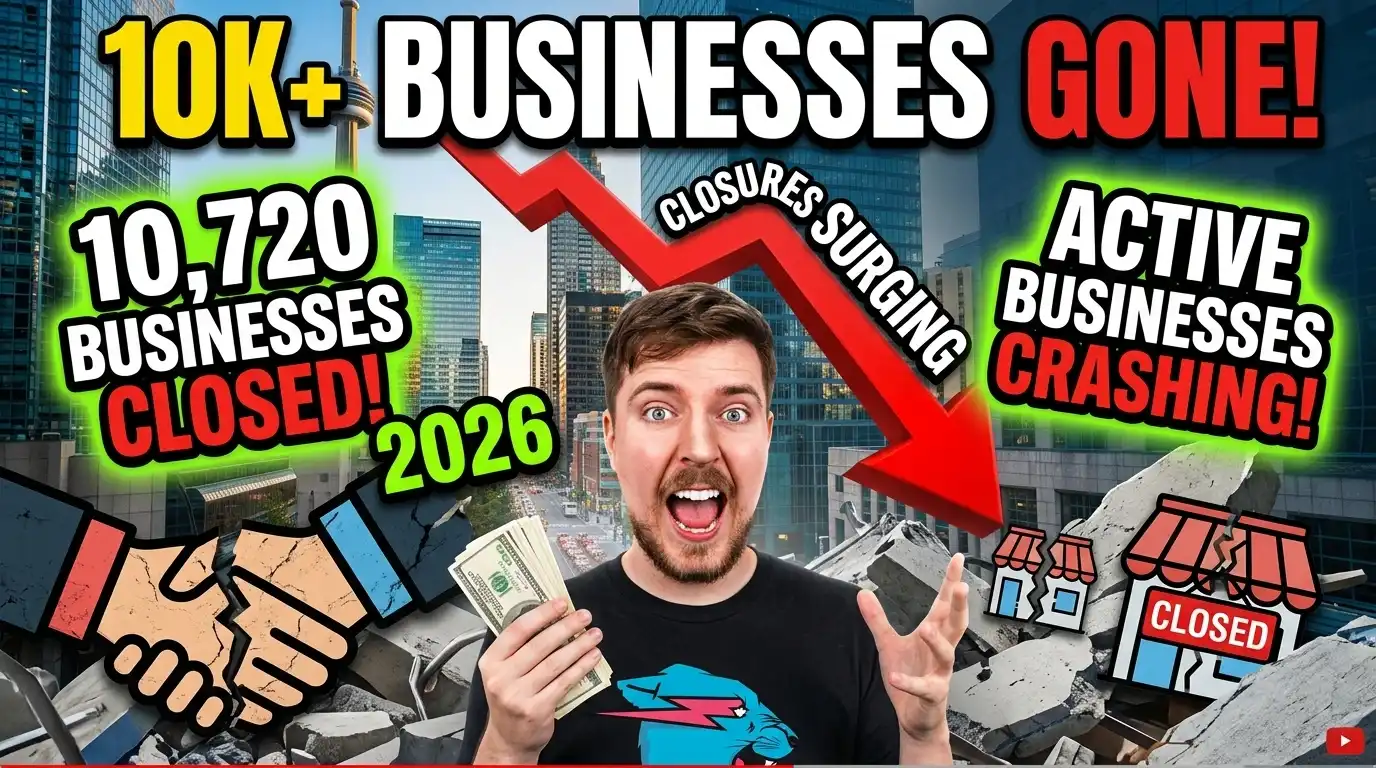
  • Toronto also recorded approximately 10,720 Toronto business closures, the second-highest April total on record, behind only April 2020.
  • Active businesses fell to 187,700 in April 2026, marking a seventh consecutive monthly decline and the lowest level since June 2022.
  • Canada recorded 13,254 insolvency filings in June 2026, up 11.5% year over year and more than double the June 2020 volume.
  • BMO Capital Markets’ per-capita analysis provides one useful perspective. Still, it does not capture who has access to credit, who is filing, or how many businesses and households are struggling without filing.
  • For Toronto business owners, early advice from an accountant and a Licensed Insolvency Trustee can preserve more restructuring options.

Toronto Business: Highlights

Toronto Business: What is Toronto business data telling us?

The Toronto CMA is experiencing both entrepreneurial activity and business contraction at the same time.

According to Better Dwelling’s August 5, 2026 report, approximately 10,870 businesses opened in April 2026. That was the most openings recorded for an April in at least 11 years.

That might sound encouraging. It is.

However, approximately 10,720 businesses also closed during the month. This was the second-highest April closure total on record, surpassed only by April 2020, when pandemic lockdowns disrupted the economy.

The result is a high-churn environment. Toronto business churn means businesses are opening and closing at an unusually rapid rate. Churn can reflect innovation and opportunity, but it can also indicate that owners are entering markets without enough financial cushion to withstand weaker demand, higher operating costs, tighter credit, or delayed customer payments.

The number of active businesses in the Toronto CMA fell to 187,700 in April 2026. This was the seventh consecutive monthly decline. The active Toronto business count was down approximately 0.9% year over year and at its lowest level since June 2022, nearly a four-year low.

This is the real-world business story behind the headline. Toronto is not simply seeing fewer businesses. It is seeing significant movement in both directions, while the total base of active businesses continues to shrink.

Business professionals reviewing positive and negative cash flow Toronto business projections during a restructuring discussion

Toronto Business: Why is BMO’s per-capita argument incomplete?

BMO Capital Markets senior economist Robert Kavcic has offered a perspective that deserves to be understood fairly.

As reported by Better Dwelling on August 13, 2026, Mr. Kavcic acknowledged that consumer insolvencies were near the highest level since the 2009 recession. His argument was that, after adjusting for Canada’s population growth, insolvencies had “basically just normalized back to pre-pandemic conditions.”

He concluded that “the real story is that there is really no story.”

A per-capita measure, a calculation that divides a total by the size of the population, can be useful. It can help compare conditions across different time periods when the population has changed. BMO is right that raw totals do not tell the entire story.

The difficulty is that population growth does not necessarily equal comparable growth in credit exposure.

Better Dwelling reported that approximately 40% of Canada’s population growth over the past five years came from non-permanent residents, including temporary workers and international students. These groups typically have more limited access to unsecured credit, the type of credit that does not require collateral.

That matters because consumer insolvency filers often have an established borrowing history. According to the Office of the Superintendent of Bankruptcy data cited by Better Dwelling, 57% of consumer insolvency filers in 2024 had a bank loan, with a median value of approximately $20,000. In addition, one in five filers had filed before.

This profile does not necessarily match the typical non-permanent resident. Therefore, using total population as the denominator may dilute the apparent rate of insolvency without accurately measuring the financial stress among established borrowers.

The broader lesson is not that per-capita statistics are useless. The lesson is that they must be qualified. A business owner, lender, policymaker, or household needs to know not only how many people live in Canada, but also who is borrowing, who is falling behind, and who is taking formal action.

The June 2026 figures remain significant. Canada recorded 13,254 insolvency filings, an 11.5% increase from June 2025 and more than double the June 2020 volume. Only June 2009 recorded more filings. The trailing 12-month total reached approximately 150,505 filings, up 5.3% year over year.

Those numbers do not prove that every household or Toronto business is in crisis. They do show that financial distress is material and deserves more than a single reassuring ratio.

Toronto Business: What kinds of financial distress are being missed?

Raw insolvency counts and per-capita ratios can both understate the pressure facing the economy because they capture only part of the problem.

There are at least three different forms of financial distress:

Form of distressWhat it isHow it appears in the dataWhy it matters to a business owner
Formal insolvency filingA bankruptcy or proposal filed under Canada’s insolvency legislation. A proposal is a formal arrangement intended to compromise or restructure debts.It appears in official insolvency statistics reported by the OSB.It may provide legal protection and a structured path forward, but waiting too long can reduce available options.
Silent business closureA business stops operating, winds down, or does not renew operations without making a formal insolvency filing.It appears in business-opening and business-closure data, but not necessarily in insolvency statistics.Suppliers, employees, landlords, and customers may still be affected. The owner may also remain personally exposed through guarantees or other obligations.
Household debt stressA household manages financial pressure through arrears, refinancing, payment deferrals, or high-interest credit without filing an insolvency proceeding.It may appear indirectly in arrears or credit data and may not appear in formal insolvency counts for months or years.Household stress can reduce consumer spending, delay business payments, and weaken the customer base on which a business depends.

Insolvency is also a lagging indicator. That means a formal filing often occurs after months or years of financial deterioration. Before filing, a business may have used savings, borrowed from family, increased credit-card balances, refinanced assets, delayed tax remittances, or negotiated informal payment arrangements.

By the time the filing appears in the statistics, the underlying financial pressure may already be much more severe.

This is why a Toronto business owner should not wait for a formal insolvency number, or a missed payment, to decide whether advice is necessary. Early advice is about information, not commitment.

Toronto Business: What does this mean for GTA business owners?

For a GTA business owner, the important question is not whether the economy is technically “normal” on a per-capita basis. The important questions are more immediate:

  • Are sales sufficient to cover operating costs?
  • Are customers paying more slowly?
  • Are supplier terms becoming stricter?
  • Are tax arrears accumulating?
  • Are loan renewals or refinancing becoming more difficult?
  • Have you used personal credit to support the company?
  • Have you signed personal guarantees for corporate borrowing or leases?
  • Is the Toronto business profitable before debt payments, but unable to meet its total obligations?

A company can be viable, meaning it has a fundamentally workable business model, while still being financially unsound because of accumulated debt, temporary cash-flow disruption, or an unsustainable repayment schedule.

That distinction is important. A viable company may have restructuring options that disappear if the owner waits until assets are seized, key employees leave, or critical suppliers stop extending credit.

A corporate restructuring plan may involve negotiating with creditors, changing payment terms, selling non-core assets, reducing expenses, or using a formal proposal. A commercial proposal, sometimes called a Division I Proposal, is a legal process that can allow a financially troubled but viable company to compromise debts and continue operating, subject to the required approvals.

The right solution depends on the company’s structure, assets, liabilities, cash flow, tax position, employees, secured lenders, and personal guarantees. There is no universal answer.

Businessperson protected by a shield representing a Toronto business director protection and early insolvency advice

Toronto Business: What should a worried business owner do now?

If you are concerned about your GTA or City of Toronto business, I recommend taking these steps:

  1. Prepare a current cash-flow forecast.
    List expected sales receipts, payroll, rent, taxes, loan payments, supplier obligations, and other essential expenses. A cash-flow forecast is a practical estimate of money coming in and going out over a defined period.
  2. Speak with your accountant early.
    Your accountant can help identify profitability problems, tax obligations, cash-flow gaps, and whether the business can realistically recover under its current structure.
  3. Consult a Licensed Insolvency Trustee.
    A Licensed Insolvency Trustee can explain formal options, including a proposal or bankruptcy, and help distinguish between corporate obligations and your personal exposure.
  4. Review personal guarantees and director liability.
    If you personally guaranteed a corporate loan, lease, credit facility, or supplier account, the corporation’s financial problems may affect you directly. Certain tax and payroll obligations can also create potential director exposure. Obtain professional advice before transferring assets, repaying selected creditors, or closing the company.
  5. Assess whether the core business is viable.
    Ask whether the company can generate positive operating cash flow after a realistic restructuring of its debt and costs. If the answer is yes, a restructuring proposal may be a lifeline. If not, an orderly wind-down may be more appropriate.
  6. Act before the crisis becomes irreversible.
    Early action does not mean you have decided to file. It means you are preserving information, time, credibility, and options.

We know the tension placed upon Toronto business owners and their families. It is not your hope, commitment, or personal worth that these statistics measure. Financial distress is a business problem that requires a business solution.

For additional context, our discussion of commercial proposals and corporate restructuring explains how a formal proposal may help a viable company continue operations. Our article on personal bankruptcy also discusses why a corporation and its owner must be assessed separately.

Toronto Business: Frequently Asked Questions (FAQ)

Are Toronto’s business closures the same as business insolvencies?

No. A business closure means an operation has stopped or ceased to be active. It does not necessarily mean the business filed a bankruptcy or proposal. Some businesses close quietly, while others may restructure informally or continue under a different ownership or operating model.

Does BMO’s per-capita analysis have value?

Yes. Per-capita analysis can help account for population changes. The concern is relying on it alone. It may not reflect differences in credit access, borrowing behaviour, business exposure, or the number of people experiencing stress without filing.

Why are insolvency filings considered a lagging indicator?

A formal insolvency filing often follows a long period of missed payments, borrowing, refinancing, arrears, or attempts to negotiate with creditors. The filing is usually evidence that earlier coping strategies have stopped working.

Should I wait until my business misses a payment before seeking advice?

No. Early advice is generally more useful because it allows you to understand your options before creditors take enforcement action, suppliers withdraw terms, or essential assets become unavailable. A consultation does not obligate you to file.

Can a business owner be personally responsible for corporate debt?

Possibly. Personal guarantees, the legal structure of the business, and certain tax or payroll obligations can create personal exposure. This is fact-specific, so speak with your accountant and a Licensed Insolvency Trustee before making major financial decisions.

Is a proposal the same as bankruptcy?

No. A proposal is a formal arrangement to compromise or restructure debts, while bankruptcy is a separate legal process. Whether a proposal is appropriate depends on the company’s viability, assets, liabilities, cash flow, and creditor situation.

The message for Toronto and the GTA is balanced but clear: new businesses are still being created, but active businesses are declining, closures are elevated, and formal insolvency filings are rising. That is a story worth paying attention to, not to create panic, but to encourage timely, informed action.

Source note: Statistics and quotations in this article are based on the two Better Dwelling reports published on August 5, 2026, and August 13, 2026. The underlying Statistics Canada and Office of the Superintendent of Bankruptcy data are attributed as reported by Better Dwelling. BMO’s position is attributed to BMO Capital Markets senior economist Robert Kavcic.

Starting Over, Starting Now

Don’t let financial uncertainty dictate your future. If you or your business is struggling with debt, losing sleep, or facing legal action, contact Ira Smith Trustee & Receiver Inc. today.

We offer a free, confidential consultation to discuss your situation, explain your options in plain language, and help you develop a clear, actionable plan. Our team of Licensed Insolvency Trustees is dedicated to providing the compassionate, professional support you need to regain control and achieve a debt-free life.

Take the first step towards a brighter financial future; call us now.

Ira Smith Trustee & Receiver Inc. is licensed by the Office of the Superintendent of Bankruptcy. Ira and Brandon Smith are members of the Canadian Association of Insolvency and Restructuring Professionals.

, , , , , , , , , , , , , , , , , , , , , , , , , , –

Disclaimer: This analysis is for educational purposes only and is based on the cited sources and professional expertise as a Licensed Insolvency Trustee. The information provided does not constitute legal or financial advice for your specific circumstances. Every situation is unique; the outcomes discussed may not apply to your particular case. Please contact Ira Smith Trustee & Receiver Inc. to discuss your specific needs.

About the Author:

Ira Smith is President at Ira Smith Trustee & Receiver Inc. and a Licensed Insolvency Trustee serving clients across Ontario. His experience includes consumer insolvency and complex court-ordered receivership and corporate bankruptcy administration, giving him practical insight into navigating challenging financial situations to achieve optimal outcomes for businesses, creditors, and professionals. Ira stays current with landmark developments in Canadian insolvency law, ensuring his clients benefit from a cutting-edge understanding of their rights and options.Image of a worried business owner as Toronto business closures are increasing in 2026

#TorontoBusiness #GTABusiness #BusinessClosures #CorporateRestructuring #BusinessInsolvency #DebtRestructuring #CommercialProposal #DivisionIProposal #BusinessBankruptcy #FinancialDistress #LicensedInsolvencyTrustee #StartingOverStartingNow

Categories
Brandon Blog Post

BANKRUPTCY OF THE COMPANY: OUR ENTREPRENEUR’S COMPREHENSIVE GUIDE TO REBUILDING AFTER BANKRUPTCY

Bankruptcy of the Company: Introduction

Imagine being at the helm of a thriving business, only to watch the bankruptcy of the company. As an insolvency professional, a Canadian licensed insolvency trustee (formerly called a trustee in bankruptcy), I have witnessed the rollercoaster of emotions that come with financial failure, often paired with the entrepreneur’s sense of guilt and loss that can feel insurmountable.

Recovering from the bankruptcy of the company is challenging but possible. By understanding the impacts, assessing finances, creating a strong recovery plan, and rebuilding credit and reputation, business owners can rise again with resilience and prepare for future growth.

This is not the end. It’s a transformative stage that opens doors to rethinking, reconstructing, and revitalizing your future. Let’s explore the roadmap to recovery together, filled with actionable advice and insightful anecdotes.

Bankruptcy of the Company: Understanding Business Bankruptcy

Canadian law offers two primary types of bankruptcy for addressing the insolvent company corporate bankruptcy process:

Liquidation

Liquidation is the process of closing a business and selling its assets to generate funds. The proceeds from these sales are then used to pay off creditors. While it represents the conclusion of the company’s operations, understanding this process can help you navigate the winding down of a business effectively.

Reorganization

This initiative aims to thoughtfully reshape the company’s financial and operational structures, ensuring its ongoing success and stability. Reorganization presents a valuable opportunity for businesses facing financial difficulties, allowing them to effectively address and potentially overcome their economic challenges. Typically, this process is carried out through a commercial proposal under the Bankruptcy and Insolvency Act. For larger corporations with debts of at least $5 million, reorganization can take place under the Companies’ Creditors Arrangement Act.

Let’s take a closer look at each of these options to better understand how they can help.

Liquidation under bankruptcy of the company

Liquidation is the process of winding up a company that can no longer meet its financial obligations. It follows a structured corporate bankruptcy process outlined in the BIA, which bears similarities to Chapter 7 of the US Bankruptcy Code. Corporate bankruptcy is also called commercial bankruptcy.

Here’s a step-by-step breakdown of liquidation:

  • The decision to file:
  • The board of directors makes the difficult decision to file for bankruptcy and appoint a person to sign the official bankruptcy documents.
  • Assignment in Bankruptcy: A director, or the sole director, signs the required bankruptcy documents to make the company’s assignment into bankruptcy.
  • Appointment of the Licensed Insolvency Trustee: An insolvency trustee is appointed to oversee the process.
  • Asset Transfer: All corporate assets are transferred to the Licensed Insolvency Trustee, which then manages and sells them.
  • Distribution to Creditors: Proceeds from asset sales, after the cost of the corp bankruptcy proceedings, are distributed to creditors based on a predetermined legal priority.
  • Secured creditors, such as lenders with liens on company assets, generally have priority over unsecured creditors.
  • The company ceases to operate: Once assets are distributed, although the bankrupt corporation is not legally dissolved, it no longer operates.

Depending on whether the company is federally or provincially incorporated, eventually, the appropriate government authority will cancel the company’s charter due to the bankruptcy of the company.

Liquidation can be a complex process, but it offers a clear and organized approach to closing a company that is experiencing significant financial challenges. This process ensures that assets are distributed fairly among creditors, helping to bring some resolution to a difficult situation. If you find yourself in this position, rest assured that there are steps in place to manage the process as smoothly as possible.

“The closure of a business doesn’t just impact balance sheets, it impacts lives.”

A picture of a jigsaw puzzle with some pieces missing and a picture of a businessman over the puzzle to reporesent the bankruptcy of his company and his putting the pieces back together to start over.
bankruptcy of the company

Reasons for Bankruptcy of the Company

Financial Challenges

  • Cash Flow Management: Many companies struggle to manage their cash flow effectively, leading to a buildup of debt and ultimately, the bankruptcy of the company. This can be due to a variety of factors, including poor budgeting, delayed payments from customers, or over-reliance on credit.
  • High Debt Levels: Companies that take on too much debt can quickly become overwhelmed by their financial obligations. This can be particularly true for companies that have taken on debt to finance expansion or acquisitions.
  • Inefficient Use of Assets: Companies that fail to optimize their use of assets, such as inventory or equipment, can struggle to generate sufficient revenue to meet their financial obligations.
  • Poor Financial Planning: Companies that fail to plan for the future or make poor financial decisions can quickly find themselves in a difficult financial situation.

Operational Issues

  • Inefficient Operations: Companies that fail to streamline their operations or make inefficient use of resources can struggle to remain competitive and profitable.
  • Lack of Scalability: Companies that may not be fully attuned to shifts in the market or industry can find it difficult to scale their operations effectively. By staying adaptable and responsive to changes, businesses can better meet growing demand and seize new growth opportunities.
  • Poor Management: Companies that are poorly managed or lack effective leadership can struggle to make sound business decisions and ultimately, may force the bankruptcy of the company.
  • Failure to Innovate: Companies that fail to innovate or adapt to changes in the market can quickly become obsolete and struggle to remain competitive.

External Factors

  • Economic Downturn: Companies that operate in industries that are heavily reliant on consumer spending or are sensitive to economic fluctuations can be particularly vulnerable to bankruptcy during economic downturns.
  • Regulatory Changes: Companies facing evolving regulations or laws may find it challenging to adapt. However, with the right strategies and support, they can navigate these changes effectively and avoid potential difficulties. It’s important to stay informed and seek assistance to thrive in a dynamic regulatory environment.
  • Competition: Companies that operate in highly competitive industries can struggle to remain profitable and may force the bankruptcy of the company if they are unable to differentiate themselves or compete effectively.
  • Natural Disasters: Companies that are affected by natural disasters, such as hurricanes or wildfires, can struggle to recover and may ultimately be forced into bankruptcy.

Understanding the Ripple Effects of Bankruptcy

The bankruptcy of the company can turn your business life upside down. But understanding its effects can help you navigate this rough terrain. What are the immediate and long-term consequences?

Understanding The Immediate Effects on Your Credit Score

It’s important to know that your business’s credit score is separate from your credit score. The company is considered a distinct legal entity, meaning that, generally, its financial activities do not directly impact your credit score. However, as an entrepreneur, if you’ve personally guaranteed any bank loans or lines of credit for your business, this could affect you personally. If the company is unable to repay those loans, the bank will look to you to cover any outstanding amounts.

Additionally, as a director of the company, you hold responsibility for any unremitted employee source deductions and unremitted HST owed to the Canada Revenue Agency. Being aware of these obligations can help you manage your financial responsibilities more effectively and protect your credit standing. If you have questions or need further clarification, don’t hesitate to reach out for assistance.

So although the bankruptcy of the company does not directly affect your personal credit score, depending on what your financial position is now and how it is affected by the bankruptcy of the company, it could very well have a negative impact on your credit score.

The bankruptcy of the company gets reported to the two Canadian credit bureaus, TransUnion and Equifax. Depending on how your financial situation is affected by the bankruptcy of the company, your credit score may then suffer. It usually suffers in two ways:

  • Loss of borrowing capacity: You might find it challenging to get credit lines or loans.
  • Higher interest rates: If you do get offers, they may come with steep rates.

Loss of Trust Among Stakeholders

Trust is hard to regain once lost. After filing for corporate bankruptcy, if you wish to start up a new business, suppliers may hesitate to extend credit, leaving you in a bind. Customers might question your reliability, and partnerships can falter.

Legal Limitations Post-Bankruptcy

Additionally, there are legal limitations that follow the bankruptcy of the company. If you are applying for a job or credit for a new business, there could be a question to answer like “Have you ever been a director of a company that filed for bankruptcy”. Your answer could include restrictions on the types of businesses you can operate or positions you can hold.

Understanding these ripple effects is crucial. As financial advisor Jamie Carter wisely said,

“Bankruptcy can be a valuable lesson if you are willing to learn from it and adapt.”

Remember, the impacts extend beyond finances to reputational damage and legal constraints. You can emerge stronger if you take the time to understand these dynamics.

A picture of a jigsaw puzzle with some pieces missing and a picture of a businessman over the puzzle to reporesent the bankruptcy of his company and his putting the pieces back together to start over.
bankruptcy of the company

Reflecting on Financial Health Post-Bankruptcy

Understanding Your Financial Landscape

Recovering from the bankruptcy of the company can feel overwhelming. But remember, it all starts with understanding your financial situation. You can’t chart a path forward if you don’t know where you stand. So, how do you begin?

1. Gather Your Financial Documents

  • Start by collecting all of your financial statements and paperwork.
  • Make sure to include documents that reflect your current cash flow, outstanding debts, and assets.
  • Having this information organized will give you a clear understanding of your current financial position, making it easier to assess your situation effectively.

2. Create a List of Assets and Debts

Take the time to write down what you own and what you owe. Having a clear picture of your financial reality is crucial.

  • Total Debts: $200,000
  • Remaining Assets: $50,000

This exercise can feel daunting. But it’s necessary for redefining your reality. Consider this: how can you build a new foundation without understanding the ground underneath? Remember that you may have given personal guarantees to a lender to the company.

3. Set Realistic Financial Goals

Having a goal gives you direction. Break your recovery journey into achievable steps:

  1. Short-term goals: Focus on income generation, budget management and expense reduction.
  2. Long-term goals: Aim for debt reduction and credit score improvement.

Your goals should be tangible and reflect your new financial reality. It’s about letting clarity drive your recovery.

Using Financial Statements as a Roadmap

Your financial statements will serve as a roadmap throughout your recovery journey. They provide essential guidance when making decisions. For example, if you see a consistent cash flow issue, it might be time to revisit your business strategy.

Visualizing Your Financial Position

Understanding your debts versus assets is vital. The chart below visualizes your financial health:

Financial Element

Amount ($)

Total Debts

$200,000

Remaining Assets

$50,000

Preparation involves a meticulous assessment of your financial landscape. It’s about clarity, honesty, and setting yourself up for real change.

Crafting a Proactive Recovery Blueprint

Recovery is not merely about surviving; it’s about thriving. You can turn challenges into opportunities with the right proactive plan. Let’s break down some essential steps.

1. Establishing a Comprehensive Budget

Creating a detailed budget is crucial. It serves as your roadmap. Think of it as a financial GPS that helps guide your decisions.

  • Forecasting Cash Flows: This allows you to anticipate income and expenses. By understanding your cash flow, you can eliminate any surprises. Wouldn’t it be great to know your financial future better?
  • Identifying Fixed and Variable Costs: Understanding the difference between fixed and variable costs is essential for effective planning. Fixed costs, such as rent and salaries, remain constant regardless of production levels, while variable costs fluctuate based on your business activity.
  • By recognizing these distinctions, you can make more informed decisions and enhance your financial strategy.

2. Exploring Cost-Cutting Avenues

The goal here is to reduce costs without sacrificing quality. It’s a delicate balance.

  • Assess your needs and look for ways to get better deals.
  • Cut unnecessary expenditures.

How much could you save by embracing smarter practices?

3. Implementing Financial Management Systems

Robust financial management systems help ensure future stability. They make monitoring and adjusting your budget easier. They are available to everyone at a reasonable cost.

  • Adopt accounting software: This can automate processes and save time.
  • Conduct regular financial reviews: Staying updated allows for timely adjustments.

“Failing to prepare is preparing to fail.” – John C. Maxwell

These strategies don’t guarantee instant success, but they set a solid foundation for recovery. It’s about making informed decisions today to secure a better tomorrow.

A picture of a jigsaw puzzle with some pieces missing and a picture of a businessman over the puzzle to reporesent the bankruptcy of his company and his putting the pieces back together to start over.
bankruptcy of the company

Rebuilding Business Credit: It’s a Marathon, Not a Sprint

Getting into a new business requires building your business credit and access to financing after hardship is a journey. It’s a marathon, not a sprint. Why rush? Quick fixes can lead to long-term pain. Instead, focus on long-term strategies. Patience is your best friend here.

1. Opening New Credit Lines Responsibly

Start slow. Open new credit lines when you can manage them. This is your stepping stone. Think of it like planting seeds. You need to nurture them to grow. Responsible borrowing can improve your credit utilization ratio. This, in turn, boosts your credit score.

  • Choose accounts that report to credit bureaus.
  • Start with secured credit cards or smaller loans.

2. Using Secured Credit Cards

Secured credit cards are excellent tools for growth. They require a deposit, but they report your payments to credit bureaus. This means you’re building a positive credit history, one payment at a time. It’s about creating a solid foundation for your credit profile.

3. The Importance of Timely Payments

Let’s take a moment to discuss the significance of making payments on time. Your financial reputation is important, and timely payments play a crucial role in demonstrating your responsibility and stability. Think of it as essential for maintaining a healthy credit score – just like breathing is for your well-being.

If you happen to miss a payment, it can negatively impact your score, so it’s important to stay consistent. By prioritizing timely payments, you’re setting yourself up for financial success!

“Rebuilding credit will require discipline and strategy but can lead to an empowered financial future if handled well.”

4. Learning from Others

Many businesses have successfully navigated this path. Their stories are inspiring. They show that it’s possible to come back stronger. Embrace the lessons from those who have rebuilt their credit. Their experiences can guide you.

Remember, this isn’t just about fixing credit. It’s about creating a healthier future for your business. Stay focused on these long-term strategies to ensure lasting impact and success.

Repairing Your Company’s Image: The Reputation Rehabilitation

Repairing Trust through Transparent Communication

After a reputation setback, you might wonder how to regain trust. The answer lies in transparent communication. Regularly update your stakeholders about your journey. Share not just successes but also hurdles. This honesty shows integrity.

Consider this: Wouldn’t it be easier to trust someone who is open about their difficulties? When your audience perceives you as authentic and genuine, it becomes much simpler to reconnect with them.

Leveraging Digital Platforms for Positive Narratives

In today’s connected world, digital platforms play a crucial role. Use social media and your company website to share uplifting stories. Highlight how you’re improving and what your team is excited about.

  • Share success stories from employees or customers.
  • Post updates on community involvement and corporate social responsibility initiatives.
  • Engage with your audience through polls or Q&A sessions.

“Your brand is a story unfolding across all customer touchpoints.” – Jonah Sachs

As this suggests, every interaction is an opportunity to shape your narrative.

Documenting Changes to Restore Confidence

Last but not least, it’s vital to document and showcase changes. This can be anything from new management practices to enhanced product quality. Displaying tangible improvements can effectively demonstrate your commitment to recovery.

Regular updates not only remind stakeholders of your progress but also instill confidence. Keep in mind, that restoring your reputation is a journey, not a sprint.

So, how ready are you to engage fully in your reputation rehabilitation? Embracing these strategies can set your business on the right path.

A picture of a jigsaw puzzle with some pieces missing and a picture of a businessman over the puzzle to reporesent the bankruptcy of his company and his putting the pieces back together to start over.
bankruptcy of the company

Innovating Your Way Back to Success: Growth Beyond Recovery

With a foundation grounded in recovery, you’re now in a position to think bigger. The journey ahead is about more than just bouncing back; it’s about redefining your business potential. Let’s explore some key strategies you can adopt.

1. Identifying New Markets and Opportunities for Diversification

After any setback, understanding where to pivot is essential. Ask yourself: Are there untapped markets waiting for your offerings? Consider the possibilities:

  • Geographic expansion: Could your product resonate in a different region?
  • New demographics: What about targeting younger or older audiences?
  • Product diversification: Have you considered exploring complementary products or services that could enhance your offerings? This could be a great way to provide more value to your customers!

2. Investing in Tech and Innovative Practices

In today’s fast-paced environment, standing still is not an option. Innovation is power. Investing in technology can provide you with a competitive edge. For instance:

  • Automation: Streamline processes to save time and costs.
  • Data analytics: Leverage data to make informed decisions.
  • Digital marketing: Boost your online presence to engage and attract new customers effectively.

3. Building Alliances and Partnerships

Alone, you might find challenges hard to overcome. But together? You can achieve new heights. Consider forming strategic alliances. It could mean collaborating with other businesses to:

  • Share resources, which can lower costs.
  • Access new audiences through shared marketing efforts.
  • Mutual growth leads to stronger foundations for both parties.

“In today’s interconnected world, collaboration is the new competition.”

The Importance of Innovation

Absolutely! It’s important to recognize that innovation goes beyond just technology – it’s fundamentally about our mindset. By adopting an innovative approach during recovery phases, we can create opportunities for sustainable growth. Embracing this perspective can truly make a difference!

As you explore these avenues for growth, keep a sharp focus on your core mission and values. This will reignite your passion and drive for business.

Measuring Progress and Celebrating Wins Along Your Journey

Recovery is a journey filled with small victories. To make your path clear and effective, you need to start by establishing Key Performance Indicators (KPIs). These are measurable values that demonstrate how effectively you’re achieving your recovery goals. Think of them as signposts that guide you along the way.

Establishing KPIs to Monitor Your Recovery Journey

Choose KPIs that resonate with your specific recovery objectives. Here are a few ideas:

  • Credit score improvements
  • Reduction in outstanding debts
  • Revenue growth
  • Customer retention rates

Why is it important to track these KPIs? Regular updates and adjustments to your recovery strategy are essential. When you notice patterns in your progress, you can adapt your plan accordingly. Are you hitting targets? Celebrate that achievement! Are numbers not improving? Analyze what might need to change.

Acknowledging Small Milestones

It’s crucial to acknowledge and celebrate small milestones. Each small win is a step forward. Taking a moment to recognize these successes not only boosts morale but also motivates you to keep pushing onward. Think about what you have accomplished—each step is proof of your progress.

Incorporating these practices—setting KPIs, adjusting strategies as necessary, and celebrating your successes—can transform your recovery journey. By implementing effective tracking and celebrating your achievements, you can maintain a positive outlook and remain committed to your goals.

“Documenting progress not only keeps you accountable but also energizes your journey forward.”

Remember, recovery from the bankruptcy of the company is not just about bouncing back. It’s about moving forward stronger and more resilient than before. Embrace the journey, celebrate each victory, and you’ll find the path to success becomes much clearer. Keep pushing your limits, and don’t shy away from recognizing the efforts that take you further along your journey.

A picture of a jigsaw puzzle with some pieces missing and a picture of a businessman over the puzzle to reporesent the bankruptcy of his company and his putting the pieces back together to start over.
bankruptcy of the company

Bankruptcy of the Company FAQ

1. What happens when my company goes bankrupt?

In Canada, the bankruptcy of the company can be taken down one of two main paths: liquidation and reorganization.

  • Liquidation involves closing the business, selling its assets, and using the proceeds to pay off creditors. It signifies the end of the company’s operations.
  • Reorganization, typically through a proposal under the Bankruptcy and Insolvency Act, aims to restructure the company’s finances and operations to enable its continued existence.

The specific process and outcome will depend on the chosen path and the company’s individual circumstances.

2. How does company bankruptcy affect my personal credit score?

Generally, the bankruptcy of the company doesn’t directly impact your personal credit score. Companies are considered separate legal entities. However, there are exceptions:

  • Personal Guarantees: If you personally guaranteed any of the company’s debts, you become liable for those debts if the company can’t pay. This can negatively affect your credit score.
  • Director Liabilities: As a director, you are responsible for unremitted employee source deductions and HST owed to the CRA. Failure to remit these could impact your creditworthiness.

While the bankruptcy of the company isn’t a direct hit, the resulting financial strain from personal guarantees or liabilities can indirectly affect your creditworthiness.

3. What are the immediate consequences of bankruptcy beyond finances?

The impact of the bankruptcy of the company extends beyond just the financial aspect. You might experience:

  • Loss of Trust: Stakeholders like suppliers, customers, and potential partners might hesitate to work with you due to the bankruptcy of the company.
  • Reputational Damage: The bankruptcy of the company becomes a public record, potentially affecting your future business prospects.
  • Legal Limitations: You might face restrictions on the types of businesses you can operate or positions you can hold.

These consequences highlight that bankruptcy’s impact can be far-reaching and affect your ability to rebuild.

4. How can I understand my financial situation after company bankruptcy?

Start by:

  1. Gathering Financial Documents: Collect all personal and business financial statements, including cash flow statements, debt records, and asset documentation.
  2. Listing Assets and Debts: Create a comprehensive list of what you own and what you owe, including any personal guarantees for company debts.
  3. Setting Realistic Goals: Define achievable short-term goals (income generation, budgeting) and long-term goals (debt reduction, credit score improvement).

This process helps you understand your current financial position and create a roadmap for recovery.

5. How do I rebuild business credit after bankruptcy?

Rebuilding business credit takes time and strategic effort. Focus on:

  1. Responsible New Credit Lines: Start small with secured credit cards or loans that report to credit bureaus, gradually building a positive credit history.
  2. Timely Payments: Consistently making payments on time demonstrates financial responsibility and is crucial for improving your credit score.
  3. Learning from Others: Seek advice and inspiration from other businesses that successfully rebuilt their credit after bankruptcy.

Remember, patience and responsible financial management are key to rebuilding business credit.

6. How can I repair my company’s reputation after bankruptcy?

Focus on:

  1. Transparent Communication: Openly communicate with stakeholders about the bankruptcy of the company, your recovery plan, and progress made. This honesty builds trust.
  2. Leveraging Digital Platforms: Utilize your website and social media to share positive stories, highlight improvements, and engage with your audience.
  3. Documenting Changes: Showcase tangible improvements in your operations, management practices, and product quality to demonstrate your commitment to recovery.

By actively managing the narrative and showcasing positive change, you can gradually rebuild trust and restore your company’s reputation.

7. What are some strategies for growth after recovering from bankruptcy?

Consider these strategies:

  1. Identifying New Markets: Explore untapped markets by expanding geographically, targeting new demographics, or diversifying your product/service offerings.
  2. Investing in Innovation: Embrace technology and innovative practices through automation, data analytics, and digital marketing to gain a competitive edge.
  3. Building Partnerships: Form strategic alliances with other businesses to share resources, access new audiences, and achieve mutual growth.

Growth after the bankruptcy of the company involves strategic planning and proactive efforts to explore new opportunities and redefine your business potential.

8. How do I measure my progress and stay motivated during recovery?

Utilize these methods:

  1. Establish KPIs: Define key performance indicators (KPIs) that align with your recovery goals, such as credit score improvement, debt reduction, revenue growth, etc.
  2. Track and Adjust: Regularly monitor your KPIs and adjust your recovery strategy as needed, celebrating successes and addressing areas requiring improvement.
  3. Acknowledge Milestones: Celebrate even small wins and acknowledge your progress to maintain motivation and a positive outlook throughout the recovery journey.

By actively tracking your progress and celebrating achievements, you can stay focused and committed to rebuilding your business stronger than before.

Bankruptcy of the Company: Conclusion

I hope you enjoyed this bankruptcy of the company Brandon’s Blog. Do you or your company have too much debt? Are you or your company in need of financial restructuring due to distressed real estate or other reasons? The financial restructuring process is complex. The Ira Smith Team understands how to do a complex restructuring. However, more importantly, we understand the needs of the entrepreneur or someone with too much personal debt.

You are worried because you are facing significant financial challenges. It is not your fault that you are in this situation. You have been only shown the old ways that do not work anymore. The Ira Smith Team uses new modern ways to get you out of your debt troubles while avoiding the bankruptcy process. We can get you debt relief freedom using processes that are a bankruptcy alternative.

The stress placed upon you is huge. We understand your pain points. We look at your entire situation and devise a strategy that is as unique as you and your problems; financial and emotional. The way we take the load off of your shoulders and devise a plan, we know that we can help you.

We know that people facing financial problems need a realistic lifeline. There is no “one solution fits all” approach with the Ira Smith Team.

That is why we can develop a restructuring process as unique as the financial problems and pain you are facing. If any of this sounds familiar to you and you are serious about finding a solution, contact the Ira Smith Trustee & Receiver Inc. team today.

Call us now for a free consultation. We will get you or your company back on the road to healthy stress-free operations and recover from the pain points in your life, Starting Over, Starting Now.

The information provided in this Brandon’s Blog is intended for educational purposes only. It is not intended to constitute legal, financial, or professional advice. Readers are encouraged to seek professional advice regarding their specific situations. The content of this Brandon’s Blog should not be relied upon as a substitute for professional guidance or consultation. The author, Ira Smith Trustee & Receiver Inc. as well as any contributors to this Brandon’s Blog, do not assume any liability for any loss or damage resulting from reliance on the information provided herein.

A picture of a jigsaw puzzle with some pieces missing and a picture of a businessman over the puzzle to reporesent the bankruptcy of his company and his putting the pieces back together to start over.
bankruptcy of the company
Categories
Brandon Blog Post

COMMERCIAL PROPOSAL – CORPORATE RESTRUCTURING PART 3

bankrupt, commercial proposal, corporate restructuring, division 1 proposal, liquidator, proposal, restructure, trustee, Company bankruptcyIn last week’s blog we discussed the stakeholders and key players and their roles in a corporate restructuring. This week we’ll be addressing the Division 1 Proposal, commonly referred to as a Commercial Proposal or the Proposal.

What is a Division 1 Proposal? The Division 1 Proposal is a legal document typically drawn up by either the Trustee or the company’s lawyer. It is essentially a compromise between a commercial debtor and his/her creditors that, if approved by the creditors and the Court, becomes legally binding. Proposals help resolve the financial difficulties of a business and offer creditors more than they could expect to receive in a bankruptcy. The agreed upon Proposal is a part of the overall restructuring plan, which is a business plan.

When is a Commercial Proposal, otherwise known as a Division 1 Proposal used? A Division 1 Proposal can be used if a business is viable but financially unsound. The general principal we use in determining if a business is a good candidate for a Proposal is that they have to have a core business that is viable and once they shed themselves of most of their debt and develop a business plan and model that will be profitable they can use a Proposal as a tool to continue operations and settle their unsecured debt for less than the full amount of the unsecured debt.

What are the advantages of a Division 1 Proposal? After a debtor files a Division 1 Proposal or a notice of intention to file a Proposal, creditors may not begin or continue any legal action. The debtor remains in possession and control of their assets and company management continues to make all business decisions. Restoring the financial condition of a business with a Proposal may save the business, preserve jobs, give creditors the best return, provide a continuing source of business for existing and new creditors, and enable the owners and/or shareholders to retain an interest in the business.

If your company is experiencing severe financial difficulties, avoid a Company bankruptcy. Contact Ira Smith Trustee & Receiver Inc. to discuss whether a Division 1 Proposal is the right strategy for you. Starting Over, Starting Now we can help to restructure and turnaround your company, restoring it to financial health.

Call a Trustee Now!