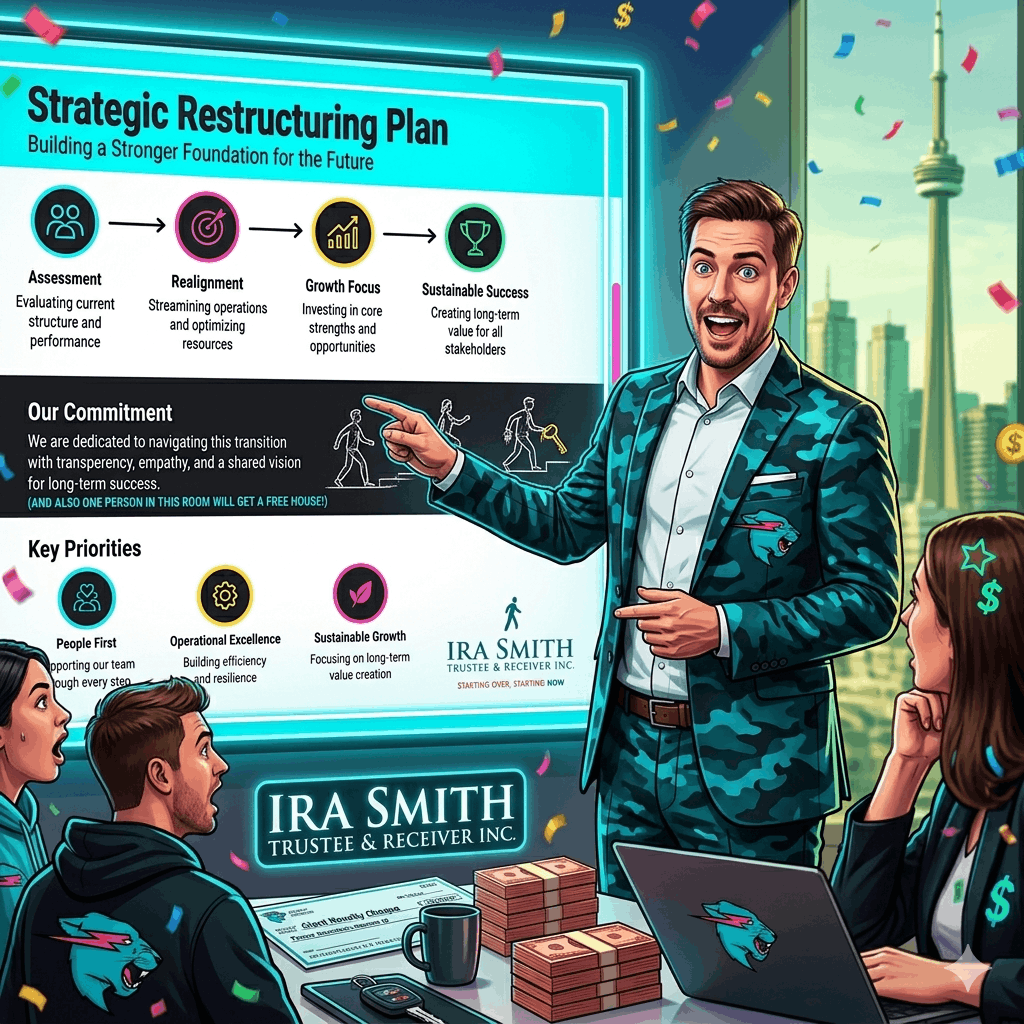
I hope you and your family are staying safe and well. At Ira Smith Trustee & Receiver Inc., we understand that the current economic climate in the Greater Toronto Area (GTA) has placed an unprecedented burden on the GTA general contractor community and everyone else in or relying upon the construction industry. If your company is feeling the weight of mounting debt or the pressure of a stalled project, please know that you are not alone, and it is not your fault. We are here to help you navigate these choppy waters with clarity and compassion.
GTA General Contractor Key Takeaways
- Insolvency is Not Always the End: Modern insolvency tools like Division I Proposals allows a GTA general contractor and construction firms to restructure and continue operating.
- GTA Trends are High: Construction insolvencies in Ontario are at multi-decade highs in 2026, primarily due to cost inflation and high interest rates.
- Personal Risk is Real: Business owners must be wary of personal guarantees and director liabilities for unpaid taxes or wages.
- Early Action is Critical: Engaging a Licensed Insolvency Trustee (LIT) early provides more options to save the business and protect personal assets.
- Restructuring is a Fresh Start: Over 37% of insolvent builders successfully use legal mechanisms to re-enter the market and start over.
GTA General Contractor Highlights
- The Current State of Construction in the GTA
- 1. Liquidation vs. Restructuring: Know the Difference
- 2. The “Triple Threat” Facing SMEs in 2026
- 3. Understanding Director Liabilities
- 4. The Division I Proposal: A Lifeline for Your Business
- 5. The Intersection of the Construction Act and Bankruptcy
- 6. The Hidden Danger of Personal Guarantees
- 7. Why Timing is Everything
- 8. Protecting Your Reputation with Subcontractors
- 9. Why a Licensed Insolvency Trustee is Your Best Ally
- 10. Embracing “Starting Over, Starting Now”
- Insolvency Options Comparison Table
- Frequently Asked Questions (FAQ)
GTA General Contractor: The Current State of Construction in the GTA
The GTA construction sector is currently navigating a perfect storm. As we move through 2026, data suggests that over 1,500 construction firms in our region are facing some form of insolvency. This is a staggering increase from previous years, driven by the collision of fixed-price contracts and skyrocketing material and labour costs.
For the small business owner or the independent GTA general contractor, this isn’t just about numbers on a balance sheet; it’s about your livelihood, your employees, and your peace of mind. We see the tension put upon you, and our goal is to transform that catastrophe into a manageable plan.
1. Liquidation vs. Restructuring: Know the Difference
When people hear the word “insolvency,” they often think of liquidation, the process of selling off all assets to pay creditors and closing the doors forever. However, for many GTA firms, the better path is restructuring. This allows you to renegotiate what you owe, keep your equipment, and finish your current projects. Assets used to generate income in this way are often part of a plan to satisfy creditors while keeping your business alive.
2. The “Triple Threat” Facing SMEs in 2026
Small and medium-sized enterprises (SMEs) are currently facing three major pressures:
- Price Inflation: Wages and material costs have risen faster than most contracts anticipated.
- Supply-Chain Volatility: Delays in materials cause project slippage, leading to penalty clauses.
- High Interest Rates: The cost of carrying debt has made traditional bridging finance nearly impossible to sustain.
3. Understanding Director Liabilities
As a director of a construction corporation, you may be personally liable for certain debts, even if the company is limited. These are known as director liabilities. Specifically, the Canada Revenue Agency (CRA) can come after your personal assets for unpaid HST and source deductions (payroll taxes). Furthermore, unpaid WSIB premiums and employee wages can also become personal director obligations. This is why professional financial restructuring services are vital to protect your personal home and savings.

4. The Division I Proposal: A Lifeline for Your Business
A Division I Proposal is a formal procedure under the Bankruptcy and Insolvency Act (BIA). It allows your business to make a formal offer to your creditors to pay back a percentage of what is owed over time. If they accept, you avoid bankruptcy entirely.
The beauty of a Proposal is the Stay of Proceedings. This is a legal “pause button” that stops all lawsuits, garnishments, and collection efforts the moment you file, giving you the breathing room to stabilize your cash flow.
5. The Intersection of the Construction Act and Bankruptcy
In Ontario, construction projects are governed by the Construction Act. This includes complex rules regarding statutory trusts, money received for a project must be used to pay the trades and suppliers on that project first. If you use “Project A” money to pay “Project B” debts, you could face serious legal repercussions.
When project funds are released, they need to flow straight down to the people actually performing the work. This isn’t just a suggestion; it’s the bedrock of a functional project. Redirecting that cash to cover general overhead or to prop up unrelated jobs before the trades are paid is more than just a financial hiccup—it’s a serious breach of trust. Ensuring the money reaches those at the bottom of the chain first is what keeps the industry moving and relationships intact.
We help you navigate how these trust fund obligations interact with federal insolvency laws to keep you in compliance.
6. The Hidden Danger of Personal Guarantees
Many GTA general contractors have signed personal guarantees for their business lines of credit or equipment leases. When the business fails to pay, the lender will look to you personally. Understanding which of your debts are “personally guaranteed” is the first step in creating a comprehensive personal bankruptcy or consumer proposal plan if the business cannot be saved.
7. Why Timing is Everything
We often see business owners wait until their bank accounts are empty and the CRA has frozen their assets before seeking help. By then, your options are limited. If you act while you still have some liquidity (cash or accessible credit), you have a much higher chance of a successful restructuring. Early intervention is the difference between a controlled “Starting Over” and a chaotic collapse.
8. Protecting Your Reputation with Subcontractors
The GTA general contractor and the broader GTA construction community are tight-knit. Your reputation with subcontractors and suppliers is your most valuable asset. A formal restructuring plan often provides a better outcome for your sub-trades than a straight bankruptcy would. By being proactive, you show your partners that you are committed to finding the best possible resolution for everyone involved.
9. Why a Licensed Insolvency Trustee is Your Best Ally
You might speak with your lawyer or your general accountant, and while they are valuable, only a LIT is authorized by the federal government to administer Proposals and Bankruptcies. We are the only professionals who can grant you the legal protection of a Stay of Proceedings. We act as a “supportive guide” to ensure the process is fair to both you and your creditors.
10. Embracing “Starting Over, Starting Now”
Insolvency is not a moral failure; it is a legal tool designed to fix an impossible financial situation. Our philosophy, “Starting Over, Starting Now,” focuses on the future. We help you strip away the stress so you can focus on what you do best: building the GTA.

GTA General Contractor Insolvency Options Comparison Table
The following table outlines the primary insolvency solutions for GTA construction firms and individuals.
| Feature | Division I Proposal | CCAA Restructuring | Corporate Bankruptcy |
|---|---|---|---|
| Best For | SMEs and Individuals | Large corporations (>$5M debt) | Businesses closing permanently |
| Primary Goal | Save the business; settle debt | Complex restructuring/sale | Orderly liquidation of assets |
| Stay of Proceedings | Immediate and Automatic | Court-ordered | Immediate and Automatic |
| Control | Owner retains control | Owner/Monitor oversight | Trustee takes control |
| Creditor Approval | Required (50% +1 by #; 66.7% by $) | Required (various classes) | Not required for liquidation |
GTA General Contractor Frequently Asked Questions (FAQ)
Can I keep my tools and equipment if my construction company goes bankrupt?
If the equipment is owned by the corporation, it is an asset of the company. If all the assets were pledged for a bank loan, then the bank has a first charge priority to the assets. If there is no secured lender, then it becomes part of the bankrupt estate. Either way, it needs to be sold.
However, if you are a sole proprietor GTA general contractor or construction business, “tools of the trade” are considered exempt assets up to a specific dollar amount under Ontario law (currently $17,362 for construction tools).
Will a business restructuring affect my personal credit score?
If you have personally guaranteed the business debts, your credit score will likely be affected. However, a successful Proposal is often viewed more favourably by future lenders than a total bankruptcy.
What happens to my active construction liens during a Proposal?
A Stay of Proceedings stops many actions, but it does not necessarily extinguish a lien claimant’s rights. The interaction between the Construction Act and the BIA is complex, and we will review your specific lien situation during our consultation. Although we will perform a financial review, you will need your construction lawyer for legal advice.
How long does a Division I Proposal take?
The initial filing happens immediately. You then have 30 days (which can be extended by the court) to lodge the formal proposal. Once accepted by creditors and approved by the court, the payment period typically lasts between 1 and 5 years.
Starting Over, Starting Now
Don’t let financial uncertainty dictate your future. If you or your GTA general contractor or construction business are struggling with debt, you are losing sleep, or facing legal action, contact Ira Smith Trustee & Receiver Inc. today.
We offer a free, confidential consultation to discuss your situation, explain your options in plain language, and help you develop a clear, actionable plan. Our team of Licensed Insolvency Trustees is dedicated to providing the compassionate, professional support you need to regain control and achieve a debt-free life.
Take the first step towards a brighter financial future, call us now.
- Phone: 905.738.4167
- Toronto Line: 647.799.3312
- After hours and weekends: 289.670.7500
- Website: irasmithinc.com
- Email: brandon@irasmithinc.com
Ira Smith Trustee & Receiver Inc. is licensed by the Office of the Superintendent of Bankruptcy. Ira and Brandon Smith are Licensed Insolvency Trustees and are members of the Canadian Association of Insolvency and Restructuring Professionals.
, , , , , , , , , , , , , , , , , , , , , , , , , , –
Disclaimer: This analysis is for educational purposes only and is based on the cited sources and professional expertise as a Licensed Insolvency Trustee. The information provided does not constitute legal or financial advice for your specific circumstances. Every situation is unique; the outcomes discussed may not apply to your particular case. Please contact Ira Smith Trustee & Receiver Inc. to discuss your specific needs.
About the Author:
Brandon Smith is a Senior Vice-President at Ira Smith Trustee & Receiver Inc. and a Licensed Insolvency Trustee serving clients across Ontario. His experience includes consumer insolvency and complex court-ordered receivership and corporate bankruptcy administration, giving him practical insight into navigating challenging financial situations of a GTA general contractor or construction company to achieve optimal outcomes for businesses, creditors, and professionals. Brandon stays current with landmark developments in Canadian insolvency law, ensuring his clients benefit from a cutting-edge understanding of their rights and options. GTA general contractor
#ConstructionInsolvency #GTABusiness #DebtRestructuring #OntarioLaw #SmallBusinessOntario #IraSmithTrustee #FinancialRecovery