Categories
Brandon Blog Post

The Debtor Loses The Driver’s Seat: The Rise of Creditor-Launched CCAA Proceedings

Corporate steering wheel symbolizing control in CCAA proceedings of the debtor company.

The Debtor Introduction

At Ira Smith Trustee & Receiver Inc., we hope you are doing well and staying safe in these rapidly changing economic times. We know that the weight of corporate financial distress doesn’t just sit on a balance sheet; it sits on the shoulders of the people, the directors of the debtor company, investors, and creditors, who make these businesses run. We are here to help you navigate these complex waters with clarity and compassion.

The Debtor Key Takeaways

  • The Power Shift: 2026 has seen a definitive shift toward creditor-led and investor-led CCAA proceedings, moving away from the traditional model where the debtor company calls all the shots.
  • The Angus A2A GP Inc v Alvarez & Marsal Canada Inc, 2026 ABCA 156 (CanLII) Decision: A landmark Alberta Court of Appeal ruling in May 2026 has officially cleared the way for equity investors to qualify as “interested persons” under the Companies’ Creditors Arrangement Act (CCAA) to initiate restructuring proceedings, fundamentally changing the “who” and “how” of corporate rescue.
  • Super-Monitors: Courts are increasingly granting Monitors enhanced operational powers, creating a “Super-Monitor” role that provides receivership-level control within a CCAA framework.
  • Reverse Vesting Orders (RVOs): While under higher judicial scrutiny, RVOs remain the “surgical tool” of choice for preserving tax attributes and regulatory licences.
  • Restructuring at Scale: Speed is the new currency. The use of “SISPs-on-steroids” ensures that businesses are moved through the market in weeks rather than months.

For decades, the CCAA was seen as the debtor-in-possession regime. The company in trouble would realize it was sinking, seek court protection, and then propose a plan to its creditors. But as we move through the middle of 2026, that landscape has shifted. We are now seeing creditors, and even equity investors, seizing the wheel.

Whether you are a secured lender in the GTA or an investor looking to protect a failing portfolio company, understanding this “Creditor-Led” era is essential. It’s no longer just about waiting for a proposal; it’s about taking proactive steps to preserve value.


The Debtor Highlights

  • The Angus Manor Decision: A Game Changer
  • The Rise of the “Super-Monitor”
  • RVOs: Surgical Precision or Extraordinary Relief?
  • SISPs-on-Steroids: The Need for Speed in 2026
  • BIA vs. CCAA: A Strategic Comparison for Creditors

The Angus Manor Decision: Why Equity Investors are Now at the Table

In May 2026, the Alberta Court of Appeal released its decision in Angus Manor, a case that has sent ripples through the Canadian insolvency community. Historically, the right to file for CCAA protection was largely the domain of the debtor company itself or its creditors. Equity investors were often sidelined until a plan was actually on the table.

The Angus Manor ruling changed that. The court determined that, in specific circumstances, where management is deadlocked or the board is failing to act in the face of imminent insolvency, equity investors can have the standing to initiate CCAA proceedings.

As a Licensed Insolvency Trustee Toronto, we see this as a vital evolution. It prevents a “burn-down” scenario in which a debtor company’s value evaporates while its leadership is paralyzed. For GTA business owners and stakeholders, this means you have a new lever to pull if your investment is at risk.


The Rise of the “Super-Monitor” Overseeing The Debtor

Professional trustee overseeing complex business restructuring of the debtor company.

Traditionally, a Monitor in a CCAA proceeding is a court-appointed officer (a Licensed Insolvency Trustee) who watches over the debtor company’s finances, assists in formulating the restructuring plan, interfaces with creditors and reports to the court. They are the “eyes and ears” of the judge.

However, in 2026, we are seeing the rise of the Super-Monitor. In many creditor-led filings, the court is granting the Monitor “enhanced powers.” This means the Monitor isn’t just watching; they are often:

  • Approving all major expenditures.
  • Directing the sale process (the SISP).
  • Even overriding the management of the debtor company on key strategic decisions.

This creates a hybrid between a CCAA and a corporate receivership process for GTA creditors. It provides the legal “stay of proceedings” (the freeze on lawsuits) that CCAA offers, but with the tight, professional control of a receiver. If you are a creditor who has lost faith in a company’s management, the Super-Monitor is your best friend.


The Debtor and RVOs: The Surgical Tool under Fire

A corporate shell being cleaned of liabilities through an RVO of the debtor company.

One of the most powerful tools in our 2026 toolkit is the Reverse Vesting Order (RVO). If a regular sale is like selling a car and leaving the debt behind, an RVO is like keeping the car’s registration and history but magically removing the debt from the title.

In an RVO, the purchaser buys the shares of the company. The “bad” parts, the debts and unwanted contracts, are “vested out” into a separate, temporary company that eventually goes bankrupt. This is incredibly useful for companies with complex regulatory licences or tax attributes (like losses that can be carried forward) that would be lost in a traditional asset sale.

However, the courts are becoming more cautious. In 2026, judges are demanding clear evidence that an RVO is necessary and not just a “convenient shortcut” to avoid taxes or environmental liabilities. At Ira Smith Trustee & Receiver Inc., we ensure that any RVO proposal is backed by a rock-solid evidentiary record to stand up to judicial scrutiny.


SISPs-on-Steroids: The Need for Speed

A stopwatch on legal documents symbolizing the urgency of modern SISPs in reorganizing the debtor company.

The days of long, drawn-out restructuring processes are largely over. In 2026, we utilize what we call “SISPs-on-steroids.” A Sale and Investment Solicitation Process (SISP) is the formal way we market the assets of the debtor company, either in pieces or en masse, representing the operating business for sale during insolvency.

Why the rush? Because in a high-interest, volatile market, “time is the enemy of value.” The longer a company stays in CCAA, the more “professional fees” it burns and the more customers it loses. We are now seeing SISPs that launch, market, and close a sale in as little as 45 days. This requires a team that can move fast, with a deep network in the Toronto and Canadian investment communities.


BIA vs. CCAA: A Strategic Comparison for Creditors

When deciding how to handle a distressed company in the GTA, creditors often weigh the Bankruptcy and Insolvency Act (BIA) against the CCAA. Here is how they compare in the current 2026 environment:

FeatureBIA (Receivership/Proposal)CCAA (Restructuring)
Primary GoalLiquidation or debt settlement.Going-concern restructuring or sale.
ControlHigh (Receiver takes over).Traditionally low, but high with “Super-Monitor.”
ComplexityLower; rules-based.Higher; flexible and court-driven.
CostGenerally more affordable for SMEs.Significant; usually for debts over $5 million.
SpeedCan be very fast (liquidation).Fast in 2026 (SISPs-on-steroids).
Shareholder RightsMinimal.Emerging rights (see Angus Manor).

The Debtor Frequently Asked Questions (FAQ)

1. Can a creditor force a company into CCAA in Ontario?

Yes. While it is more common for the company to file voluntarily, a creditor with a significant claim (over $5 million) can apply to the court to have the debtor company placed into CCAA protection if the company is insolvent.

2. What is the difference between a Receiver and a Super-Monitor?

A Receiver generally takes full possession and control of the assets to sell them. A Super-Monitor works alongside or over management within the CCAA process, often allowing the debtor company to keep operating while a sale is finalized.

RVOs are popular because they preserve “intangible” value. If a company has a specific licence to operate in a regulated industry (like cannabis, pharma, or energy), an RVO allows that licence to stay with the corporate entity while the debt is stripped away.

4. How does the Angus Manor decision affect me as a business owner?

It means your investors have a new “safety valve.” If your board is deadlocked and the business is failing, a shareholder investor might be able to go to court to start a restructuring, even if the board doesn’t agree.


Why This Matters to You and The Debtor Company

Understanding these shifts isn’t just for lawyers and bankers. It’s for the business owner who is worried about their legacy, the investor trying to save a portfolio, and the creditor trying to recover what they are owed.

At Ira Smith Trustee & Receiver Inc., we don’t just see numbers; we see the “Starting Over, Starting Now” potential in every crisis. By staying at the cutting edge of BIA vs CCAA proceedings Toronto, we give our clients the best possible chance to emerge from financial distress with their dignity and their future intact.

Starting Over, Starting Now

Don’t let financial uncertainty dictate your future. If you or your business is struggling with debt, losing sleep, or facing legal action, contact Ira Smith Trustee & Receiver Inc. today.

We offer a free, confidential consultation to discuss your situation, explain your options in plain language, and help you develop a clear, actionable plan. Our team of Licensed Insolvency Trustees is dedicated to providing the compassionate, professional support you need to regain control and achieve a debt-free life.

Take the first step towards a brighter financial future. Call us now.

Ira Smith Trustee & Receiver Inc. is licensed by the Office of the Superintendent of Bankruptcy. Ira and Brandon Smith are members of the Canadian Association of Insolvency and Restructuring Professionals.

, , , , , , , , , , , , , , , , , , , , , , , , , , –

Disclaimer: This analysis is for educational purposes only and is based on the cited sources and professional expertise as a Licensed Insolvency Trustee. The information provided does not constitute legal or financial advice for your specific circumstances. Every situation is unique; the outcomes discussed may not apply to your particular case. Please contact Ira Smith Trustee & Receiver Inc. to discuss your specific needs.

About the Author:

Brandon Smith is a Senior Vice-President at Ira Smith Trustee & Receiver Inc. and a Licensed Insolvency Trustee serving clients across Ontario. His experience includes consumer insolvency and complex court-ordered receivership and corporate bankruptcy administration, giving him practical insight into navigating challenging financial situations to achieve optimal outcomes for businesses, creditors, and professionals. Brandon stays current with landmark developments in Canadian insolvency law, ensuring his clients benefit from a cutting-edge understanding of their rights and options.

An image of a tug of war between the debtor company, creditors and shareholders on a CCAA reorganizataion administered by the Monitor Ira Smith Trustee & Receiver Inc.

#CorporateRestructuring #CCAA #TorontoBusiness #InsolvencyLaw #DebtRelief #CreditorRights #thedebtor #BIA #IraSmithTrustee #Companies’CreditorsArrangementAct #AngusManorDecisionAlberta

Categories
Brandon Blog Post

Too Late for CCAA Restructuring: The True Cost Of Waiting Too Long To Restructure

A realistic photograph of a commercial trucking terminal in Brampton, Ontario, at dusk, symbolizing the gravity of financial insolvency and the need to seek CCAA restructuring early.

CCAA Restructuring Introduction

Hello and welcome. We hope this Brandon’s Blog finds you well and that you are navigating your day with a sense of security and peace. At Ira Smith Trustee & Receiver Inc., we understand that the weight of financial uncertainty can be overwhelming. Whether you are an individual struggling with personal debt or a business owner in the Greater Toronto Area facing corporate insolvency, please know that you are not alone, and there is a path forward.

In the world of corporate restructuring, timing is everything. A recent and highly publicized legal decision on May 15, 2026, in the Ontario Superior Court of Justice Commercial List, has sent a clear message to business owners and creditors across Ontario. Waiting until the last minute to seek bankruptcy protection can be a fatal mistake. The Companies’ Creditors Arrangement Act restructuring (CCAA restructuring) case of Lion Force Transport Inc. serves as a sobering reminder that the court’s patience has its limits, especially when a company’s financial deterioration has gone too far.

Key Takeaways

  • Early Intervention is Critical: Courts are less likely to grant CCAA restructuring protection if a company waits until it is “too far gone” before seeking help.
  • Credible Plans Matter: A restructuring bid must be supported by a realistic and financeable plan, not just a desperate “Hail Mary” attempt.
  • Justice Myers’ Ruling: Justice Myers rejected Lion Force’s CCAA restructuring bid in favour of immediate receivership due to long-standing defaults and a lack of a viable path forward.
  • Starting Over, Starting Now: Our philosophy emphasizes taking control early to avoid the harsh consequences of a court-ordered shutdown.
  • Protecting Stakeholders: Receivership is often triggered when a company can no longer meet basic obligations like paying drivers, taxes, or insurance.

What Happened in Brampton? The CCAA Restructuring Case of Lion Force Transport

Lion Force Transport Inc., a prominent trucking carrier based in the Brampton and Mississauga, Ontario area of the GTA, recently found itself at the centre of a significant legal battle. The company, which at its peak operated hundreds of power units across North America, fell into deep financial distress. Their primary secured creditor, Royal Bank of Canada (RBC), was owed approximately $53 million. Part of RBC’s security package was a mortgage on its Brampton property.

The situation was dire. Lion Force had not only defaulted on its bank loans but had also accumulated a mountain of other arrears. These included:

  1. Unpaid drivers and carriers essential to the daily operation of a transport business.
  2. Property tax arrears exceeding $500,000 to local municipalities.
  3. A WSIB (Workplace Safety and Insurance Board) garnishment of over $600,000.
  4. Ongoing issues with fuel supply arrears and insurance coverage cancellations.

When RBC moved to appoint a receiver to take control of the assets, Lion Force responded with a last-minute application for protection under CCAA restructuring. They were seeking a stay of proceedings, a court-ordered pause that stops creditors from taking enforcement action, to allow them time to restructure.

A professional close-up of a judge's gavel and CCAA legal documents, representing the legal weight of CCAA restructuring decisions.

The Judge’s Decision: Why “Too Late” is a Dealbreaker

Justice F.L. Myers of the Ontario Superior Court of Justice Commercial List was not convinced. In a decisive ruling, he rejected the company’s CCAA restructuring application and granted the receivership requested by RBC. The reasoning was clear and serves as a vital lesson for any business owner in the GTA.

The “Too Late” Factor

Justice Myers held that Lion Force’s CCAA restructuring application came too late in the deterioration of its financial position. The defaults were not new; they were long-standing and severe. By the time the company asked the court for help to restructure, it had already failed to pay the very people and institutions required to keep the business running safely and legally.

The Lack of a Credible Plan

The court found that Lion Force’s proposed CCAA restructuring plan lacked substance. It was described by some observers as a “Hail Mary” pass, a desperate attempt to avoid the inevitable without a concrete, financeable strategy to back it up. In Canadian insolvency, the court will not grant a CCAA stay of proceedings if there is no reasonable prospect that the company can actually survive.

Prejudice to Stakeholders

Justice Myers expressed significant concern for the unpaid drivers, carriers, and other creditors who were being harmed by the continued operation of a business that was effectively insolvent. When a company cannot meet its basic operational costs, continuing to “try” for a CCAA restructuring can actually make the situation worse for everyone involved.


BIA vs CCAA Restructuring Proceedings: Making the Right Choice Early

For many large corporations in Toronto and the surrounding areas, the choice between the Bankruptcy and Insolvency Act (BIA) and a CCAA restructuring is a strategic one.

FeatureCCAA RestructuringCourt-Appointed Receivership
Control“Debtor-in-Possession” (Management stays in control)The Receiver takes full control of assets and operations
Primary GoalTo restructure the business and keep it operatingTo maximize recovery for secured creditors (often through sale or liquidation)
FlexibilityHighly flexible, allows for creative settlementsStrictly governed by the court order and provincial law
ThresholdGenerally, for larger companies with >$5M in debtAvailable to creditors when a security agreement is breached
SupervisionMonitored by a court-appointed MonitorManaged directly by the Receiver

The Lion Force case demonstrates that while the CCAA restructuring offers flexibility, it is not a “get out of jail free” card. If a company waits until a receiver is at the door, the court may find that a Corporate receivership process for GTA creditors is more appropriate than allowing the debtor to remain in control.

A team of financial restructuring experts in a Toronto office, illustrating the collaborative effort required for a successful CCAA restructuring and turnaround.

The “Starting Over, Starting Now” Philosophy

At Ira Smith Trustee & Receiver Inc., we live by the philosophy of “Starting Over, Starting Now.” We know the tension put upon you when your business is struggling. It is often not your fault; market shifts, rising fuel costs, and unforeseen economic pressures can hit even the most seasoned entrepreneurs.

However, the Lion Force case proves that the worst thing you can do is wait and hope things will get better on their own. Early intervention is your most powerful tool. When you seek professional advice early, you have more options. You can negotiate with creditors from a position of relative strength rather than desperation.

If you are facing pressure from secured creditors or the CRA, either our BIA or CCAA Financial Restructuring and Turnaround Services or our Receiver Manager services in the GTA can help. In some cases, we act as the court-appointed officer; in others, we work as a privately appointed receiver.

An abstract representation of a fresh start through a CCAA restructuring administered by Ira Smith Trustee & Receiver Inc., showing a path leading toward a hopeful, bright horizon.

How to Avoid the “Lion Force” Trap

If your business is showing signs of distress, such as unpaid taxes, difficulty meeting payroll, or constant calls from creditors, here are the steps you should take immediately:

  1. Face the Facts: Honestly assess your cash flow. If you are insolvent, admitting it is the first step toward a solution.
  2. Consult a Licensed Insolvency Trustee: We are the only professionals licensed by the federal government to handle these matters. We can explain BIA vs CCAA restructuring proceedings in Toronto in plain language.
  3. Prioritize Critical Payments: If you stop paying your employees or your insurance, you lose the ability to operate, which makes a court-ordered receivership much more likely.
  4. Develop a Realistic Plan: Don’t rely on “overly optimistic” assumptions. Your plan needs to be grounded in reality and backed by financial data.

Frequently Asked Questions (FAQ)

1. What is the difference between receivership and CCAA restructuring?

In a receivership, a secured creditor (like a bank) asks the court to appoint a Receiver to take control of the assets to ensure the debt is repaid. In a CCAA restructuring proceeding, the company remains in control of its business (debtor-in-possession) under the supervision of a Monitor, while it tries to negotiate a plan with its creditors.

2. Can a company be forced into receivership even if it wants to do a CCAA restructuring?

Yes, as seen in the Lion Force case. If the court believes the company has waited too long, has no viable plan, or is acting in a way that prejudices its creditors, the judge can reject the restructuring bid and appoint a receiver.

3. What happens to the employees in a corporate receivership?

Typically, the receiver will decide whether to continue operations or shut them down. If the business is sold as a “going concern,” some employees may keep their jobs. If not, employees may be entitled to claim unpaid wages through the Wage Earner Protection Program (WEPP).

4. Why did Justice Myers call the Lion Force bid a “Hail Mary”?

The term was used to describe a last-ditch, desperate effort that lacked the necessary financial backing or operational stability to succeed. The court felt that the company was simply trying to buy time without any real hope of a turnaround.

5. How can I protect my business from a similar fate?

The key is early action. Engaging with a Licensed Insolvency Trustee at the first sign of trouble allows for a controlled restructuring, such as a Notice of Intention to Make a Proposal, or a court filing for CCAA restructuring protection, which provides immediate protection from creditors.

A professional boardroom setting in Toronto, symbolizing the authoritative guidance provided by a Receiver Manager once it was decided that a CCAA restructuring was not a viable alternative.

CCAA Restructuring Conclusion: Taking Control Before the Court Does

The Lion Force Transport case is a landmark reminder for the Ontario business community. The court is a place of law and equity, but it is not a sanctuary for those who ignore their financial realities until the eleventh hour. By the time a business is “too far gone,” the opportunity to restructure is often lost, leaving liquidation as the only remaining path.

We understand the stress and confusion that comes with a financial crisis. Our goal is to help you navigate these complex legal waters so that you can achieve a fresh start. Whether you need a Corporate receivership process for GTA creditors explained or you are looking for a way to save your business through a financial restructuring, we are here to help.

A powerful image of a chain around financial ledgers, representing the difficulty in implementing a CCAA Plan of Arrangement and the consequences of failing to act before receivership occurs.

Starting Over, Starting Now

Don’t let financial uncertainty dictate your future. If you or your business is struggling with debt, losing sleep, or facing legal action, contact Ira Smith Trustee & Receiver Inc. today.

We offer a free, confidential consultation to discuss your situation, explain your options in plain language, and help you develop a clear, actionable plan. Our team of Licensed Insolvency Trustees is dedicated to providing the compassionate, professional support you need to regain control and achieve a debt-free life.

Take the first step towards a brighter financial future, call us now.

Ira Smith Trustee & Receiver Inc. is licensed by the Office of the Superintendent of Bankruptcy. Ira and Brandon Smith are members of the Canadian Association of Insolvency and Restructuring Professionals.

, , , , , , , , , , , , , , , , , , , , , , , , , , –

Disclaimer: This analysis is for educational purposes only and is based on the cited sources and professional expertise as a Licensed Insolvency Trustee. The information provided does not constitute legal or financial advice for your specific circumstances. Every situation is unique; the outcomes discussed may not apply to your particular case. Please contact Ira Smith Trustee & Receiver Inc. to discuss your specific needs.

About the Author:

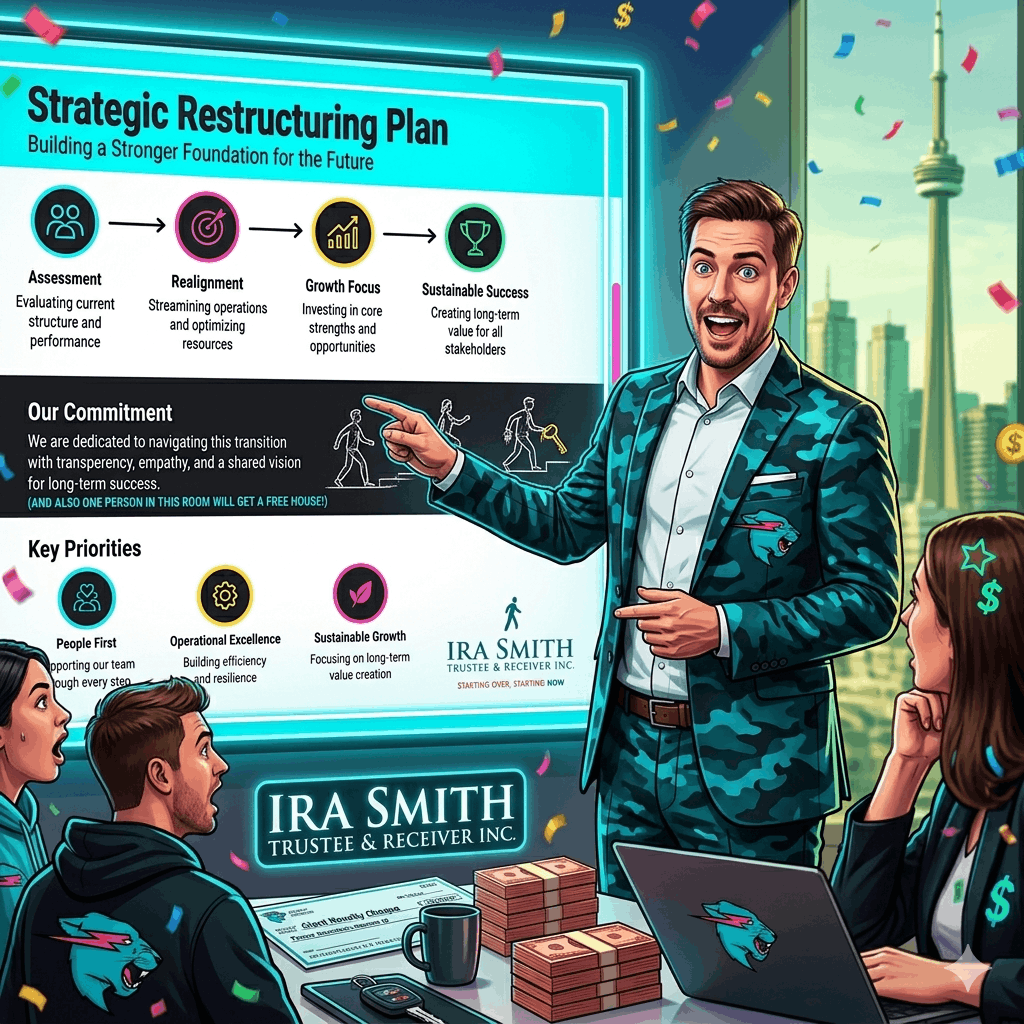
Brandon Smith is a Senior Vice-President at Ira Smith Trustee & Receiver Inc. and a Licensed Insolvency Trustee serving clients across Ontario. His experience includes consumer insolvency and complex court-ordered receivership and corporate bankruptcy administration, giving him practical insight into navigating challenging financial situations to achieve optimal outcomes for businesses, creditors, and professionals. Brandon stays current with landmark developments in Canadian insolvency law, ensuring his clients benefit from a cutting-edge understanding of their rights and options.MrBeast-style YouTube thumbnail and blog featured image for Ira Smith Trustee & Receiver Inc. explaining the Lion Force Transport case, CCAA restructuring protection denial, and the corporate receivership process for GTA creditors.

#CCAARestructuring #CorporateInsolvency #Receivership #CCAA #GTA #BusinessRestructuring #IraSmithTrustee #BramptonBusiness #FinancialRecovery

Categories
Brandon Blog Post

BIA vs CCAA Proceedings Toronto: Which Restructuring Strategy Saves Your Business?

BIA vs CCAA proceedings Toronto: A comprehensive guide to business restructuring and corporate debt relief.

BIA vs CCAA Introduction

Good morning. If you are reading this, you are likely navigating one of the most challenging periods in your professional life. We want to start by acknowledging the immense pressure you are under. Running a business in the Greater Toronto Area (GTA) is demanding enough without the added weight of financial distress, creditor calls, and the fear of losing everything you have built. Please know that you are not alone, and your safety and well-being are paramount. Financial crisis is a hurdle, not the end of your story. We are here to help you find the path back to stability.

In this Brandon’s Blog, I talk about how using either the Bankruptcy and Insolvency Act (BIA) or the Companies’ Creditors Arrangement Act (CCAA), can be navigated to restructure and save your business.

BIA vs CCAA Key Takeaways

  • BIA Division 1 Proposals are typically faster and more cost-effective for small to medium-sized enterprises (SMEs) with less complex debt.
  • CCAA Proceedings are reserved for larger corporations with debts exceeding $5 million, offering greater judicial flexibility.
  • A “Stay of Proceedings” is a legal shield that immediately stops creditors from taking legal action or seizing assets while you restructure.
  • Failing a BIA Proposal leads to automatic bankruptcy, whereas a CCAA failure allows for more structured exits or liquidations.
  • Choosing the right strategy depends on your debt load, the complexity of your operations, and your ultimate goal for the business.

Highlights

  1. The Lifeline of Business Restructuring
  2. What is a BIA Division 1 Proposal?
  3. The CCAA: For Complex Corporate Challenges
  4. Direct Comparison: BIA vs. CCAA
  5. Which Strategy is Right for Your Toronto Business?
  6. Frequently Asked Questions (FAQ)
  7. Conclusion: Starting Over, Starting Now

The Lifeline of Business Restructuring

When a business can no longer meet its financial obligations, it enters a state of insolvency. This is a technical term meaning the company’s liabilities exceed its assets or it cannot pay its bills as they come due. In Canada, we have two primary “lifelines” to help businesses avoid total liquidation: the Bankruptcy and Insolvency Act (BIA) and the Companies’ Creditors Arrangement Act (CCAA).

Both pathways are designed to give a “fresh start” to a viable business by allowing it to restructure its debts and continue operating. However, the choice between them is critical. Making the wrong move can lead to the very outcome you are trying to avoid: the permanent closure of your company. Whether you are managing a manufacturing plant in Vaughan or a tech startup in downtown Toronto, understanding these frameworks is the first step toward regaining control.

Corporate debt restructuring in Toronto thourhg BIA Division 1 Proposals or CCAA proceedings for Ontario businesses: Breaking chains representing breaking free from financial insolvency and creditor pressure.


What is a BIA Division 1 Proposal?

The BIA Division 1 Proposal is the most common tool used by small and medium-sized businesses in Ontario to manage insolvency. It is a formal, legally binding agreement between a debtor and their creditors to pay back a portion of the debt over time or to restructure the business operations.

How the Process Works

The process usually begins with filing a Notice of Intention (NOI). This filing triggers an immediate Stay of Proceedings, which acts as a legal “stop button” for all lawsuits, wage garnishments, and asset seizures. This gives the company an initial 30 days, extendable up to six months with court approval, to develop a restructuring plan.

A Licensed Insolvency Trustee (LIT) acts as the Proposal Trustee, overseeing the process and ensuring fairness for both the debtor and the creditors. Once the proposal is drafted, it is presented to the creditors for a vote. To pass, the proposal requires a “double majority”:

  1. A majority in number of creditors who vote.
  2. Two-thirds (66.7%) of the total dollar value of the claims.

Why Choose the BIA?

  • Predictability: The rules are clearly defined in the Act, leaving less room for legal ambiguity.
  • Cost-Efficiency: It involves fewer court appearances than a CCAA proceeding, making it significantly more affordable for smaller companies.
  • Speed: The deadlines are strict, forcing a resolution relatively quickly.

However, there is a catch. If the creditors reject the proposal, or if the court refuses to approve it, the company is automatically assigned into bankruptcy. This “all or nothing” nature makes the quality of the initial proposal and the advice of your business debt restructuring expert vital.


The CCAA: For Complex Corporate Challenges

While the BIA is a set of rigid rules, the Companies’ Creditors Arrangement Act (CCAA) is more like a blank canvas. It is federal legislation designed specifically for large corporations that need a more customized approach to restructuring.

The $5 Million CCAA Threshold

To qualify for CCAA, a company (or a group of affiliated companies) must have total debts exceeding $5 million. If your debt is below this mark, the BIA is your only option.

The Power of the Court

The defining feature of CCAA is judicial discretion. Unlike the BIA, where the process is largely administrative, CCAA is entirely court-driven. This allows a judge in the Ontario Superior Court of Justice to “craft” orders that fit the unique needs of a complex business. This might include:

  • Dealing with multiple classes of creditors separately.
  • Approving a stalking horse bidder process to sell assets while under protection.
  • Granting a broader “Stay of Proceedings” that can extend to third parties or directors.

Why Choose CCAA?

CCAA is ideal when a company has a complicated capital structure, international operations, or multiple layers of secured debt. It offers more flexibility and, crucially, does not result in automatic bankruptcy if the plan is rejected. Instead, the company simply loses its legal protection, and creditors are free to pursue their remedies.

Professional restructuring consultation on BIA Division 1 Proposals and CCAA proceedings for Ontario businessesin in the GTA with Ira Smith Trustee & Receiver Inc., a Vaughan Licensed Insolvency Trustee.


Direct Comparison: BIA vs. CCAA

To help you decide which path fits your situation, here is a direct comparison of the two restructuring frameworks:

We know the tension put upon you when making these decisions. Choosing between these two paths isn’t just a legal formality; it’s a strategic decision that affects your employees, your reputation, and your future.


BIA vs CCAA: Which Strategy is Right for Your Toronto Business?

Determining the right strategy requires a deep dive into your company’s financial health and operational goals. For a local GTA business owner, perhaps a restaurant group with a few locations or a mid-sized construction firm, the BIA Division 1 Proposal is often the “lifeline” of choice. It provides the necessary protection without the prohibitive costs of a court-heavy CCAA process.

However, if you are managing a large enterprise with diverse assets and massive liabilities, the CCAA offers the “surgical precision” needed to restructure without the looming threat of automatic bankruptcy.

At Ira Smith Trustee & Receiver Inc., we specialize in identifying the most efficient route for your specific needs. We focus on the “why” behind the numbers, saving jobs, protecting your legacy, and giving you the peace of mind to sleep through the night again.

Visual comparison of documents for BIA Division 1 Proposals and CCAA proceedings for Ontario businesses.


Frequently Asked Questions (FAQ)

Q: Can a small business use CCAA if they have less than $5 million in debt?
No. The $5 million threshold is a strict statutory requirement. For debts under this amount, the BIA Division 1 Proposal is the designated restructuring tool.

Q: Will my creditors find out about the restructuring?
Yes. Both BIA and CCAA are public processes. All known creditors must be notified so they can participate in the voting or court proceedings.

Q: Can I keep running my business during a BIA or CCAA process?
Absolutely. The entire point of these “debtor-in-possession” (DIP) proceedings is to allow management to continue running the day-to-day operations while the debt is restructured.

Q: What is a “Stay of Proceedings”?
Think of it as a legal shield. It is an order that prevents creditors from starting or continuing any legal actions, seizures, or collection efforts against you while you are under restructuring protection.


BIA vs CCAA Conclusion

Navigating the choice between BIA and CCAA proceedings in Toronto can feel like walking through a minefield. But you don’t have to do it alone. Whether your business needs the structured simplicity of a BIA Proposal or the sophisticated flexibility of a CCAA filing, the goal is the same: Starting Over, Starting Now.

By taking action today, you are choosing to lead your company through the storm rather than letting the storm dictate your future.

Starting Over, Starting Now

Don’t let financial uncertainty dictate your future. If you or your business is struggling with debt, losing sleep, or facing legal action, contact Ira Smith Trustee & Receiver Inc. today.

We offer a free, confidential consultation to discuss your situation, explain your options in plain language, and help you develop a clear, actionable plan. Our team of Licensed Insolvency Trustees is dedicated to providing the compassionate, professional support you need to regain control and achieve a debt-free life.

Take the first step towards a brighter financial future. Call us now.

Ira Smith Trustee & Receiver Inc. is licensed by the Office of the Superintendent of Bankruptcy. Ira and Brandon Smith are members of the Canadian Association of Insolvency and Restructuring Professionals.

, , , , , , , , , , , , , , , , , , , , , , , , , , –

Disclaimer: This analysis is for educational purposes only and is based on the cited sources and professional expertise as a Licensed Insolvency Trustee. The information provided does not constitute legal or financial advice for your specific circumstances. Every situation is unique; the outcomes discussed may not apply to your particular case. Please contact Ira Smith Trustee & Receiver Inc. to discuss your specific needs.

About the Author:

Brandon Smith is a Senior Vice-President at Ira Smith Trustee & Receiver Inc. and a Licensed Insolvency Trustee serving clients across Ontario. His experience includes consumer insolvency and complex court-ordered receivership and corporate bankruptcy administration, giving him practical insight into navigating challenging financial situations to achieve optimal outcomes for businesses, creditors, and professionals. Brandon stays current with landmark developments in Canadian insolvency law, ensuring his clients benefit from a cutting-edge understanding of their rights and options.

Call a Trustee Now!