I hope you, your family, and your Toronto business are safe and managing as well as possible in a difficult economic environment. If you are a GTA business owner watching sales weaken, costs rise, or creditors become more persistent, you are not alone, and asking for help early is not a sign of failure. It is a practical step towards regaining control.
The latest Toronto business and Canadian insolvency data tell a complicated story. New businesses continue to open, but an unusually large number are also closing. At the same time, formal insolvency filings are rising, while many households and businesses may be managing distress outside the formal insolvency system.
Toronto Business: Key Takeaways
- The Toronto Census Metropolitan Area (CMA) recorded approximately 10,870 Toronto business openings in April 2026, the highest April level in at least 11 years.
- Toronto also recorded approximately 10,720 Toronto business closures, the second-highest April total on record, behind only April 2020.
- Active businesses fell to 187,700 in April 2026, marking a seventh consecutive monthly decline and the lowest level since June 2022.
- Canada recorded 13,254 insolvency filings in June 2026, up 11.5% year over year and more than double the June 2020 volume.
- BMO Capital Markets’ per-capita analysis provides one useful perspective. Still, it does not capture who has access to credit, who is filing, or how many businesses and households are struggling without filing.
- For Toronto business owners, early advice from an accountant and a Licensed Insolvency Trustee can preserve more restructuring options.
Toronto Business: Highlights
- What is Toronto’s business data telling us?
- Why is BMO’s per-capita argument incomplete?
- What kinds of financial distress are being missed?
- What does this mean for GTA business owners?
- What should a worried business owner do now?
- Frequently Asked Questions (FAQ)
Toronto Business: What is Toronto business data telling us?
The Toronto CMA is experiencing both entrepreneurial activity and business contraction at the same time.
According to Better Dwelling’s August 5, 2026 report, approximately 10,870 businesses opened in April 2026. That was the most openings recorded for an April in at least 11 years.
That might sound encouraging. It is.
However, approximately 10,720 businesses also closed during the month. This was the second-highest April closure total on record, surpassed only by April 2020, when pandemic lockdowns disrupted the economy.
The result is a high-churn environment. Toronto business churn means businesses are opening and closing at an unusually rapid rate. Churn can reflect innovation and opportunity, but it can also indicate that owners are entering markets without enough financial cushion to withstand weaker demand, higher operating costs, tighter credit, or delayed customer payments.
The number of active businesses in the Toronto CMA fell to 187,700 in April 2026. This was the seventh consecutive monthly decline. The active Toronto business count was down approximately 0.9% year over year and at its lowest level since June 2022, nearly a four-year low.
This is the real-world business story behind the headline. Toronto is not simply seeing fewer businesses. It is seeing significant movement in both directions, while the total base of active businesses continues to shrink.

Toronto Business: Why is BMO’s per-capita argument incomplete?
BMO Capital Markets senior economist Robert Kavcic has offered a perspective that deserves to be understood fairly.
As reported by Better Dwelling on August 13, 2026, Mr. Kavcic acknowledged that consumer insolvencies were near the highest level since the 2009 recession. His argument was that, after adjusting for Canada’s population growth, insolvencies had “basically just normalized back to pre-pandemic conditions.”
He concluded that “the real story is that there is really no story.”
A per-capita measure, a calculation that divides a total by the size of the population, can be useful. It can help compare conditions across different time periods when the population has changed. BMO is right that raw totals do not tell the entire story.
The difficulty is that population growth does not necessarily equal comparable growth in credit exposure.
Better Dwelling reported that approximately 40% of Canada’s population growth over the past five years came from non-permanent residents, including temporary workers and international students. These groups typically have more limited access to unsecured credit, the type of credit that does not require collateral.
That matters because consumer insolvency filers often have an established borrowing history. According to the Office of the Superintendent of Bankruptcy data cited by Better Dwelling, 57% of consumer insolvency filers in 2024 had a bank loan, with a median value of approximately $20,000. In addition, one in five filers had filed before.
This profile does not necessarily match the typical non-permanent resident. Therefore, using total population as the denominator may dilute the apparent rate of insolvency without accurately measuring the financial stress among established borrowers.
The broader lesson is not that per-capita statistics are useless. The lesson is that they must be qualified. A business owner, lender, policymaker, or household needs to know not only how many people live in Canada, but also who is borrowing, who is falling behind, and who is taking formal action.
The June 2026 figures remain significant. Canada recorded 13,254 insolvency filings, an 11.5% increase from June 2025 and more than double the June 2020 volume. Only June 2009 recorded more filings. The trailing 12-month total reached approximately 150,505 filings, up 5.3% year over year.
Those numbers do not prove that every household or Toronto business is in crisis. They do show that financial distress is material and deserves more than a single reassuring ratio.
Toronto Business: What kinds of financial distress are being missed?
Raw insolvency counts and per-capita ratios can both understate the pressure facing the economy because they capture only part of the problem.
There are at least three different forms of financial distress:
| Form of distress | What it is | How it appears in the data | Why it matters to a business owner |
|---|---|---|---|
| Formal insolvency filing | A bankruptcy or proposal filed under Canada’s insolvency legislation. A proposal is a formal arrangement intended to compromise or restructure debts. | It appears in official insolvency statistics reported by the OSB. | It may provide legal protection and a structured path forward, but waiting too long can reduce available options. |
| Silent business closure | A business stops operating, winds down, or does not renew operations without making a formal insolvency filing. | It appears in business-opening and business-closure data, but not necessarily in insolvency statistics. | Suppliers, employees, landlords, and customers may still be affected. The owner may also remain personally exposed through guarantees or other obligations. |
| Household debt stress | A household manages financial pressure through arrears, refinancing, payment deferrals, or high-interest credit without filing an insolvency proceeding. | It may appear indirectly in arrears or credit data and may not appear in formal insolvency counts for months or years. | Household stress can reduce consumer spending, delay business payments, and weaken the customer base on which a business depends. |
Insolvency is also a lagging indicator. That means a formal filing often occurs after months or years of financial deterioration. Before filing, a business may have used savings, borrowed from family, increased credit-card balances, refinanced assets, delayed tax remittances, or negotiated informal payment arrangements.
By the time the filing appears in the statistics, the underlying financial pressure may already be much more severe.
This is why a Toronto business owner should not wait for a formal insolvency number, or a missed payment, to decide whether advice is necessary. Early advice is about information, not commitment.
Toronto Business: What does this mean for GTA business owners?
For a GTA business owner, the important question is not whether the economy is technically “normal” on a per-capita basis. The important questions are more immediate:
- Are sales sufficient to cover operating costs?
- Are customers paying more slowly?
- Are supplier terms becoming stricter?
- Are tax arrears accumulating?
- Are loan renewals or refinancing becoming more difficult?
- Have you used personal credit to support the company?
- Have you signed personal guarantees for corporate borrowing or leases?
- Is the Toronto business profitable before debt payments, but unable to meet its total obligations?
A company can be viable, meaning it has a fundamentally workable business model, while still being financially unsound because of accumulated debt, temporary cash-flow disruption, or an unsustainable repayment schedule.
That distinction is important. A viable company may have restructuring options that disappear if the owner waits until assets are seized, key employees leave, or critical suppliers stop extending credit.
A corporate restructuring plan may involve negotiating with creditors, changing payment terms, selling non-core assets, reducing expenses, or using a formal proposal. A commercial proposal, sometimes called a Division I Proposal, is a legal process that can allow a financially troubled but viable company to compromise debts and continue operating, subject to the required approvals.
The right solution depends on the company’s structure, assets, liabilities, cash flow, tax position, employees, secured lenders, and personal guarantees. There is no universal answer.

Toronto Business: What should a worried business owner do now?
If you are concerned about your GTA or City of Toronto business, I recommend taking these steps:
- Prepare a current cash-flow forecast.
List expected sales receipts, payroll, rent, taxes, loan payments, supplier obligations, and other essential expenses. A cash-flow forecast is a practical estimate of money coming in and going out over a defined period. - Speak with your accountant early.
Your accountant can help identify profitability problems, tax obligations, cash-flow gaps, and whether the business can realistically recover under its current structure. - Consult a Licensed Insolvency Trustee.
A Licensed Insolvency Trustee can explain formal options, including a proposal or bankruptcy, and help distinguish between corporate obligations and your personal exposure. - Review personal guarantees and director liability.
If you personally guaranteed a corporate loan, lease, credit facility, or supplier account, the corporation’s financial problems may affect you directly. Certain tax and payroll obligations can also create potential director exposure. Obtain professional advice before transferring assets, repaying selected creditors, or closing the company. - Assess whether the core business is viable.
Ask whether the company can generate positive operating cash flow after a realistic restructuring of its debt and costs. If the answer is yes, a restructuring proposal may be a lifeline. If not, an orderly wind-down may be more appropriate. - Act before the crisis becomes irreversible.
Early action does not mean you have decided to file. It means you are preserving information, time, credibility, and options.
We know the tension placed upon Toronto business owners and their families. It is not your hope, commitment, or personal worth that these statistics measure. Financial distress is a business problem that requires a business solution.
For additional context, our discussion of commercial proposals and corporate restructuring explains how a formal proposal may help a viable company continue operations. Our article on personal bankruptcy also discusses why a corporation and its owner must be assessed separately.
Toronto Business: Frequently Asked Questions (FAQ)
Are Toronto’s business closures the same as business insolvencies?
No. A business closure means an operation has stopped or ceased to be active. It does not necessarily mean the business filed a bankruptcy or proposal. Some businesses close quietly, while others may restructure informally or continue under a different ownership or operating model.
Does BMO’s per-capita analysis have value?
Yes. Per-capita analysis can help account for population changes. The concern is relying on it alone. It may not reflect differences in credit access, borrowing behaviour, business exposure, or the number of people experiencing stress without filing.
Why are insolvency filings considered a lagging indicator?
A formal insolvency filing often follows a long period of missed payments, borrowing, refinancing, arrears, or attempts to negotiate with creditors. The filing is usually evidence that earlier coping strategies have stopped working.
Should I wait until my business misses a payment before seeking advice?
No. Early advice is generally more useful because it allows you to understand your options before creditors take enforcement action, suppliers withdraw terms, or essential assets become unavailable. A consultation does not obligate you to file.
Can a business owner be personally responsible for corporate debt?
Possibly. Personal guarantees, the legal structure of the business, and certain tax or payroll obligations can create personal exposure. This is fact-specific, so speak with your accountant and a Licensed Insolvency Trustee before making major financial decisions.
Is a proposal the same as bankruptcy?
No. A proposal is a formal arrangement to compromise or restructure debts, while bankruptcy is a separate legal process. Whether a proposal is appropriate depends on the company’s viability, assets, liabilities, cash flow, and creditor situation.
The message for Toronto and the GTA is balanced but clear: new businesses are still being created, but active businesses are declining, closures are elevated, and formal insolvency filings are rising. That is a story worth paying attention to, not to create panic, but to encourage timely, informed action.
Source note: Statistics and quotations in this article are based on the two Better Dwelling reports published on August 5, 2026, and August 13, 2026. The underlying Statistics Canada and Office of the Superintendent of Bankruptcy data are attributed as reported by Better Dwelling. BMO’s position is attributed to BMO Capital Markets senior economist Robert Kavcic.
Starting Over, Starting Now
Don’t let financial uncertainty dictate your future. If you or your business is struggling with debt, losing sleep, or facing legal action, contact Ira Smith Trustee & Receiver Inc. today.
We offer a free, confidential consultation to discuss your situation, explain your options in plain language, and help you develop a clear, actionable plan. Our team of Licensed Insolvency Trustees is dedicated to providing the compassionate, professional support you need to regain control and achieve a debt-free life.
Take the first step towards a brighter financial future; call us now.
- Phone: 905.738.4167
- Toronto Line: 647.799.3312
- Evening and Weekends: 289.670.7500
- Website: irasmithinc.com
- Email: brandon@irasmithinc.com
Ira Smith Trustee & Receiver Inc. is licensed by the Office of the Superintendent of Bankruptcy. Ira and Brandon Smith are members of the Canadian Association of Insolvency and Restructuring Professionals.
, , , , , , , , , , , , , , , , , , , , , , , , , , –
Disclaimer: This analysis is for educational purposes only and is based on the cited sources and professional expertise as a Licensed Insolvency Trustee. The information provided does not constitute legal or financial advice for your specific circumstances. Every situation is unique; the outcomes discussed may not apply to your particular case. Please contact Ira Smith Trustee & Receiver Inc. to discuss your specific needs.
About the Author:
Ira Smith is President at Ira Smith Trustee & Receiver Inc. and a Licensed Insolvency Trustee serving clients across Ontario. His experience includes consumer insolvency and complex court-ordered receivership and corporate bankruptcy administration, giving him practical insight into navigating challenging financial situations to achieve optimal outcomes for businesses, creditors, and professionals. Ira stays current with landmark developments in Canadian insolvency law, ensuring his clients benefit from a cutting-edge understanding of their rights and options.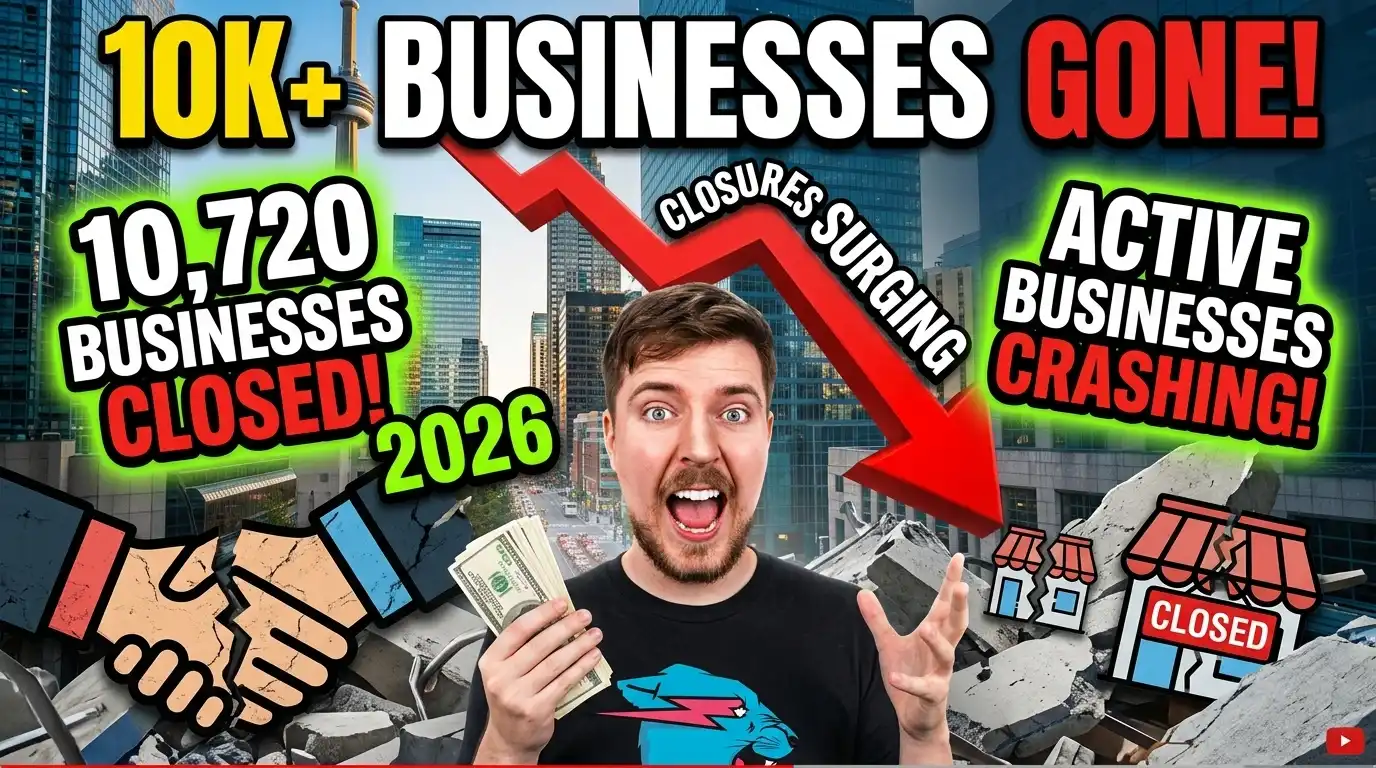
#TorontoBusiness #GTABusiness #BusinessClosures #CorporateRestructuring #BusinessInsolvency #DebtRestructuring #CommercialProposal #DivisionIProposal #BusinessBankruptcy #FinancialDistress #LicensedInsolvencyTrustee #StartingOverStartingNow