We hope that you, your family, and your team are staying safe and resilient during these increasingly turbulent times in the Ontario development sector. We understand the immense pressure the current economic climate places on your shoulders, and we are here to offer clarity and support.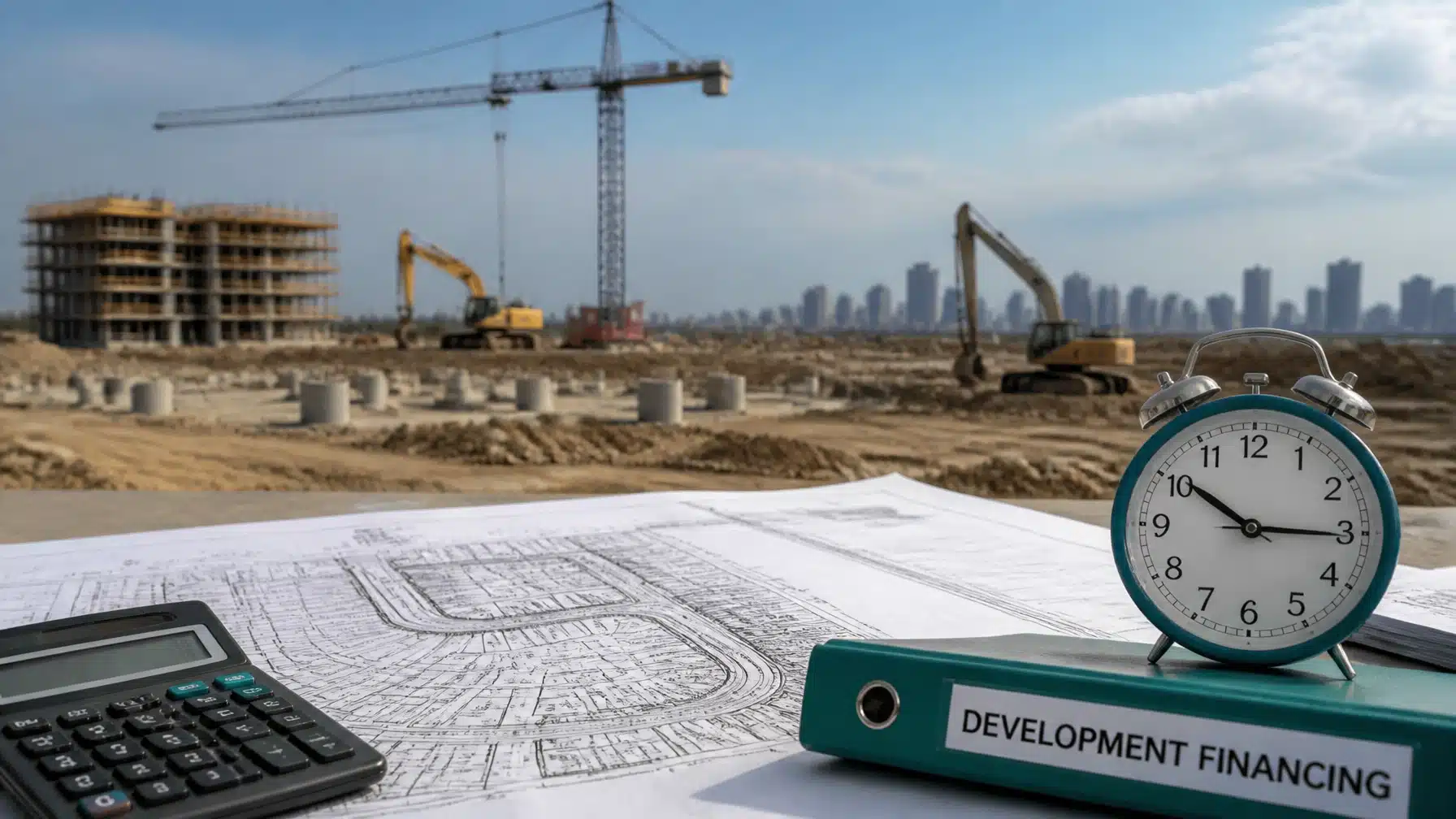
Infrastructure Key Takeaways
- The June 11 Trigger: The looming $700 million infrastructure funding gap in Peel Region is more than a headline; it is a potential distress trigger for active credit facilities.
- Invisible Costs: Beyond the “freeze,” developers face escalating interest-carrying costs on land assemblies that are no longer generating progress-based draws.
- Director Vulnerability: Site dormancy does not pause statutory obligations; directors remain personally liable for unpaid HST, source deductions, and provincial wages.
- Caledon at Risk: With 64% of at-risk housing units located in Caledon, specialized strategic restructuring is now a necessity, not an option.
- Proactive vs. Reactive: Engaging a Licensed Insolvency Trustee for a 30-minute stress test can prevent a receivership and preserve your equity.
Highlights
- Why the June 11 Infrastructure Deadline is a Distress Trigger
- The Hidden Danger: Interest-Carrying Costs and Dormancy
- Director Liability: The Trap of Unpaid Project Taxes and Wages
- Why Caledon is the Epicentre of the GTA Development Crisis
- Restructuring as a Lifeline: Solvent vs. Insolvent Options
- Frequently Asked Questions (FAQ)
Why the Infrastructure June 11 Deadline is a Distress Trigger
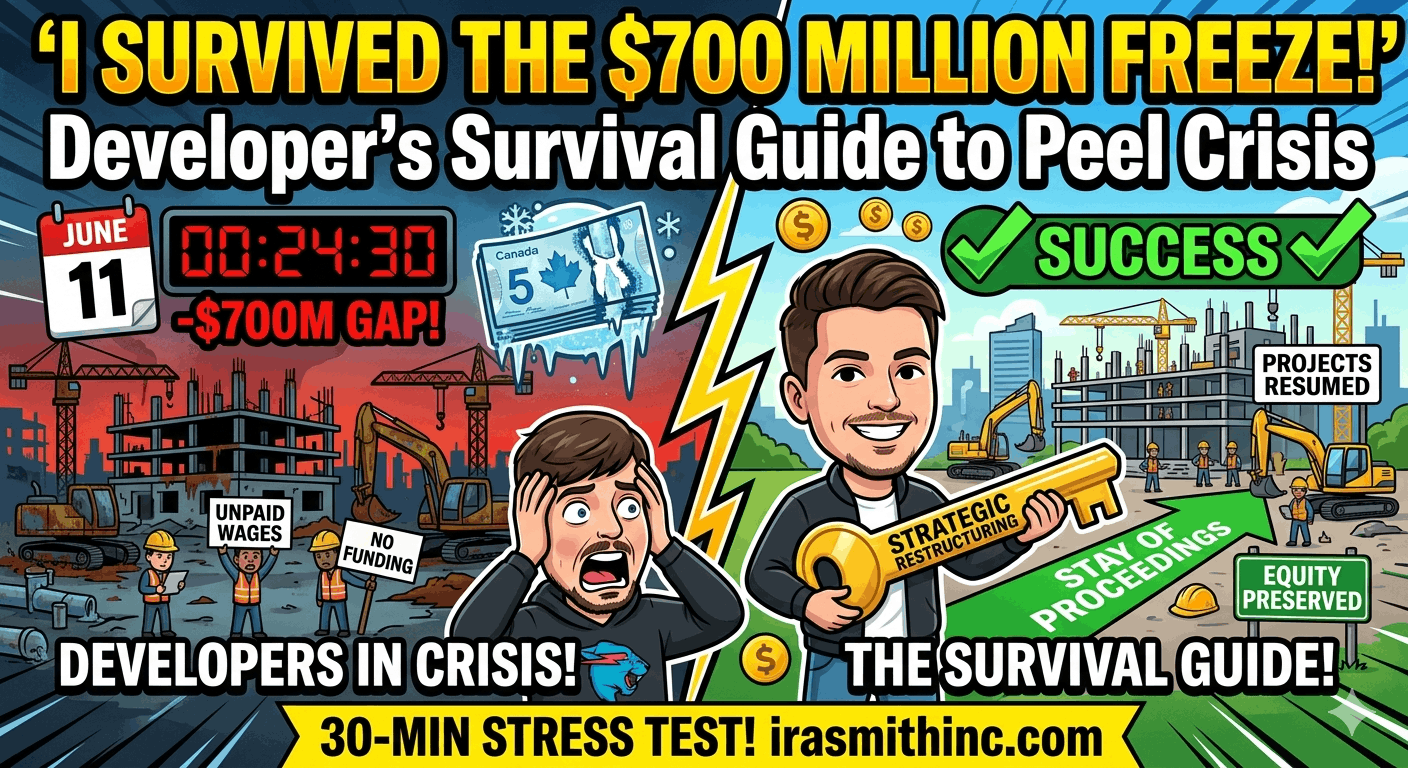
The $700 million funding gap in Peel Region has moved from a municipal budget concern to a direct threat to GTA developers. If the provincial funding does not materialize by the June 11 deadline, the “freeze” on critical infrastructure, water, wastewater, and roads becomes a functional reality.
For many developers, this date serves as a distress trigger. This is a specific event or condition that allows a lender to re-evaluate a loan’s risk profile, potentially leading to a demand for repayment or a refusal to extend further credit. Lenders do not wait for a provincial bailout; they act in response to the immediate reality of stalled timelines. If your project relies on the next phase of infrastructure to trigger a construction draw, you may find yourself in a liquidity crunch before the summer is out.
The Infrastructure Hidden Danger: Interest-Carrying Costs and Dormancy
One of the most dangerous blind spots for construction firms is the interest-carrying cost. When a site goes dormant due to an infrastructure freeze, the clock doesn’t stop. The interest on your land loans, mezzanine financing, and equipment leases continues to accrue daily.
In a high-interest-rate environment, a six-month delay is not just a scheduling inconvenience; it can erode millions of dollars in project equity. When revenue-generating milestones are missed, the project enters a state of negative carry, where the cost of holding the asset exceeds the appreciation or progress being made. We know the tension this puts upon you, as you watch your hard-earned capital being swallowed by debt service while the site sits silent.

Director Liability: The Trap of Unpaid Project Taxes and Wages
A significant risk that often goes unaddressed until it is too late is Director Liability. Even if a development project is held within a specific corporation, the directors can be held personally responsible for certain corporate debts if the project fails.
If your site goes dormant and cash flow dries up, you must be extremely cautious about which bills are being paid. Under Canadian law, directors are personally liable for:
- Source Deductions: Unpaid employee income tax, CPP, and EI.
- GST/HST: Collected but unremitted sales tax.
- Wages: Unpaid vacation pay and statutory wages (varies by province, but is highly strictly enforced in Ontario).
When a project is “frozen” due to the Peel infrastructure gap, the temptation may be to use remaining cash to pay suppliers or keep a lender happy. However, neglecting these statutory obligations can result in the Canada Revenue Agency (CRA) pursuing your personal assets, including your home or savings. This is why immediate, professional advice is vital.
Why Caledon is the Epicentre of the GTA Infrastructure Development Crisis
While Brampton and Mississauga are certainly feeling the pinch, Caledon is the hardest hit by this $700 million shortfall. Statistics indicate that roughly 64% of the units currently stalled or at risk are located within Caledon.

The town was positioned for massive growth, but that growth was predicated on a delicate balance of provincial and regional infrastructure spending. With that balance tipped, Caledon developers are facing a unique “perfect storm” of high-leverage land assemblies and a total lack of municipal serviceability. If you are operating in this area, you are not just facing a market dip; you are facing a structural blockage that may require a formal reorganization. Call to survive.
Restructuring as a Lifeline: Solvent vs. Insolvent Options
At Ira Smith Trustee & Receiver Inc., we believe in the “Starting Over, Starting Now” philosophy. Waiting for a government bailout that may never arrive is a reactive strategy that often leads to total loss. A proactive move is to stress-test your project and consider restructuring.
A restructuring is a formal or informal process to modify the financial or operational structure of a company to make it more viable. For a developer, this might mean renegotiating loan terms, seeking new equity partners, or utilizing the Bankruptcy and Insolvency Act (BIA) to pause creditor actions while a new plan is developed.
| Feature | Solvent Restructuring (Informal) | Insolvent Restructuring (Proposal/CCAA) |
|---|---|---|
| Creditor Consent | Must be unanimous or negotiated individually. | Can be forced if a majority/two-thirds of creditors agree. |
| Legal Stay | No automatic protection from lawsuits. | Stay of Proceedings stops all legal and collection actions. |
| Timeline | Can be slow and prone to “hold-out” creditors. | Strictly governed by court-ordered or statutory timelines. |
| Complexity | High negotiation burden on the developer. | Managed by a Licensed Insolvency Trustee who is the Monitor. |
| Cost | Flexible, but risks escalating if negotiations fail. | Higher upfront costs but offers a final, binding resolution. |

Taking 30 minutes now to consult with a Licensed Insolvency Trustee in Toronto can save a multi-million dollar land assembly from being seized by a receiver. We help you look at the cold legal facts while providing the supportive guide you need to navigate these high-stakes decisions.
Peel Infrastructure Frequently Asked Questions (FAQ)
What exactly is an “infrastructure freeze”?
In this context, it refers to the Peel Region’s inability to commit to new water, wastewater, and road projects required to service new developments because of a $700 million funding shortfall. Without these services, building permits for new phases cannot be issued.
Can a lender call my loan just because of the Peel funding gap?
Most commercial loan agreements have “Material Adverse Change” (MAC) clauses. If a lender determines that the infrastructure freeze significantly impairs the project’s viability or your ability to repay, they may use the June 11 deadline as a reason to review or call the loan.
Is it my fault if my project fails due to this freeze?
No. It is not your fault that regional politics and provincial funding gaps have created a barrier to your development. However, it is your responsibility to take proactive steps to protect your stakeholders and your personal liability.
How does a “Stay of Proceedings” help a developer?
A Stay of Proceedings is a legal “pause button.” It prevents lenders from seizing land, suppliers from suing, and the CRA from freezing accounts. This gives you the breathing room to find new financing or restructure your debt without the threat of immediate collapse.
Starting Over, Starting Now
Don’t let financial uncertainty dictate your future. If you or your business is struggling with debt, losing sleep, or facing legal action due to the Peel infrastructure freeze, contact Ira Smith Trustee & Receiver Inc. today.
We offer a free, confidential consultation to discuss your situation, explain your options in plain language, and help you develop a clear, actionable plan. Our team of Licensed Insolvency Trustees is dedicated to providing the compassionate, professional support you need to regain control and achieve a debt-free life.
Take the first step towards a brighter financial future. Call us now.
- Phone: 905.738.4167
- Toronto Line: 647.799.3312
- After hours and weekends: 289.670.7500
- Website: irasmithinc.com
- Email: brandon@irasmithinc.com
Ira Smith Trustee & Receiver Inc. is licensed by the Office of the Superintendent of Bankruptcy. Ira and Brandon Smith are members of the Canadian Association of Insolvency and Restructuring Professionals.
, , , , , , , , , , , , , , , , , , , , , , , , , , –
Disclaimer: This analysis is for educational purposes only and is based on the cited sources and professional expertise as a Licensed Insolvency Trustee. The information provided does not constitute legal or financial advice for your specific circumstances. Every situation is unique; the outcomes discussed may not apply to your particular case. Please contact Ira Smith Trustee & Receiver Inc. to discuss your specific needs.
About the Author:
Brandon Smith is a Senior Vice-President at Ira Smith Trustee & Receiver Inc. and a Licensed Insolvency Trustee serving clients across Ontario. His experience includes consumer insolvency and complex court-ordered receivership and corporate bankruptcy administration, giving him practical insight into navigating challenging financial situations to achieve optimal outcomes for businesses, creditors, and professionals. Brandon stays current with landmark developments in Canadian insolvency law, ensuring his clients benefit from a cutting-edge understanding of their rights and options.
#GTARealEstate #ConstructionInsolvency #PeelRegion #DebtRestructuring #ProjectManagement #OntarioLaw #FinancialCrisisManagement