
Categories
Brandon Blog Post

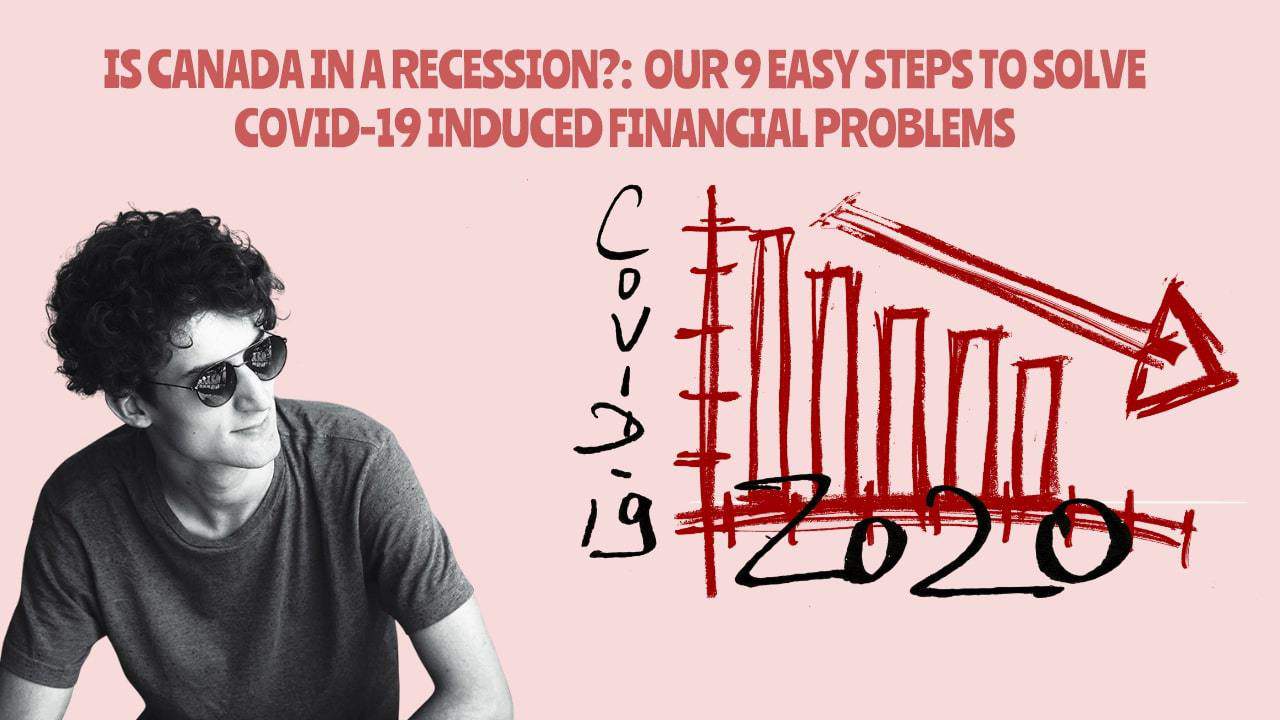
IS CANADA IN A RECESSION: OUR 9 EASY STEPS TO SOLVE COVID-19 INDUCED FINANCIAL PROBLEMS

The Ira Smith Trustee Team is absolutely operational and Ira, in addition to Brandon Smith, is readily available for a telephone consultation or video meeting.
If you would prefer to listen to the audio version of this is Canada in a recession Brandon’s Blog, please scroll to the very bottom and click on the podcast.
is canada in a recession
Is Canada in a recession introduction

One question that people are searching online for answers is: Is Canada in a recession? Last month I wrote a blog titled Canada in recession: Will the economy fall into a great depression? In that blog, I described the views of Nouriel Roubini is a world-known economist and a professor of economics at New York University’s Stern School of Business. He has some stark current thoughts on just how bad the Canadian economy can go. I invite you to again read that blog to see what his thoughts are.

That blog accepted the signals that Canada is in a recession. The purpose of this Brandon’s Blog is to take a step back and answer the question: Is Canada in a recession?

Is Canada in a recession? What is a recession?

To begin to answer is Canada in a recession, we first need to understand what a recession is.

A recession is a short-term period of overall economic decline. Economies go via cycles, which implies there are periods of growth as well as durations of decline. The COVID-19 pandemic has actually thrust our economic climate into a decrease, a lot like just how a considerable, unanticipated expense can upend your own household budget plan.

The federal government identifies when our economy has actually entered a recession and when it has left by measuring key economic signals. These signs are sensitive to what happens locally and internationally. They include, for circumstances, declines in various industry sectors, agriculture or manufacturing, and also disruptions to international trade.

The C.D. Howe council defines a recession as a pronounced, persistent, and pervasive decline in total economic activity. It considers both GDP and employment as its major rulers. Is Canada in a recession? It stated that Canada is formally in an economic crisis and recession.

What did some economists forecast about is Canada in a recession

Economists were checking out financial indicators of the health of the Canadian economy near the end of 2019 and very early in 2020 to try and forecast the future. So, what were economists saying about is Canada in a recession?

What some economic experts were predicting prior to the coronavirus pandemic was that they really did not assume we would see one this year. However, on the other hand, last October David Rosenberg, chief economist at Gluskin Sheff & Associates, assumed there would certainly be an 80% chance of an economic downturn coming to Canada this year.

The complete level of its economic impact will certainly not be known for some time. It seems clear to economists that the United States will certainly go into an economic downturn in 2020 if it hasn’t already. Since 1970, Canada has experienced economic crises at roughly the very same time as the USA, showing the interconnectedness of the two economies. So it appears that all of North America is in a recession.

How bad will Canada’s COVID-19 recession be?

Canada is only now seeing the tip of the economic iceberg from COVID-19. It is clear that its economic effect will be like nothing seen since the Great Depression. Economists state the overview for employment and the economic climate will be stark. The only silver lining may be that the deepness and suddenness of the decrease might offer hope for a fast rebound.

As I previously reported, Dr. Roubini thinks there are pressures that not only would make is Canada in a recession, but it could go into a depression! His view is that there is going to be a U-shape recuperation due to the fact that this is an international shock. Both households and businesses will need to invest less and save more. Precautionary savings are most likely to go higher. Income is most likely to be lower. This will convert into much less business capital spending. He claims there will certainly be a worldwide investment slump due to a global savings excess.

How long will this is Canada in a recession last?

The rapid spread of coronavirus led to unprecedented personal, the social, and economic impact that caught the world largely unprepared. Although the government of Canada responded decisively with programs and grants to lessen the economic devastation, the recovery period remains to be seen. And by most indicators, this downturn is looking like a long and steep uphill climb.

If we’re looking specifically at negative growth, then economists anticipate that this trend won’t continue for long. There are 2 reasons:

  • Lockdown mandated by the government. Whatever was closed down by government mandate which takes place much faster than a shutdown due to economic issues.
  • Government bailouts. The government is supporting the whole economy. Yes, we’ll need to pay back the government in taxes eventually yet that can only occur when the economy is recovering. This suggests that economic growth will certainly be slower.

Parliament budget officer Yves Giroux believes that the Canadian deficit this year will strike $256 billion, consisting of a 6.8% decline in economic development, the most awful showing since the 1981-1982 economic recession.

Is Canada in a recession? Are there any predictors of a recession recovery?

Indicators like stagnant salaries, low home financial savings, as well as high consumer financial debt, don’t predict economic crises, yet they do forecast just how challenging the healing will be when an economic downturn hits. Below are some signs and symptoms that can indicate a recession:

  • the surge in joblessness;
  • an increase in bankruptcies;
  • defaults or repossessions;
  • the falling rate of interest;
  • reduced consumer spending;
  • decreased consumer confidence; and
  • falling asset prices.

A healthy and balanced labour market as well as a turnaround in the housing sector helped the Canadian economy expand at a modest rate in 2019. This supports the contention that in order to come out of an economic downturn, companies and consumers need to feel confident to invest and spend.

What can you do when is Canada in a recession

If you believe the answer to the question is Canada in a recession is yes, after that there are several things that you can do. I have written on these problems before under several headings such as financial literacy, household debt and the benefits of having an emergency savings fund on hand in case of, well, an emergency situation.

You can’t regulate the country’s economic climate, yet you can control your very own. Every person requires to take a look at:

  • Using this time to examine your overall household budget and figure out some practical yet difficult goals for your cash.
  • This is the time to live according to your emergency situation budget and look at what your typical spending plan will certainly resemble once you are back to work.
  • Consider your typical budget based upon what it looked like before COVID-19 hit and the insights you’ve gotten around your spending behaviours since you’re living more frugally.
  • Making a plan to eliminate credit card debt. Try to find a no or extremely reduced rate of interest balance transfer charge card to transfer the balance to if you have some credit card financial debt lingering around.
  • A strategy to include a savings element in your family budget will aid to shield you when you face a reduction or a full loss of your earnings.
  • Dealing with the pandemic as a wake-up call to recession-proof your funds. If your income was impacted by the pandemic, what length of time could you have survived had the government, banks and other financial institutions and different corporations not actioned in with procedures to get cash back into your wallet through deferrals?
  • Can you work at a couple of jobs that amount to providing you with a full-time revenue? This might first take some efficient networking before you can discover the appropriate mix of work.
  • Have an emergency fund all set up. It will go a long way to helping you weather a recession.
  • No matter your current scenario, the very best way to recession-proof you and your family is with an emergency savings account.

In the post-COVID years, there is a likelihood that lenders will be stingier with exactly how much cash they loan to customers. So guarantee that your budget permits constant debt repayment when you resume a stable income that resembles your pre-coronavirus income level.

That is exactly why it is crucial to focus on your financial situation now and take steps to guarantee your long-term personal financial stability.

Is Canada in a recession summary

It certainly feels that way. I hope you found this is Canada in a recession Brandon’s Blog informative. The Ira Smith Team family hopes that you and your family members are remaining secure, healthy and well-balanced. Our hearts go out to every person that has been affected either via misfortune or inconvenience.

We all must help each other to stop the spread of the coronavirus. Social distancing and self-quarantining are sacrifices that are not optional. Families are literally separated from each other. We look forward to the time when life can return to something near to typical and we can all be together once again.

Ira Smith Trustee & Receiver Inc. has constantly used clean, safe and secure ways in our professional firm and we continue to do so.

Income, revenue and cash flow shortages are critical issues facing entrepreneurs, their companies and individual Canadians. This is especially true these days.

If anyone needs our assistance for debt relief Canada COVID-19, or you just need some answers for questions that are bothering you, feel confident that Ira or Brandon can still assist you. Telephone consultations and/or virtual conferences are readily available for anyone feeling the need to discuss their personal or company situation.

The Ira Smith Trustee Team is absolutely operational and Ira, in addition to Brandon Smith, is readily available for a telephone consultation or video meeting.


Categories
Brandon Blog Post

CANADA REVENUE AGENCY LOGIN: MASSIVE CREDENTIAL STUFFING CAUSES MANY PROBLEMS

The Ira Smith Team is totally operational and both Ira and Brandon Smith are here for a telephone consultation, conference calls, and virtual meetings.

Keep healthy and safe everybody.

[monkeytools msnip=”https://monkeyplayr.com/playr.php?u=5173&p=22412″]

Canada Revenue Agency login introduction

The Canada Revenue Agency login for its online services has been suspended after what became 3 separate cyberattacks. It ends up that the cyber assaults took place over a one week to 10 day period. The very first strike was the biggest, but, it was originally held under wraps. The news being reported last weekend was after the third strike.

Hackers utilized hundreds of swiped usernames and passwords to fraudulently acquire government services and compromise Canadians’ personal information. A data breach is never a good idea, yet this could not have actually come at a worse time.

The purpose of this Brandon’s Blog is to look at the Canada Revenue Agency login issues and what it means right now. It is not so much about debt issues. Rather, I combed through all publicly available information in order to do more of a public service announcement on this terrible event.

The Canada Revenue Agency login hack debacle

A total amount of 5,500 Canada Revenue Agency (CRA) accounts were targeted in what the federal government defined as three credential stuffing strikes, in which cyberpunks make use of passwords as well as usernames from other Canadian information websites to access Canadians’ accounts with the CRA. The CRA has actually temporarily closed down the Canada Revenue Agency login for online services after it was hit by these 3 cyberattacks.

Both personal and business tax information accounts have been banged with numerous credential stuffing assaults. It appears that these strikes used passwords and also usernames accumulated from previous hacks of accounts elsewhere. It made use of the fact that many individuals reuse passwords and usernames throughout several accounts.

Credential stuffing is a form of cyberattack that relies on databases of peoples’ login info made readily available with previous data breaches. The hackers utilize that information to try to get to new databases, such as using the Canada Revenue Agency login online site.

The violations allowed hackers to apply for illegal Canada Emergency Response Benefit (CERB) payments. It also allowed them to get email addresses, other personal information to use for identity theft scams as well as bank account information. Presumably, the hackers can then go to your bank account and try the same username and password to see if they can steal your money too.

How do I know if I was impacted by the Canada Revenue Agency login data breach?

Government authorities claim Canadians impacted by the Canada Revenue Agency login cyber attack will be informed by the CRA this week whether their account was breached and also what to do about it.

A variety of Canadians might have currently received alerts from the CRA by e-mail or phone over the weekend, officials claim. An email has additionally been sent out to every EI recipient, stated Lori MacDonald, the chief operating officer with Service Canada.

Nonetheless, some Canadians have discovered the breaches themselves.

What do I do if the Canada Revenue Agency login hacking impacted me?

Anybody who has actually been affected will certainly be contacted by the CRA either by e-mail or by letter, which will clarify exactly how to reconfirm your identity as well as recover access to your account. The CRA and other federal authorities did not yet give details on what’s called for to reauthenticate a breached account.

As soon as reactivated, the account owner will certainly be motivated to add email alerts as an added security layer if they already did not have the alternative activated.

“These notifications act as an early warning to Canadians of potential breaches to their account,” said Annette Butikofer, Assistant Commissioner and Chief Information Officer, Information Technology, Government of Canada.

The federal government is cautioning Canadians not to recycle old passwords after the thousands of accounts involved in the Canada Revenue Agency login breach were targeted in a credential stuffing strike.

Those impacted will additionally want to contact their bank if they had direct deposit info included in their CRA My Account. They will want to make sure that there has been no irregular activity in their account and to change the username and password immediately.

Annette Butikofer sure has chutzpah over the Canada Revenue Agency login data breach

I am somewhat insulted and also embarrassed by the perspective taken by Annette Butikofer. She does not acknowledge that possibly CRA should have closed down the system after the first cyberattack. Why did CRA and Ms.Butikofer have to wait on 3 assaults? She likewise does not claim that our federal government should have had a far better system to protect against such a credential stuffing strike.

The credential stuffing cyberattack methodology has been understood for several years. To make it also worse, there has been credential stuffing cyber attacks on the United States government computer systems going in May 2020 surrounding COVID-19 benefits. Surely Ms. Butikofer knew of them and also could have executed new controls in May or June of this year to secure against the exact same type of assaults that came upon CRA in August 2020.

However, all she can appear to do is scold Canadians not to be so careless with utilizing common usernames and passwords. Just how about looking in the mirror to the person that did such poor work securing my personal details on the feds’ computer systems?

Even though there has been a Canada Revenue Agency login data breach, can I still apply for benefit programs?

The decision to briefly put on hold the CRA’s online access comes as numerous Canadians still need to get COVID-19 -related benefit programs, such as the fifth round of the Canada Emergency Wage Subsidy (CEWS).

While on-line solutions are inaccessible, Canadians can still apply for programs like CERB, according to senior government authorities. Clearly this is not a perfect circumstance.

Canadians can use it by calling 1-800-959-8281. Canadians can additionally, still look for these benefits retroactively over the phone. Nonetheless, that contact number is a general number for all kinds of personal tax inquiries. Likewise, CRA has actually said that it is focusing on telephone calls from the victims of the strikes and is answering phone calls as promptly as feasible.

When calling the CRA, people can pick the report a suspected identity theft because of the Canada Revenue Agency login debacle alternative. This will presumably expedite their contact with a specialized representative suitably educated to handle these concerns.

Expedite may be a relative term. I am sure the wait time will be substantial. I sure hope they have some good music while people are on hold waiting.

The RCMP is now investigating the Canada Revenue Agency login breach

The RCMP is examining, and the federal Privacy Commissioner has been spoken to and informed about the hacking violations. As of August 15, 2020, it was uncertain what info had been gotten by the hackers.

CBC News reported that numerous Canadians say e-mail addresses associated with their CRA accounts had actually been altered, their bank payment details modified, and those COVID-19 support payments under the CERB had actually been released in their name even though they had never applied for the benefit.

Authorities are also now trying to establish the number of government services and just how much financial assistance was acquired fraudulently. The RCMP and the Privacy Commissioner have been called upon to examine the range and scope of individual information stolen. I am rather terrified to think about the extent of the theft of both private information of Canadian taxpayers and government funds.

Privacy Commissioner Daniel Therrien has been promoting changes to the Privacy Act to make such breach immediate reporting mandatory. As it stands, government divisions just have to notify affected people in case of “material” breaches. Situations including the theft of sensitive personal details which fairly can be expected to create major injury or damage to people, such as this Canada Revenue Agency login breach, must qualify for reporting.

Canada Revenue Agency login breach summary

This Canada Revenue Agency login cyberattack is very scary. Our government has yet to say anything reassuring us as to what they are doing to protect our private information.

The Ira Smith Team’s family hopes you and your family are staying safe, healthy, and well-balanced. Our hearts go out to every person who has been affected either through inconvenience or personal family tragedy.

We are all citizens of Canada and we have to coordinate our efforts to stop the spread of the coronavirus. Social distancing and self-quarantining are sacrifices that are not optional. Family members are literally separated from each other. We look forward to the time when things can return to something close to normal and we can all be together again physically.

Ira Smith Trustee & Receiver Inc. has always employed clean and safe habits in our professional practice and continues to do so.

If you need financial help right now, feel confident that Ira or Brandon can still assist you. Telephone consultations and/or virtual conferences are readily available for anyone feeling the need to discuss their personal or company situation.

Are you now worried just how you or your business are going to survive? Those concerns are obviously on your mind. This pandemic situation has made everyone scared.

The Ira Smith Team understands these concerns. More significantly, we know the requirements of the business owner or the individual that has way too much financial debt. You are trying to manage these difficult financial problems and you are understandably anxious.

It is not your fault you can’t fix this problem on your own. The pandemic has thrown everyone a curveball. We have not been trained to deal with this. You have only been taught the old ways. The old ways do not work anymore. The Ira Smith Team makes use of new contemporary ways to get you out of your debt problems while avoiding bankruptcy. We can get you debt relief now.

We look at your whole circumstance and design a strategy that is as distinct as you are. We take the load off of your shoulders as part of the debt settlement strategy we will draft just for you.

We understand that people facing money problems require a lifeline. That is why we can establish a restructuring procedure for you and end the discomfort you feel.

Call us now for a no-cost consultation. We will listen to the unique issues facing you and provide you with practical and actionable ideas you can implement right away to end the pain points in your life, Starting Over, Starting Now.

The Ira Smith Team is totally operational and both Ira and Brandon Smith are here for a telephone consultation, conference calls, and virtual meetings.

Keep healthy and safe everybody.

canada revenue agency login
Categories
Brandon Blog Post

FINANCIAL LITERACY IN CANADA: EXCEPTIONAL MONEY MANAGEMENT SKILLS ARE CRUCIAL

The Ira Smith Team is totally operational and both Ira and Brandon Smith are here for a telephone consultation, conference calls, and virtual meetings.

Keep healthy and safe everybody.

If you would prefer to listen to the audio version of this Brandon’s Blog, please scroll to the very bottom and click on the podcast.

financial literacy in canada

What is financial literacy in Canada

Financial literacy in Canada is having the skills and expertise to make informed decisions concerning managing your money. Recognizing basic financial ideas allows people to understand just how to navigate the financial system. People with financial literacy skills make better monetary decisions and handle cash much better than those without these skills.

We remain in uncharted waters currently in Canada. The COVID-19 pandemic has actually called for the Canadian government to give economic support programs to both individuals as well as businesses. Canadians’ 2019 personal income tax obligation payment due date has been extended and is due September 30, 2020. The Canada Emergency Response Benefit (CERB) payments are ending soon. The Canada Emergency Wage Subsidy (CEWS) will end in December 2020.

Where will Canadians end up when government subsidies end? LendingArch has reported that there has been a 1000 percent increase in demand for debt relief and loan refinancing among Canadians. So I thought it would be an opportune time to discuss the state of financial literacy in Canada.

Why is financial literacy in Canada important?

Financial literacy in Canada requires to begin with student education. It will aid students to:

  • Thoroughly consider their money options. This can relate to daily decisions, like acquiring groceries to bigger investments, like spending for tuition or getting a vehicle.
  • Understand fundamental money management.
  • Create their very own point of view on financial issues, such as rates of interest, home mortgage guidelines, or the Canadian or worldwide economy.

Financial literacy in Canada and money management go hand in hand

Establishing excellent finance practices like budgeting at an early stage in life is essential to financial wellness in the long term. Without fundamental financial literacy abilities, individuals are a lot more quickly tempted right into financial debts: utilizing credit cards, extending lines of credit, and also taking out high-interest predatory loans, without totally comprehending the ramifications of paying back those financial debts.

Many individuals have a difficult time talking about money at home too. The research I talk about below shows that typically, Canadians’ financial literacy in Canada is above average. Nonetheless, at the very least one study reveals Canadian moms and dads prefer to speak to their youngsters regarding sex than money matters. Not comprehending the fundamentals of finance could send their children into a financial freefall. The topic of this blog is not sufficiently wide to talk about the ramifications of children not understanding the concepts of responsible and safe sex!

Perhaps it comes down to financial preparedness and confidence.

How is financial literacy in Canada assessed?

The Programme for International Student Assessment (PISA) is an international survey that intends to assess education systems around the world by evaluating the abilities and also understanding of 15-year-old pupils in topics like science, math, reading, joint problem resolving, and financial literacy.

In the 2015 PISA survey, Canada took part in it for the very first time. PISA does not measure academic success in relation to each institution’s curricula. It does examine pupils’ capacity to apply understanding and abilities as well as to examine, reason, and also connect effectively as they examine, assess, and resolve problems. The results supply a crucial standard step for financial literacy in Canada.

The Council of Ministers of Education, Canada (CMEC) reported that in 2015, Canadian 15-year-old students attained an above-average score. Amongst the 15 countries and economies that joined the 2015 PISA financial literacy study, only one, China, outmatched Canada.

A different 2015 research revealed that overall Canadians stack up well on financial literacy contrasted to their peers in other places of the world. For example, the 2015 Organisation for Economic Co-operation and Development (OECD) Survey on Measuring Financial Literacy and Financial Inclusion measured respondents’ financial knowledge, attitudes, and behaviours. It ranked Canadians’ overall financial literacy third out of 29 countries.

The results were that only 61% of Canadians could correctly answer five of seven financial knowledge questions. That is what gave Canadians’ overall the financial literacy standing of 3rd place.

So it appears based on these 2015 studies, that Canadian youth on average as a group score better than Canadians as a whole, although overall financial literacy in Canada is above average. Presumably, it is the Canadian school system teaching financial literacy that might account for the overall better performance of 15-year-old Canadians versus a mixed age group.

How is financial literacy in Canada taught in Ontario schools?

The Ontario government has recently overhauled its financial literacy education and learning program. Pupils in grades 4-12 learn about financial literacy so they can comprehend just how to make enlightened financial choices.

Financial literacy belongs to the elementary and secondary schools’ educational programs in many different subjects such as mathematics, social studies, Canadian and world studies and also business studies. In some subjects, pupils may be learning details of and abilities for understanding money and money management, consumer education, savings and budgeting. This will certainly help them create financial literacy in Canada abilities. In various other subjects, financial literacy connections may be made as pupils learn more about their place in the world, as a responsible and caring person or when they examine different economic systems.

What resources are available to teachers for classroom use to teach financial literacy in Canada?

Via the educational program, pupils are creating abilities in critical reasoning, decision-making as well as solving problems that can be applied for both education and also to real-life circumstances. Resources have been created for teachers to help them connect financial literacy topics across the curriculum to grow the students’ discovering and making financial literacy in Canada much more meaningful to them.

Teacher videos, guides and lesson plans are developed to supply financial literacy teaching are developed to assist.

What resources are available for teachers to help parents support their children’s financial literacy in Canada?

Moms and dads have an essential duty to play in supporting their children to create the skills, knowledge, and behaviours to navigate today’s significantly complicated economic world. Parent resources have been established to highlight the Ministry of Education’s financial literacy in Canada methodology and to direct parents in engaging their youngsters in financial literacy matters. These sources can be made use of to support discussions at parent-teacher evenings, student fairs, and various other parent-child learning situations.

The Financial Consumer Agency of Canada has actually developed an outline based on best practices in assessment methodology and what it has discovered in assessing its very own financial literacy sources and program. The provincial Ministries of Education have developed their very own programs as mentioned above with this guidance.

Financial literacy in Canada: Canadians share what they wish they learned about money

Even though on average Canadians score above average in a financial literacy test, Canadians still don’t feel confident they know everything they can about financial planning.

Huffington Post Canada reported that over half of Canadians are only $200 away from insolvency, and 31 percent don’t make enough to cover their bills, according to a recent poll of 1,500 Canadians.

Alison Carson, Oakville, Ont. high school teacher wished she found out the most effective method to invest her money. As a teacher, a large part of her paycheque goes into her pension plan. She says she relies upon her employer to invest her money in such a way that will offer her the very best retirement possible. However, she doesn’t know enough regarding exactly how it all works to keep track of it.

“I just trusted that if there was a problem … that someone more financially literate than me would’ve figured that out, and there would be some article written about it, and I would read the article,” she said.

Ontario Securities Commission Investor Education Fund (IEF) supports financial literacy in Canada

Started by the Ontario Securities Commission, the IEF site offers individual finance advice for consumers in various life situations as well as resources for instructors and students. It supplies an excellent introduction of the major types of investments – stocks, bonds, mutual funds, RRSPs – as well as uses a range of calculators, worksheets and tests.

This website, which combines the instructional resources of all 12 U.S. Federal Reserve Banks and the Board of Governors of the Federal Reserve, offers public and class resources on business economics, personal finance, banking, and money management. It also offers interactive tools and games for grades K to 12; as well as web links to various other sites of financial education and learning (within and outside the U.S. Federal Reserve system).

This is their contribution to financial literacy in Canada.

Financial literacy in Canada summary

I hope you enjoyed this financial literacy in Canada Brandon’s Blog. November is Financial Literacy Month in Canada. Throughout November, organizations and individuals from across the country are encouraged to host and participate in events and share resources aimed at helping Canadians learn how to manage their personal finances successfully. But we don’t have to wait until then to begin learning.

The Ira Smith Team family hopes you and your family are staying safe, healthy and well-balanced. Our hearts go out to every person who has been affected either through inconvenience or personal family tragedy.

We are all citizens of Canada and we have to coordinate our efforts to stop the spread of the coronavirus. Social distancing and self-quarantining are sacrifices that are not optional. Family members are literally separated from each other. We look forward to the time when things can return to something close to normal and we can all be together again physically.

Ira Smith Trustee & Receiver Inc. has always employed clean and safe habits in our professional practice and continues to do so.

Revenue and cash flow shortages are critical issues facing entrepreneurs and their companies and businesses. Should you take advantage of the CEBA? I say a resounding YES!. I just wanted to highlight all of the issues that you should consider.

If you need financial help right now, feel confident that Ira or Brandon can still assist you. Telephone consultations and/or virtual conferences are readily available for anyone feeling the need to discuss their personal or company situation.

Are you now worried just how you or your business are going to survive? Those concerns are obviously on your mind. This pandemic situation has made everyone scared.

The Ira Smith Team understands these concerns. More significantly, we know the requirements of the business owner or the individual that has way too much financial debt. You are trying to manage these difficult financial problems and you are understandably anxious.

It is not your fault you can’t fix this problem on your own. The pandemic has thrown everyone a curveball. We have not been trained to deal with this. You have only been taught the old ways. The old ways do not work anymore. The Ira Smith Team makes use of new contemporary ways to get you out of your debt problems while avoiding bankruptcy. We can get you debt relief now.

We look at your whole circumstance and design a strategy that is as distinct as you are. We take the load off of your shoulders as part of the debt settlement strategy we will draft just for you.

We understand that people facing money problems require a lifeline. That is why we can establish a restructuring procedure for you and end the discomfort you feel.

Call us now for a no-cost consultation. We will listen to the unique issues facing you and provide you with practical and actionable ideas you can implement right away to end the pain points in your life, Starting Over, Starting Now.

The Ira Smith Team is totally operational and both Ira and Brandon Smith are here for a telephone consultation, conference calls and virtual meetings.

Keep healthy and safe everybody.

[monkeytools msnip=”https://monkeyplayr.com/playr.php?u=5173&p=22410″]

Categories
Brandon Blog Post

EASY COMMERCIAL RENT RELIEF CANADA: THE SECRET TO CREATING A CORPORATE RESTRUCTURING

The Ira Smith Team is totally operational and both Ira and Brandon Smith are here for a telephone consultation, conference calls and virtual meetings.

Keep healthy and safe everybody.

[monkeytools msnip=”https://monkeyplayr.com/playr.php?u=5173&p=22354″]

Commercial rent relief Canada introduction

Commercial rent relief Canada is one of the biggest needs of Canadian businesses. This is a result of the COVID-19 induced economic shutdown. I have written before on this problem and about the Canadian government Canada Emergency Commercial Rent Assistance (CECRA) Program.

This program is part of Canada’s COVID-19 Economic Response Plan. The CECRA has been updated from its original version which I also wrote about. You can view the updated discussion in my blog – COMMERCIAL TENANCIES ACT ONTARIO: NEW FIX FOR YOUR UNRULY LANDLORD’S COVID-19 COMMERCIAL LEASE TERMINATION.

The purpose of this Brandon’s Blog is to discuss how “unused” leased premises have been treated differently so far under both US and Canadian corporate restructuring. I will also fill you in on the secret to get commercial rent relief Canada for Canadian bankruptcy protection and financial restructuring. Unfortunately, as you will see, it isn’t much of a secret!

Commercial rent relief Canada – The US version

The US bankruptcy courts have been generous and pragmatic in cutting companies who filed under Chapter 11 some slack in relation to leased premises that were unused due to the economic shutdown. There were two cases in particular that I previously wrote about.

Modell’s Sporting Goods, Inc. et al Chapter 11 bankruptcy proceedings

On March 12, 2020, the U.S. Bankruptcy Court District of New Jersey issued the Order authorizing the Chapter 11 bankruptcy application of Modell’s Sporting Goods, Inc. et al (Modell’s) submitted on March 11. Modell’s is America’s earliest, family-owned ran store of sporting items, sports footwear, clothing and equipment. It was founded in 1889.

On March 27, 2020, the court granted Modell’s court application making an order attending to both a bankruptcy suspension and an operational suspension. The bankruptcy suspension maintained the bankruptcy protection proceedings until April 30, 2020 (the Suspension Period). The operational suspension enables Modell’s to shut down all shops and also not operate. The judge additionally gave Modell’s the right to apply on brief notice to the court to extend the Suspension Period. The order went on to state the stay of proceedings holds throughout the suspension.

As part of their application, Modell’s submitted a modified budget to show what sources of cash it would have and also what expenditures it would pay during the Suspension Period. It likewise showed what expenditures were being incurred, but not paid. Commercial rent on every one of its shops was among the expenditures being accumulated but left unpaid.

Modell did not put any of the commercial lease payments in its amended spending plan. They needed to shut down every one of their stores as a result of the coronavirus pandemic. Shops shut suggests no sales. They were not going to pay rent at the same time the stores were not generating cash.

The court order accepted the modified budget plan. It also verified that the only payments that Modell’s would make were those indicated as most important. The business considered payments to every one of its landlords as non-essential. The court order did indicate that the accumulated and overdue commercial rent payments were not and also were not deemed to be waived or not payable.

Pier 1 Imports took a page from the Modell playbook

In February 2020, Pier 1 Imports, Inc. (Pier 1) declared Chapter 11 bankruptcy protection as part of trying to find a purchaser of its operations. It then closed all of its shops in Canada and most in the United States.

On Tuesday, March 31, 2020, following the Modell’s precedent, Pier 1 applied to the court to stop paying commercial rent on its US retail locations on a temporary basis. Pier 1 had to shutter all of its shops as a result of the COVID-19.

Following the Modell’s model, the court provided its approval. It is interesting to note that no commercial rent relief Canada was sought from the Canadian court.

commercial rent relief canada

Could this commercial rent relief Canada occur under Canadian bankruptcy protection?

So the concern is, could a business get this new Modell’s/ Pier 1 precedent to take place in a Canadian bankruptcy protection restructuring? Put another way, could Canadian companies being formally restructured get commercial rent relief Canada?

Under the CECRA program, landlords and tenants need to cooperate and agree with each other to apply for that commercial rent relief Canada. However, what if the landlord plays hardball? Can a Canadian firm declare bankruptcy protection in Canada and be successful in having the court order commercial rent relief Canada?

The two corporate restructuring statutes in Canada are the Part III Division I section of the Bankruptcy and Insolvency Act (Canada) (BIA) and the Companies’ Creditors Arrangement Act (CCAA).

There are no express arrangements in either statute to conjure up commercial rent relief Canada. Actually, the reverse is true. In either a restructuring or liquidation, the case law says that if a leased premise is being used then rent must be paid to the landlord. Fairness is part of the Canadian bankruptcy landscape. There are years of cases on this problem and they all wind up the very same. You don’t even have to be open for business. If you are tying up the location and preventing the landlord from the right of reentry, the rent needs to be paid.

However, there are two comparable sections in each of the BIA and CCAA. Section 183( 1) of the BIA says:

“183 (1) The following courts are invested with such jurisdiction at law and in equity, as will enable them to exercise original, auxiliary and ancillary jurisdiction in bankruptcy and in other proceedings authorized by this Act…”.

The wording has been interpreted by the courts to imply that the bankruptcy court in each province has the sole responsibility to supervise and approve all acts needed to be done for the correct administration of the Canadian insolvency system. This holds whether it is bankruptcy protection restructuring or straight-out bankruptcy liquidation.

The CCAA offers more adaptability in an insolvency business restructuring than the BIA does. Generally, the court will reach its decisions in a CCAA restructuring on the basis of fairness and also reasonableness. The court is required to be worried that what is being recommended is not prohibited and there are cogent reasons regarding why what is being proposed serves to benefit all or most of the creditors affected by the restructuring.

Until recently, a Canadian court has not published a decision in response to an application for commercial rent relief Canada due to the coronavirus pandemic shutdown in a BIA or CCAA restructuring.

We now have a commercial rent relief Canada answer from British Columbia

The case is Quest University Canada (Re), 2020 BCSC 921. Quest University Canada (Quest) filed for CCAA bankruptcy protection in January 2020. It had several motions between January and May to extend the restructuring proceedings.

Also in May, Quest premised its request for a boost in its restructuring interim loan facility, somewhat, on it deferring lease payments on four of its university residences from June-August 2020. Southern Star Developments Ltd. (Southern Star) is the owner of the residences and also Quest’s landlord. Southern Star and its mortgagee Bank of Montreal (BMO), objected to any lease deferment. The court had to figure out whether it is appropriate to allow Quest to delay rent payments to its landlord, Southern Star.

Quest mandated that as part of the educational experience, all students going to Quest were required to reside on campus in the residences. A significant percentage of Quest’s students (some 75%) were international students. In addition, some faculty members resided in the residences.

Effects developing from the COVID-19 pandemic, as experienced in BC, across Canada and all over the world, are well known. On March 12, 2020, Quest’s board of governors declared the closure of Quest to the general public. Students had to leave the campus and finish the springtime and summertime semesters online. All occupants vacated the residences. Only a small number of personnel stayed behind for security purposes.

Then the BC government issued a Ministerial Order whereby it declared a state of emergency. The federal government prohibited the entry of foreign nationals into Canada, initially except the United States under the Quarantine Act. The Canadian government then extended the ban to most travellers from the USA also.

The timing of the pandemic as well as its extreme repercussions couldn’t be worse for Quest in regards to its restructuring efforts.

Quest’s commercial rent relief Canada application like Modell’s and Pier 1

Without referencing the US bankruptcy protection court orders I discussed above, Quest made a similar application to the court. Quest was looking for commercial rent relief Canada just like was given to the US companies in the Chapter 11 cases.

On May 18, 2020, Quest advised Southern Star that it would not be making rent payments for the residences starting in June 2020. Quest said it needed to conserve cash due to the fact that the residences could not be used (the same argument as the Modell’s and Pier 1 cases). Quest mentioned the continuous restructuring process, the closure of on-campus learning and the unpredictability of what academic instruction it would be able to offer in fall 2020 as reasons for the deferral.

The court had so far accepted and approved interim financing to permit the restructuring to continue. Quest told Southern Star that it wished to discuss a rent deferral arrangement over the following numerous months. Quest hoped that Southern Star would be accommodating given their history of working together and the COVID-19 pandemic.

Unfortunately, Southern Star right away showed its unwillingness to do so. Southern Star stated that, without receipt of lease payments from Quest, Southern Star will certainly not have the ability to make its mortgage loan payments to BMO. For apparent reasons, that is not an enviable situation for Southern Star, nor obviously, BMO, to be in.

In late May 2020, Quest sought and obtained an increase in the approved interim financing by $3 million. The cash-flow forecast that supported that application, included the Monitor‘s Second Report, did not reference any kind of rent payments by Quest to Southern Star until October 2020. Accordingly, the accepted interim funding is not adequate to fund Quest’s lease payments over the summer season.

Quest contended that it is critical to preserve the use of the residences and its relationship with Southern Star. Quest says that its ability to restructure and continue as a university depends on it. They also content that Southern Star and BMO will not suffer any prejudice if the rent deferral is allowed. Quest believed that it would be able to make up the deferred payments sometime in the future.

Southern Star and BMO opposed the court granting that relief. They contend that they will be prejudiced if Quest does not have to make the rent payments.

The court’s decision in Quest’s commercial rent relief Canada application

The court’s analysis was very detailed. The BC court reviewed precedent decisions from various provinces, including Ontario. For Quest, an important question that it wanted the court to answer was were the residences being used?

Quest suggested that it left the residences because of safety issues and provincial health and wellness orders relating to the COVID-19 pandemic. It stated that it is only allowed to make use of the residences for student housing. The court did not equate this absence of physical use of the leased facilities by students with a total absence of “use”.

The court concluded that Quest is “using” the residences within the CCAA restructuring because:

  • Quest is allowing some staff members to live there.
  • It is insisting, as against Southern Star as landlord of the residences, according to its right to quiet enjoyment of the residences. Simply put, Quest is exercising its right to “use” the residences, as usual, notwithstanding they are mostly vacant.
  • Certainly, since June 2020, Quest was able to populate the residences with students or other persons safely. This would be consistent with what they have done every past summer season.
  • The court did not see the use over the summertime as being irregular with the specified and allowed use of the residences.
  • As of June and proceeding right into July and August 2020, the principal reason the residences are vacant is no different than from previous summers. In previous summers, Quest had to pay rent to Southern Star because it was still “making use of” the residences.
  • Quest has actually not chosen to disclaim the (Sub)leases. On the contrary, Quest’s evidence is that the residences are essential and it must maintain them to advance the possible restructuring options available to them. The existence of the residences, and Quest’s legal rights to their use, remain a crucial marketing factor in relation to possible financial partners.

Fairness is a typical touchstone in CCAA and all insolvency proceedings. In the court’s view, substantial indicia of unfairness arise by permitting the rental fee deferment. The court stated that it had the option to allow Quest to choose to pay the rent. The court stated however that it did not have the right to prevent Southern Star from requiring payment and taking action in the face of any kind of default.

The court found that it was not appropriate to grant the rent deferment sought and dismissed Quest’s application. In doing so, the court followed the long line of cases in both CCAA and BIA restructuring cases as well as bankruptcy liquidation cases. By not granting the commercial rent relief Canada requested, it differentiated the Canadian insolvency system from the US system as seen in the Modell’s and Pier 1 cases.

A word of caution:

  • There is no discussion in the decision that Quest attempted to claim or rely upon a force majeure argument.
  • Notwithstanding how detailed the court’s analysis is, this BC court decision is not binding on courts in other provinces.

So as I said at the beginning, the secret to getting commercial rent relief Canada in a formal restructuring simply based on this court decision is either reach a deal with the landlord on your own or just hand the premises back to the landlord. Those are the only ways!

Commercial rent relief Canada summary

I hope you enjoyed this commercial rent relief Canada Brandon’s Blog. The Ira Smith Team family hopes you and your family are staying safe, healthy and well-balanced. Our hearts go out to every person who has been affected either through inconvenience or personal family tragedy.

We are all citizens of Canada and we have to coordinate our efforts to stop the spread of the coronavirus. Social distancing and self-quarantining are sacrifices that are not optional. Family members are literally separated from each other. We look forward to the time when things can return to something close to normal and we can all be together again physically.

Ira Smith Trustee & Receiver Inc. has always employed clean and safe habits in our professional practice and continues to do so.

Revenue and cash flow shortages are critical issues facing entrepreneurs and their companies and businesses. Should you take advantage of the CEBA? I say a resounding YES!. I just wanted to highlight all of the issues that you should consider.

If anyone needs our assistance, feel confident that Ira or Brandon can still assist you. Telephone consultations and/or virtual conferences are readily available for anyone feeling the need to discuss their personal or company situation.

Are you now worried just how you or your business are going to survive? Those concerns are obviously on your mind. This pandemic situation has made everyone scared.

The Ira Smith Team understands these concerns. More significantly, we know the requirements of the business owner or the individual that has way too much financial debt. You are trying to manage these difficult financial problems and you are understandably anxious.

It is not your fault you can’t fix this problem on your own. The pandemic has thrown everyone a curveball. We have not been trained to deal with this. You have only been taught the old ways. The old ways do not work anymore. The Ira Smith Team makes use of new contemporary ways to get you out of your debt problems while avoiding bankruptcy. We can get you debt relief now.

We look at your whole circumstance and design a strategy that is as distinct as you are. We take the load off of your shoulders as part of the debt settlement strategy we will draft just for you.

We understand that people facing money problems require a lifeline. That is why we can establish a restructuring procedure for you and end the discomfort you feel.

Call us now for a no-cost consultation. We will listen to the unique issues facing you and provide you with practical and actionable ideas you can implement right away to end the pain points in your life, Starting Over, Starting Now.

The Ira Smith Team is totally operational and both Ira and Brandon Smith are here for a telephone consultation, conference calls and virtual meetings.

Keep healthy and safe everybody.

commercial rent relief canada
Categories
Brandon Blog Post

COMPANY BANKRUPTCIES: A USEFUL TOOL TO SHOWER EXECS WITH BONUSES?

company bankruptcies

The Ira Smith Trustee Team is absolutely operational and Ira, in addition to Brandon Smith, is readily available for a telephone consultation or video meeting.

If you would rather listen to the audio version of this company bankruptcies Brandon’s Blog, please scroll to the bottom and click on the podcast.

Company bankruptcies introduction

Company bankruptcies have been in the news during 2020. The ones that got the most attention were large US retailers filing for Chapter 11 bankruptcy protection, their Canadian subsidiaries filing for restructuring or pure Canadian retailers who needed to file.

In the United States, almost one-third of 40 big firms seeking U.S. bankruptcy protection during the coronavirus pandemic awarded bonuses to execs within a month prior to filing their cases, according to a Reuters evaluation. Eight companies, consisting of J.C. Penney and Hertz, approved the bonuses as few as five days before seeking bankruptcy protection.

In this Brandon’s Blog, I discuss why this happened and look at could it happen in Canadian bankruptcies cases.

The role of a Key Employee Retention Plan (KERP) in company bankruptcies

A KERP is not a new concept in company bankruptcies. KERP refers to an advantage strategy utilized by a debtor company in a bankruptcy situation as incentives to upper management to stay working for the business throughout the bankruptcy. The purpose of this KERP is to help in the retention of particular essential qualified and competent executives of the company and its subsidiaries, by providing a retention bonus offer for such employees in return for their continued employment during the restructuring of the business in bankruptcy protection.

The KERP intends to maintain qualified officers, employees, and directors of the company and its subsidiaries upon whose judgment and effort the company depends upon for the successful conduct of its business. It is expected that providing such persons with a direct stake in the firm’s successful restructuring will assure a more direct alignment of their interests with those of the business and have them working on the company’s behalf throughout the entire financial restructuring. In this way, senior management and key personnel are incentivized to keep their employment with the company throughout its restructuring and not leave for a new opportunity.

So if KERP is normal, why pay out big bonuses ahead of time?

This phenomenon is unique to company bankruptcies restructurings in the United States. So far, it has not been applied directly to Canadian insolvency filings. The main reasons are the legislation and because of the supervisory role and practices of the courts.

KERPs have long caused objections that companies are enriching execs while cutting jobs, stiffing creditors and wiping out shareholders. In March, creditors filed a claim against previous Toys R’ US executives and directors, accusing them of misdeeds that consisted of paying out such rewards days before its 2017 bankruptcy filing. The company liquidated in 2018, terminating 31,000+ workers.

An attorney for the execs and directors stated the benefits were warranted, given the added work and stress on senior executives, as Toys R’ US had wanted to remain in business after its restructuring. As we all know, the restructuring failed and the company was liquidated.

United States legislation in 2005 needed execs and other company insiders to have a competing job offer in hand before getting retention bonus offers through a bankruptcy protection administration. That forced companies to design new means to pay the bonuses.

After the 2008 financial crisis, firms frequently proposed bonuses in bankruptcy court, casting them as incentive plans with goals execs have to satisfy. Courts mostly accepted the plans, ruling that the performance benchmarks placed the payment past the purview of the limitations on retention incentives. The plans, nonetheless, sparked objections from creditors calling them KERPs in disguise.

At some point, companies discovered they could avoid analysis entirely by approving benefits before insolvency filings. US Bankruptcy Trustees have no power to stop bonuses paid even days prior to company bankruptcies.

Why big bonuses are not paid out on the eve of company bankruptcies in Canada

As I mentioned earlier, the treatment of KERPs is really directed by the supervision of the court. A large Canadian bankruptcy protection filing that might involve a KERP is done under the Companies’ Creditors Arrangement Act (Canada) (CCAA). The Canadian legislation and therefore the decisions of the courts in Canada are different than in the United States.

A financial restructuring under the CCAA is a collaborative effort in Canada. It is not as adversarial as in the USA. In a Canadian CCAA restructuring, a Monitor is appointed by the court. The Monitor to a large extent is the “eyes and ears” of the court. The process is that the Monitor acts as a supervisor over the company’s affairs in restructuring and also acts as a mediator between the various stakeholders. The court places a high degree of reliance on the Monitor’s recommendations. The court also expects its Monitor to be in the middle of all important matters and make thoughtful and pragmatic recommendations.

In Canada, the legislation does not directly address the issue of a KERP. Rather, the court will review the terms of a KERP put before it for approval. The court expects that:

  • Hard evidence will be put before it to show why the KERP is required and will aid in the company restructuring.
  • Why the employees for whom it is being recommended qualify.
  • The court will want to see that the KERP was negotiated, that key stakeholders had input, and there is not a “one size fits all” plan for all the employees.
  • Rather, individual employee characteristics have been taken into account.
  • The Monitor has been involved in the discussions and is recommending it to the court with reasons.

The proper use of an appropriately-calibrated reward plan is evident:

  • Company bankruptcies cause staff members now in an insecure position to be prey to competitors able to provide the possibility of a stable and solvent workplace to people whose natural very first top priority is caring for their households.
  • There is a danger that the top and mobile employees will certainly be cherry-picked while the company in a restructuring might discover itself significantly handicapped in attempting to attract competent senior staff.
  • Sometimes a restructuring can result in a court-supervised sales process. Employees might commonly find themselves being asked to bring all of their skills and devotion to the task of making themselves unemployed.
  • Considering that many employers use a mix of base pay and profit-based motivations, company bankruptcies causing a restructuring may put greater demands on key staff including covering for associates who have been laid off or who have actually left for greener fields.

The main factors considered by the court being asked in company bankruptcies to approve a KERP

The main factors a court considers during company bankruptcies are:

  • Whether the Monitor recommends the KERP agreement and the cost.
  • For the senior staff to which the KERP is being recommended, how realistic is it that they would seriously consider various other work choices if the KERP was not approved?
  • Is the continued employment of the senior staff members for which the KERP is being recommended is essential for the security of the business and to boost the performance of the overall restructuring?
  • Each employee’s background with and expertise in connection with the debtor.
  • Any problems in replacing each of the senior staff for the employees to which the KERP would apply.
  • Were the KERP agreement and its cost authorized by the board of directors, including the independent Monitor, as the business judgment of the board needs to not be disregarded?
  • Is the KERP agreement and charge approved or consented to by secured creditors of the borrower (who might very likely end up paying for it)?
  • Are payments under the KERP payable upon the conclusion of the restructuring process or are milestones built in that may or may not be realistic.

These are the major issues that the court needs to consider when determining whether or not to approve a KERP. As you can see, in company bankruptcies in Canada resulting in a CCAA restructuring, the issues the court must consider are many. So far, business sense has prevailed in Canada not requiring the shenanigans now taking place in US bankruptcy restructuring cases.

Company bankruptcies summary

I hope you have found this company bankruptcies Brandon’s Blog interesting and helpful. The Ira Smith Team family hopes that you and your family members are remaining secure, healthy and well-balanced. Our hearts go out to every person that has been affected either via misfortune or inconvenience.

We all must help each other to stop the spread of the coronavirus. Social distancing and self-quarantining are sacrifices that are not optional. Families are literally separated from each other. We look forward to the time when life can return to something near to typical and we can all be together once again.

Ira Smith Trustee & Receiver Inc. has constantly used clean, safe and secure ways in our professional firm and we continue to do so.

Income, revenue and cash flow shortages are critical issues facing entrepreneurs, their companies and individual Canadians. This is especially true these days.

If anyone needs our assistance for debt relief Canada COVID-19, or you just need some answers for questions that are bothering you, feel confident that Ira or Brandon can still assist you. Telephone consultations and/or virtual conferences are readily available for anyone feeling the need to discuss their personal or company situation.

The Ira Smith Trustee Team is absolutely operational and Ira, in addition to Brandon Smith, is readily available for a telephone consultation or video meeting.

[monkeytools msnip=”https://monkeyplayr.com/playr.php?u=5173&p=22346″]

Categories
Brandon Blog Post

UNDUE INFLUENCE: ENTREPRENEUR’S SPOUSE’S ONTARIO COLLATERAL SECURITY

The Ira Smith Trustee Team is absolutely operational and Ira, in addition to Brandon Smith, is readily available for a telephone consultation or video meeting.

[monkeytools msnip=”https://monkeyplayr.com/playr.php?u=5173&p=22344″]

Undue influence introduction

Undue influence refers to a situation in which somebody is pushed into taking an action, usually with respect to their property, rather than under their own uninfluenced decision. The action does not a result of their true wishes or objectives, rather it is those of the influencer.

It is an equitable principle made use of to set aside particular transactions. While initially used on wills, it has also been found in various other transactions such as:

  • powers of attorney; and
  • a spouse providing a collateral mortgage on property owned by the spouse to support that spouse’s guarantee of a business loan taken out by the other spouse or a company owned by one or both spouses.

It is especially important to think about the concept of undue influence and its impact if suspected. This is especially true when the person being influenced is a senior when dealing with estates and wills.

In this Brandon’s Blog, I look at a recent decision of the Court of Appeal for Ontario in reviewing a lower court’s decision involving the presumption of undue influence.

Presumed undue influence

The decision of the Court of Appeal for Ontario in JGB Collateral v. Rochon, 2020 ONCA 464 (CanLII) was released on July 17, 2020. Mr. Rochon was Chairman and CEO of a publicly-traded Florida corporation (the “Company” or the “Corporation”). He was also a significant shareholder. The Company borrowed from a New York-based lender. As a condition of the loan, Ms. Rochon was required to give her personal guarantee to the lender for this debt, supported by a collateral mortgage over a farm property she owned in Lanark, Ontario. She did so.

The Corporation defaulted on the loan and filed for bankruptcy protection in the United States Bankruptcy Court. Mrs. Rochon’s guarantee was governed by New York State law, and the New York court decided that her guarantee was valid and enforceable. The lender used that finding to begin an action in Ontario seeking the possession and sale of the Ontario property.

The Ontario lower court decided that the collateral mortgage on the Ontario property was not enforceable due to the fact that:

  1. It was the result of presumed undue influence on Mrs. Rochon by Mr. Rochon.
  2. The lender had notice thereof.
  3. It did not sufficiently ensure that Mrs. Rochon got independent legal advice prior to providing the guarantee and collateral mortgage security.

The lower court’s decision of the presumed undue influence and undue influence

Whenever there is the presumption of undue influence, the evidence is needed to either prove or disprove the allegation of undue influence. As I mentioned earlier, these legal concepts arise many times in the Estates area. It is not unusual for an Estate Trustee to see the will be challenged on the basis that one or more of the beneficiaries used undue influence on the deceased when the most recent will was drafted and signed.

It also arises in commercial transactions, especially between spouses, when one spouse provides a guarantee like Mrs. Rochon did with collateral security.

The Court of Appeal started out by stating that the presumption of undue influence is a rebuttable presumption based on evidence. It emerges if the nature of the connection between the borrower and the guarantor, coupled with the nature of the transaction between them justifies, without any other evidence, an inference that the transaction was the result of the excessive impact of one party over the other. Evidence is then needed to prove or disprove the presumption of undue influence.

The motion judge decided that the crucial points supporting a presumption of undue influence were satisfied:

“[t]his is a classic case of a spouse who unquestioningly complied with any and all requests by her husband to sign documents related to his business”.

He found two attorneys acted for the stakeholders. One of them was the company’s general counsel and also Mr. and Mrs. Rochon’s daughter. He also noted the evidence of an officer of the lender, that he asked for and received confirmation from both lawyers that everything in the guarantee, including the declaration in it that its terms had been clarified to both Mr. and Mrs. Rochon by an independent lawyer.

The lower court judge decided that this was insufficient. The lender did not get a certificate that Mrs. Rochon was provided with independent legal advice. Additionally, there was no indication that Mrs. Rochon got legal advice independently from (as well as by an independent lawyer) to any kind of legal recommendations given to Mr. Rochon.

He commented that Mrs. Rochon’s difficulty to the enforceability of the mortgage would certainly have been counteracted by the easy tool of calling for ample proof, via a Certification of Independent Legal Advice (or comparable), that Mrs. Rochon was fully knowledgeable about the import of the security that she was offering.

Based on these findings, the lower court judge found that Mrs. Rochon’s guarantee and collateral mortgage security was the product of undue influence. Therefore her guarantee was unenforceable and the collateral mortgage was void and unenforceable.

The Court of Appeal for Ontario undue influence decision

The appellate court’s three-judge panel reviewed the lower court’s decision and found several errors. Based on the evidence, the Court of Appeal found that:

  1. Mrs. Rochon never argued undue influence in the New York State court case so that issue was never examined there.
  2. The motion court considered just the nature of the connection between Mr. and Mrs. Rochon. He fell short to think about the nature of the transaction between them.
  3. While Mr. and Mrs. Rochon swore in their affidavits before the motion court that Mrs. Rochon had no financial interest in the Company, they acknowledge in their factums before the appeal court that Mrs. Rochon had an interest in the Corporation. However, they suggest that it was not significant, and for that reason, the judge’s failure to clearly consider it is of no importance.
  4. The materials before the motion court included a Schedule 13D filing with the US Securities and Exchange Commission, signed by Mr. Rochon. It was also submitted with the Securities and Exchange Commission. It shows that Mrs. Rochon was a limited partner holding a 20% interest in a limited partnership holding around 35% of the common shares of the Corporation. The filing also said that she had the indirect right, through the limited partnership, to obtain dividends from, or profits from the sale of, any common shares of the Company owned by the limited partnership.
  5. Therefore, Mrs. Rochon had a significant interest in the Company.
  6. The Company was in numerous aspects that of a family business. The Rochon’s son and daughter were employed by the Corporation. Therefore, aside from her significant economic interest in the Corporation, Mrs. Rochon had a desire to do what she could to sustain it. As she confessed on cross-examination, signing documents when asked by her other half, such as those with this financing, was in both her and her other half’s best interests. From a business perspective, there was an advantage to Mrs. Rochon.
  7. Even if a presumption of undue influence did occur such that the lender was put on notice to make certain Mrs. Rochon was participating in the transaction of her own free will, the lender did so. The lower court judge improperly elevated the test of what a lending institution must do to secure itself from an assertion of presumed undue influence.

Particularly, take practical steps to attempt to ensure that the guarantor understands the deal and is becoming part of it freely, and understands the ramifications of becoming a guarantor, by recommending that the guarantor look for and get independent legal advice.

The lower court improperly boosted the onus on the lender to a demand that a loan provider obtains a written Certification from a lawyer that the attorney has provided independent legal advice to the guarantor. The Court of Appeal For Ontario found that the inquiries made by the lender of the attorneys sufficed to shield it from Mrs. Rochon’s assertion of presumed undue influence.

Therefore, the Court of Appeal for Ontario reversed the lower court decision and gave the lender judgment to seize and sell the Ontario property.

Undue influence summary

This is a very important case for entrepreneurs in Ontario. Entrepreneurs are by definition risk-takers. It is not unusual for them to not have any family assets in their name, either jointly or on their own. Rather, family assets can be shielded by having ownership by a spouse, other family members or a family trust. That way, if the company established by the entrepreneur runs into business problems, the family home or other assets are not at risk.

For this reason, it is common for a bank to ask not only for the entrepreneur’s guarantee for a bank loan to the company, but also the guarantee of his or her spouse. The bank also can and many times does ask for collateral security to stand in support of the spouse’s guarantee. So, it is important to understand when there may be a presumption of undue influence in getting the guarantee and collateral security and what tests the court will use if it is raised as a defence on the guarantee.

I hope you have found this undue influence Brandon’s Blog interesting and helpful. The Ira Smith Team family hopes that you and your family members are remaining secure, healthy and well-balanced. Our hearts go out to every person that has been affected either via misfortune or inconvenience.

We all must help each other to stop the spread of the coronavirus. Social distancing and self-quarantining are sacrifices that are not optional. Families are literally separated from each other. We look forward to the time when life can return to something near to typical and we can all be together once again.

Ira Smith Trustee & Receiver Inc. has constantly used clean, safe and secure ways in our professional firm and we continue to do so.

Income, revenue and cash flow shortages are critical issues facing entrepreneurs, their companies and individual Canadians. This is especially true these days.

If anyone needs our assistance for debt relief Canada COVID-19, or you just need some answers for questions that are bothering you, feel confident that Ira or Brandon can still assist you. Telephone consultations and/or virtual conferences are readily available for anyone feeling the need to discuss their personal or company situation.

The Ira Smith Trustee Team is absolutely operational and Ira, in addition to Brandon Smith, is readily available for a telephone consultation or video meeting.

undue influence
undue influence
Categories
Brandon Blog Post

THE BEST CEWS EXTENSION NEWS REVIEWED

cews extension
cews extension

The Ira Smith Trustee Team is absolutely operational and Ira, in addition to Brandon Smith, is readily available for a telephone consultation or video meeting.

If you would prefer to listen to the audio version of this Brandon’s Blog, please scroll to the bottom of the page and click on the podcast.

CEWS extension introduction

On Friday, July 17, 2020, the federal government made an announcement regarding the Canada Emergency Wage Subsidy (CEWS). The CEWS extension deals with both extending the date the program continues to and also amends some of its provisions.

This Brandon’s Blog discusses the proposed changes announced by Finance Minister Bill Morneau. I caution that this is merely an announcement about the Liberal government’s intention to make a legislation change. Right now there is no new legislation on the books so the final CEWS extension may look different than what was announced.

CEWS status prior to the July 17 announcement

The CEWS was put in place for an initial 12-week duration from March 15 to June 6, 2020, giving a 75-per-cent wage aid to eligible companies. In my May 20, 2020 blog, CANADA EMERGENCY WAGE SUBSIDY: HELPING YOUR COVID-19 BUSINESS RECOVERY, I wrote about Prime Minister Justin Trudeau introducing on May 15, 2020, amendments to the program to aid businesses to prepare for reopening. These companies needed to be able to rehire workers laid off when the state of an emergency closure was proclaimed.

Justin Trudeau’s May announcement was of a CEWS extension for 3 extra months to August 29. The CEWS covers 75% of a staff member’s wage or salary – as much as $847 per week – for qualified employers. For those able to in addition gain from the Temporary 10% Wage Subsidy for a period, any kind of credit taken under that program will decrease the total to be declared under the CEWS for that precise same period.

Another CEWS extension was inevitable

CEWS is just one of many support programs under the federal government’s COVID-19 Economic Response Plan. In my July 8, 2020 blog, CANADIAN BUSINESS: WHAT WILL BE THE ULTIMATE BUSINESS IN ONTARIO RECOVERY PROGRAM?, I talked about not only the inevitability of a CEWS extension but of extensions for the other government support programs. It is not that I am some insightful visionary, it is just as simple as the coronavirus is not going away. Similarly, the financial pain being experienced by entrepreneurs and their companies and by ordinary people is also not going away.

Everyone will certainly need to stand on their own 2 feet just like they needed to prior to the COVID-19 pandemic. Until the CEWS extension news last Friday, the Canadian company assistance programs were all set up to end August 31. I asked the question “What will take place then?”.

My personal idea was that the government will certainly not be able to finish the financial assistance programs that soon. Instead, I wrote they will certainly have to prolong all the programs once more. They may modify them to start the process of weaning Canadians off of COVID-19 Economic Response Plan assistance. However, they would certainly need to be extended.

I wrote that the government would not intend to extend for more than 90 days, however, Xmas would come shortly after the expiry of a 90-day extension, pandemic or no pandemic. The only part that I got wrong was that the government would not want to shut down the faucet prior to Christmas. So, I wrote that it suggested an extension until January 1, 2021. I also don’t see one thing in the CEWS extension that I predicted. That the government will accompany the new extension with an alert to every Canadian to get their affairs in order since there will certainly be no more assistance programs after December 31.

As I will explain below, I did not see such a warning in last Friday’s announcement.

The CEWS extension

The CEWS safeguards jobs by helping organizations maintain workers on the payroll and also motivating companies to re-hire employees formerly laid off. The Canadian government says that since the CEWS was launched, 3 million Canadian workers have actually had their work sustained, and that number continues to expand.

Finance Minister Bill Morneau revealed last Friday that the CEWS extension would include program changes that would widen the reach of the program. It would also offer much better-targeted assistance to ensure that more workers can return to their jobs promptly as the economy reboots.

The proposed modifications included in the Federal government’s draft proposed legislation for the CEWS extension would:

  • The CEWS extension will prolong the program until November 21, 2020, with the intent to supply additional support until December 19, 2020.
  • Make the subsidy obtainable to a more comprehensive range of companies by consisting of employers with a revenue decrease of less than 30 percent and also offering a slowly lowering base aid to all eligible employers. This would help numerous employers with less than a 30% revenue loss obtain assistance to keep employees.
  • Introduce a top-up subsidy of approximately an extra 25 percent for employers that have actually been most adversely affected by the pandemic. This would be especially practical to companies in industries that are recovering much more slowly.
  • Offer certainty to companies that have actually already made company decisions for July and August by ensuring they would not have their subsidy lower than they would have had under the previous policies.
  • Address specific concerns recognized by stakeholders.

These recommended adjustments come from consultations with labour and business representatives on making certain that the CEWS extension remains to save jobs and help with economic growth.

By helping employees shift back to their jobs and sustaining companies as they boost revenue, these adjustments go to give support to companies to have some certainty that they need to bring back workers.

There are other government subsidy programs too

The federal government continues to evaluate as well as react to the impact of COVID-19 and stands ready to take extra actions as required to maintain the economy. So, perhaps we will see announcements soon, just like the CEWS extension announcement, to extend:

Only time will tell. I will certainly keep you updated as more announcements are made.

“We are ensuring that Canadians are able to get back to work as quickly as possible. The adjustments we are proposing would ensure that the CEWS continues to address Canadians’ needs while also positioning them for growth as economies continue to gradually and safely reopen.” – Bill Morneau, Minister of Finance

CEWS extension summary

I hope you have found this CEWS extension Brandon’s Blog interesting and helpful. The Ira Smith Team family hopes that you and your family members are remaining secure, healthy and well-balanced. Our hearts go out to every person that has been affected either via misfortune or inconvenience.

We all must help each other to stop the spread of the coronavirus. Social distancing and self-quarantining are sacrifices that are not optional. Families are literally separated from each other. We look forward to the time when life can return to something near to typical and we can all be together once again.

Ira Smith Trustee & Receiver Inc. has constantly used clean, safe and secure ways in our professional firm and we continue to do so.

Income, revenue and cash flow shortages are critical issues facing entrepreneurs, their companies and individual Canadians. This is especially true these days.

If anyone needs our assistance for debt relief Canada COVID-19, or you just need some answers for questions that are bothering you, feel confident that Ira or Brandon can still assist you. Telephone consultations and/or virtual conferences are readily available for anyone feeling the need to discuss their personal or company situation.

The Ira Smith Trustee Team is absolutely operational and Ira, in addition to Brandon Smith, is readily available for a telephone consultation or video meeting.

[monkeytools msnip=”https://monkeyplayr.com/playr.php?u=5173&p=22343″]

Categories
Brandon Blog Post

BANKRUPTCY MEANS: SERIOUSLY, CAN IT EVER MEAN BEGGING FOR A BANKRUPTCY ANNULMENT?

The Ira Smith Trustee Team is absolutely operational and Ira, in addition to Brandon Smith, is readily available for a telephone consultation or video meeting.

[monkeytools msnip=”https://monkeyplayr.com/playr.php?u=5173&p=22327″]

Bankruptcy means introduction

From my perspective, bankruptcy means that a person or company has either filed an assignment in bankruptcy or the court has issued a bankruptcy order against the debtor. The debtor has taken the voluntary action to seek relief and the benefits obtained by doing so under the Bankruptcy and Insolvency Act (Canada) (BIA). Or a court, based on the application of one or more creditors, has ordered that the BIA applies and the debtor is adjudged bankrupt.

As I have written in the past, this is different from insolvency. Insolvency is the financial state where a company or person cannot meet their liabilities as they come due or whose assets, if sold at fair value, would not be enough to pay off all of the liabilities. Bankruptcy is a legal state.

I recently read an article about Mr. Stanley Frank Ostrowski aka Frank Ostrowski, who lives in Winnipeg, Manitoba. Mr. Ostrowski filed an assignment in bankruptcy on February 12, 2019. He listed his assets having a value of $250. He stated that his liabilities were $259,621. This is his second bankruptcy. His first was in 1983 and he received an absolute discharge in 1985.

The article states that Mr. Ostrowski has now made an application to the court to annul his bankruptcy. This Brandon’s Blog looks at: Is it possible to annul a bankruptcy and under what circumstances? Put another way, is it really the case that bankruptcy means you can file for bankruptcy and then say oops, I didn’t really want to file? I am not really sure that is how bankruptcies work.

The reasons why Mr. Ostrowski thinks bankruptcy means it can be annulled

In May 1987, a jury decided that Mr. Ostrowski was guilty of first-degree murder. In March 1992, he was found guilty of possession of cocaine for the purposes of trafficking. He was sentenced to 15 years in prison, concurrent with his life sentence for murder.

He served 23 years, 2 months and 24 days in prison. He got out of jail on December 18, 2009. In 2014, then federal justice minister Peter MacKay asked Manitoba’s Court of Appeal to review the case. Then justice minister MacKay believed that there was a miscarriage of justice with respect to the murder conviction.

In a November 2018 decision, the Court of Appeal set aside the conviction after it discovered a miscarriage of justice took place when two vital details were not revealed to the defence or the court. While the court set aside his conviction, it did not acquit him. In their decision, the three-judge panel said they thought there was enough proof against the accused, which the court could have found him guilty even if full disclosure had been made.

The court also held that it would be unfair to have another trial given that it had been 32 years since the shooting. The court also entered a judicial finding that the charge is stayed from further prosecution.

In June 2020, Mr. Ostrowski retained legal counsel to commence an action for damages because of his wrongful conviction. His lawyers have not yet launched the claim but they plan to. The article said that he will be seeking $16 million in compensation.

Now he wants to have his 2019 bankruptcy annulled. He believes he has a realistic chance of receiving sufficient compensation to be able to settle all his debts. So with all this background information, do I think his bankruptcy means that he can get his bankruptcy annulled?

Bankruptcy means: what happens if I declare bankruptcy?

I have written before about what happens when a person or company declares bankruptcy. There is a responsibility to make full disclosure to the licensed insolvency trustee (formerly called a bankruptcy trustee) (Trustee) all of your assets, liabilities, income and expenses. The debtor also must give to the Trustee all provincially non-exempt assets so that the Trustee can sell them for the benefit of the creditors.

In his bankruptcy filing documents, Mr. Ostrowski did not make mention of this potential lawsuit that had not yet been launched. He also did not indicate that he had the right to such an asset. If he had, there would be two realistic options.

He could have taken the position that the amount of recovery in a lawsuit not yet launched is unknown and speculative. So, the action should only be valued at $1 as a placeholder. By doing so, he would have made full disclosure to his creditors and to his Trustee as to the existence of this potential asset.

If Mr. Ostrowski had disclosed this asset and valued it at more than $259,371, then he would not have met the asset test for being insolvent and potentially would not have been able to file for bankruptcy. I say potentially because, in his affidavit, Mr. Ostrowski makes no mention of what his income and expenses were at the time of filing for bankruptcy or now. Mr. Ostrowski does not disclose in his affidavit whether or not he has to pay any surplus income to his Trustee for the benefit of his creditors.

Can bankruptcy be annulled?

Annulling a bankruptcy is more than just cancelling a bankruptcy. It is erasing it to the point as if it never happened. It is a complete elimination of the bankruptcy. If it was the person’s first bankruptcy, and it was annulled, they could honestly say they never were bankrupt.

To figure out what are the odds that Mr. Ostrowski will be successful in his application to annul his bankruptcy, we need to look at several factors. First, what reasons does Mr. Ostrowski say are the basis as to why his bankruptcy should be annulled?

In his affidavit sworn June 8, 2020, the reasons he gives are:

  1. “I have a realistic chance of receiving sufficient compensation to be able to settle my debts with my creditors in a manner that would be more advantageous to the creditors than if I pursue bankruptcy.”
  2. “I am advised by…” my lawyer “…that when he advised…” my Trustee, “… of my intention to seek an order annulling my assignment in bankruptcy…” my Trustee “…did not object to it.”.

That is it. No other reasons. To Mr. Ostrowski, his bankruptcy means that maybe perhaps he can do better for his creditors than they would get in his bankruptcy and his Trustee doesn’t object to his trying to annul his bankruptcy.

With all due respect to his legal counsel on this bankruptcy annulment application who only has what he has to work with, I rate those reasons somewhere between weak and lame! The bankruptcy annulment process was not designed for the convenience of the bankrupt.

Bankruptcy means when will a court annul a bankruptcy?

First, Section 181(1) of the BIA gives the court the authority to annul a bankruptcy. It says:

181 (1) If, in the opinion of the court, a bankruptcy order ought not to have been made or an assignment ought not to have been filed, the court may by order annul the bankruptcy.”

This authority is discretionary. Generally, the court will only annul an assignment if it is shown that:

  • The debtor was not insolvent at the time of filing.
  • It was an abuse of process of the court
  • The debtor was trying to commit a fraud on his or her creditors.

If Mr. Ostrowski’s affidavit is the only evidence submitted in his application to annul his bankruptcy, he has not shown that the bankruptcy assignment “ought not to have been filed”.

Second, there have been cases where an assignment in bankruptcy has been annulled. The list of general reasons why the court found that a bankruptcy order ought not to have been made or an assignment ought not to have been filed are:

  1. An assignment in bankruptcy was completed and was to be held in escrow while the debtor negotiated with his creditors. The assignment was only to be filed if a resolution could not be worked out. A deal was reached but the assignment was filed in error. In other words, a verifiable mistake.
  2. The bankruptcy was of no benefit to the creditors. The creditors would receive a distribution but would bear all the costs of the bankruptcy administration.
  3. The debtor was restrained by court order from dealing with all of his assets without giving his estranged wife seven clear days’ notice and he filed an assignment in bankruptcy with no notice given.
  4. Joint assignment by a husband and wife where it was evident that a large amount of debt was from the husband’s unincorporated business and the wife was not in partnership with him.
  5. A bankruptcy assignment purportedly filed by an infant!
  6. The second assignment filed before the bankrupt received a discharge from the 1st bankruptcy.
  7. The husband filing an assignment in bankruptcy in an attempt to disgorge himself of his assets while embroiled in bitter family law proceedings.
  8. Directors of a company whose assets were already being administered under a court-appointed receiver having filed an assignment in bankruptcy for the company.

In all the above situations, the court DID annul the bankruptcy. The court did not agree that bankruptcy means it was the right choice in those situations.

Bankruptcy means when will a court NOT annul a bankruptcy?

Third, there have been cases where an assignment in bankruptcy was NOT annulled. The list of general reasons why the court found refusing the annulment request was appropriate are:

  1. The sole purpose of the bankruptcy was to rearrange the priorities of certain creditors.
  2. A bankruptcy to defeat the enforcement attempts of a judgment creditor.
  3. The sworn statement of affairs failed to show the name and amount of a creditor.
  4. The debtor had no assets.
  5. Debtor was insolvent and did not bring an application to annul the bankruptcy until 4 months after filing an assignment in bankruptcy. The court decided that an application to annul a bankruptcy only because the debtor did not wish to continue with the bankruptcy process should be brought immediately after the filing of the assignment in bankruptcy.

The last reason why the court did not annul a bankruptcy, is pretty much the reason Mr. Ostrowski says he wants his bankruptcy annulled. Only in his case, he is bringing the application some 18 months after becoming a bankrupt.

Interestingly enough, that last reason was a Manitoba case, Baker (Bankrupt), Re, 1997 CanLII 23100 (MB QB). In that case, the bankrupt contended that the Trustee filed the bankruptcy documents with the Office of the Superintendent of Bankruptcy in error. However, she waited for 4 months and the court was not persuaded that the filing was an error!

In Mr. Ostrowski’s case, his reasons boil down to it will be more convenient for him! As you can probably tell by now, I don’t place a high probability of his chances of success in persuading the court to annul his bankruptcy. But then I am not the judge.

Bankruptcy means what should Mr. Ostrowski do?

The answer as to what his bankruptcy means and what Frank Ostrowski should do lies within the BIA. Mr. Ostrowski has two choices and I believe it will be what the court decides.

First, the BIA allows for a bankrupt, with the permission of the inspectors in his bankruptcy, if any, to file a restructuring proposal. He could get that started right now without any court application.

If his debts are truly over $250,000, based on the claims filed to date, then he can file a proposal under part III division I proposal under the BIA. If the claims filed are a total under $250,000, then he could file a consumer proposal. Either way, the administration would continue under the BIA.

His proposal would be a very simple one. It would essentially say that he has a claim against several parties for what his lawyer believes is $16 million. He knows he will get at least enough to pay all of his creditors in full. So, if you vote in favour of my proposal, if I win, enough money will be paid to the Trustee to pay all the creditors in full. If I don’t win, or there isn’t enough money to pay everyone in full, all creditors will share in whatever is available.

Once the restructuring proposal is accepted by his creditors and approved by the court, his bankruptcy is annulled. He will get exactly what he is asking for. His creditors will get paid presumably in full. They will not just get the chance to have their debts settled as Mr. Ostrowski states in his affidavit.

Second, section 144 of the BIA says that the bankrupt is entitled to any surplus remaining after payment of all creditor claims in full, with interest, and the cost of the bankruptcy administration. So, if Mr. Ostrowski is successful and gets $16 million, that money would go to his Trustee, after the legal costs of winning that award. The Trustee would keep what is necessary to pay all the claims in full, with interest, and the costs of the bankruptcy administration. Mr. Ostrowski would keep the rest.

I recommend the first way, the restructuring proposal route because that could get Mr. Ostrowski’s bankruptcy annulled fairly quickly, which is what he is asking for.

It will be interesting to see what the court decides. I will let you know when I find out.

Bankruptcy means summary

I hope you found this bankruptcy means Brandon’s Blog informative and interesting.

The Ira Smith Team family hopes that you and your family members are remaining secure, healthy and well-balanced. Our hearts go out to every person that has been affected either via misfortune or inconvenience.

We all must help each other to stop the spread of the coronavirus. Social distancing and self-quarantining are sacrifices that are not optional. Families are literally separated from each other. We look forward to the time when life can return to something near to typical and we can all be together once again.

Ira Smith Trustee & Receiver Inc. has constantly used clean, safe and secure ways in our professional firm and we continue to do so.

Income, revenue and cash flow shortages are critical issues facing entrepreneurs, their companies and individual Canadians. This is especially true these days. Some people think that bankruptcy means the end of their life. Bankruptcy should be a last resort for anyone. We strive to help people and companies avoid bankruptcy. But if bankruptcy is necessary, do not think of it as the end of life. It really is a fresh new beginning. That is what bankruptcy means.

If anyone needs our assistance for debt relief Canada COVID-19, or you just need some answers for questions that are bothering you, feel confident that Ira or Brandon can still assist you. Telephone consultations and/or virtual conferences are readily available for anyone feeling the need to discuss their personal or company situation.

The Ira Smith Trustee Team is absolutely operational and Ira, in addition to Brandon Smith, is readily available for a telephone consultation or video meeting.

bankruptcy means
bankruptcy means
Categories
Brandon Blog Post

ZOOMING RULES OF CIVIL PROCEDURE FOR SUPERIOR COURT OF JUSTICE TORONTO BANKRUPTCY COURT

rules of civil procedure superior court of justice toronto bankruptcy courtThe Ira Smith Trustee Team is absolutely operational and Ira, in addition to Brandon Smith, is readily available for a telephone consultation or video meeting.

If you would prefer to listen to an audio version of this Brandon’s Blog, please scroll to the bottom and click on the podcast.

Rules of civil procedure introduction

Today’s blog is taking a lighter look at new rules of civil procedure for a Zooming video conference world. These are my somewhat tongue in cheek suggestions for the Superior Court of Justice Toronto bankruptcy court.

I did not make these up. I am taking it from an actual Standing Order For The Conduct of Evidentiary Video Conference Hearings. It was issued by the Honourable D. H. Lester, Circuit Judge in the Circuit Court of the Fourth Judicial Circuit, Clay County Florida. It was sent to me by a Florida bankruptcy attorney friend of mine. I have just amended them for the Ontario Superior Court of Justice Toronto bankruptcy court context.

I have not seen any such pronouncements from the Ontario Superior Court of Justice Toronto Bankruptcy Court (and doubt that I will!). Below would be my proposed amendments to the R.R.O. 1990, Reg. 194: RULES OF CIVIL PROCEDURE (Rules of Civil Procedure) under the Courts of Justice Act, R.S.O. 1990, c. C.43. Everything I am suggesting below was actually in the Florida Standing Order.

New rules of civil procedure 46.02

Rules of civil procedure 46 through 51, sets out the rules of civil procedure for pre-trial procedures. I propose a new rule, number 46.02, to read:

46.02 Prior to any video conference hearing, all counsel, parties and witnesses shall familiarize themselves with the operation of Zoom and its capabilities. Instructions on Zoom operation may be found at https://zoom.us/resources. The following procedure will be followed:

(a) Enter your name on your Zoom profile so that you can be identified by the Judge.

(b) Devices must be fully charged prior to the hearing with a charger accessible in the event it becomes necessary.

(c) Devices must remain muted unless the participant is speaking. All participants must be in a location that is free of extraneous noise or visual distraction.

(d) A virtual background is not permitted.

(e) Hearings are court proceedings. Appropriate courtroom attire for counsel, parties and witnesses is expected.

It is too bad that virtual backgrounds would not be allowed in the Toronto bankruptcy court. I personally would want to attend a bankruptcy court hearing with this background:

rules of civil procedure superior court of justice toronto bankruptcy court
Photo courtesy of Zoom.us rules of civil procedure

As far as appropriate courtroom attire, I asked my friend if a judge has made him stand up yet to see what he was wearing below the waist. He said he has not yet been asked to do so, but it could happen.

New Superior Court of Justice rules of civil procedure for witness testimony

Rule 53 of the Rules of Civil Procedure deals with evidence at trial. I propose a new rule 53.01.1 which would go something like:

53.01.1 (a) At least three business days prior to hearing, the parties shall e-mail to the court a list of all witnesses expected to be called, with full names, e-mail addresses and cell phone numbers. Real names must be used. Court reporters are meeting participants. If a court reporter will be present, the reporter’s name and e-mail address shall be provided along with the witness list.

(b) After any opening statements, when a witness is called, the judge will admit the witness from the waiting room. After testifying, the witness will be removed electronically from the hearing.

(c) Witnesses must be alone. Prior to testifying and after testifying, witnesses shall scan the room to confirm they are the only person in the room. However, if an interpreter is necessary, interpreters may be either in the room with a witness or a meeting participant. The parties list of witnesses should indicate whether a witness will be testifying through an interpreter. The interpreter’s name and e-mail address must be provided to the judge in the list of witnesses.

(d) Passing of electronic notes during testimony and recording of the proceedings is forbidden.

(e) All other electronic devices must be turned off.

(f) A lawyer and a party may be in the same room. However, the camera must capture both. No one else may be present in the room.

New rules of civil procedure for documents in writing in Superior Court of Justice proceedings

I propose new rules of civil procedure number 4.01.1:

4.01.1 (a) At least five days prior to hearing, the lawyers shall confer

to disclose exhibits and other documents in writing expected to be used and to stipulate to as many as possible.

(b) All documents in writing must be delivered, e-mailed to the judge or e-filed at least three business days prior to the hearing. They should be pre-marked, identifying the party and exhibit number. Exhibits over ten pages in the number of pages shall be either delivered to the judge or e-filed in searchable PDF format with computer-generated page numbers. The parties must also provide an index that includes the number of pages.

(c) All lawyers, the judge and the court reporter must have a copy of all documents in writing. Witnesses must have a copy of all documents in writing to which they will testify or for which they will lay the predicate for admission.

(d) Documents in writing can be shared during the video hearing using a shared screen on Zoom.

Rules of civil procedure for the Superior Court of Justice

So this is what was in the Florida Standing Order for a Zooming video environment. I hope you enjoyed this somewhat light-hearted Brandon’s Blog.

The Ira Smith Team family hopes that you and your family members are remaining secure, healthy and well-balanced. Our hearts go out to every person that has been affected either via misfortune or inconvenience.

We all must help each other to stop the spread of the coronavirus. Social distancing and self-quarantining are sacrifices that are not optional. Families are literally separated from each other. We look forward to the time when life can return to something near to typical and we can all be together once again.

Ira Smith Trustee & Receiver Inc. has constantly used clean, safe and secure ways in our professional firm and we continue to do so.

Income, revenue and cash flow shortages are critical issues facing entrepreneurs, their companies and individual Canadians. This is especially true these days.

If anyone needs our assistance for debt relief Canada COVID-19, or you just need some answers for questions that are bothering you, feel confident that Ira or Brandon can still assist you. Telephone consultations and/or virtual conferences are readily available for anyone feeling the need to discuss their personal or company situation.

The Ira Smith Trustee Team is absolutely operational and Ira, in addition to Brandon Smith, is readily available for a telephone consultation or video meeting.

[monkeytools msnip=”https://monkeyplayr.com/playr.php?u=5173&p=22322″]

Categories
Brandon Blog Post

CANADIAN BUSINESS: WHAT WILL BE THE ULTIMATE BUSINESS IN ONTARIO RECOVERY PROGRAM?

The Ira Smith Trustee Team is absolutely operational and Ira, in addition to Brandon Smith, is readily available for a telephone consultation or video meeting.

[monkeytools msnip=”https://monkeyplayr.com/playr.php?u=5173&p=22320″]

Canadian business introduction

In April 2020, a survey of entrepreneurs who own what could be called a small Canadian business across the GTA was conducted. It found that almost two-thirds of them might have to shut down for good as they struggle to stay on top of rent and other bills throughout the COVID-19 pandemic.

In this Brandon’s Blog, I look at entrepreneurs in Canadian business, both small and large, and talk about the one essential ingredient that will determine Canadian business success or failure. This one necessary item may turn out to be the only Canadian business recovery program that will ultimately work.

Canadian business opening-up again

Many are progressively opening up under local, provincial and federal government guidance. They need to navigate a host of constraints, including restrictions on the number of customers at any one time. I have read that many say the restrictions with their added layer of costs may stop them from being profitable. Even though COVID-19 cases appear to be under control in Ontario, companies have actually reopened to dramatically smaller sized groups, imperilling their survival.

To save local Canadian businesses, and the millions they employ, the federal government developed Canada’s COVID-19 Economic Response Plan. The federal assistance programs for Canadian business include:

I have already written about most of these support programs. I have attached relevant links above so that you can read up on the various support programs for Canadian business.

Provincial governments have also stepped up. For example, in Ontario, the Doug Ford Conservative government has implemented:

  1. Interest/penalty relief – Canadian business in Ontario will get five months of interest and fine relief to make payments for taxes administered by the Province. From April 1, 2020 – August 31, 2020, Ontario will not apply any penalty interest on any late-filed returns or incomplete or late tax obligation payments under the Employer Health Tax, Tobacco Tax and Gas Tax obligations. This enhances relief from the federal government on interest and other charges from not remitting the amount owing for corporate income tax.
  2. WSIB payment deferments – Employers can delay WSIB payments for 6 months.
  3. Rent support for local Canadian business Ontario has partnered with the Government of Canada on the Ontario-Canada emergency commercial rent assistance for small businesses and landlords experiencing financial problems throughout the COVID-19 pandemic.

But there are still Canadian business problems

Despite all these support programs, the Canadian business world still has to figure out how to pay the balance of their rent, utility, insurance as well as a host of various other recurring expenses. While some have had the ability to delay these expenses, they can’t do so for life. Companies will become required to take care of their unmet commitments. They will also have to figure out how they are going to go back to paying all their expenses in full once the support programs end and business has not yet come back to the pre-coronavirus pandemic level.

Some companies may have enough cash savings to ride out the pandemic or can access fresh cash resources from owners. That is both good and bad. Entrepreneurs will take from their retirement savings, and in some cases deplete them, in the hopes of keeping their business alive long enough to survive and once again be profitable. It is highly doubtful that Canadian business will be able to borrow from the Banks as a source of fresh capital under these circumstances.

For a lot of others, the crush of past-due costs will certainly limit and maybe even end their business.

What happens when the government support programs end?

That is a big question that I get asked always. The answer is somewhat obvious: Everyone will have to stand on their own two feet just like they had to before the COVID-19 pandemic. Right now all the Canadian business support programs are all scheduled to end August 31. What will happen then?

My personal belief is that the federal and provincial governments will not be able to end the economic response support programs that soon. Rather, I think they will have to extend all the programs again. They may tweak them to begin the process of weaning Canadian business off of government support. Nevertheless, I feel they will have to be extended.

I think the extension will come with stark warnings. I believe the government would not want to extend for more than 90 days, but Christmas will still come in December. Pandemic or no pandemic. Nobody will want to shut off the tap before Christmas. So, that means an extension until the end of the calendar year 2020. With it, the governments will have to warn everyone to get their houses in order now because for certain there will be no more support programs after December 31.

I don’t have any inside information. I am just guessing. But to me, that seems the most realistic to still help Canadian business because entrepreneurs and workers are still all scared. At the same time, the governments’ exit strategy time clock begins ticking. Everyone will have a fair warning.

There is one precious commodity Canadian business will need when the support programs stop

Please humour me. Let us just say you find my prediction to be a reasonable one. On January 1, 2021, Canadian business is not all of a sudden flush with cash. They have survived. Entrepreneurs will still be scared. They certainly will not hire everyone back with an uncertain economic climate. All of the creditors of the businesses will start demanding payment in full. They have been patient and understanding. But now, all business debts will be demanded.

What is the one commodity Canadian business will desperately need? Cash is an obvious one but, no more is coming. Not from the government, the Banks or investors. Entrepreneurs are already tapped out having used personal savings to keep their businesses afloat. The most precious commodity Canadian business will need is TIME. Time to gear up again. Time to get back on their feet and bring in some cash. The Courts will have reopened. Creditors will begin to sue. There will be no more “time-outs” built into our Canadian economic system.

How will businesses get the time they need?

Bankruptcy protection will very likely be the answer

Breathing time that briefly ices up the need to pay off old debt while letting Canadian business function and have the time to find a strategy to keep going. In most cases, that will only be able to happen with a bankruptcy protection insolvency filing.

While bankruptcy is only thought of with going out of business, there are two Canadian federal statutes that allow viable businesses to develop a restructuring plan to lead them back to success. The trouble is that bankruptcy laws don’t give sufficient time to do this while there is still a pandemic. Ongoing COVID-19 health problems will likely suppress the Canadian economy in 2021.

Some out-of-the-box thinking and creativity are going to have to go into bankruptcy restructuring. It will be incumbent on licensed insolvency trustees (formerly called bankruptcy trustees), insolvency lawyers and the courts to recognize viable businesses that deserve to survive. This will be the case even if the processes being recommended are a bit unorthodox. These times are unorthodox and the solutions will have to fit the realities of our time.

I have previously written many blogs on how the two Canadian insolvency statutes can be used to allow Canadian business to restructure. The two statutes are:

For the purpose of this blog, I won’t repeat what I have previously written about corporate restructuring under either the BIA or CCAA. For this blog, what you need to know is that CCAA proceedings are for companies with $5 million or more of debt. BIA proceedings are for those companies with $4,999,999 of debt or less. Both statutes allow for bankruptcy protection filing. They are the Canadian equivalent to Chapter 11 bankruptcy protection in the United States.

How will bankruptcy protections help Canadian business?

For numerous companies battling the consequences of COVID-19, the main issue will not be a massive backlog of debt. It will be the inability to pay off the debt fast due to an absence of immediate profits. Cash will be needed to carry on business and make commitments on a go-forward basis. Given enough time, Canadian business will be able to repay its debts which accrued during the coronavirus shutdown. Unfortunately, the time Canadian business will need will be much longer than how much longer creditors will be willing to wait.

This is where bankruptcy protection filing, under either the BIA or CCAA comes in. First, under a bankruptcy protection filing, there is an automatic stay of proceedings. Creditors will not be able to start or continue collection efforts. This includes repossession by secured creditors or beginning or continuing legal proceedings.

Other benefits of a bankruptcy protection filing for Canadian business will be:

  1. Buying some time to come up with a restructuring plan to keep viable businesses in operation.
  2. Saving jobs through restructuring rather than liquidating the assets of many companies.
  3. Allowing for the sale of entire business units to be integrated into other healthier companies in order for businesses to survive, albeit in a different legal format.
  4. To allow for the sale of redundant assets to raise much-needed cash.
  5. Get out of onerous equipment, IP or premises leases/contracts that need to be jettisoned or else a restructuring is not possible.
  6. Stopping secured lenders from calling a default on loan facilities due to either cash or non-cash impairment charges leading to going concern worries.
  7. Obtain operating capital by way of a new debtor-in-possession loan credit facility for restructuring. Most companies outside of a formal restructuring will be unable to borrow any more money as I have already mentioned. However, in a BIA or CCAA Canadian business restructuring, the court can approve emergency funding and raise that operating loan to the top of the pile by giving it a priority secured loan position.
  8. Stopping Canada Revenue Agency (CRA) from starting or continuing garnishee tactics, general collection efforts and especially placing liens on business property for unpaid taxes.
  9. To allow companies to restructure their debt and clean up their balance sheets in a post lockdown economy.

The biggest resource Canadian business will need is also going to be its largest enemy

So as you can see, I believe that the most important resource that Canadian business will need to survive will not be cash. It will be time. Creditors will no longer want to give businesses more time to repay. Companies will need more time to get back on their feet when the COVID-19 Economic Response Plan support programs end.

The only way I can see that truly happening while allowing for proper restructuring of viable businesses will be under bankruptcy protection filings. Those businesses that are not viable, by definition, will fall by the wayside causing more harm to many good people.

So this why I say formal bankruptcy protection proceedings to allow viable businesses to restructure will be the ultimate business recovery program in a post-lockdown Canada.

Canadian business summary

I hope you have found this Canadian business Brandon’s Blog interesting and helpful. The Ira Smith Team family hopes that you and your family members are remaining secure, healthy and well-balanced. Our hearts go out to every person that has been affected either via misfortune or inconvenience.

We all must help each other to stop the spread of the coronavirus. Social distancing and self-quarantining are sacrifices that are not optional. Families are literally separated from each other. We look forward to the time when life can return to something near to typical and we can all be together once again.

Ira Smith Trustee & Receiver Inc. has constantly used clean, safe and secure ways in our professional firm and we continue to do so.

Income, revenue and cash flow shortages are critical issues facing entrepreneurs, their companies and individual Canadians. This is especially true these days.

If anyone needs our assistance for debt relief Canada COVID-19, or you just need some answers for questions that are bothering you, feel confident that Ira or Brandon can still assist you. Telephone consultations and/or virtual conferences are readily available for anyone feeling the need to discuss their personal or company situation.

The Ira Smith Trustee Team is absolutely operational and Ira, in addition to Brandon Smith, is readily available for a telephone consultation or video meeting.

canadian business
canadian business
Call a Trustee Now!