
Categories
Brandon Blog Post

CREDIT REPORT FROM EQUIFAX: HOW THIS ONTARIO TEACHER’S CREDIT SCORE TOOK AN AWFUL MASSIVE HIT TO ZERO

We hope that you and your family are safe, healthy and secure during this coronavirus pandemic.

Ira Smith Trustee & Receiver Inc. is absolutely operational and Ira, in addition to Brandon Smith, is readily available for a telephone consultation or video meeting.

Credit report from Equifax: What is the Equifax Credit Score?

A credit report from Equifax Canada Co. shows your recent credit history as well as the Equifax credit score. This credit score is the most widely recognized one in Canada. It is used to determine an individual’s creditworthiness and is used for a host of purposes, including the ability to get a mortgage or credit card. This score is commonly used as a predictive model for lending decisions.

Equifax Canada is one of two credit bureaus in Canada. The other one is TransUnion Canada. Each one uses their own proprietary credit model to produce a credit score on you using their credit scoring algorithms. Consumer credit reports are not always accurate. It is up to you to make sure that it is. But even when you notice something strange it is not always so easy to quickly clear up an obvious error.

In this Brandon Blog, I will tell you the story of Angela Monaghan, an Ontario high school teacher. I will tell you how a very rare error caused her two years of grief when her credit score took a massive credit score drop down to zero!

Credit report from Equifax: What is a Consumer Credit Reporting Agency?

Consumer credit reporting agencies are businesses that collect and analyze information from customers of other businesses, primarily companies that have extended credit to you, but also from public records. The CRA’s primary goal is to provide you with an accurate and complete report of your credit information and its protection.

What is your credit report from Equifax?

You should know what goes into your credit report from Equifax Canada Co. or TransUnion Canada and how your financial behaviour may impact you and your credit. When you think of credit, you should think of Equifax Canada Inc. and TransUnion Canada. They are the two Canadian credit bureaus that hold your Equifax credit report, which is a snapshot of your credit history.

They provide information about what you owe, who you owe it to and what your balances and payment history look like. In addition, their databases reflect your consumer behaviour and determine the risk level associated with any individual that a credit report is requested for because you are applying for any type of credit and permitted that bank or company to do a credit check on you.

A credit report normally includes:

  • your name
  • age and current address
  • your job and where you work
  • what debts you have
  • your paying habits (do you usually pay on time or are your payments late, do you only make minimum payments)

A credit report does not include: a bankruptcy discharged more than 7 years ago unless you have declared bankruptcy more than once. Your credit report, summarizing all this information into a consumer credit score, affects your ability to get credit, which can affect your ability to buy a car or home.

The Ontario Consumer Reporting Act (OCRA) is the legislation that regulates consumer credit reporting in Ontario.
credit report from equifax

What is the Ontario Consumer Reporting Act?

The Ontario Consumer Reporting Act (OCRA) is the provincial legislation that regulates consumer credit reporting in Ontario. The OCRA creates the rules under which a consumer reporting agency operates. Examples are:

  • how a consumer’s credit report can be used
  • when someone can request a credit report
  • what consumers can do if their files contain any wrong or incomplete information and many more issues are covered by this provincial law.

OCRA recognizes that businesses, landlords and employers need to have the correct information.

At the same time, it makes sure that:

  • agencies collect, maintain and also report your debt and personal information sensibly and as accurately as possible
  • your right to recognize what is being reported concerning you and also to whom
  • your right to remedy details regarding yourself that are inaccurate.

A party who is convicted of purposefully supplying a consumer reporting business with false or incorrect or deceptive information could be fined up to $25,000 or sent to prison for up to 1 year, or both.

Credit report from Equifax: The Angela Monaghan TransUnion Canada story

A Tiny, Ont. high school teacher, Angela Monaghan still keeps in mind the moment she went to her neighbourhood Canadian Tire in the summer season of 2019. She went there to make an application for a new store credit card to use for expenses related to the school orchestra.

The request was promptly rejected. The application had been flagged because according to her credit file, she recalls the Canadian Tire employee, matter-of-factly stating that she was dead.

The one that had actually passed away was her late husband who had passed away from cancer. Yet as she tells her story, she later uncovered a reporting mistake that indicated she, rather than her late husband, had been declared as dearly departed on her TransUnion credit record by a reporting error.

As soon as the consumer reporting agencies are alerted of someone’s death, they position a death notice on their credit report. This step is meant to stop identity theft. However incorrect death reports do take place periodically. Identity thieves and other criminals always try to use a deceased person’s identity for their own illegal gain.

It took her virtually 2 years from when she became aware of and reported the error to TransUnion to have it officially and fully corrected. During that time, she claims she needed to cope with a TransUnion credit report of zero!

Credit report from Equifax or TransUnion: Be proactive

What happened to Angela Monaghan is very frustrating. After the loss of her husband, this is the last kind of trouble she needed. But you can be proactive. You don’t have to wait until you apply for credit to find out if there is an error on your credit report.

The consumer reporting agencies allow you to apply for your own credit report once a year for free.

How Do I Get My Free Credit Report?

You can request your free credit history report by one of several techniques: credit report by phone, by mail or in person. If you’re asking for your credit report by phone, you will need to enter your Social Insurance Number. You’ll need to send acceptable identification validating that you say who you are and your mailing address if you are asking the credit bureau by mail. Photo identification such as your driver’s licence can identify both you and your current home address at the same time. This is one type of acceptable documents.

Everyone qualifies to receive a free credit report annually from each of the two Canadian credit report reporting companies.

How do I confirm my identity?

In addition to the above, identity confirmation is done by responding to a series of individual and financial questions, where one of the possible answers to each question is a fact about yourself. They will only send you your free credit report by mail.

How much does it cost to order my credit report?

As I already stated, Equifax Canada and TransUnion Canada each allow you to order your credit report once annually for free. So if you really wanted to stay on top of reviewing the information the credit bureaus have on you, you could order from each of them once a year, 6 months apart.

credit report from equifax

Correct an inaccuracy on your Equifax credit report: How do I dispute my credit report from Equifax?

Credit reports matter. Let us assume that you have been checking your credit report from Equifax regularly and you find something you believe is a credit report error or potential inaccuracy and should be removed from your file. The error can be as drastic as the one Angela Monaghan had or something a little less distressing, yet still troubling. If you find such an error, you need to initiate an investigation.

What are the steps to dispute information on your credit report from Equifax? There are two ways to submit your dispute info to Equifax for free – online submission or by mail. You of course have to file supporting documentation to prove your dispute is valid.

Once you’ve successfully filed your dispute by mailing the Credit Report Update Form or completing the Equifax Online Dispute, there will be an investigation of your dispute. When reviewing your dispute, if they can make changes to your credit report based on the information you provided, they will do so.

People ask me how long will my investigation take? Equifax states that their dispute process is completed in 5-20 business days. However, they also say that due to COVID-19, investigations and dispute resolutions are experiencing longer than normal processing times for dispute investigations. After their investigation is complete, a confirmation letter or email will be sent to you with the results and outcome of the investigation.

We see their time estimate is not always accurate. It took Angela Monaghan two years to correct the fact that she was not deceased! If you dispute an item and the investigation did not resolve the dispute, you have the right to add a statement to your credit file that is 400 words or less, free of charge, explaining the nature of your dispute.

Spot identity theft early. Review your credit reports.

Inaccuracies on credit reports can be simple errors, or much worse, you could be a victim of identity theft. So much of our financial lives and financial history is stored in computer databases. Computer hackers steal and sell such personal information which is why identity theft continues to be on the rise. As a matter of fact, an Equifax data breach by hackers took place from mid-May through July 2017. Amongst the stolen information were Social Insurance numbers.

With such theft, thieves use your personal information to open up credit card or loan accounts, run up each credit card balance to their respective credit card limit to purchase goods and never pay a cent. When the debts go into arrears, you start getting calls from collection agencies and your credit rating takes a drastic reduction. One of the more common signs of identity theft is a credit card opened up in your name without your knowledge. Having this happen to you could be devastating to you, especially if you have a consistent payment history of paying your credit card in time every month and all of your other debts on time.

It is up to you to confirm that you are not the one who opened these accounts. It is a painstaking and sluggish procedure. You will most likely have to ask for a copy of the real application from the financial institution and match up your genuine signature against the one given on the application to confirm it was not you. It will certainly take some time, however ultimately, you will get it corrected.

There is also one more means to keep up to date with what is happening with your credit report from Equifax, however, it will cost you some cash.

What is credit monitoring?

If you use credit cards, you may one day either be or know someone who is, a victim of identity theft. Bank cards and other types of credit scams are a serious problem, as well as one that is promptly growing as more individuals utilize plastic, including debit cards, e-Transfers or online bill payments to settle their debts. A credit tracking solution can help you stay one step ahead of credit card fraud.

Both Equifax and TransUnion, along with many credit card issuers and financial institutions, provide credit report monitoring solutions. Equifax calls their product Equifax credit watch™. Transunion Canada also has a subscription-based credit monitoring service.

These solutions monitor your credit activity and give you a regular report with alerts after certain updates to your credit file, such as a credit inquiry. If fraud is suspected, you will get an initial fraud alert.

You can think about using this service if you:

  • believe you’ve been the victim of fraud;
  • if you have actually been affected by an information breach; or
  • you just wish to guard in real-time against identity theft.

This service will help you see if somebody is trying to apply for credit in your name. You will be able to spot identity theft in more or less real-time. However, you usually are required to spend money to get this type of protection. Monitoring things twice a year using your free credit reports in most cases should be enough for the average person.

credit report from equifax

Credit report from Equifax summary

I hope that you found this credit report from Equifax Brandon Blog informative. Many people feel that they are trapped in a cycle of credit card debts, unsecured lines of credit, tax debt and generally an unmanageable level of debt. Some of this may have come about because you are a victim of identity theft. You may want to do something about those debts but you aren’t sure what to do.

If you are concerned because you or your business are dealing with substantial debt challenges and you assume bankruptcy is your only option, call me. It is not your fault that you remain in this way. You have actually been only shown the old ways to try to deal with financial issues. These old ways do not work anymore.

The Ira Smith Team utilizes new modern-day ways to get you out of your debt difficulties while avoiding bankruptcy. We can get you the relief you need and so deserve.

The tension put upon you is big. We know your discomfort factors. We will check out your entire situation and design a new approach that is as unique as you and your problems; financial and emotional. We will take the weight off of your shoulders and blow away the dark cloud hanging over you. We will design a debt settlement strategy for you. We know that we can help you now.

We understand that people and businesses facing financial issues need a realistic lifeline. There is no “one solution fits all” method with the Ira Smith Team. Not everyone has to file bankruptcy in Canada. The majority of our clients never do. We help many people and companies stay clear of bankruptcy.

That is why we can establish a new restructuring procedure for paying down debt that will be built just for you. It will be as one-of-a-kind as the economic issues and discomfort you are encountering. If any one of these seems familiar to you and you are serious about getting the solution you need, Contact the Ira Smith Trustee & Receiver Inc. group today.

Call us now for a no-cost consultation.

We will get you or your business back up driving to healthy and balanced trouble-free operations and get rid of the discomfort factors in your life, Starting Over, Starting Now.

We hope that you and your family are safe, healthy and secure during this coronavirus pandemic.

Ira Smith Trustee & Receiver Inc. is absolutely operational and Ira, in addition to Brandon Smith, is readily available for a telephone consultation or video meeting.

credit report from equifax
Categories
Brandon Blog Post

LICENSED INSOLVENCY TRUSTEE FOR BANKRUPTCY SIMPLE STEPS ON HOW TO AVOID BANKRUPTCY AND SAVE YOUR BUSINESS

licensed insolvency trustee for bankruptcy

We hope that you and your family are safe, healthy and secure during this COVID-19 pandemic. Ira Smith Trustee & Receiver Inc. is absolutely operational and Ira, in addition to Brandon Smith, is readily available for a telephone consultation or video meeting.
Licensed Insolvency Trustee for bankruptcy on why businesses go bankrupt

In my last Brandon Blog, Business Bankruptcy In Canada: Discover The Causes Of Business Insolvency And Bankruptcy, I described the causes of business insolvency, the types of business entities normally found in Canada and tips on how to pull your business around back from insolvency.

Numerous businesses are battling to survive today, not to mention stay lucrative. They are scaling down or just closing their doors. They are accessing the available government support money for a business. Most entrepreneurs hesitate to seek the advice of a licensed insolvency trustee due to the fact that they are afraid all the licensed insolvency trustee (formerly called a bankruptcy trustee or a trustee in bankruptcy) wants to do is be a trustee for bankruptcy.

In this Brandon blog post, I want to continue from the suggestions from my last blog, to show you exactly how that the last point I push for is to be a trustee for bankruptcy. I first look to reorganize your business. If your business or company remains in danger because of the effect of the COVID-19 pandemic, it will certainly be advantageous for you and also your organization to do so.

I will also show how sometimes, a trustee for bankruptcy or receivership, can actually help save parts of your business. The only other alternative could be to let all the business parts fail, which is the worst possible outcome.

The role of a debtor in bankruptcy or insolvency

Remember, I previously defined insolvency as a financial condition, where bankruptcy is a legal condition and a legal process. You will also recall that in my last Brandon Blog, I described the three common types of business structures in Canada; proprietorship, partnership and corporation. Just as these three business structures are different in form, they are also treated differently in insolvency vs bankruptcy. Here is how I differentiate the role of each debtor.

Proprietorship – Sole proprietorships are a type of business structure in which one individual is the sole owner of the business, which gives that person control over everything related to the business. This includes the business’ name, structure, accounting, legal obligations and tax responsibilities.

As I described last week, in Canada, the person, the sole proprietor, is carrying on business in their personal name, operating as the business name. You can register a sole proprietorship with the provincial government by completing an application form.

A sole proprietorship is the simplest kind of business structure. It permits an individual to sell goods or run a service with complete control of it on their own. Nonetheless, a sole proprietorship is not considered a separate legal entity from the owner. This means that any liabilities incurred by the business are also personal financial obligations of the owner.

So in an insolvency situation, all of the sole proprietor’s assets come into play as do all of his or her debts. It is not just the business assets and business liabilities. It is everything. This is the worst-case scenario for an entrepreneur.

So if the business is viable, and the personal assets and liabilities lead to the sole proprietor being in the situation where they can do a debt settlement plan, they can choose one of two options to restructure their entire personal financial situation. This assumes they cannot resolve their financial issues informally to bring their financial situation back to being solvent.

Partnership – A terrific way to begin a new business is teaming up with one or more people. All of you should enhance the group’s abilities as well as energy. Nonetheless, you also wish to be with people that are trustworthy, industrious and have a certain expertise that will help the business grow. Just like the way a proprietorship is one person, a partnership is made up of two or more people.

A partnership agreement is crucial. This is an agreement between the partners, describing the rights as well as obligations of each partner in the business. The same way a sole proprietor is personally responsible for the debts of the business and is putting all of their personal and business assets at risk, the same is true for partners in a business partnership. The partners are each liable for 100% of the business debts in case of insolvency. The partners cannot limit their liability to only their partnership share of the business.

Corporation – When you incorporate a business, it is a corporation. The company is a different legal entity from its owner shareholders. Shareholders are not responsible for the unpaid debts owed to financial institutions (normally a secured creditor), suppliers to the firm (normally an unsecured creditor) or the government. There are only two exceptions: (i) certain government liabilities that are a personal liability of a Director; and (ii) if the entrepreneur directly guarantees a financial debt of the company, such as a company loan, then that individual will have a liability with respect to such debt.

If the company’s financial future becomes bleak because it is insolvent, there are options. In my last blog, I talked about self-help remedies senior management of a company whose business is viable can try to informally bring the company back to a healthy financial state. You can re-read that blog to see the options available. If the self-help remedies do not work yet then we must look at more formal proceedings.

trustee for bankruptcy
licensed insolvency trustee for bankruptcy

Licensed InsolvencyTrustee for bankruptcy: Settle with creditors and debt collectors without bankruptcy

In a proprietorship or partnership, if the underlying business is viable, then there are a variety of options to try to turn the business around yourself. You would use the self-help methods I described in my last blog. If the self-help options do not work, there are debt settlement options available to the individual(s) under the Bankruptcy and Insolvency Act (Canada) (BIA). They would be the only government-sanctioned debt settlement plan available in Canada. Either a consumer proposal or a Division I Proposal. You can read about how each one works by clicking on the following links:

In a successfully completed debt settlement program, the bankruptcy trustee would not be a trustee for bankruptcy. Rather, the trustee in bankruptcy would be an Administrator under a consumer proposal or a Proposal Trustee in the Division I Proposal.

If the business is not viable or the circumstances are such that a debt settlement plan is not feasible, then personal bankruptcy would be the only other option. You can read about how personal bankruptcy works by looking at our top 20 bankruptcy FAQs section. Upon the bankruptcy of the person, the sole proprietorship is automatically terminated.

Since a partnership is a way of carrying on business personally, then the same insolvency options available to the partners to the business debtor are also available. A restructuring is always preferred over a bankruptcy when the partnership is in financial difficulty.

For a debt settlement insolvency filing, the licensed trustee is not a trustee for bankruptcy. That is the case only if there is an actual bankruptcy assignment. Under provincial law, if a partner goes bankrupt, the partnership is automatically dissolved.

Licensed Insolvency Trustee for bankruptcy: Ask creditors to help you avoid bankruptcy of the corporation

Without wanting to sound like a broken record, you can review my prior blog to go over the self-help remedies for turning a business around, even if it is a corporation. A self-help remedy is always a great alternative to bankruptcy. If that isn’t appropriate, or just plain does not work, then you must get in touch with an insolvency trustee.

Again, if the company’s business is viable, then there are financial restructuring alternatives. these alternatives will be within a government-regulated insolvency proceeding. There are two formal restructuring statutes in Canada:

In both cases, a company should retain the services of both a licensed trustee for bankrutpcy and a bankruptcy lawyer. The lawyer acts as legal counsel to the company. The licensed trustee will be both a financial advisor and steer the company through the restructuring process. The CCAA option is for companies with $5 million or more of debt. A BIA Proposal is for a company with any amount of debt. The main difference between the two processes are:

  • In a failed BIA Proposal, the debtor is immediately deemed to have filed an assignment in bankruptcy. This is not the case in a failed CCAA Plan of Arrangement.
  • A CCAA proceeding is more costly as there are many more court appearances in that forum than in a BIA restructuring.

Using one of these two statutes to gain what is called in the media “bankruptcy protection” in order to work out a successful restructuring with your unsecured creditors is always preferable. The company will pay less than it owes while keeping its viable but insolvent business alive. Don’t underestimate the power of preserving jobs in the eyes of a court. A bankruptcy trustee can be very helpful in obtaining great results.

trustee for bankruptcy
licensed insolvency trustee for bankruptcy

Licensed Insolvency Trustee for bankruptcy: When to consider an Assignment for the Benefit of Creditors

If the business is not viable and is insolvent, then the only thing left to consider is an assignment in bankruptcy filing. It is definitely a last resort if everything I have already spoken about in this Brandon Blog just won’t work and you have run out of options. Trustees in bankruptcy always consider the alternatives to bankruptcy, but sometimes filing bankruptcy is the only option available.

In the case of a proprietorship or partnership, it is the individual sole proprietor and one or more of the partners who will be meeting with a trustee in bankruptcy and filing for a personal type of bankruptcy. the personal bankruptcy trustee will administer the personal bankruptcy estate. Again, you can read up on personal bankruptcy by looking at our top 20 personal bankruptcy FAQs section.

In personal bankruptcies, it will be either a streamlined system called a Summary Administration and if not, it is then an ordinary administration bankruptcy. Unlike a company, a person is ultimately entitled to a bankruptcy discharge.

When it comes to the administration of bankruptcy for a corporation, it is always an ordinary administration bankruptcy. The purpose of this Brandon Blog is not to run through all the steps in a personal or corporate bankruptcy process. Above I have provided some links to read up on debt settlement restructuring and personal bankruptcy. For corporate bankruptcy, I recommend that you read our corporate website page on corporate bankruptcy.

Alternatively, you can also read my previous Brandon Blog Bankrupting a Limited Company: Canadian Corporate Bankruptcy Process.

A trustee for bankruptcy administers the bankruptcy process for the benefit of unsecured creditors. Sometimes, it is a secured creditor who needs to enforce their security. They do not necessarily need the company to meet with a trustee for bankruptcy. Rather, the secured creditor needs the appointment of trustee to act not in a bankruptcy administration, but rather, to act as a receiver or receiver-manager to enforce the secured creditor’s position by taking control of the assets subject to the security and ultimately selling them. To read the receivership process, you can read the receivership section of our corporate website.

You can also read my Brandon Blog titled What Is A Receivership? Our Complete Guide To Receivership Solutions.

Licensed Insolvency Trustee for bankruptcy: How to avoid bankruptcy and save your business from closing

I hope you enjoyed the licensed insolvency trustee for bankruptcy Brandon Blog post. Are you worried because you or your business are dealing with substantial debt challenges and you assume bankruptcy is your only option? Call me. It is not your fault that you remain in this way. You have actually been only shown the old ways to try to deal with financial issues. These old ways do not work anymore.

The Ira Smith Team utilizes new modern-day ways to get you out of your debt difficulties while avoiding bankruptcy. We can get you the relief you need and so deserve. As you can see from this blog, we are not just a trustee for bankruptcy. We believe every person and business should first explore debt settlement to avoid bankruptcy.

The tension put upon you is big. We know your discomfort factors. We will check out your entire situation and design a new approach that is as unique as you and your problems; financial and emotional. We will take the weight off of your shoulders and blow away the dark cloud hanging over you. We will design a debt settlement strategy for you. We know that we can help you now.

We understand that people and businesses facing financial issues need a realistic lifeline. There is no “one solution fits all” method with the Ira Smith Team. Not everyone has to file bankruptcy in Canada. The majority of our clients never do. We help many people and companies stay clear of bankruptcy.

That is why we can establish a new restructuring procedure for paying down debt that will be built just for you. It will be as one-of-a-kind as the economic issues and discomfort you are encountering. If any one of these seems familiar to you and you are serious about getting the solution you need, contact the Ira Smith Trustee & Receiver Inc. group today.

Call us now for a no-cost consultation.

We will get you or your business back up driving to healthy and balanced trouble-free operations and get rid of the discomfort factors in your life, Starting Over, Starting Now.

We hope that you and your family are safe, healthy and secure during this COVID-19 pandemic. Ira Smith Trustee & Receiver Inc. is absolutely operational and Ira, in addition to Brandon Smith, is readily available for a telephone consultation or video meeting.

trustee for bankruptcy
licensed insolvency trustee for bankruptcy
Categories
Brandon Blog Post

LAURENTIAN UNIVERSITY INSOLVENCY RESTRUCTURING – OUR UPDATED GUIDE ON ITS MASSIVE CUTS TO GAIN FINANCIAL HEALTH

We hope that you and your family are safe, healthy and secure during this COVID-19 pandemic. Ira Smith Trustee & Receiver Inc. is absolutely operational and Ira, in addition to Brandon Smith, is readily available for a telephone consultation or video meeting.

laurentian university insolvency

Laurentian University insolvency: Laurentian students, faculty ‘shocked’ at university’s declaration of insolvency

On February 8, 2021, I wrote my blog about the Laurentian University insolvency filing for creditor protection under the Companies’ Creditors Arrangement Act (Canada) (CCAA) on February 1, 2021. It was the very first time in Canada that a public university took such creditor protection action. That blog is titled: Laurentian University Facing Insolvency Makes Startling CCAA News By Filing For Creditor Protection.

Post-secondary education can be a hard path for lots of young Canadians. The road can be filled with challenging experiences. Nevertheless, students never thought that having their college or university teeter on the edge of bankruptcy while they’re still going there would be a reality they would need to face! “It was a surprise,” declares one third-year Laurentian University student, resembling the views of her peers.

The students found out about the Laurentian University insolvency when they logged into their student portal. That is when they found out that the school has declared itself insolvent. The University President and Vice-Chancellor stated in the CCAA proceedings that the university’s dire financial situation financial issues were first determined as early as 2008-09 when a prior administration.

The students who were accepted to the school on the understanding that the school would continue operating and that their field of study would not be in danger surely feel betrayed by this. What a stressful time for them.

Everyone was pretty shocked when we found out that the Laurentian University insolvency CCAA filing happened. Nobody had really focussed before on the fact that public institutions like Laurentian would become insolvent and then be eligible for a CCAA process.

What went wrong in this Sudbury, Ontario-based university? In this Brandon Blog, I’m going to give you an update to my February 8, 2021, Brandon Blog and what has gone on since then in this Laurentian University insolvency process.

Laurentian University insolvency: Is Laurentian University closing?

No. The purpose of the CCAA filing is to allow Laurentian University to restructure so that hopefully it will remain open for a long time to come. Laurentian has continued operating. Courses are continuing (virtually because of the COVID-19 pandemic).

Laurentian opened up discussions with its different stakeholders, including its students, faculty, other staff, trade suppliers, research-granting agencies and donors immediately after the issuance of the court order approving the Laurentian University insolvency filing.

Laurentian has to negotiate functional modifications in order to drive go-forward financial savings. Consequently, these conversations have included settlement negotiations between Laurentian and the:

  • Committee of representatives chosen by the Senate, to deal with the course offering to restructure.
  • Federated Universities;
  • Laurentian University Faculty Association, the bargaining unit representing the professors; and
  • Laurentian University Staff Union, the bargaining unit for non-faculty personnel.

    laurentian university insolvency
    laurentian university insolvency

Upon the initial CCAA filing, the Laurentian University insolvency application included a request for a sealing order to keep away from public viewing two Exhibits. Laurentian’s position was that stakeholders should not be able to see those documents as it would weaken and perhaps totally frustrate Laurentian’s ability to restructure. The court granted the sealing order.

On March 4, 2021, the Ontario Confederation of University Associations, the faculty union and the Canadian Union of Public Employees served notices looking for leave to appeal the sealing order from the Court of Appeal for Ontario. On March 31, 2021, the Court of Appeal for Ontario issued its decision dismissing the motion for leave to appeal.

Laurentian University cuts 100 professors, dozens of programs

Laurentian University told the court that it had many programs relative to its number of pupils. Since the day of the CCAA declaration, Laurentian had roughly 209 different programs – 166 undergraduate programs as well as 43 programs for graduate students. Laurentian additionally advised that a lot of programs have continually reducing enrolment and are not financially sustainable.

The university undertook an evaluation of low-enrollment programs and a review of the variety of courses to be provided moving forward. This procedure led to a full review of programs as well as potential program closures. The results of this analysis led to recommendations for academic program restructuring. The recommendations were accepted by the Senate Sub-Committee charged with completing this review and also the complete Senate.

The program closures consist of 38 English-language undergraduate programs and 27 French-language undergraduate programs. This represents 39% of the undergraduate programs offered as of February 1, 2021. This will affect about 772 undergraduate students (557 in English language programs and 215 in French-language programs). In addition, Laurentian proposes to close 11 graduate programs (4 in French; 7 in English).

If programs are being cut, then it stands to reason that teaching costs and other staff costs also need to be reduced. At the commencement of the CCAA proceedings, approximately 612 employees were represented by LUFA including 355 full-time faculty, many of whom had tenure pursuant to the collective agreement, 252 sessional faculty or health care professionals and 5 full-time counsellors.

The faculty and the Laurentian Board are parties to a collective agreement with a three-year term which expired on June 30, 2020. Pursuant to the provisions of the agreement, it automatically continues year-to-year unless notice is provided that either the union or university intends to terminate or amend it. In February 2020, the union provided the Laurentian Board with a notice to bargain. The agreement automatically remains in force during any period of negotiation.

On April 7, 2021, after participating in insolvency negotiations and mediation, the parties entered into a new labour agreement term sheet. Since academic programs were cut, faculty cuts had to follow. The term sheet calls for a new collective agreement with a five-year term expiring on June 30, 2025. It declares 116 full-time faculty positions and 1 counsellor position redundant.

The faculty downsizing will be achieved through voluntary resignations and termination of employment. Faculty to be terminated, who is currently teaching, will be terminated effective May 15, 2021. Those faculty who were not teaching in the current term were terminated effective April 30, 2021. There are also some other salary decreases across the board and benefits reductions for continuing faculty.

As far as other unionized staff (non-faculty), there will be 42 job losses. For the remaining non-teaching staff, there will be certain salary and benefits adjustments. For non-union staff, there is some salary rollback and loss of certain benefits.

laurentian university insolvency

Laurentian University insolvency: Court ruling allows Laurentian University to reduce value of pension plan payouts

The institution oversees three pension and benefit plans: (a) a registered defined benefit pension plan (DBP); (b) a supplementary unfunded retirement plan (SURP) and (c) a retirement health benefits plan (RHBP). The SURP, as well as RHBP, are currently unfunded. Repayments pursuant to the SURP and RHBP have remained stayed, in conformity with the terms of the CCAA Order.

The DBP is a plan registered with the Financial Services Regulatory Authority of Ontario under the Ontario Pension Benefits Act as well as the Income Tax Act (Canada). The DBP has a going-concern pension deficit of roughly $4.5 million. The University needs to deal with the going-concern shortage. Under provincial government regulations, it needs to do so within a 10-year duration.

Terminated personnel that are DBP members, need to think about whether they want to move their pension plan entitlement to a different trustee due to the fact that they are not qualified to receive their pension payments yet. Alternatively, they could maintain their pension with Laurentian University as trustees. For retiring or terminated staff, depending on their situation, they must elect either an immediate pension plan payment or a deferred pension.

On March 17, 2021, the court made an order specifying, amongst other things, that for any kind of DBP participant that wanted to transfer their pension plan, a transfer proportion of 65.8% will be used for any commuted value transfer request for anyone that received a retirement or termination statement and an election form, for whom such transfers had not yet been made.

Therefore, anyone making such an election lost 34.2% of what they believed their pension entitlement was going to be. Various other amendments to the DBP are also proposed to take place in the Laurentian University insolvency matter. As you can imagine, the further amendments are aimed at creating long-term solvency for the DBP. Therefore, it involves certain reductions to what the remaining members thought they bargained and signed up for!

As part of the restructuring, the Laurentian University insolvency process also proposes that the RHBP will be terminated. Any claims against the SERP will be dealt with in the CCAA proceedings.

The SURP was implemented on July 1, 2002, to supply additional retirement benefits to Laurentian staff members who were in the DBP, to get additional benefits for those earning income over a certain limit. Retiring employees that qualified for the SURP were automatically enrolled. They received either a yearly or monthly payment from the SURP. All of the SURP commitments are unfunded. Historically, the university made annual payments in respect of the SURP from existing operating funds every July.

The insolvency negotiations and mediation have led to the Laurentian University insolvency process recommending that the SURPs be terminated. Accumulated obligations will be managed in the Laurentian University insolvency CCAA Plan of Arrangement. All SURP payments stopped on February 1, 2021, as a result of the CCAA stay of proceedings.

By March 17, 2021, all the changes I have talked about so far were approved by the court.

Judges reject appeals from federated universities, Laurentian insolvency plan can proceed

Laurentian has a federated school structure whereby it has formal affiliations with the Federated Universities: the University of Sudbury, Huntington University and Thorneloe University. Laurentian has a federated institution framework whereby it has official affiliations with the Federated Universities: the University of Sudbury, Huntington University as well as Thorneloe University.

The University of Sudbury is a Roman Catholic multilingual university offering programs in Culture and Communication Studies, Indigenous Studies, Philosophy as well as Religious Studies consisting of courses in both English and French. It was founded in 1913 as Collège du Sacré-Coeur before changing its name to the University of Sudbury in 1957.

Huntington is an independent university founded in 1960 with its own charter and offers programs in Communication Studies, Gerontology, Religious Studies as well as Theology.

Thorneloe is a university with historic origins and association with the Anglican Church of Canada. It offers programs in the departments of Ancient Studies, Religious Studies and also Women’s, Gender as well as Sexuality Studies.

Laurentian and the Federated Universities are connected via a selection of historical connections as well as contractual arrangements. Each of the Federated Universities is a separate legal entity and each is controlled by their own respective board of governors, independent of Laurentian providing oversight of university affairs, respectively.

The Federated Universities do not admit or register their own students and they do not confer their own degrees (with the exception of Theology at Huntington as well as Thorneloe). All Federated University programs and courses are offered by Laurentian University, and all students go to the Laurentian campus. Although the Federated Universities each manage their own respective financial affairs, they cannot receive provincial funding directly. The majority of the public funding for Federated Universities is processed through Laurentian.

As part of the Laurentian University insolvency CCAA restructuring, Laurentian served Notices of Disclaimer on the Federated Universities as it felt it was financially more advantageous for Laurentian to be free from those contractual responsibilities. As a result of the negotiation and mediation process, on April 16, 2021, Laurentian and Huntington entered into an agreement whereby Huntington essentially agreed to cease offering its courses and turn over certain course rights to Laurentian. The only exception allowed in this Laurentian University insolvency process negotiation was that if the court held that the University of Sudbury and Thorneloe University were permitted to continue to receive funding from Laurentian to teach courses or programs, Huntington could also, should it choose to do so.

The University of Sudbury and Thorneloe took a different approach. They each filed motion records in court objecting to the Notices of Disclaimer. The court heard the motions on May 2, 2021, along with Laurentian’s motion to extend the restructuring period and the resulting stay of proceedings to August 31, 2021, and to approve an increase of $10 million to its debtor-in-possession financing.

Laurentian argued that a condition of the increased financing was that the Federated Universities agreements be terminated and that terminating them will improve the University finances. The University of Sudbury and Thorneloe argued that it has not been shown necessary to Laurentian’s future viability and solvency that the Federated Universities relationship had to end and all it really is was an attempt to put them out of business.

Two different judges heard the University of Sudbury and the Thorneloe University motions. Each released their decisions last Sunday night. Each judge dismissed their respective motions. Laurentian’s increased financing and the extension of its restructuring period were also approved. The judges indicated that Reasons would follow. At the time of writing this Brandon Blog, the Reasons have not been released. When they are, I will certainly let you know what the Judges’ thought processes were.

laurentian university insolvency

Unprecedented Laurentian University insolvency summary

Seeking to escape a mounting debt problem, the administration of Laurentian University insolvency process has led to its filing for bankruptcy protection under the CCAA statute. This will have unfortunate consequences for some students whose courses of study are no longer offered. It will also have a terrible effect on the roughly 164,000 people who live in Sudbury, many of whom are directly involved in the school.

I hope you enjoyed the Laurentian University insolvency Brandon Blog post. You may be very upset and frustrated over this. You may have been directly affected by the course and employee downsizing. Perhaps your pension has just been cut drastically from what you thought it would eventually be. You may even be downright depressed. No doubt the Sudbury entrepreneurs may be very frustrated whether their businesses will be able to continue to pay all its debts as they come due.

Are you worried because you or your business are dealing with substantial debt challenges and you assume bankruptcy is your only option? Call me. It is not your fault that you remain in this way. You have actually been only shown the old ways to try to deal with financial issues. These old ways do not work anymore.

The Ira Smith Team utilizes new modern-day ways to get you out of your debt difficulties while avoiding bankruptcy. We can get you the relief you need and so deserve.

The tension put upon you is big. We know your discomfort factors. We will check out your entire situation and design a new approach that is as unique as you and your problems; financial and emotional. We will take the weight off of your shoulders and blow away the dark cloud hanging over you. We will design a debt settlement strategy for you. We know that we can help you now.

We understand that people and businesses facing financial issues need a realistic lifeline. There is no “one solution fits all” method with the Ira Smith Team. Not everyone has to file bankruptcy in Canada. The majority of our clients never do. We help many people and companies stay clear of bankruptcy.

That is why we can establish a new restructuring procedure for paying down debt that will be built just for you. It will be as one-of-a-kind as the economic issues and discomfort you are encountering. If any one of these seems familiar to you and you are serious about getting the solution you need, contact the Ira Smith Trustee & Receiver Inc. group today.

Call us now for a no-cost consultation.

We will get you or your business back up driving to healthy and balanced trouble-free operations and get rid of the discomfort factors in your life, Starting Over, Starting Now.

We hope that you and your family are safe, healthy and secure during this COVID-19 pandemic. Ira Smith Trustee & Receiver Inc. is absolutely operational and Ira, in addition to Brandon Smith, is readily available for a telephone consultation or video meeting.

laurentian university insolvency
Categories
Brandon Blog Post

SOFT CREDIT CHECK: TWEAKS YOU CAN DO TO MAKE IT HARD AND HAPPY

soft credit check
soft credit check

We hope that you and your family are safe, healthy and secure during this COVID-19 pandemic. Ira Smith Trustee & Receiver Inc. is absolutely operational and Ira, in addition to Brandon Smith, is readily available for a telephone consultation or video meeting.

If you would prefer to listen to the audio version of this Brandon Blog, please scroll to the very bottom and click play on the podcast.

Soft credit check introduction: What is a credit score?

When you apply for a loan, or to rent someone’s house, condo or apartment, the bank or landlord will very likely do a credit check on you. What will be of importance to them, amongst other things, is your credit score.

A Canadian credit score is a three-digit number used to indicate the creditworthiness of a debtor, based upon the info in their credit report. It is determined by looking at several factors, including if you usually pay your bills on time, just how much of your readily available credit you use, the number of charge cards you have, as well as your basic level of financial debt. The score ranges from 300 to 900 and also represents the chance that you will pay every one of your expenses on time.

There are two methods that either you or a potential lender can do a credit check on you: soft or hard. Keep in mind that even a potential landlord can fall into the category of prospective lenders. They will be advancing your credit in the form of their property. They are entrusting the tenant to take possession of their property, in return for paying for that privilege every month. In that way, a landlord is also extending credit to a tenant.

Have you ever wondered what the difference is between a soft credit check and a hard credit check? Well, in this Brandon Blog I am going to explain the difference between them for you.

Overview: Hard vs. Soft inquiries on your credit report (And Why They Matter)

The hard inquiry is a credit check that will show up on your credit report. These types of inquiries are typically the result of applying for a new loan, credit card or insurance quotes. A hard inquiry will typically stay on your credit report for up to 3 years.

A soft inquiry, on the other hand, is a credit check that does not show up on your credit report but is visible to creditors. A soft inquiry could be the result of checking your own credit score or shopping around for a new cell phone or cable plan.

More details: What is the difference between hard and soft credit inquiries?

What is a soft credit check you ask? A soft credit check request is something you can do at the beginning of your search for a loan. It will help you to know what your credit score is to help you get better loan rates, special promotions or offers a bank may be running or even help you secure that loan for which you might not qualify if your credit score was outside of an acceptable range. Knowing that information upfront can help you negotiate better for that loan deal you want.

A soft credit check is a surface-level credit inquiry that is used to get a preliminary assessment of your creditworthiness. These take place when you check your credit report or when a lending institution checks your score to pre-approve you for special deals. Soft checks do not influence your credit rating.

A hard credit check is basically a check performed by a company to find out your credit history and score. A hard credit check is different than a soft credit check. Hard checks are performed by companies that decide whether or not to lend you money. Sometimes, a hard check is also referred to as a hard credit inquiry. While a hard check is more informative than soft pulls, it can also adversely affect your score if too many checks are performed.

Sometimes you will enter into a contract for a product or service that requires you to provide authorization on the credit applications to access your credit report and credit score. Whether you are applying for a cell phone contract, to a credit card company, or applying to mortgage lenders or for auto loans, the company is going to check your credit report and score. Knowing what is a “hard credit check” can help you decide if it is worth it to use the service or not.

soft credit check
soft credit check

How could a hard credit check affect your credit score when a soft credit check will not?

Many consumers have a good credit score, but when you are one of the millions of consumers who do not, it can be difficult to get that coveted loan or credit card. To make sure that you do not have to deal with a hard credit check, you should make sure that you have no missed payments on your credit reports and that you have a diverse mix of credit (credit cards, store cards and installment loans, for example).

A hard inquiry can harm your credit score, but usually by just a few points. But how much your score is affected can depend on your specific financial situation.

Having too many inquiries on your credit report especially within a short period of time may also have an impact. And if your credit report shows multiple credit applications within a short period of time, it might appear to lenders that your finances have changed negatively.

When you apply for credit, as I mentioned, a hard credit score check is the way a potential lender can take a deep dive into your credit history. A putative lender would do so to determine if they should approve you for the credit you are applying for. This is different from a cursory soft credit check so a lender can tell you if you might qualify for a special deal or are doing your own self-assessment.

If you’ve ever before been denied for financing, denied an apartment, or had your car loan application rejected, you probably went through a hard credit check and the financial institution or landlord you approached was not happy with your results.

Soft credit check: How your initial credit limit is determined

The normal question individuals typically ask is why their credit line is not higher. In fact, the question is so usual, some credit card companies have their own applications that you can use to forecast your credit line. Nonetheless, as you may anticipate, the response is not quite as straightforward as the credit card issuers would like you to believe.

Your credit rating is an important metric in establishing what your credit line will be set at. If you have an inadequate credit rating, expect a lower credit limit and various other unfavourable terms. On the other hand, a high credit score offers you the opportunity to shop around to find the best credit card agreement and credit card issuer for you.

Soft credit check: Who creates your credit report and credit score?

Each time you make an application for a credit card, a car loan or home mortgage, your credit report is evaluated by the loan provider you are applying to. Your credit report is a document of the financial commitments you have actually currently incurred (credit cards, personal loans, lines of credit and mortgages) and your payment history. It is obtained from one of the two credit bureaus in Canada.

By now you should understand that the higher your credit score, the better your chances are to be approved for the loan or credit card you are applying for. This is because your credit rating will be seen as a lower threat to default, and therefore the bank will feel more positive that you will pay off any credit extended to you.

TransUnion and Equifax Canada are the two credit bureaus in Canada that contain your credit information. Lenders will use one of these two businesses to do the soft credit check or the hard credit check on a potential borrower or existing customer requesting additional or new credit.

These are private businesses that collect, store and share details concerning just how you use debt. Equifax Canada and TransUnion just collect information from creditors concerning your financial experiences in Canada.

soft credit check
soft credit check

Can a lender do a soft credit check or any type of inquiry without my permission?

If you are applying for credit from a financial institution or another type of lender, you will be asked to provide the authorization for them to do search one of the two major credit bureaus in Canada on you as part of their normal credit process. A lender cannot perform a hard credit pull without your OK.

No pre-authorization is required to do soft pulls. Perhaps you wish to just discover if you meet the requirements for a unique promo they may are promoting on one or more of their credit products. Or, possibly the loan provider wants to get a quick picture of your credit file to see if it is worth investing the time running you through their credit application process. The lender can get a response to both issues by carrying out a soft inquiry on you. That they can do soft credit pulls on their own.

Soft credit check: How long inquiries stay on your credit report

Your credit rating is a snapshot of your financial life, and it is important for obtaining credit, renting an apartment, even getting a job. But what happens if you want to buy a house, apply for a job, or apply for a loan and you have a negative or positive inquiry on your credit report? It is important to know how long an inquiry will remain on your report.

The rules surrounding credit inquiries and how long they stay on your Canadian credit report are a little different than in the US. In the US, hard inquiries generally stay on your record for 2 years. In Canada, there is no specific set amount of time that they stay on your report. The length of time a new inquiry is reported is determined by the business that requested the inquiry. According to Equifax Canada, a hard inquiry may not drop off your report for up to 36 months.

Home & Car Insurance Savings From Good Credit Scores

If you’ve ever shopped for auto insurance or homeowners insurance, you’ve no doubt been pressured to buy coverage you don’t need or a policy that seems like the insurance costs are just too high? If that sounds like you, don’t be ashamed! To avoid this, you should first know your credit score, since that will be the key to getting the best insurance rates.

A good credit score does more than simply affect the interest rates you pay on loans – it also affects the rates you pay on your insurance. This is because insurance companies consider your credit score when setting the rates you pay because it correlates to your likelihood of filing a claim and the likelihood of that claim being paid.

In addition, your mortgage company, your landlord and your car dealership will check your credit score when renting property, leasing a car or deciding how much of a down payment you can afford.

soft credit check
soft credit check

Can prospective employers perform a credit check on me?

If the job application you signed gives a potential employer permission to do a hard inquiry on you, then they can. Bad credit history can have many consequences that far exceed a simple refusal to get a loan. It can prevent you from getting a job, and destroy your self-esteem. How do you know if your bad credit is affecting your life? The first step is to find out what’s on your credit report.

The next step is to realize that your negative financial situation didn’t happen overnight. Your financial problems are a result of both bad luck and poor judgment.

Most of us have been there: you’re ready to start your career, turn over a new leaf and begin a new chapter in your life, but you get rejected for a job because one of the background checks turns up a bad credit report. And you are confused. You didn’t know that your report included bad credit information. And you didn’t know that you could fix a bad credit report.

But you can. As I already mentioned, it starts with you doing a soft inquiry on yourself and finding out what the bad information is. Or, once a year, for free, you can do a hard inquiry on yourself and really drill down to find out what negative information is causing the roadblock to your moving forward in life. I highly recommend that you do so as the start to improving your financial situation.

Soft credit check a summary

I hope you enjoyed the soft credit check Brandon Blog post. You may be very upset and frustrated over the current pandemic situation and your personal financial problems. You may even be downright depressed. The entrepreneur may be very frustrated that the company can no longer pay all its debts as they come due.

There may be sufficient value to take care of the secured creditor, but nothing for anyone else, including the unsecured creditors. There may be some business units that should not survive, but if cut out, the business will be viable. A receivership might very well accomplish the goals for the entrepreneur also. I have many times structured a receivership process, in order to meet the goals of the entrepreneur, while satisfying the requirements of the secured creditor.

Are you worried because you or your business are dealing with substantial debt challenges and you assume bankruptcy is your only option? Call me. It is not your fault that you remain in this way. You have actually been only shown the old ways to try to deal with financial issues. These old ways do not work anymore.

The Ira Smith Team utilizes new modern-day ways to get you out of your debt difficulties while avoiding bankruptcy. We can get you the relief you need and so deserve.

The tension put upon you is big. We know your discomfort factors. We will check out your entire situation and design a new approach that is as unique as you and your problems; financial and emotional. We will take the weight off of your shoulders and blow away the dark cloud hanging over you. We will design a debt settlement strategy for you. We know that we can help you now.

We understand that people and businesses facing financial issues need a realistic lifeline. There is no “one solution fits all” method with the Ira Smith Team. Not everyone has to file bankruptcy in Canada. The majority of our clients never do. We help many people and companies stay clear of bankruptcy.

That is why we can establish a new restructuring procedure for paying down debt that will be built just for you. It will be as one-of-a-kind as the economic issues and discomfort you are encountering. If any one of these seems familiar to you and you are serious about getting the solution you need, contact the Ira Smith Trustee & Receiver Inc. group today.

Call us now for a no-cost consultation.

soft credit check
soft credit check

We will get you or your business back up driving to healthy and balanced trouble-free operations and get rid of the discomfort factors in your life, Starting Over, Starting Now.

We hope that you and your family are safe, healthy and secure during this COVID-19 pandemic. Ira Smith Trustee & Receiver Inc. is absolutely operational and Ira, in addition to Brandon Smith, is readily available for a telephone consultation or video meeting.

Categories
Brandon Blog Post

CEBA UPDATE TODAY: OUR SIMPLE HAPPY GUIDE TO CEBA LOAN TERMS

We hope that you and your family are safe, healthy and secure during this COVID-19 pandemic. Ira Smith Trustee & Receiver Inc. is absolutely operational and Ira, in addition to Brandon Smith, is readily available for a telephone consultation or video meeting.
ceba update

Canada Emergency Business Account (CEBA)

The CEBA is a unique program established by the federal government to help Canadian businesses adversely impacted by the lockdowns and other business interruptions produced by the COVID-19 pandemic. The program was originally developed to help companies and non-profits that need additional funding and some business relief. Absent this Canada Emergency Business Account program, the funding that might be available from financial institutions would not address the Canadian business realities of then or unfortunately, still now.

In my April 13, 2020, Brandon Blog “COVID-19 BUSINESS SUPPORT: CANADA EMERGENCY BUSINESS ACCOUNT REVIEW“, I described the CEBA program. Since then there has been a CEBA update or two. As most of us understand, the economic situation is still refraining from doing much better. I am currently being contacted by companies who got CEBA funds yet still are insolvent and feel they will either need financial restructuring or bankruptcy. The CEBA funds were valuable yet were insufficient now that we are in the 14th month of this health and wellness pandemic.

In this CEBA update Brandon Blog, I want to go over the most up-to-date upgrade on CEBA and answer several of the more typical inquiries I am now being asked when business owners consider an insolvency filing for their company.

The easiest way to answer what the CEBA update is will be to start fresh and describe what the program was back when first announced and what it is today after the CEBA changes.

CEBA update: Original CEBA eligibility requirements

The original CEBA loan requirements went like this. The CEBA online application process showed up on April 9, 2020. PM Trudeau introduced this brand-new program as part of the federal government’s general program to supply COVID-19 business operations assistance to Canadian companies. At that time, the program saw financial institutions providing $40,000 in financing to each qualifying company, guaranteed by the federal government.

The loans were processed and financed by the Canadian chartered banks. Despite its name, the Canada Emergency Business Account is actually not a business account. It is a non-revolving term loan. It is government-guaranteed lending of $40,000, The CEBA are interest-free loans that are not due for repayment until December 31, 2022. If not repaid by then, interest will then accrue.

The CEBA was developed by the Canadian government to supply COVID-19 business operations assistance to small and medium companies and also non-profit organizations with their most immediate cash requirements during the COVID-19 dilemma. The process was all online. The online application process included a CEBA pre-screen tool. The applicant went through the questions and submitted the required information. The system then:

  • provided a CEBA pre-screen tool reference number;
  • told you that the application was submitted through your bank;
  • said your bank really has nothing to do with the application process; and
  • confirmed that you will get an answer within 7 to 10 business days.

The requirements for approval for the $40K CEBA were not difficult to meet. The CEBA was readily available to incorporated companies and non-profits who relied upon their respective CRA Business Numbers and had an operational Canada Revenue Agency Business Number (BN) on or before March 1, 2020. The company or non-profit also needed to be businesses with payroll and have a total 2019 payroll filed under the Canada Revenue Agency Business Payroll Number (BN), between $50,000 and $1 million.

ceba update
ceba update

CEBA update: Is my business eligible for CEBA and its expansion?

The program requirements have since been amended since the original CEBA came out. The maximum loan balance, other program details and eligibility criteria have changed. To qualify as one of the eligible businesses for a $60,000 CEBA the applicant needs to be an operating company that is a proprietorship, partnership or a Canadian-controlled private corporation that was in operation in Canada on March 1, 2020.

Other types of entities are not qualified for the $60,000 CEBA or $20,000 Canada Emergency Business Account expansion financing. If you previously were approved for the original $40,000 CEBA, you know that you can qualify now for the $20,000 CEBA expansion from the initial $40K amount already funded. So now sole proprietors operating a sole proprietorship and partners in business partnerships also qualify. Family-owned corporations always did and continue to qualify. It seems that the non-profit enterprises do not for the CEBA update program.

The CEBA update application process now adheres to 1 of 2 streams: (i) the Payroll Stream (To be considered as eligible businesses, applicants that are businesses with payroll paid under the Canada Revenue Agency Business Payroll Number (BN), in the 2019 fiscal year between a lower limit of $20,000 to a maximum limit of $1,500,000) or (ii) the Non-Deferrable Expense Stream (Applicants who are businesses with payroll paid under the Canada Revenue Agency Business Payroll Number (BN), of $20,000 or less in the 2019 calendar year).

The actual wording in the program requirements is expressed in a funny way. It talks about having paid employment income, rather than a payroll expense as I have described it above. I guess Parliament wanted to emphasize the fact that the money should be used to including employing Canadians so that they will earn the employment income being paid by the business payroll!

Every applicant needs to meet the following eligibility criteria:

  • CRA Business Numbers – has an active business account with a CRA Business Number (BN) registered on or before March 1, 2020.
  • Has an open business chequing/operating account with the proposed lending institution they are applying through at the time the application process is put into play. Examples would be a CIBC Business Operating Account, an RBC Business Deposit Account, or a similar account at any of the other Canadian chartered banks. If you have a Canadian operating business, it should not be too hard to meet this qualification of having an active business chequing account.
  • Those making an application for the complete $60,000 CEBA, have not previously utilized the Canada Emergency Business Account Program and also will not request support under the CEBA Program at any other financial institution.
  • Plans to stay open or to go back to opening up as soon as restrictions are lifted.

CEBA update: Non-deferrable expense stream eligibility

If you are applying under the Non-Deferrable expenditures stream, you have to, in addition, comply with some extra eligibility criteria as follows:

  • Having verifiable non-deferrable expenses between $40,000 and $1,500,000. Eligible non-deferrable expenses can consist of operating costs like property rental fees, real estate tax, insurance policy protection, and utilities. The government says that expenditures for such non-deferrable operating expenses will certainly undergo confirmation and audit, presumably by Canada Revenue Agency.
  • Submitted an income tax return with the CRA with a tax year ending in 2019 or, if its tax return for fiscal 2019 is not yet due for filing, 2018.

As always, as soon as you have actually finished the online application via your bank, the Government of Canada will examine the application as well as alert you and your bank of the approval or decline of the funding. Your financial institution will put the funds right into your business chequing/ operating account if you are successful.

So this is how the CEBA expansion has changed the eligibility requirements resulting from the CEBA update. It is obvious that the government wants to help businesses have the necessary cash on favourable terms to make necessary expenses for business purposes.

The CEBA update has also extended the CEBA Application Period. The CEBA update also has now extended the to receive applications from businesses to June 30, 2021, (proposed in the recent Budget to be extended to the Fall of 2021) to request a $60,000 CEBA or the $20,000 expansion at their financial institution. Unless the government announces an extension to this date, time is running out.

ceba update
ceba update

CEBA update: How many businesses have applied for CEBA?

Here are the statistics of the use of the CEBA program during this difficult time as of this date:

  • 866,750 businesses were approved for CEBA loans;
  • 532,899 businesses were approved for the CEBA update expansion; and
  • funds were loaned as a result of the above total $46.56 billion.

What are the CEBA loan terms and is there any CEBA event of default?

The most well-known CEBA term loan provisions are:

  • The CEBA program supplies access to a $60,000 business loan.
  • 0% interest till December 31, 2022.
  • No principal payments until after December 31, 2022.
  • The loan is fully open so, all or part of the non-forgiven portion can be repaid prior to January 1, 2023.
  • Full repayment by December 31, 2022, will only require the borrower to repay $40,000 of the total $60,000 loan for it to be considered fully repaid. Therefore, there is loan forgiveness of $20,000 if repaid by the end of 2022. The federal government is actually calling this loan forgiveness for early repayment.
  • The interest rate on any outstanding balance after December 31, 2022, is 5% per annum during the “Extended Term”. The Extended Term runs until December 31, 2025. So after the interest-free period, the Extended Term converts it to a 3-year term loan after December 31, 2022, the Initial Term Date. During the Extended Term, monthly interest payments are required. The full principal balance of $60,000 is due no later than December 31, 2025.

There are some CEBA update loan events of default as follows:

The events of default are quite simple. The bank may need you to pay back the loan, upon the incident of any kind of among the following events of default:

  • you fail in paying any amount due under the CEBA funding;
  • you don’t pay according to its terms any other non-CEBA financing outstanding to that same financial institution;
  • you fail to comply with any one of the terms of the CEBA agreement (which really revolves around interest and repayment), you make any false or deceptive statements to the bank, including without restriction, in your CEBA application;
  • the business commits an act of bankruptcy or becomes insolvent; or
  • the business is placed in receivership.

It would appear that the only remedy for the bank upon the default of the borrower is to advise that full repayment is due immediately. There are no other specifics in the CEBA loan agreement providing the lender with any other powers.

There is no personal guarantee attached to this CEBA loan. However, there is some language that speaks to the CEBA agreement being binding on “your heirs, your successors and personal representatives – including executors and administrators”. This language did not make any sense when only corporations could apply in the beginning. The language now makes sense because the CEBA update created the CEBA expansion to include sole proprietors and partners, who of course, are people, not companies.

I have received some calls from entrepreneurs who applied for and obtained the CEBA $60K loan expansion funds. Their company is still in financial trouble; it was just able to hang on longer. The business owners want to know if their company has to enter into an insolvency proceeding, what is their risk as it relates to the CEBA repayment?

To date, I have advised them of my understanding of the CEBA loan terms and CEBA loan events of default as outlined above. I also caution entrepreneurs that the company books and records should be able to show both the receipt of the CEBA interest-free loan and that the funds were used for appropriate business purposes.

ceba update
ceba update

CEBA update summary

I hope you enjoyed this CEBA update Brandon Blog post on the current rules for the Canada Emergency Business Account. This is one of several government programs to hopefully allow business continuity to survive.

Are you worried because you or your business are dealing with substantial debt challenges and you assume bankruptcy is your only option? Call me. It is not your fault that you remain in this way. You have actually been only shown the old ways to try to deal with financial issues. These old ways do not work anymore.

The Ira Smith Team utilizes new modern-day ways to get you out of your debt difficulties while avoiding bankruptcy. We can get you the relief you need and so deserve.

The tension put upon you is big. We know your discomfort factors. We will check out your entire situation and design a new approach that is as unique as you and your problems; financial and emotional. We will take the weight off of your shoulders and blow away the dark cloud hanging over you. We will design a debt settlement strategy for you. We know that we can help you now.

We understand that people and businesses facing financial issues need a realistic lifeline. There is no “one solution fits all” method with the Ira Smith Team. Not everyone has to file bankruptcy in Canada. The majority of our clients never do. We help many people and companies stay clear of bankruptcy.

That is why we can establish a new restructuring procedure for paying down debt that will be built just for you. It will be as one-of-a-kind as the economic issues and discomfort you are encountering. If any one of these seems familiar to you and you are serious about getting the solution you need, contact the Ira Smith Trustee & Receiver Inc. group today.

Call us now for a no-cost consultation.

We will get you or your business back up driving to healthy and balanced trouble-free operations and get rid of the discomfort factors in your life, Starting Over, Starting Now.

We hope that you and your family are safe, healthy and secure during this COVID-19 pandemic. Ira Smith Trustee & Receiver Inc. is absolutely operational and Ira, in addition to Brandon Smith, is readily available for a telephone consultation or video meeting.

ceba update
ceba update
Categories
Brandon Blog Post

WHAT IS A RECEIVERSHIP? OUR COMPLETE GUIDE TO RECEIVERSHIP SOLUTIONS

what is a receivership?

We hope that you and your family are safe, healthy and secure during this coronavirus pandemic. Ira Smith Trustee & Receiver Inc. is absolutely operational and Ira, in addition to Brandon Smith, is readily available for a telephone consultation or video meeting.
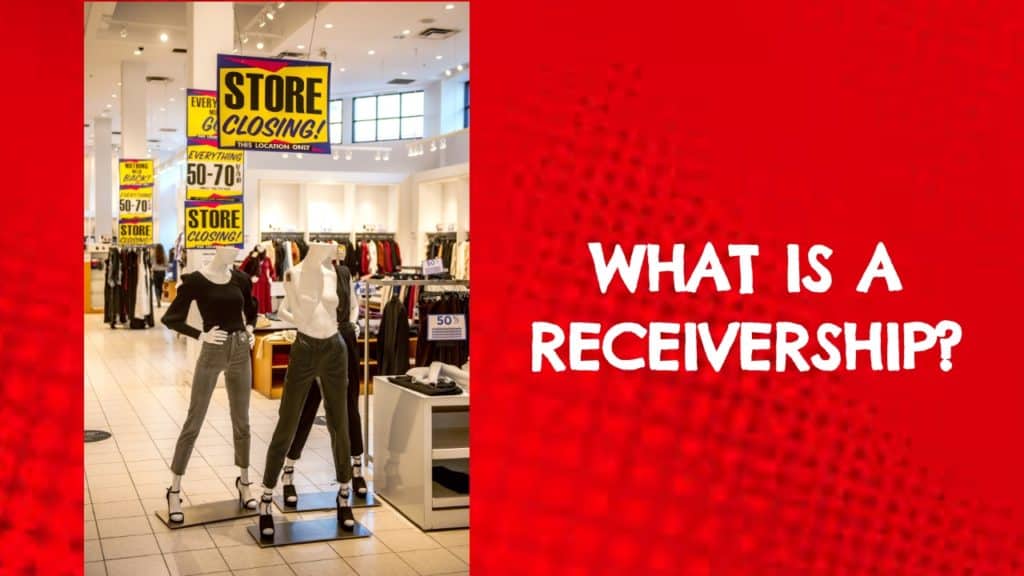
What is a receivership?

What is a receivership is a question I am asked often. Receivership is a remedy available to secured lenders to recoup as much of their debt as possible. A secured creditor, normally a financial institution, has lent funds to the company or individual under a secured financing transaction. They did it this way so in the event the company or person defaults on its finance payments, they can enforce against the assets subject to the security.

Receivership is a different process than bankruptcy for the sale of the properties of a corporation. In Canada, the secured creditor is typically the Bank as the lender. Normally, when a borrower misses payments, they tend to be insolvent. However, it is possible to have a receivership in Ontario even if the borrower is not insolvent.

In this Brandon Blog, I am going to tell you all about receivership. What is a receivership? How it works. When it can be used? What types of receivership are there?

What is a receivership? Examples of receivership in a sentence

What is a receivership? Receivership is a legal proceeding. Either a secured creditor privately appoints the receiver by instrument or a court appoints a person or company, called a receiver, to collect and manage the assets of a person or business that is unable to manage those assets effectively.

To understand more about the receivership process, we first need to look at the types of receivership. These are:

  • Liquidating receivership – This is a type of receivership that is brought about when a company ceases operations because the management of the company is unable to make it a viable business again. If the business is not viable, then the receiver will not operate it and will find buyers for the assets.
  • Operating receivership – This form of receivership is when parts of the company are viable or must otherwise continue operating under receivership. The business assets have a great deal of value if operating, but if shut down, relatively no value. In this case, the receiver will continue operating the business and the secured creditor will agree to lend funds if the business’s cash flow is insufficient. While operating the business, the receiver will also look for buyers.

The word “receiver” originally meant “a person appointed by a court to manage the affairs of another, especially a bankrupt or insolvent“. The term is now more widely applied and refers to a person placed in temporary charge and control of another person’s assets or a business entity. A receivership is a form of governance used in a wide range of situations. It is particularly common in the fields of law and business.

What is a receivership in a sentence – A receivership is a legal process started by a secured creditor either privately appointing a receiver by instrument or making an application to the court for an order that forces a party to carry out the duties of a receiver over the assets of a company or person.

what is a receivership
what is a receivership?

In Canada, section 243(4) of the Bankruptcy and Insolvency Act (Canada) (BIA) dictates that only a licensed insolvency trustee can act as a receiver. From the above, you should now realize that there are two types of receivers: (i) privately appointed receiver; and (ii) court-appointed receiver.

What is a receivership? 10 – Day Notice of Intention to Enforce Security

Section 244 of the BIA relates to a secured creditor who intends to enforce its security against an insolvent debtor, either through private appointment or by making an application to the court. This section states that any secured creditor who intends to enforce against all, or substantially all, of the inventory, accounts receivable or other property used by the insolvent debtor in its business, must give adequate notice. The notice must be in writing by using the form prescribed by the BIA.

The BIA defines adequate as a minimum of 10 days. A secured creditor must send out the 10-day notice of intention to enforce security and cannot enforce its security until the 10 days have expired unless the debtor consents in writing to earlier enforcement. The purpose of giving the 10-day notice is to allow the insolvent debtor a chance to either negotiate some resolution with the secured creditor or otherwise attempt to reorganize its financial affairs. An example of reorganizing would be speaking with new potential lenders, consideration of assets that could be sold to repay or otherwise reduce the indebtedness to the unhappy secured creditor.

The insolvent debtor may also be considering invoking an insolvency process such as a Division I Proposal under the BIA to reorganize all of its debts to implement a financial reorganization strategy. If a proposal or a notice of intention to make a proposal under the BIA is filed by the insolvent debtor before the expiry of the 10 day period, then the enforcement action of the secured creditor has initially stayed.

That secured creditor would have to make an application to the court to show that it has lost total confidence in the insolvent debtor’s abilities and it will not support any reorganization attempt. The application is to lift the automatic stay of proceedings that happened when the insolvent debtor filed, to allow the secured creditor to enforce its security against the assets to try to recover as much of the secured debt as possible through the appointment of a receiver.

Why did 10 days become the official notice period? This was part of amendments to the BIA made in 2009. It arose as a .esult of court decisions over what is reasonable notice. The most famous case is one that insolvency practitioners refer to as Lister v. Dunlop. The case made its way all the way up to the Supreme Court of Canada. The proper name of the case is R.E. Lister Ltd. v. Dunlop Canada Ltd., [1982] 1 S.C.R. 726. The decision was released on May 31, 1982.

The case dealt with a variety of issues, including what is receivership. Another of the issues considered was a reasonable notice to be given when a secured creditor demanded repayment of its demand loan, due to one or more defaults on loan? The most common default is defaulting on making the required loan payments on time. The loan agreement and debenture securing the loan stated that it was a demand loan and that the lender must give reasonable notice when making the demand.

However, in the “old days”, there was never a definition of what reasonable notice was. In fact, in Ontario, the law at the time was that reasonable notice only came into being if the business owner asked for a time to repay the loan. What was reasonable was a matter of discussion and negotiation. In Lister v. Dunlop, it was determined that Dunlop did not provide reasonable notice, based on the specific facts in that case.

Case law evolved and eventually, in 2009, the BIA was amended as part of the new provisions to bring receivership under the BIA and receivers subject to the supervision of the Office of the Superintendent of Bankruptcy Canada. The 10 day notice period was Parliament’s way to try to codify what reasonable notice is.

Court Appointed Receivers vs. Privately Appointed Receivers

As discussed above, receivers are appointed when secured creditors want to recover on their secured loans. Receivership is a remedy for secured creditors. It is not a remedy for unsecured creditors. The intent is for the receiver to take possession of the insolvent company assets subject to the security agreement and conduct a sale of assets. The proceeds of the sale will then be distributed in accordance with the priority of the creditors under the BIA. The secured creditor should want to make sure that it is in the first place to receive the funds from the receiver, for the receivership process they are paying for!

From the above, by now, you have probably realized that a privately appointed receiver is appointed in writing by the secured creditor. The receiver gets properly retained and then is given an appointment letter by the secured creditor after the 10 day notice period has either passed or was waived by the insolvent debtor. The privately appointed receiver gets its powers from the security documents which will outline the approved steps the receiver can take.

Court-appointed receivers, as the term implies, are appointed by the court. The secured creditor properly retains the receiver and makes an application to the court for the appointment of the receiver. The secured creditor is the plaintiff in this litigation. If the court grants the order, then the court-appointed receiver begins the receivership administration. The powers and responsibilities of the court-appointed receiver come from the court order, called the Appointment Order.

The steps the receiver will take in determining what method will realize the most money possible from the sale of assets should be pretty well identical under both a court-appointed receivership and a privately appointed receivership. The analysis of how and the steps to be taken to realize the most money possible from the assets of the company in receivership should be the same, regardless of the form of appointment.

Either way, as stated above, the receiver must be a licensed insolvency trustee who is experienced in acting as a licensed insolvency practitioner.

what is a receivership

What is a receivership? Duties of a receiver

Receivers are required to act honestly and in good faith. A privately appointed receiver has a duty to the secured creditor who appointed the receiver. A court-appointed receiver has a duty to act in good faith to all creditors.

The main roles of the receiver, whether private or court-appointed, can be summarized as to:

  • Secure all the assets of the insolvent debtor pledged under the security agreement or covered by the Appointment Order.
  • Make sure the receiver has control of property, the assets are conserved and properly insured.
  • Advance the rights of the debtor with the approval of either the secured creditor or the court. This could include continuing or beginning any necessary litigation.
  • Formulate the plan to maximize the realization from the sale of assets. This also involves a decision as to whether or not to operate the business of the company.
  • Offer the assets for sale in a properly advertised public sale.
  • Complete the sale and distribute the net proceeds in accordance with the provisions of the BIA.
  • Make regular reporting to the court and/or the appointing creditor
  • Obtain the approval of the secured creditor, and under a court appointment, approval of the court for all actions to be taken by the receiver.
  • In a court appointment, to obtain the approval of the court for its fee and disbursements and for those of the receiver’s legal counsel.

The Appointment Order generally will give the court-appointed receiver extensive powers.

I want to summarize the difference between company receivership and bankruptcy

I find that many times people will confuse the terms receivership and bankruptcy. What is a receivership is not the same as what is bankruptcy. I want to summarize the difference between company receivership and bankruptcy. There are important differences between bankruptcy and receivership.

The terms bankruptcy and receivership are often mistakenly used; they are not the very same thing. Bankruptcy is a legal process for unsecured creditors. The bankruptcy of a person and that person’s discharge from bankruptcy acts to discharge that person’s unsecured debt. As a company is never discharged from bankruptcy, the bankruptcy process has the effect of ending the company’s business.

What is a receivership? Receivership on the other hand, is a legal process for the benefit of secured creditors that safeguards their security if an insolvent borrower defaults on its secured debt financial obligations.

what is a receivership
what is a receivership?

What is a receivership? Is receivership the right solution for you?

I hope you enjoyed the what is a receivership Brandon Blog post. I have gone to great lengths to describe what is a receivership, the different types of receivership and that it is a remedy for secured creditors. However, many times, if properly handled, it can also assist the business owner. The entrepreneur may be very frustrated that the company can no longer pay all its debts as they come due and is looking for a way out, a way to sell the business or a way to get rid of the sick parts of the business and keep the good parts.

There may be sufficient value to take care of the secured creditor, but nothing for anyone else, including the unsecured creditors. There may be some business units that should not survive, but if cut out, the business will be viable. A receivership might very well accomplish the goals for the entrepreneur also. I have many times structured a receivership process, in order to meet the goals of the entrepreneur, while satisfying the requirements of the secured creditor.

Are you worried because you or your business are dealing with substantial debt challenges and you assume bankruptcy is your only option? Call me. It is not your fault that you remain in this way. You have actually been only shown the old ways to try to deal with financial issues. These old ways do not work anymore.

The Ira Smith Team utilizes new modern-day ways to get you out of your debt difficulties while avoiding bankruptcy. We can get you the relief you need and so deserve.

The tension put upon you is big. We know your discomfort factors. We will check out your entire situation and design a new approach that is as unique as you and your problems; financial and emotional. We will take the weight off of your shoulders and blow away the dark cloud hanging over you. We will design a debt settlement strategy for you. We know that we can help you now.

We understand that people and businesses facing financial issues need a realistic lifeline. There is no “one solution fits all” method with the Ira Smith Team. Not everyone has to file bankruptcy in Canada. The majority of our clients never do. We help many people and companies stay clear of bankruptcy.

That is why we can establish a new restructuring procedure for paying down debt that will be built just for you. It will be as one-of-a-kind as the economic issues and discomfort you are encountering. If any one of these seems familiar to you and you are serious about getting the solution you need, contact the Ira Smith Trustee & Receiver Inc. group today.

Call us now for a no-cost consultation.

We will get you or your business back up driving to healthy and balanced trouble-free operations and get rid of the discomfort factors in your life, Starting Over, Starting Now.

We hope that you and your family are safe, healthy and secure during this coronavirus pandemic. Ira Smith Trustee & Receiver Inc. is absolutely operational and Ira, in addition to Brandon Smith, is readily available for a telephone consultation or video meeting.

what is a receivership
what is a receivership?
Categories
Brandon Blog Post

CANADA HOUSEHOLD DEBT: HOW COVID-19 AFFECTED HOUSEHOLD DEBT AND IS THERE A LOOMING CORONAVIRUS DEBT CRISIS?

We hope that you and your family are safe, healthy and secure during this coronavirus pandemic.

Ira Smith Trustee & Receiver Inc. is absolutely operational and Ira, in addition to Brandon Smith, is readily available for a telephone consultation or video meeting.

canada household debt

Canada household debt: Pre-pandemic debt pressures

Pre-pandemic, Canada household debt was continually increasing. The number of homes carrying debt has increased significantly over the last decade. In 2012, Statistics Canada reported that for the average household, Canadian households’ debt-to-income (DTI) ratio was 150%. That means that debt was rising at a rate of $1.50 for every dollar of income. This was up from $1.10 or 110% the year before. In the first quarter of 2020, the DTI ratio hit 175.4%. The ratio had been stuck at that level since about 2016.

This increase in debt can have a negative effect on a household’s bottom line — and the larger the debt, the greater the negative effect. In this Brandon’s Blog, I discuss what has happened to Canada household debt during the COVID-19 pandemic.

How COVID-19 Affected Household Debt in 2020: Canada household debt well supported by a temporary income surge

Whether you consider the federal and provincial financial assistance given to Canadians primarily through Canada’s COVID-19 Economic Response Plan as an income surge or not, findings released by Canada Mortgage and Housing Corporation (CMHC) in November 2020 show that the government assistance did help Canadians cope with Canada household debt.

The key findings in Canada in the CMHC report were:

  • Q2 2020 Canada household debt ratio is 17% down from the Q1 ratio at 158%.
  • The DTI ratio for home mortgage debt was also down, falling from 115% to 105%.
  • These declines were a straight outcome of a boost in household disposable income.
  • The degree of outstanding Canada household debt had not changed.
  • On average, Canadian household disposable income grew by almost 11% between the Q1 and Q2 of 2020 and by 15% year over year.
  • The government’s temporary transfer of money to Canadian families had the effect of decreasing the Canada household DTI ratio to a ratio not seen since 2010.

    canada household debt
    canada household debt

COVID-19: The second wave brought uncertainty on household debt

How Has COVID-19 Affected Canada Household Debt? Around the time of the second wave, the COVID-19 pandemic had actually changed the family financial picture. The DTI ratio is a crucial indication of financial obligations as a vulnerability for primarily the financial real estate industries.

The Canada household debt-to-income ratio decreased in all significant Canadian cities in the second quarter of 2021. Under regular scenarios, such a decline would certainly indicate a general strengthening in families’ capacity to pay off financial debt. Federal government subsidies effectively supported the household lost income. This more than likely helped Canadians with lowering their non-mortgage debt throughout those months. Nonetheless, the mortgage part of Canada household debt has increased in the majority of metropolitan areas while employment has contracted.

At the same time, mortgage deferrals on mortgage payments offered by Canadian financial institutions stopped. This of course leads to worries about the ability of Canadians to stay current on their mortgage payments, even with the current extremely low-interest rates. Other government assistance programs have already ended or are coming to an end. The end of the government support programs leading to the temporary boosting of household income now brings uncertainty as to how Canadians will be able to manage to carry and pay down their household debt levels.

Canada household debt: Higher-income increases drive DTI ratios down

Statistics Canada also came out with an interesting report about the economic impacts of how COVID-19 affected household debt in 2020. The key findings of the Statistics Canada report are:

  • The gap between the lowest and highest income groups declined in 2020. As you might expect, the reason was that lower-income families received a greater share of government COVID-19 funds than higher-income households. Therefore, lower-income households saw more growth in household income than high-income earners, so, the gap closed.
  • There was a more powerful rebound in disposable income for lower-income households as well as younger households. Again, government coronavirus pandemic-related funds transfers are the reason why.
  • Lowest-income and youngest families experience the biggest decline in wages and salaries. As mobility restrictions, shutdowns and lockdowns took place across Canada, travel, food and beverage and the hospitality industries were hard hit because of closings for an extended period. These industries provided employment for many lower-income people. Layoffs resulted in declines in wages and salaries.
  • The dollars of COVID-19 assistance doled out by the federal government surpassed the losses in employment and self-employment incomes suffered.
  • COVID-19 support procedures have the biggest impact on lower-income and more youthful households.
  • Families were able to reduce monthly expenses to the point where it was less than their monthly income from all sources to boost their savings and cash balances on hand in 2020.
  • Lowest-income and youngest families saw the largest wealth gains.
  • Low lending rates facilitated home buying for lower-income and younger Canadians.
  • Lower-income families restricted their consumer debt balances on credit cards and other non-mortgage debt.
  • Younger homes restricted consumer credit (non-mortgage) borrowing in spite of higher consumer spending.
  • The biggest changes in DTI ratios occurred in lower-income and also younger families as opposed to higher-income households.

    canada household debt
    canada household debt

Canada household debt: How will COVID-19 affect financial assets, delinquency and bankruptcy?

The Canada Emergency Response Benefit (CERB) supplied financial support to Canadians who experienced negative financial impact by the COVID-19 pandemic. Eligible Canadians obtained $2,000 for a 4-week period (the same as $500 a week), between March 15 and September 26, 2020. Roughly $82 billion was paid to about 8.9 million Canadians through the CERB program which ended in September 2020.

The Canada Recover Benefit (CRB) sustains Canadians that have actually not returned to work as a result of COVID-19 or whose earnings have actually been reduced at the very least by 50%, and who are not eligible for Employment Insurance (EI). Eligible Canadians should be searching for work and accepting a job where it is reasonable to do so. The CRB gives $500 a week for up to 38 weeks. It is available only for 1 year. You make an application for the CRB for 2 weeks a time through your online CRA MyAccount. You have to wait until after you’ve missed out on 2 weeks of work to apply.

So the CERB is over. The CRB will get kicked to the CRB by this Fall. The Canada Emergency Wage Subsidy for support businesses continuing to employ people is supposed to end this June. Mortgage payment deferrals are over. Although during the first wave courts were closed so lawsuits were not advancing and at the same time collection agencies were not hounding people.

The courts have been open and litigation continuing for some time now. Over the last few weeks, people calling in to inquire about consumer proposals and personal bankruptcy have been saying they are getting calls from collection agencies looking for money, including, credit card debt payments. So pretty soon we should be back to business as usual as far as debt collection is concerned.

To date, as indicated above, COVID-19 has allowed Canadians in general to increase their financial assets and their rise in household net worth. As already described, for those lower-income families, the government support measures have actually had an increase in household income.

Delinquencies in Canada household debt have been ignored to a large extent in 2020 and bankruptcy filings were the lowest on record in 2020 in two decades. I expect that to change, as nobody is currently addressing any form of debt hangover. That is debts that people had pre-pandemic where no principal has yet been paid down and lenders have been understanding and therefore not pressing for collection. As collection calls increase, I expect that personal insolvency filings will also.

I expect that there will also be an increase in corporate insolvency filings. So far in Canada, most of the filings have been large retailers, certain cannabis companies and Laurentian University seeking bankruptcy protection in order to restructure under the Companies’ Creditors Arrangement Act (CCAA). As the economy gets better, companies will need to restart, hire more staff and generally gear up for an increase in business.

Companies will need capital to do so. Unless a company is sitting with a large cash balance, which for the majority is unlikely, they will need to tap into available lines of credit or do fresh borrowing. Lenders who have been understanding to date, may not wish to increase their exposure to certain companies or industries. If companies do not have the cash to operate, they will fail.

How will COVID-19 affect financial assets, delinquency and bankruptcy? I will now provide you with some thoughts to consider.

Canada household debt: Predictions and financial challenges for 2021

Canadians will be facing a great financial challenge as the economy rebounds from the economic impacts of the coronavirus. Canada’s economy pretty well made a sudden stop due to the COVID‑19 pandemic crisis.

This has actually caused extensive income losses, producing a tough scenario for many Canadian families. This is especially true for those that are highly indebted. From a financial stability point of view, a key worry is whether homes can stay up to date with their financial obligation payments. Highly indebted Canadians may very well end up in a financial crisis.

The COVID‑19 pandemic has a worldwide reach, and its aftermath is a lot more uncertain than how we recover from a normal recession. Economic activity will most certainly rebound as mandated lockdowns are gradually relieved. However, this will likely be a slow process, implying some of the macro-financial results of the pandemic might linger.

The Bank of Canada is worried about the 2021 financial challenges for all Canadians. To what degree can homes weather the storm? Canada’s central bank says that this eventually depends on:

  • the financial wellness of households last February 2020;
  • the efficiency of Canadian government support measures and policy activities targeted at the recovery; and
  • the rate at which the labour market recuperates.

The Bank of Canada will be looking at many Canada household debt factors as the economy recovers. Specifically concerning are the more financially vulnerable households. Things that will give the Bank of Canada concern about household liabilities are:

  • Mortgagors (the homeowners) with not many financial guardrails.
  • Home equity credit lines can supply a financial reserve however at the expense of increased borrowing.
  • Will government fiscal policy aid in supporting Canadians until household income can get back to or exceed pre-pandemic levels?
  • Unemployment rates may not be a fully accurate indicator of household revenue losses.

Only time will tell how 2021 unfolds for Canadians and the economy.

canada household debt

Canada household debt summary

I hope you enjoyed this Canada household debt Brandon Blog post. Are you worried because you or your business are dealing with substantial debt challenges and you assume bankruptcy is your only option? Call me. It is not your fault that you remain in this way. You have actually been only shown the old ways to try to deal with financial issues. These old ways do not work anymore.

The Ira Smith Team utilizes new modern-day ways to get you out of your debt difficulties while avoiding bankruptcy. We can get you the relief you need and so deserve.

The tension put upon you is big. We know your discomfort factors. We will check out your entire situation and design a new approach that is as unique as you and your problems; financial and emotional. We will take the weight off of your shoulders and blow away the dark cloud hanging over you. We will design a debt settlement strategy for you. We know that we can help you now.

We understand that people and businesses facing financial issues need a realistic lifeline. There is no “one solution fits all” method with the Ira Smith Team. Not everyone has to file bankruptcy in Canada. The majority of our clients never do. We help many people and companies stay clear of bankruptcy.

That is why we can establish a new restructuring procedure for paying down debt that will be built just for you. It will be as one-of-a-kind as the economic issues and discomfort you are encountering. If any one of these seems familiar to you and you are serious about getting the solution you need, contact the Ira Smith Trustee & Receiver Inc. group today.

Call us now for a no-cost consultation.

We will get you or your business back up driving to healthy and balanced trouble-free operations and get rid of the discomfort factors in your life, Starting Over, Starting Now.

We hope that you and your family are safe, healthy and secure during this coronavirus pandemic.

Ira Smith Trustee & Receiver Inc. is absolutely operational and Ira, in addition to Brandon Smith, is readily available for a telephone consultation or video meeting.

canada household debt
Categories
Brandon Blog Post

IS CERB TAXABLE? EXCLUSIVE REPORT AS TO WHAT HAPPENS WHEN YOU DON’T HAVE THE MONEY TO PAY OFF YOUR TAX RETURN

We hope that you and your family are safe, healthy and secure during this coronavirus pandemic.

Ira Smith Trustee & Receiver Inc. is absolutely operational and Ira, in addition to Brandon Smith, is readily available for a telephone consultation or video meeting.

Is CERB taxable? CERB is a taxable payment

Last weekend we set our clocks ahead 1-hour. This time of year always gets me thinking of doing my income tax return. So with taxes on my mind, I believed it would certainly be appropriate to discuss CERB, which is the short-hand for the Canada Emergency Response Benefit.

So, is CERB taxable? That is what I want to discuss with you today.

Since March 2020, I have written several blogs about different issues facing Canadians with Canada’s COVID-19 Economic Response Plan, including the Canada Emergency Response Benefit (CERB). My 3 previous blogs on CERB were:

Now I look at is CERB taxable?

Is CERB taxable? What is the CERB?

Simply to freshen your memory, I think a summary of the CERB eligibility requirements will nicely establish the stage.

To be eligible for the $2,000 CERB payment by applying through the Canada Revenue Agency (CRA), you needed to have met specific CERB requirements for each of the CERB time periods you were making an application for. The Government of Canada specified the eligibility requirements to be:

  • You didn’t obtain CERB or Employment Insurance (EI) from Service Canada for the CERB dates now being requested.
  • You did not voluntarily give up your work.
  • You live in Canada and are not younger than 15 years of age.

You earned at least $5,000 (before taxes) in the preceding 12 months, or in 2019, from 1 or even more of:

  • job income;
  • self-employment income;
  • provincial benefits for maternity or parental leave;
  • your job hours have been lowered as a result of COVID-19;
  • you have actually quit or will give up work as a result of COVID-19;
  • you are not able to work as a result of COVID-19, for example, because you are looking after an individual;
  • you have been paid EI benefits for at least one week of qualifying after December 29, 2019, and your entitlement to such benefits have ended;
  • this is your first application because:
    • you have quit or will stop working, or you are working decreased hours, as a result of the coronavirus;
    • you don’t expect to earn over $1,000 in gross work or self-employment earnings for at least 14 days right during the 4-week duration.
      If you are getting a subsequent period: You are still not utilized or self-employed, or you are doing decreased hrs due to COVID-19. You do not prepare for transforming $1,000 in gross income; and
    • you expect this to continue throughout the whole 4-week period you are applying for.

      is cerb taxable
      is CERB taxable

The CERB emergency benefit: Our federal government started to attack the self-employed

The Canadian CERB program is completed. The CRA approved and paid retroactive applications until December 2, 2020. Currently, they are doing audits to see if individuals who received CERB did not really qualify.

As you may recall, this revealed a one-of-a-kind issue to the self-employed individual. CRA was inconsistent in their descriptions and definitions of the threshold to get CERB. The concern that was uncovered for self-employed people was in the computation of income. The qualification guidelines and eligibility standards concerning self-employed earnings had been misunderstood by both the public and CRA employees alike!

Self-employed Canadians have said that when they reviewed the federal government’s CERB site, they understood that their business had to have earned (before taxes) a minimum of $5,000. CRA stated that the $5,000 was net income, your business earnings after deducting all your expenses. Numerous people understood it to be gross earnings as meeting the income test requirement for obtaining CERB. The federal government originally stated that those that misunderstood this regulation would need to pay all the CERB back. Luckily for them, the government has withdrawn from that position and will just rely upon the income tax system to determine what those people will have to pay in income tax.

Now for is CERB taxable?

Is CERB taxable? Report T4E amounts on your tax return

Along with any other income you might have earned in 2020, if you got the CERB or other emergency benefits from Service Canada or any kind of EI payments, you will certainly be sent out a T4E tax slip showing the amount paid. So is CERB taxable? Sadly, yes.

These benefits are taxable. Any of this kind of payment you received prior to December 31, 2020, will certainly need to be reported on your 2020 tax return. You will receive a T4E slip at tax time or you may also get your T4E info from your My Service Canada Account.

is cerb taxable
is CERB taxable

Maximize your tax planning for CERB before our debt-ridden government comes looking for more

When I think of tax planning, I think of ways to avoid (but not evade) income tax. In the case of CERB and other such benefits, the planning is really making sure you actually have the money to pay your 2020 income tax liability. The reason for this was that, unlike employment income, no income tax was deducted at source for the CERB payments. The federal government wanted to get the money out as quickly as possible without extra bookkeeping.

How much tax will I have to pay on CERB is a question people ask. Given the duration that the benefits lasted for, the maximum CERB that Canadians might have obtained is $12,000 of revenue. Nevertheless, the amount of income tax obligation that you will owe cannot be calculated on this number alone. It will be calculated based on the full amount you made throughout the year.

Because the sum total of CERB paid to you is taxable income, it will be reported on line 11900 of the 2020 income tax return. That amount, in addition to any other sources of income, works through your income tax return to end up with your total taxable income and your total deductions. After that, you determine your income tax obligation, what taxes at source were subtracted or tax paid by you in instalments. The net amount is either tax payable or a tax refund. So the income tax payable on the CERB payments you obtained relies on what your marginal tax rate is.

Contributing to an RRSP may have been the only other way to reduce your total taxable income and therefore your total income tax. However, in a year where you had to rely on CERB, you may not have had surplus funds to contribute to an RRSP in 2020 or the first 60 days of 2021.

Is CERB taxable? When do I have to pay CERB taxes?

Unlike our 2019 income tax returns, there are no extensions being offered this year. The filing deadline for your 2020 income tax return is April 30, 2021, for most people. A self-employed person has until June 15, 2021, to file their income tax return. However, anyone who has a tax balance owing to CRA must pay it by April 30.

What if I didn’t set aside taxes for CERB? What happens when you can’t pay the tax on your CERB tax debt?

If you really did not reserve the right amount, or anything, to pay your taxes for CERB, and you find that you owe a substantial amount (possibly not hideous if CERB was your only earnings in 2020) then you’ll still have to figure out how to pay your taxes.

This situation resembles the majority of self-employed people whose taxes are not subtracted at source and need to be really attentive at reserving cash from their income to pay their income tax obligations. If they don’t have the funds readily available, they need to clamber to find the money for the CRA.

After your tax return is prepared, if you recognize you don’t have the cash to pay the tax owing, talk with your tax advisor. Perhaps they can establish a realistic timetable to offer CRA to pay your tax bill over some months using a current dated cheque and a few post-dated cheques to cover off the balance. This will give you the breathing room and financial help that you need.

However, the COVID-19 pandemic has left many Canadians in dire straits. They have barely enough money to pay for food and rent or mortgage payments, let alone income tax. If you find yourself in a situation where post-dated cheques are not even a possibility, contact a licensed insolvency trustee. We will provide you with a free consultation where we will go over your financial situation with you and make recommendations.

If you are working again and have a steady income, perhaps a consumer proposal is right for you. If you are not back at work or do not have full hours as you did before the pandemic, perhaps bankruptcy is your answer. Either way, contact a licensed insolvency trustee and find out what all your viable options are to settle your debts and eliminate that stress from your life.

is cerb taxable
is CERB taxable

Is CERB taxable summary

I hope you have enjoyed this is CERB taxable Brandon’s Blog. Do you or your company have too much debt? Are you or your company in need of financial restructuring? The financial restructuring process is complex. The Ira Smith Team understands how to do a complex restructuring. However, more importantly, we understand the needs of the entrepreneur or the person who has too much personal debt.

You are worried because you are facing significant financial challenges. It is not your fault that you are in this situation. You have been only shown the old ways that do not work anymore. The Ira Smith Team uses new modern ways to get you out of your debt troubles while avoiding bankruptcy. We can get you debt relief freedom.

The stress placed upon you is huge. We understand your pain points. We look at your entire situation and devise a strategy that is as unique as you and your problems; financial and emotional. The way we take the load off of your shoulders and devise a debt settlement plan, we know that we can help you.

We know that people facing financial problems need a realistic lifeline. There is no “one solution fits all” approach with the Ira Smith Team That is why we can develop a restructuring process as unique as the financial problems and pain you are facing. If any of this sounds familiar to you and you are serious about finding a solution, contact the Ira Smith Trustee & Receiver Inc. team today.

Call us now for a free consultation.

We will get you or your company back on the road to healthy stress-free operations and recover from the pain points in your life, Starting Over, Starting Now.

We hope that you and your family are safe, healthy and secure during this coronavirus pandemic.

Ira Smith Trustee & Receiver Inc. is absolutely operational and Ira, in addition to Brandon Smith, is readily available for a telephone consultation or video meeting.
is cerb taxable
is CERB taxable
Categories
Brandon Blog Post

STATUTE OF LIMITATIONS: IS STATUTE BARRED DEBT A BASIC PROPER BANKRUPTCY CLAIM IN ONTARIO?

statute of limitations

We hope that you and your family are safe, healthy and secure during this coronavirus pandemic.

Ira Smith Trustee & Receiver Inc. is absolutely operational and Ira, in addition to Brandon Smith, is readily available for a telephone consultation or video meeting.

If you would prefer to listen to the audio version of this Brandon Blog, please scroll to the very bottom and click play on the podcast.

Know Your Limitations: The Basic Limitation Period in Ontario

The basic limitation period in Ontario is 2 years from the date knowledge of the claim arises. The phrase “statute of limitations” is used to describe this time period. This is the time period between when you discover you have a claim and when you are legally permitted to bring that claim forward in a court of law. If you do not file your lawsuit within the 2-year limitation period, your right to sue will be extinguished and your claim will be forever lost. This is known as your claim being statute barred.

Statute of limitations: Limitations Act, 2002, S.O. 2002, c. 24, Sched. B

Each province has its very own rules, but the policies are comparable throughout the nation. In Ontario, the period is set by the Limitations Act, 2002, S.O. 2002, c. 24, Sched. B (Act). The Act sets out a time limit as to when legal proceedings might be commenced by suing. It defines the time in which an aggrieved person can start a claim developing from any type of injury, loss, or damage that happened as a result of an act or an omission.

The Act sets out the two-year limitation period as follows:

“Basic limitation period

4 Unless this Act provides otherwise, a proceeding shall not be commenced in respect of a claim after the second anniversary of the day on which the claim was discovered. 2002, c. 24, Sched. B, s. 4″

This is where the 2-year statute barred period of time is set in Ontario limitations law.

Can Your Debt Be Eliminated by the Statute of Limitations in Ontario?

Most people don’t realize that their debts can expire, just like the milk at the back of your fridge. In fact, while you can’t get rid of your debt by throwing it in the garbage, it can be eliminated by the basic statute of limitations under the Act. Debt is not considered timeless in Ontario.

There are two other main concepts under the Act also, which are not part of the discussion in this statute of limitations Brandon Blog. The two other main concepts are:

  • Ultimate limitation period (Section 15 of the Act).
  • The different proceedings in respect of for which limitation periods do not apply and therefore there are no time periods or time limits to worry about (Section 16 of the Act).

To keep it simple, when it comes to unsecured debt, the proceeding in respect of trying to recover on a debt by initiating legal action, and the focus of this blog, the applicable limitation period is the 2 year time statute of limitations period.

statute of limitations

Statute of Limitations: How long can a debt collector pursue an old debt in Ontario

Last week I wrote a blog on various experts predicting that as the economy reopens, there will be increased activity by collection agencies and debt collectors. In that blog, I discuss the role of the debt collection agency and that they are all governed by provincial law. I also highlighted that they get their work either by trying to collect on the debts of their clients or they purchase accounts in default for less than the total amount owed and then try to collect as principal. Outstanding credit card debt is fertile ground for debt collectors and the debt collection process.

What do you do when a debt collector is pursuing you for an old debt? If it’s one you know you can’t pay, your first step should be to contact the agency and inform them of your situation. It’s important, to be honest, and precise when you tell them why you can’t pay what you owe.

Debt can be a very scary thing. When you owe money, you can feel like your life is one big bill you need to pay. It’s easy to want to hide from your creditors, but the more you avoid them, the more likely they will be to take drastic measures to collect their money. If you find yourself in such a situation, the best thing you can do is to face the music and get the matter settled. If you are in Ontario and have questions about your debt, or how to get it resolved, you can contact a Licensed Insolvency Trustee.

Statute of limitations: What does Ontario limitations law say about making a claim on debts even if I can’t sue?

In Ontario, there used to be substantial support for the interpretation that the right to be paid is not extinguished by the Act, but only the remedy of starting legal action in respect of the debt was eliminated. Various other provinces in Canada have passed provisions in their legislation that expressly states that upon the expiration of a limitation period, civil liberties are extinguished.

However, Ontario has not. In Ontario, the old way of thinking was that a financial obligation is snuffed out if an action on the financial debt is not brought within two years of its being due. Instead, the financial obligation continues to be owed.

There was even Ontario judicial authority for this position in:

But that is now in doubt given the recent decision of Master J. E. Mills (as she then was) who is now Justice J.E. Mills (the Registrar in Bankruptcy). Her decision released on March 8, 2021, In re: John Trevor Eyton, 2021 ONSC 1719 (CanLII), may have changed that. I say may, because the Temple and Duca cases were decided by a judge in the Ontario Superior Court of Justice. The Registrar in Bankruptcy sits below the Justices. However, she distinguished the Eyton case before her from the above two judicial decisions.

As you will read below, that decision may very well lead to a great statute of limitations period in respect of defence against any debts that a debt collector is trying to recover on, either by themselves or through legal action, where the debt went into default 2 years or more before.

Statute of limitations: Time limits, collections and bankruptcy

So what is the Eyton bankruptcy decision all about? The issue was a creditor appealing the Trustee’s decision disallowing the creditor’s proof of claim pursuant to s. 135(4) of the Bankruptcy and Insolvency Act (Canada) (BIA) (Form 77—Notice of Disallowance of Claim). The basis of the disallowance was that the Trustee took the position that the claim was statute barred.

The claim was for an unsecured loan where the last payment made was more than 2 years before the date of bankruptcy. Although there may have been some security agreement entered into, it was not perfected under Ontario law at the time of the bankruptcy. Therefore, there was no valid and enforceable security agreement in place.

The Trustee decided that the creditor, being a reasonable person, would have known about the default on the unsecured loan when the next scheduled payment was missed. That was more than 2 years before the bankruptcy and they did not take any action, including legal action. The Trustee went on to say that if the claim in respect of this unsecured loan could no longer be made, then the debt no longer exists.

statute of limitations

Limitations analysis by the Court

It was indisputable by the creditor that the financial obligation owed by the bankrupt person was statute-barred under the Act and was not enforceable by way of legal action. The creditor relied upon the Temple and Duca cases listed above. They said that it stood for the proposition that although there was finality in respect of the fact that the creditor could not sue in court, the liability in respect of this unsecured debt remained.

The Trustee countered with a long background of case law which has held that in order to be a provable claim in bankruptcy, the financial obligation must be recoverable by legal process. If the financial obligation is statute-barred at the date of bankruptcy, the proof of claim is not sustainable. This principle was adopted by the Privy Council in 1943, the Alberta Court of Appeal in 1988 and the Court of Appeal for Ontario in 1996.

The court considered both lines of cases and decided that the cases cited by the Trustee, especially the 1996 Ontario Court of Appeal decision, bound the Registrar in Bankruptcy. She decided that the Temple and Duca cases could be distinguished and did not bind her decision.

Therefore, the creditor’s appeal was dismissed and the Trustee’s decision that if you can’t sue the debt is no longer a valid one was the correct interpretation.

What the Eyton statute of limitations analysis by the Court means for bankruptcy proceedings

There are some crazy results flowing from this Eyton decision which I am sure will result in more court decisions down the road.

First, the Registrar in Bankruptcy’s decision was in line with the Ontario Court of Appeal, but not certain judges’ decisions as decided in the Temple and Duca cases. The Temple and Duca cases were decided in a court lower than the Court of Appeal for Ontario but higher than the court in which the Registrar in Bankruptcy sits. So until a judge adopts her reasoning that the Temple and Duca cases are distinguishable, the first crazy result is that you have the various levels of the Ontario court system misaligned on this issue.

As a result of this decision in Eyton, we now have a second anomaly. In Temple, one of the judge’s findings was that a debt that is statute barred because of the statute of limitations can be used as the basis for qualification to launch a Bankruptcy Application against a debtor.

The Registrar in Bankruptcy noted that the line of cases relied upon by the Trustee in Eyton was not put before Justice Newbould (as he then was) when he heard Temple. Justice Newbould found in Temple that there was no Canadian authority for the suggestion that a statute barred debt could not support an application for a Bankruptcy Order.

The Registrar in Bankruptcy said that declaration was appropriate in the Temple case. As a result of these decisions, the legislation as it presently stands in Ontario is that a debt that is statute barred due to the statute of limitations, can be used in support of a Bankruptcy Application but after that could not constitute a provable claim in that same bankruptcy. This of course makes no sense.

Statute of limitations for unsecured debts and bankruptcy – What next?

My understanding is that the Eyton decision is being appealed. The appeal must be heard by a judge. Whatever the outcome of the appeal is, it will hopefully do away with these anomalies that currently exist.

UPDATE: THE APPEAL DECISION HAS BEEN RELEASED. TO READ OUR DISCUSSION ABOUT THE APPEAL RESULT, CLICK HERE.

The things to further consider are:

  • Has the debtor given written confirmation of the existence and enforceability of the debt prior to the expiration of the limitation period and before the date of bankruptcy? If yes, then it is a valid debt and is a provable claim in bankruptcy.
  • The disclosure of a statute barred financial obligation in the sworn Statement of Affairs by the insolvent debtor does not make up a recognition of the debt or the waiver of any limitation period for Limitations Act purposes.
  • In respect of claims, the debtor is unsure of and the debtor has not given the written confirmation identified above, then the best treatment would be to include the creditor on the Statement of Affairs but as a contingent creditor. This will give that creditor notice of the bankruptcy and they can decide whether or not to file a proof of claim with backup. If filed, the Trustee will then review the claim and make a determination as to its validity and amount.

    statute of limitations
    statute of limitations

Statute of limitations summary

I hope that you found this statute of limitations Brandon Blog interesting. If you are concerned because you or your business are dealing with substantial debt challenges and you assume bankruptcy is your only option, call me. It is not your fault that you remain in this way. You have actually been only shown the old ways to try to deal with financial issues. These old ways do not work anymore.

The Ira Smith Team utilizes new modern-day ways to get you out of your debt difficulties while avoiding bankruptcy. We can get you the relief you need and so deserve.

The tension put upon you is big. We know your discomfort factors. We will check out your entire situation and design a new approach that is as unique as you and your problems; financial and emotional. We will take the weight off of your shoulders and blow away the dark cloud hanging over you. We will design a debt settlement strategy for you. We know that we can help you now.

We understand that people and businesses facing financial issues need a realistic lifeline. There is no “one solution fits all” method with the Ira Smith Team. Not everyone has to file bankruptcy in Canada. The majority of our clients never do. We help many people and companies stay clear of bankruptcy.

That is why we can establish a new restructuring procedure for paying down debt that will be built just for you. It will be as one-of-a-kind as the economic issues and discomfort you are encountering. If any one of these seems familiar to you and you are serious about getting the solution you need, contact the Ira Smith Trustee & Receiver Inc. group today.

Call us now for a no-cost consultation.

We hope that you and your family are safe, healthy and secure during this coronavirus pandemic.

Ira Smith Trustee & Receiver Inc. is absolutely operational and Ira, in addition to Brandon Smith, is readily available for a telephone consultation or video meeting.

 

Categories
Brandon Blog Post

HOW TO BEAT 407 PLATE DENIAL RULES EACH AND EVERY MONTH FOREVER

We hope that you and your family are safe, healthy and secure during this coronavirus pandemic.

Ira Smith Trustee & Receiver Inc. is absolutely operational and Ira, in addition to Brandon Smith, is readily available for a telephone consultation or video meeting.

how to beat 407 plate denial

How to beat 407 plate denial: What happens if you don’t pay 407?

Last week I received an inquiry from a woman who owes 407 ETR some $25,000. She wanted to know how to beat 407 plate denial. Being a licensed insolvency trustee and having written on the topic before, I thought it was already well known that there is only one real sure-fire way to beat them from denying your plate sticker when you show up to pay your renewal plate fee. So I am writing this Brandon Blog as a refresher since it is still a question people ask.

If you’re not paying your 407 tolls, chances are you’re going to get a letter in the mail asking you to pay up. You’ve probably also heard that the 407 is a hotbed for toll dodgers, but how many of them actually get found out?

According to figures from the 407 ETR, the company’s collection agencies and police forces find that only about 2% of toll dodgers pay up voluntarily. However, 407 ETR has the ultimate collection weapon; Ontario can enforce plate denials against those who have an outstanding 407 toll bill. People are always interested in how to beat 407 plate denial.

How do I fight my 407 payment?

You really cannot fight with 407 on your payment. The tolls are calculated based on your usage of the toll road. They know where you entered and exited the highway. They also have a picture of your vehicle and plate. So, unless you can prove that the amount you were billed is false charges, you cannot fight it. You may be able to negotiate, sort of, but you can’t fight it.

Can you negotiate 407 bill?

The 407 bill is one of the most intimidating bills that people receive in Ontario. It is called the 407 bill because it is associated with the 407 highway and that’s also where the tolls are collected. The 407 bill is the toll amount that you need to pay based on your trip. If you drive on the 407, you will have to pay the 407 bill.

The 407 bill is issued by 407 ETR, a company that operates the 407 highway. If you have received a 407 bill, you should pay it right away. If you do not pay it, you will receive a collection notice from the company.

407 ETR offers an Exceptional Hardship plan to aid consumers that have accumulated substantial tolls and who would suffer “exceptional hardship” with the denial of their licence plate. The plan permits a consumer to pay the amount owing over an agreed time period, rather than all at once.

Approval is at the sole discernment of 407 ETR. Their decision is final and there is no avenue for appeal. As you can see, it isn’t much of a negotiation.

As you will see below, the only way to successfully negotiate the 407 bill is with the assistance of a licensed insolvency trustee.

how to beat 407 plate denial

How to beat 407 plate denial: Does 407 affect credit?

It’s common knowledge that unpaid traffic tickets can result in fines and penalties galore, but did you know unpaid 407 ETR tolls can also result in toll fines and penalties? And, like unpaid traffic tickets, they can also affect your credit score and therefore your credit rating. When you do not pay your bills on time, they will eventually send the unpaid bills to a collection agency. Once in the hands of the collection agency, it gets reported to the credit bureaus. That reporting negatively affects your credit score.

How to beat 407 plate denial: Can 407 ETR garnish wages?

If 407 ETR sued people in court and obtained a judgement, then yes they could garnish wages. But they don’t sue. Rather, they rely upon their powers of license plate suspension to block those seeking license plate renewal.

It is stopping anyone from being able to how to beat 407 plate denial that is the real collection tool. That is the reason why 407 ETR had to amend their procedures because of a Supreme Court of Canada decision.

If you can’t pay the 407 toll charges, only a licensed insolvency trustee can show you how to beat 407 plate denial

Denying license plates were found by the court to be a collection tool. In Canada, there is only one professional who can stymie the 407 collection tool. So if you can’t fight 407 bills and you really can’t negotiate with them, then how to beat 407 plate denial seems to be a long shot, no? That is where the Supreme Court of Canada in the “Moore Decision” comes into play.

Our firm, Ira Smith Trustee & Receiver Inc., has assisted individuals in negotiating their 407 bills. A debtor who becomes our client is very easy to work with since they do not deny that they have debt and they know that they must pay. Our firm takes the 407 on. We start communicating with them by listing 407 ETR as a creditor in your bankruptcy or consumer proposal.

how to beat 407 plate denial

How to beat 407 plate denial: Highway Toll Arrears and the “Moore Decision”

In my blog titled 407ETR FAIRNESS-ONTARIO COURT OF APPEAL ENSURES FRESH START I described to you the decision of the Court of Appeal for Ontario in 407 ETR Concession Company Limited v. Superintendent of Bankruptcy (In the Matter of the Bankruptcy of Matthew David Moore) (the Moore Decision).

The highway’s owners appealed that decision to the Supreme Court of Canada (SCC). On Friday, November 13, 2015, the SCC released 3 decisions all dealing with the very same fundamental problem: does the federal government’s Bankruptcy and Insolvency Act (BIA) take paramountcy over provincial laws professing to handle the concerns of debt and bankruptcy in Canada. The SCC answer was a resounding YES!

What did the SCC decide about the provincial law about 407 debt settlement?

The SCC dismissed the appeal of the 407. The SCC considered whether the plate denial stipulations of the Highway 407 Act conflicted with the discharge provisions of the BIA. 407’s position was that provincial regulation about plate denial needs to apply after a person’s discharge from bankruptcy. The Attorneys General for several provinces, including Ontario, advanced arguments on behalf of the right of the province to enforce all laws for vehicle licensing.

The SCC’s decision supported the Moore Decision which found that the discharge section of the BIA bypasses and overrides the plate rejection arrangements of the Highway 407 Act.

What is the effect of a bankruptcy or consumer proposal on ETR debt settlement?

The effect of the SCC’s decision is that pre-bankruptcy amounts owed to the ETR are provable claims under the BIA and the plate rejection scheme under the Highway 407 Act, 1998, S.O. 1998, c. 28 can no longer be used to collect pre-filing amounts. Therefore, 407 etr financial debt settlement is possible.

Upon the filing of bankruptcy or consumer proposal, in which 407 ETR is provided for in the sworn Statement of Affairs as a creditor, 407 ETR will remove from plate rejection any amount still owing from the period before your Assignment in Bankruptcy, or filing of consumer proposal (that includes interest and any other type of charges incurred on those amounts). The Ministry of Transportation will be told to amend its records to show this change.

You will be removed from plate denial if:

  • you have not incurred any type of brand-new financial obligation with 407 ETR for which you might remain barred from how to beat 407 plate denial since the filing of your bankruptcy or consumer proposal; and
  • you have no debts with the Ministry of Transportation (e.g. parking tickets) causing plate denial.

In both instances, once the balance owing is adjusted from your account, then, the individual is allowed to get plate renewal from the Province.

How to beat 407 plate denial: This seems to be the end of the discriminatory plate denial

407 ETR must and is following the SCC decision. They have set up the procedure for those who have been rejected from plate renewal and who have filed either for bankruptcy or a consumer proposal. The 407 ETR debt, including penalty and interest, is reversed and plate revival issued.

Remarkably enough, there was no evidence whatsoever in any one of the Court hearings, including this one heard by the SCC, as to the 407 ETR’s right to reject anyone from providing credit to them. When you get your transponder, the 407 ETR is actually extending credit to you, in the form of using the toll highway with the promise to pay when your bill arrives. It is no different than you making purchases on your credit card and your bank expects you to pay them when it shows up on your bill.

How to beat 407 plate denial summary

I hope that you found this how to beat 407 plate denial Brandon Blog interesting. If you are concerned because you or your business are dealing with substantial debt challenges and you assume bankruptcy is your only option, call me. It is not your fault that you remain in this way. You have actually been only shown the old ways to try to deal with financial issues. These old ways do not work anymore.

The Ira Smith Team utilizes new modern-day ways to get you out of your debt difficulties while avoiding bankruptcy. We can get you the relief you need and so deserve.

The tension put upon you is big. We know your discomfort factors. We will check out your entire situation and design a new approach that is as unique as you and your problems; financial and emotional. We will take the weight off of your shoulders and blow away the dark cloud hanging over you. We will design a debt settlement strategy for you. We know that we can help you now.

We understand that people and businesses facing financial issues need a realistic lifeline. There is no “one solution fits all” method with the Ira Smith Team. Not everyone has to file bankruptcy in Canada. The majority of our clients never do. We help many people and companies stay clear of bankruptcy.

That is why we can establish a new restructuring procedure for paying down debt that will be built just for you. It will be as one-of-a-kind as the economic issues and discomfort you are encountering. If any one of these seems familiar to you and you are serious about getting the solution you need, contact the Ira Smith Trustee & Receiver Inc. group today.

Call us now for a no-cost consultation.

We will get you or your business back up driving to healthy and balanced trouble-free operations and get rid of the discomfort factors in your life, Starting Over, Starting Now.

We hope that you and your family are safe, healthy and secure during this coronavirus pandemic.

Ira Smith Trustee & Receiver Inc. is absolutely operational and Ira, in addition to Brandon Smith, is readily available for a telephone consultation or video meeting.

how to beat 407 plate denial
Call a Trustee Now!