Categories
Brandon Blog Post

CANADIAN BANKRUPTCY AND INSOLVENCY LAW: WHAT TO THINK ABOUT BANKRUPTCY

320efcd005100f3ee3522fefba70f917 4

Introduction

The holiday gift buying season is over. Next month the credit card bills will be arriving. Maybe you overspent on holiday gifts this year. Maybe you had too much debt to start with, and you know this new spending will put you over the top. Perhaps you already have questions about Canadian bankruptcy and insolvency law.

Perhaps you spent wisely but modestly because you were acutely aware of your financial problems. Maybe you never were an uncontrollable spender. Perhaps a specific damaging event outside of your control caused you to wind up deep in the red. So far you have worked hard to overcome the financial challenges, but for the first time you are thinking that you should read up on Canadian bankruptcy and insolvency law.

Either one unfortunate life issue or one foolish monetary choice is all it could take. Despite how you arrived, there is no simple escape, except perhaps winning the lottery or an unexpected inheritance.

Bankruptcy is one alternative

If you’ve fallen under just what seems like impossible financial debt and you have no chance to get out of it, bankruptcy is one alternative. It’s not constantly an excellent one– and never ever one to be taken gently.

Below is exactly what you should understand prior to making any kind of choices about filing personal bankruptcy.

Long-term results

Almost 63,372 people declared bankruptcy in 2016, an action that will certainly have an effect on them for a long time to come. They have certainly started learning about the Canada bankruptcy and insolvency law regime.

While declaring bankruptcy relieves debt pressures caused by decisions and/or issues of the past, it could adversely influence your future. The record of your filing for bankruptcy will certainly stay on your record for up to 10 years.

Numerous companies run a credit check on job applicants. The record of your bankruptcy will come up. Potential employers have either their own bias or unique interpretation about this. Perhaps the job you are applying for requires you to be bonded. Faced with many qualified applicants, a potential employer may very well choose the person who does not have a bankruptcy on their record. As I have previously written, it can likewise have an influence on insurance coverage costs.

The Canadian bankruptcy and insolvency law system is designed to financially rehabilitate the honest but unfortunate debtor. As a licensed insolvency trustee, I certainly believe in our system. However, it is also my role to point out to anyone considering personal bankruptcy, there are many issues to consider before taking this choice.

Evaluating your alternatives

For some people bankruptcy many not be the only option. Just how do you recognize its the right one for you? What are the options under Canadian bankruptcy and insolvency law?

Prior to making any type of choice about filing for bankruptcy, you should first contact a licensed insolvency trustee (LIT) in your area for a free consultation. The LIT will review with you your current financial situation and ask you various questions. The purpose is for the LIT to gain an understanding of your current financial position and how you got there. Based on this information, the LIT will be able to give you a preliminary opinion about what your realistic options are.

In general, the options available to someone experiencing difficulty in paying their debts on time include: (i) credit counselling; (ii) debt consolidation; (iii) (consumer) proposal; and (iv) personal bankruptcy.

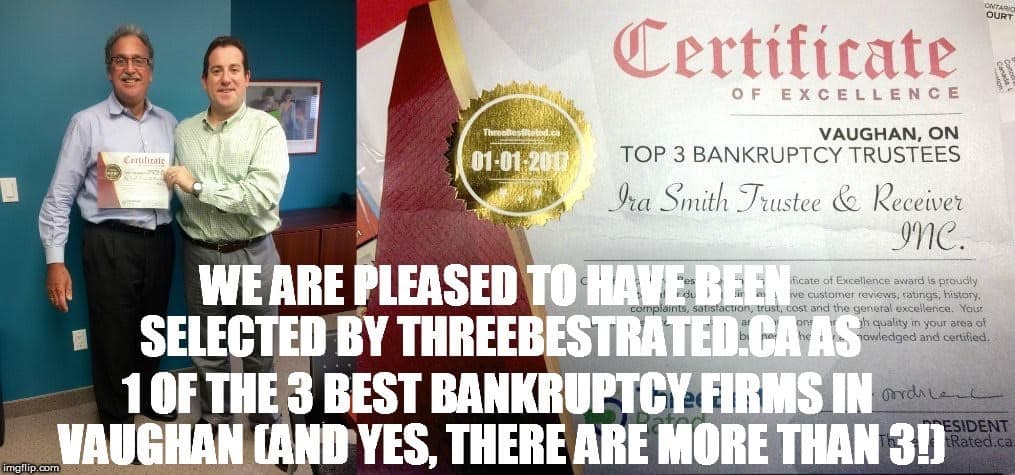
3bestaward
canadian bankruptcy and insolvency law

The proposal option used for half of all personal insolvency filings in 2016

I am using brackets around the word “consumer” when talking about the proposal option. A consumer proposal is available to anyone who owes the amount of $250,000 or less, not including the amount you owe on loans registered against your home. If you owe more than this $250,000 threshold, a proposal may still be the most viable option for you. That proposal process just falls under a different section of the Bankruptcy and Insolvency Act (Canada) (BIA). It is not called a consumer proposal, but rather a Division I proposal. The BIA governs Canadian bankruptcy and insolvency law.

As I mentioned above, in 2016, 63,372 Canadians filed personal bankruptcy. However the total number of people who filed an insolvency proceeding in 2016 in Canada was 126,843. So what did the other 63,471 people do? They filed a proposal. So roughly half of the people who filed an insolvency proceeding in Canada in 2016 to solve their debt problems, were able to avoid bankruptcy.

In 2016, 63,471 individuals filed a (consumer) proposal. This bankruptcy alternative is an organized settlement of your financial debts for an amount less than the total you owe. You can take up to 60 months of regular monthly payments to complete your (consumer) proposal.

The proposal provisions of Canadian bankruptcy and insolvency law allow those people “in the red” to keep their assets they can afford to continue paying for, including their home. At the same time, they made a monthly payment to the LIT to be distributed to their creditors for their past debts that they could not afford to repay.

Canadian bankruptcy and insolvency law: Beginning the insolvency filing process

If you believe that bankruptcy may be for you, your first action is to speak with a LIT. Remember, you are not only looking to them for solutions. The LIT is not only interviewing you. You are also interviewing the LIT to decide if this is someone you feel you can work with.

If you don’t feel comfortable after speaking to that first LIT, there is nothing wrong with you getting a second opinion from a different LIT. Not only is that not anything wrong with that, I urge it. You are going to be working with your LIT for quite some time. Make sure that you believe it will be a comfortable relationship for you.

The bottom line is if you got in over your head with money, you do have alternatives. Get an expert viewpoint on just what your options might be under Canadian bankruptcy and insolvency law. If you can’t make your monthly payments, you need professional help; and you need it now. Contact a professional Toronto bankruptcy trustee.

The Ira Smith Team has a cumulative 50+ years of experience helping people who are facing a financial crisis and we deliver the highest quality of professional service. Make an appointment for a free, no obligation appointment today and Starting Over, Starting Now you’ll take your first steps towards financial freedom.

We wish all of our readers and subscribers a healthy, happy and prosperous New Year 2018.
canadian bankruptcy and insolvency law

Categories
Brandon Blog Post

BUILDING AN EMERGENCY SAVINGS FUND: WE ALL NEED AN EMERGENCY FUND TO PROTECT OUR RETIREMENT

BUILDING AN EMERGENCY SAVINGS FUND 0
building an emergency savings fund

Building an emergency savings fund: Introduction

Many of us go about living our lives without giving any thought to building an emergency savings fund. After all, we live in the land of socialized medicine, so unlike our American neighbours, we won’t be ruined by medical expenses. If we need to come up with some cash for the plumber or car mechanic or roofer, there’s always a credit card, payday loan or retirement savings.

Building an emergency savings fund: Surviving a major life event

But what would happen if you lost your job, became disabled or got divorced? A credit card or payday loan can’t fix this kind of catastrophic situation. And, potentially, you could wipe out all of your retirement savings just trying to stay above water. How many ex-employees of Sears (and other companies like Sears) do you think are now living off their retirement savings?

Building an emergency savings fund: Canadians are not saving

Canadians are not saving. According to a Canadian Payroll Association survey:

  • Almost 50% Canadians are living paycheque to paycheque
  • 48% rely on payday to make ends meet
  • 25% couldn’t pay $2,000 bill if it popped up within the next 30 days

And a CIBC poll by Harris/Decima found that 45% of Canadians did not have an emergency savings fund at all.

Building an emergency savings fund: Protecting your retirement income

The lack of emergency savings can cause financial problems far beyond a short-term cash crunch, new research shows. Some people without cash reserves end up drawing on their retirement accounts, putting them at risk of shortfalls later in life, according to an analysis by the Pew Charitable Trusts.

Don’t think of an emergency fund as just a way to tap into some cash for an unexpected expense; think of it as a way to protect your retirement income.

Building an emergency savings fund: Some simple saving tips

Many people have said that they just can’t afford to save but saving doesn’t have to be large sums of money. Put away whatever you can afford, but do it regularly and diligently. If you still think you can’t afford to save, then drop an expense and save that money.

  • Bring your lunch to work
  • Stop buying designer coffee
  • Use public transit instead of your car
  • Put a limit on how much to spend on Christmas gifts or only buy for the children
  • If you smoke, stop now
  • Go out less to bars and restaurants

Building an emergency savings fund: Do you have more immediate financial problems?

Your retirement savings are not your emergency fund. Set up an emergency fund (if you don’t already have one) and commit to save. If you’re living paycheque to paycheque or already dipping into your retirement savings to make ends meet, give us a call today.

The Ira Smith Team has a successful track record of helping people just like you solve their financial problems and get back on track Starting Over, Starting Now.

Categories
Brandon Blog Post

HOLIDAY SPENDING MISTAKES IN CANADA: 12 SECRETS TO SOLVE THEM

3eadaee332085a4a6c58b13577cfd47b 1

Holiday spending mistakes in Canada: Introduction

Other than for some last-minute small items, your holiday spending is complete. The credit card bills will arrive next month. You will soon find out if you made any holiday spending mistakes in Canada.

Maybe you overspent and will now have too much debt you won’t be able to repay. Perhaps you spent wisely, but it will put you over the top given your current debt level. Regardless, you now need to know how to help yourself financially from holiday spending mistakes in Canada.

Holiday spending mistakes in Canada: You are not alone being in debt

Are you fighting financial threats daily? Do you wish you could unlock how to help yourself financially? If so, you are not alone. Lots of Canadians have fought the good fight to barely survive. There have been many articles in the media of the dangers of living with way too much debt. Many Canadians are living paycheque to paycheque.

The Bank of Canada has warned Canadians for years now. With the rate of interest having been so reduced, Canadians have taken on much debt. Now interest rates are beginning to rise. You have to know how to help yourself financially, so that you will not only be able to make your minimum payments, but you will also be able to start reducing your debt. Your holiday spending mistakes has now increased the pressure on you. I do not want to see anyone living this way.

Holiday spending mistakes in Canada: Who this information will help

You know you have debt troubles and this information will help if you:

  • often pay expenses after the date they are due;
  • on a regular basis write cheques that don’t clear your bank;
  • use room from one charge card to get a cash advance to pay the minimum due on a different card;
  • get telephone calls from a debt collector;
  • routinely ask pals or relatives for money;
  • utilities are threatening to cut you off;
  • cannot live to a balanced budget based on your current family income;
  • need to take a second job just to meet normal daily living expenses;

Holiday spending mistakes in Canada: Statistics Canada reporting

Statistics Canada reported that on average, at the end of 2016, Canadian families have a debt-to-income ratio of $1.67 for each dollar of after-tax revenue. At the end of the second quarter of 2017, they report that the ratio has risen to $1.68. Although Canadians’ net worth is also rising, primarily due to rising housing prices. So now housing prices have dropped, yet the debt remains.

If this sounds like how you have lived, then you need to take corrective action now from your holiday spending mistakes before it is too late. Bankruptcy should not be your first option. There are bankruptcy alternatives which include credit counselling, debt consolidation and a consumer proposal.

holiday spending

Holiday spending mistakes in Canada: Our 12 secrets on how to help yourself financially

If you are living in a debt threatening zone, it is currently the time to act to turn things around. Consider the following 12 secrets to stop your debt from spiralling out of control.

  1. Safeguard Your Health – Make sure that you are taking good care of yourself and your health, both physical and mental. You won’t be any good to yourself or your family if you are ill.
  2. Don’t Talk Yourself Out of What You’re Worth – Don’t put up with the things as they are of your job without seeking out new opportunities. Don’t sell yourself short. Make sure you understand if there are opportunities awaiting you that will pay you more than you are currently earning. Stay current on your marketable skills.
  3. Keep It Simple – Don’t over-complicate things. Don’t get involved with difficult payment plans. Put yourself in a position where if you need an essential item, you can pay for it. Don’t get sucked in by sexy advertisements for things that have long-term payment plans.
  4. Give to Your Future Before Giving to Others – There are many worthwhile causes that clamour for our money. Make sure your own house is in financial order before you give to others. Volunteer your time and not your money. You will find it very rewarding and you will be helping both yourself and others at the same time. Just say no to relatives and friends who ask you for money, until you have no debt yourself.
  5. Make Savings Automatic – Otherwise known as pay yourself first. Set up a special bank account and have the same percentage hived off of your paycheque every payday. Do not touch the funds in that special bank account, until you have enough money to invest in a safe investment. Have this money work for you over and over.
  6. Control Your Impulse Spending – Make sure that you have a monthly budget and follow it. Your budget should account for all your necessary living expenses for you and your family AND allow the percentage you are hiving off each pay period for your investment savings account. If there is anything left over, this balance should be used for debt reduction. Don’t buy on impulse as you will regret it.
  7. Evaluate Your Expenses, and live frugally – We can all get by on less than we think. This ties back into your budget. Make sure that your necessities of life and your regular payday savings are all accounted for. By cutting out expensive daily coffee drinks and other non-essential items, you will be surprised how much you will have leftover for debt reduction.
  8. Invest In Your Future – Upgrade your skillset. Take a course that will make you more marketable. Make room in your budget for this type of expense, as it will generate more income for you for the long-term future.
  9. Keep Your Family Secure – Involve your entire family in the family budget process. Everyone needs to be on the same page and working towards the same goals. Meet regularly to go over your real performance as compared to budget. When everyone knows the plan is working, they will all feel secure and try even harder.
  10. Eliminate And Avoid Debt – Make sure that you are not taking on any new debt. Use budgeting to make sure that you allow a certain amount out of your monthly budget for paying down debt. Even small amounts add up over time. You will see and feel the difference it makes in your life.
  11. Use The Envelope System – Set up a separate envelope for each of your weekly necessities, based on your budget. Only take out enough cash for those amounts and place the right amount of cash in each envelope. Do not use credit cards to pay for the necessities; just use the cash in each envelope. Make the cash in your envelopes last the entire week, then rinse and repeat.
  12. Pay Bills Immediately And Automatically – If you don’t like the envelope system, here is another idea. Pay as much as you can online from your bank account. Set up regular automatic monthly payments so that the bills are paid. You can also use this method for your regular payday savings account. Make sure you budget properly so that you realize what money is coming out of your account in a month automatically so that you don’t overdraw your bank account.

Holiday spending mistakes in Canada: Will you need immediate help from your holiday spending mistakes?

These 12 steps will ensure that you get back on the road to financial health as soon as possible. You can recover from your holiday spending mistakes.

If you find that you have too much holiday or other debt, debt collectors are harassing you and you can’t keep them all happy, then you need to take more action. I say more action because it will be in ADDITION to the above 12 steps. What you will need to do is to immediately speak to a professional trustee.

The Ira Smith Team has a cumulative 50+ years of experience helping people who are facing a financial crisis and we deliver the highest quality of professional service. Make an appointment for a free, no-obligation appointment today and Starting Over, Starting Now you’ll take your first steps towards financial freedom. We can devise a plan so you can come back from your holiday spending mistakes in Canada.

holiday spending

Categories
Brandon Blog Post

RETIREMENT AGE IN CANADA: OUR INSIDER’S LOOK INTO WHY 70 BECAME THE NEW 65 FOR RETIREMENT

retirement age in canada 0
retirement age in canada

Retirement age in Canada: Introduction

We’re now a nation of long-livers, and as a result we need to reconsider the way we look at retirement age in Canada. The great news is that we’re living longer than earlier generations. The bad news is that we haven’t planned for a retirement that could last for 30 years. As a result, our longer lifespans are having a profound effect on our personal finances.

Retirement age in Canada: Time to adjust your mindset

Unless you’re one of the few who can retire early and fund a 30 year retirement, it’s time to adjust your mindset. Think of 70 as the new 65. Many Canadians are already trending in this direction:

  • Older Canadians are already increasing their participation in the labour force. Retirements are being postponed (2014 survey by Philip Cross at the Fraser Institute)
  • “Longevity and the changing workplace have put in place a trend towards a more transitional retirement” (Retirement expert and certified financial planner Tom Feigs)

Retirement age in Canada: Will retiring at 70 help you live longer?

Personal finance expert, Suze Orman, says that resetting your retirement age to 70 will help you live well, into your nineties. She suggests:

  • Delay tapping retirement benefits until age 70
  • Lay the foundation to work longer: Talk to your employer before retirement about how you could continue to contribute on what could be a part-time basis
  • Take the long view: Working longer will give you more confidence that you’re financially set for retirement

Retirement age in Canada: Delaying retirement reduces stress about retirement

The reality is that most Canadians still count on CPP, OAS and Guaranteed Income Supplement (GIS) for their retirement income. Instead of worrying if you’ve saved enough for retirement at 65, think of 70 as the new 65. Continue working, earning, contributing and enjoying life.

Retirement age in Canada: Do you have too much debt and getting close to retirement?

Whether you’re planning to retire at 65 or the new 65, the best piece of advice we can give you is to make sure you’re debt free going into retirement. If you’re still struggling with a debt load that you can’t get rid of, give Ira Smith Trustee & Receiver Inc. a call. We can help you deal with debt and give you back peace of mind so that debt is one thing you won’t have to worry about in retirement Starting Over, Starting Now.

Categories
Brandon Blog Post

DIMINISHED CAR VALUE CLAIM: ARE CAR AND TRUCK DEALERSHIPS FORCING YOU TO CAR LOAN DEBT CONSOLIDATION BECAUSE OF DIMINISHED CAR VALUE

2

Diminished car value claim: Introduction

You need to know just how car and truck manufacturers and dealerships have achieved higher sales in Canada. By forcing a diminished car value claim on you. Everything starts with pitches like this: 112 bi-weekly at 0%, reduced payments extended over a longer time period. Over half of brand-new vehicle loans are for 7 years or longer. This is a huge change from exactly what was the standard for perhaps 5 years.

Diminished car value claim: What is the best term for a car loan?

The very best time period for an auto loan, on average, is no greater than 5 years. If you are the type of person that hangs on to your car for a very long time, then you could also opt for a 7 or 8 year loan. Regardless of your choice, the key is that you have to hang on to your car for at least the length of the loan.

Letting go of your car earlier than when the loan is fully paid off, either through a forced sale, accident write-off or trade-in for a new set of wheels, will cause you to suffer the dangers of negative equity. This will produce a diminished car value claim. Continue reading below as I make the case.

Diminished car value claim: “Oh I could manage that vehicle payment”

Canadians have purchased much more pricey cars and trucks as a result of those reduced monthly payments. The typical customer sees that they believe “Oh I could manage that vehicle payment, I could handle that no worry”. For the vehicle manufacturers and dealers, it is simply an extra means of bringing customers right into the car dealership. They are marketing them something that they actually cannot pay for. It doesn’t take much to produce a diminished car value claim.

Diminished car value claim: A recipe for problems

Seven year financing, “that to me is short-sighted just a recipe for problems” says John Carmichael, Chief Executive Officer of the Ontario Motor Vehicle Industry Council (OMVIC). Salesmen ought to be discussing all the financing choices and the dangers of the financing choices and negative equity. Customers need a lot more information about a diminished car value claim. Thus people can easily get involved in a treadmill of debt.

Diminished car value claim: There is so much negative equity in a car being financed

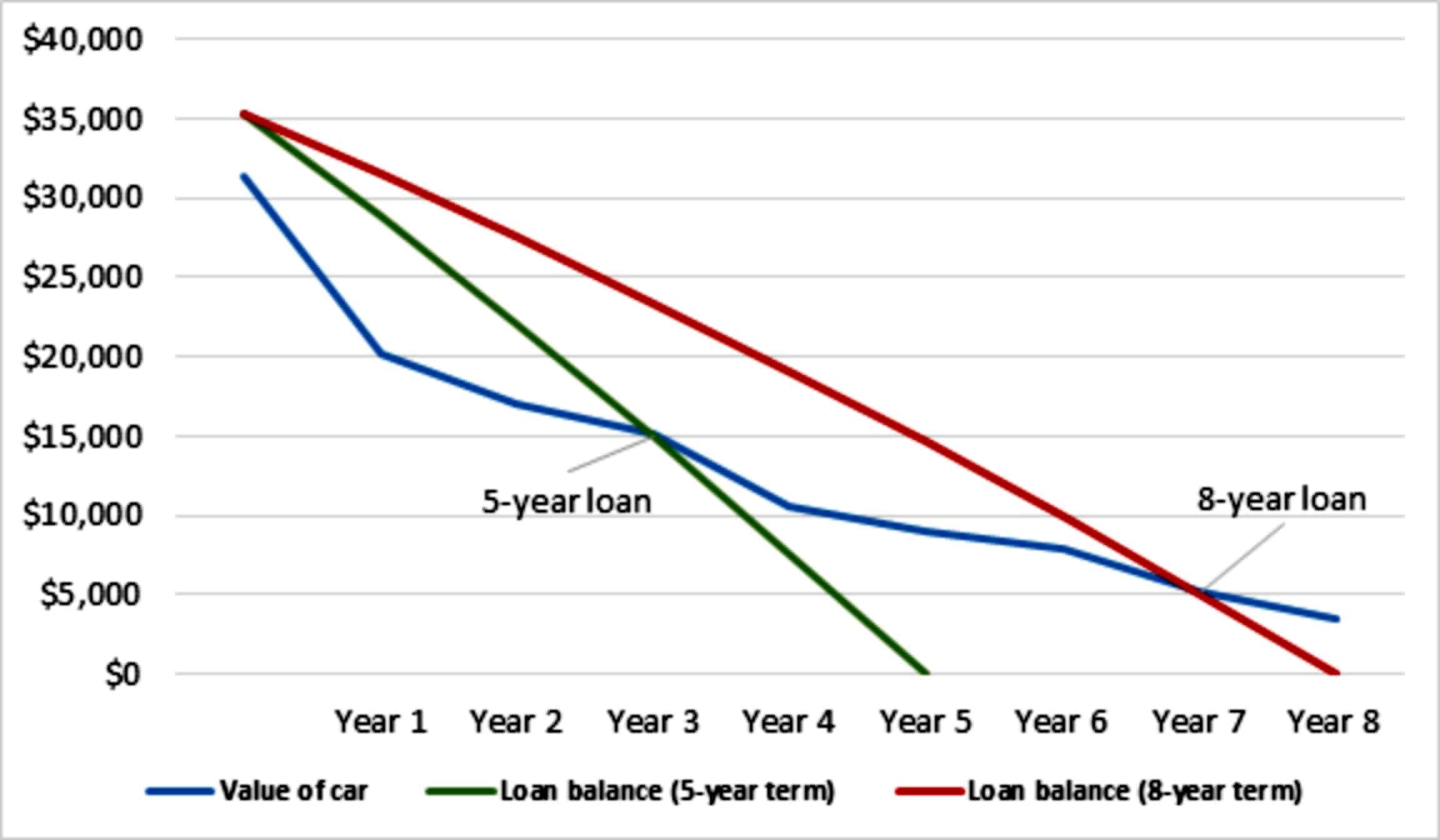
Let me show you an example of how a diminished car value claim works. Here is a negative equity comparison on a $31,300 car with a 4% interest rate.

Source: Government of Canada, Financial Consumer Agency of Canada

diminished car value
diminished car value claim

This chart highlights 2 vital factors:

  1. With five-year financing, you would not start gathering “favourable or positive equity,” until completion of the 4th year. By comparison, with an eight-year term, you would stay in an adverse or negative equity circumstance up till the 7th year of your financing.
  2. Negative equity has the tendency to be greater in the first 2 years of an auto loan. This is since automobiles drop rapidly in the very first year of use. Thus, a bigger section of each of your payments goes to interest in the very first couple of years.

You can find a diminished car value calculator website online. You can calculate how much negative equity you have in your vehicle for free online.

Diminished car value claim: The economic dangers of negative equity

If something unforeseen occurs and you should have to offer your auto for quick sale, you will probably lose on the loan. What you will be able to sell the car for will be less than what you owe on it. If this were to happen, you would need to have to put your hands on cash to cover your loss, i.e. the difference between the sale price and what you still owe on it.

If you are in an accident and your insurance company tells you that your car is a write-off, the cash you get from the insurer won’t cover what you still owe on your vehicle loan unless you have added insurance policy protection. Then if your insurer decides the current value of your auto is $10,000 however you still owe $16,000 on your financing, you will be required to cover the $6,000 shortage.

If your car is worth less than the amount you owe on your vehicle loan and you trade-in your vehicle at a car dealership to purchase another, you could wind up paying a great deal of extra money. You would spend for the brand-new car and have to cover the amount still owing on the old loan.

All these examples show how you could be forced to part with your car before you planned to. You will be taking on more debt because your vehicle was worth less than the amount of the loan against it. This would amount to a bigger financing and even more interest costs.

This will then snowball to produce a larger negative equity on your new vehicle because you are starting with a loan equal to more than your new car is worth. That is if you can find someone who would even lend on that basis to you. Certainly they would need more than just the new car as collateral.

Diminished car value claim: What to do if you have debt problems

Do you have debt problems, negative equity in your vehicle and zero or not enough equity in your other assets? If so, you need professional help and you need it now. More debt isn’t an answer for you. Don’t seek out a car loan debt consolidation lender.

Contact the Ira Smith Team. We can help you get out of your debt problems. We will put you back on track for debt and stress free living Starting Over, Starting Now. Book an appointment for a free, no obligation consultation today and take the first step to ending the cycle of debt.

diminished car value claim 0
diminished car value claim
Categories
Brandon Blog Post

FINANCIAL SKILLS: FINANCIAL EDUCATION WILL NOW BE PART OF ONTARIO HIGH SCHOOLS

FINANCIAL SKILLS 2
financial skills

Financial skills: Introduction

Schools typically provide a standard curriculum – mathematics, literature, languages, history, geography and the like; but conspicuously absent are any life skills such as a financial education. We have students graduating from high school that know when the Magna Carta was signed, but often with no concept of money. Finally Ontario is going to begin teaching financial skills to high school students.

Financial skills: Why do we need the schools to teach financial literacy?

“Canadians don’t understand the basics,” says Laurie Campbell, CEO of Credit Canada Debt Solutions. Many adults, she says, struggle with simple concepts like spending less than they earn.

As we recently pointed out, Canadians are among the most indebted in the world! A borrowing binge fueled by low-interest rates, is putting many Canadians in a financial danger zone and not setting an example for young people. They’re growing up seeing debt accumulation – not saving and budgeting.

Financial skills: The Investor Education Fund study

An Investor Education Fund study revealed:

  • Only 44% of parents believe their children are ready to manage money
  • Only 39% of high school students feel prepared to manage their finances after high school
  • 84% of parents and 70% of high school students want financial learning in the classroom

Financial skills: Students are looking for financial education

Tricia Barry, executive director of Money School Canada and a former banker, says that students know little more about money than they did five years ago. Ms Barry believes that:

  • By the time school students are in Grade 8 they should have an understanding of the concepts of income, expenses and interest; but they don’t
  • When they graduate from Grade 12, they should have a solid understanding of saving, smart spending, budgeting, borrowing and credit cards; but they don’t

According to Ms Barry, there is a direct correlation between the lack of money management training and the fact that more than 33% of those ranging in age from 18-29 are burdened with a debt of $10,000 or more.

Financial skills: Will all Ontario students be taught financial literacy?

At the moment financial skills courses will be rolled out as pilot projects at 28 high schools for 700 Grade 10 students. After the pilot projects are completed in June 2018, teachers and students will be asked to provide feedback. Based on the feedback provided, a financial skills mandatory careers course will be designed and implemented in the fall of 2018. In addition to financial skills the students will learn entrepreneurship and digital literacy in addition to career and life planning.

Schools need to lead the charge when it comes to financial literacy. As you can see by the alarming statistics of Canadian household debt, we can’t expect our young people to learn good money management skills at home. Knowledge is power and we need to do something to stem the tide of uncontrollable debt.

Financial skills: Do you need help with your debts?

Not only should financial skills be taught in high school but in elementary school as well; and the earlier the better. It’s time to break the cycle of debt while you still have options. Give the Ira Smith Team a call. We’ve got years of experience helping Canadians just like you, get back on track to debt free living. We can help.

3bestaward
financial skills
Categories
Brandon Blog Post

SEARS CANADA NEWS: HOW EDDIE LAMPERT WILL EVENTUALLY DRIVE SEARS HOLDINGS INTO BANKRUPTCY

Sears Canada news: Introduction

The news for Sears Holdings out of the United States is not better than the Sears Canada news. Customers at Sears can’t discover Whirlpool appliances or ladies’ Levi Strauss denim and currently the Wall Street Journal reports they are short on one of the holiday’s hottest toys– the L.O.L. Surprise– because its maker is questioning Sears’ financial wellness.

Sears Canada news: The sad, slow demise of Sears Holdings

Why it matters: Sales at Sears accounted for about 1% of U.S. GDP in the 1960s, however years of competition with big-box stores and online merchants, incorporated with current (mis)management by CEO Eddie Lampert, has whittled down Sears’ financial position extensively.

Sears Canada news: (Mis) management

I put “mis” in brackets because, I am not convinced that Mr. Lampert’s plan was to make Sears a successful retailer. He may have just seen assets with value that he could liquidate to reap financial rewards from until Sears can no longer function as a viable retailer. So what we see today with Sears, may very well have been his management plan all along. (See more on this hypothesis below).

Sears Canada news: The Wall Street Journal article

Currently distributors are minimizing deliveries, tightening funding terms, or declining to work with the merchant completely from concern of being stiffed if Sears is forced into bankruptcy. This is all according to a Wall Street Journal (WSJ) article on October 31, 2017 titled: “Inside the Decline of Sears, the Amazon of the 20th Century”.

Sears Canada news: What the analysts say about Sears Holdings

Bill Dreher covers Sears Holdings for Susquehanna Financial Group. WSJ states that “We see no viable path for Sears to succeed as a retailer,”. He worries that the suppliers are starting to lose confidence in Sears. He also suggests that this is what put Sears subsidiary Kmart into bankruptcy in 2002, when it was an independent company. Lampert took control of Kmart after its bankruptcy and then leveraged its stock to acquire Sears in 2005.

The fraying patience of vendors is clear as reported by the WSJ:

  • LG Electronics and Samsung are demanding money in advance to supply certain products.
  • Sears sued two long time manufacturers of its Craftsman tools brand before this year to keep them shipping product to stores. This is despite the Craftsman brand name was sold by Sears months earlier.
  • Clorox is imposing harder payment terms for its well-known products.

    3bestaward
    sears canada news

Sears Canada news: Sears Holdings CEO

Mr. Lampert’s management style is partly responsible for Sears’ current battles, according to the article. The WSJ reports that Lampert took on a strategy of skimping on investment and upgrades and instead used that cash to buy back Sears shares from certain shareholders.

This approach maintained Sears stock price, until the financial crisis hit. It is no secret that Americans’ preference for online shopping grew significantly, which has negatively affected all brick and mortar retailers. Sears is no exception.

The WSJ articles states that Eddie Lampert doesn’t visit Sears headquarters greater than a pair of times annually. He likewise hardly ever visits stores and favours that top Sears executives do the same. He argues that it is more affordable and more efficient to connect with store managers over videoconference.

Sears Canada news: Sears Holdings continues to cannibalize itself

Sears Holdings has closed unprofitable stores and spun off lines of business. The merchant’s shop footprint has been more than cut in half. Since 2010, the number of Sears locations has dropped from 4,000 stores to 1,250 currently. Sears’ current strategy is to shut a lot more. From 2010 to 2016, its sales have dropped by almost half, from $43.3 billion to $22.1 billion last year.

Sears Canada news: The financials tell the story

Sears had just one quarter of favorable same-store sales growth between 2008 to the 1st quarter of 2017, according information from retail study company Retail Metrics. During that very same time, Sears’ operating income was negative in all but 8 of 37 quarters.

Sears is a laggard in a lagging field. The business has suffered EBIDTA losses, and requires cash for operating expenditures such as:

Sears Canada news: Sears Holdings has fended off bankruptcy; for now!

Sears has been able to fend off default for many years mostly with store closures, staff lay offs, asset sales and loans from Lampert’s hedge fund ESL Investments. In trying to revive sales, Sears has partnered with Amazon to market Kenmore items, tested new store styles and revived its holiday catalogue.

Few traditional stores have actually thrived in this period of online shopping. But Sears, which was at one time one of the most innovative retailers in America, has been left more than most retailers partly due to Lampert’s decisions.

For these reasons, one day I fear that there will be a big Sears clearance. Sears Holdings news out of the United States will be the same one day as what we already know about the Sears Canada news. It is only a matter of time, IMO anyway.

Sears Canada news: It doesn’t need to be your company’s news

If you’re attempting to discover a way to reorganize your firm’s debt, to ensure that you could avoid a Sears situation, call Ira Smith Trustee & Receiver Inc. If we consult with you early, we could develop a restructuring and turnaround strategy. By doing this your business will once again thrive.

Our approach for every person is to develop an outcome where Starting Over, Starting Now takes place. You’re just one telephone call away from taking the important actions to return to leading a healthy, balanced, and stress free life.

Categories
Brandon Blog Post

CANADIAN HOUSEHOLD DEBT CRISIS: CANADIANS ARE DEAF TO NOT HEED WARNINGS AS CANADIAN HOUSEHOLD DEBT LEVELS NOW LEADS THE WORLD

canadian household debt crisisCanadian household debt crisis: Introduction

Canada is known around the world for many things including our hospitality, pristine lakes, beautiful mountains and exciting cities. Unfortunately, because of the Canadian household debt crisis, we’re now becoming known as one of the most indebted countries in the world!

Canadian household debt crisis: The OECD report

A report from the Organization for Economic Co-operation and Development (OECD) shows that:

  • Canadian households top the list of countries surveyed as the most indebted
  • Our household debt has surpassed Canada’s annual Gross Domestic Product (GDP) – it’s now more than 100% of GDP in Canada

Canadian household debt crisis: We are record breakers

We’re breaking other records as well:

Canadian household debt crisis: We have become deaf to all the warnings

We and many other financially responsible organizations and professionals have warned Canadians about the dangers of taking on too much debt. But, Canadians have become deaf to the message. And, borrowing with historically low-interest rates has become downright intoxicating. Sadly, these borrowers aren’t paying any mind to the fact that interest rates may rise which could have serious financial ramifications for many Canadians.

Canadian household debt crisis: It is time to focus on debt repayment and savings

It’s time to rein in the borrowing and focus on saving. Interest rates won’t stay low forever and with nothing saved, how will you pay your bills? Is the thought of retirement nothing more than an elusive dream?

Canadian household debt crisis: What can you do to get back on track financially before disaster strikes?

Canada, let’s stop leading the world in accumulating debt! Listen to the messages out there. The borrowing binge has to stop. Let’s reverse this Canadian household debt crisis.

Please look at your finances and see if you’re living paycheque to paycheque, or are already having trouble paying your bills. If this describes your current situation, you need professional help now!

A professional trustee can solve your financial problems with immediate action and the right plan. The Ira Smith Team has 50+ years of cumulative experience dealing with issues just like the ones that you’re facing. Give us a call today and let us give you back peace of mind Starting Over, Starting Now.3bestaward

Categories
Brandon Blog Post

ONLINE BANKRUPTCY SEARCH: THIS CANADIAN INSOLVENCY RECORDS SEARCH RENEWAL (IRS) WON’T CHASE YOU FOR MONEY!

2

Online bankruptcy search: Introduction

This blog is about the Canadian government’s plan to update its online bankruptcy search function. It is an update to our November 15, 2017 Brandon’s Blog titled: “BANKRUPTCY FILINGS FREE PUBLIC RECORDS: WILL FREE SEARCHES TURN YOU INTO A PERSONAL BANKRUPTCY RECORDS SLEUTH FOR THE TRUTH”.

As you can imagine, I have a schedule for creating Brandon’s Blog. I created the above-mentioned blog and related video on the Office of the Superintendent of Bankruptcy (OSB) insolvency records search renewal (IRS) program and posted it for publishing on November 15. After doing so, the OSB published an update on its IRS program. The purpose of this blog is to give you the updated information.

The OSB November 2017 update offers more information about the IRS post it published in August 2017.

Online bankruptcy search: Updating the technology

The OSB has stated that its updated IRS system will consist of modern-day safeguards. The new IRS will secure the private information of people or companies who have either filed or become bankrupt or who have filed a consumer proposal or Division I proposal.

Online bankruptcy search: The legislative need

Under the Bankruptcy and Insolvency Act (BIA), the Superintendent of Bankruptcy is required to keep and make available a public document of all personal and corporate bankruptcies and proposals. The public document, includes the names of the insolvent debtors given statutory stay of proceedings from the commitment to pay their financial debts.

This record consists of vital information needed to administer the bankruptcy system. It is also important for the running of an efficient and well-functioning Canadian marketplace.

Online bankruptcy search: The purpose of the current system

The current Bankruptcy and Insolvency Records Search data source offers Canadians with access to search the public database for specific people or companies that have submitted a (consumer) proposal or bankruptcy, as the case may be. It is also for creditors to see if any party applying for credit are in an insolvency proceeding.

Online bankruptcy search: Uses of the current system

The OSB’s database allows for searches for:

  • creditors to take necessary activity with respect to specific insolvency filings;
  • insolvent debtors, either an individual or Directors of a company, to acquire information about their bankruptcy or proposal;
  • Licensed Insolvency Trustees (LIT) to properly administer insolvency estates;
  • people and companies making informed credit choices on people or organizations applying for loans or trade credit.

Online bankruptcy search: How many times a year is the current system searched?

Each year the current database, (which has a cost of $8 each search for public users), is searched about 800,000 times by individual Canadians, including LITs (for whom there is no charge). Any member of the public who pays the charge could browse the government insolvency records. The present system does not limit access in any other way.

Online bankruptcy search: The proposed new IRS

The OSB will be changing the current system. It is outdated by today’s privacy standards. The OSB will create a new IRS. While still attending to the legislative needs to give access to a public document of bankruptcies, it will substantially make individual information of debtors more secure.

As compared to the old system, the IRS will consist of many steps developed to particularly restrict the disclosure and use of the individual’s details of the debtors who file for an insolvency proceeding.

3bestaward
online bankruptcy search

Online bankruptcy search: New IRS protections

Examples of the brand-new protections which are not available in the current system, to shield disclosure of individual information, are:

  • Individual information entered will just be confirmed, not offered in a search result.
  • Searchers will need to recognize the first, last name, as well as date of birth of a debtor. This is required to get verification of an individual in bankruptcy or who has filed a (consumer) proposal.
  • The new system will no longer supply access to bankrupts’ documents that do not match the search requirements. The new IRS will be search specific, and not providing a complete list of names matching search criteria.
  • For every right search, a decreased measure of individual information will certainly be returned in the public search results page. Home addresses and complete postal codes will no longer be included in search results.
  • The public document search retention will be lower. The duration for the storage of details will be 10 years post-discharge.
  • The new system will consist of innovations designed to decrease the possibility for unexpected uses of the information. For example, machine-based searches.

Online bankruptcy search: Meeting the needs of LITs

The OSB has talked to the Canadian Association of Insolvency and Restructuring Professionals (CAIRP) as part of developing the IRS. The OSB has dealt with comments received thus far. The IRS layout will certainly make best use of technology to protect personal information. The new system will fulfill the specific needs of LITs, in meeting their insolvency estate management and legal requirements.

It must be kept in mind that the OSB has no plan to remove the $8 charge from the current system before its being retired. The first introduction of the fee was designed exclusively to sustain the OSB’s operating expenses in developing and keeping the existing system.

The new IRS will consist of many measures to appropriately reduce disclosure and increase the defense of personal information of debtors. The OSB says that it has no proof that a service charge with the brand-new IRS would better safeguard debtor information against improper use.

Online bankruptcy search: This IRS won’t chase you for money!

As a result, the OSB says it will look at and suggest getting rid of the historic governing arrangement which permitted the charging of a cost to get access to the public record. The OSB states that this will align with Treasury Board Policy. That is why this IRS, is not planning to ever chase you for money!

Online bankruptcy search: What to do if you think you might need an insolvency process

Are you or your company insolvent and in need of restructuring? Are you scared to become another entry in an online bankruptcy search? If so, the worst thing you can do is procrastinate and not take positive steps to remedy your situation. Contact the Ira Smith Trustee & Receiver Team. If we meet with you early on, we can create a restructuring and turnaround strategy designed specifically for you.

online bankruptcy search 1
online bankruptcy search
Categories
Brandon Blog Post

ENOUGH MONEY IN RETIREMENT: HOW CAN YOU BE WORTH OVER A MILLION DOLLARS &WORRY ABOUT BEING BROKE

retirement security starts at home
enough money in retirement

Enough money in retirement: Introduction

For most Canadians the thought of being worth over a million dollars is a totally unattainable dream. Yet, there are now almost 357,000 Canadians with at least $1 million in wealth, not including their primary home (Capgemini). And, as difficult as it is to believe, some of these millionaires worry about being broke. They worry about having enough money in retirement. The reality is that they may have reason for concern.

Enough money in retirement: What do the ultra rich worry about?

  • 20% of ultra-high-net-worth investors (defined as those with a net worth between $5 million and $25 million), are concerned about having enough cash to last throughout retirement. (a 2017 survey by the Illinois-based Spectrem Group, a financial research firm).
  • People feel angst about running out of money in retirement whether they have $1 million, $10 million or $50 million”, says Gordon Stockman, a fee-only financial planner and principal of Efficient Wealth Management Inc. in Mississauga.

Enough money in retirement: Why do the rich worry about running out of money?

The rich have very expensive lifestyles to maintain. They’re used to the finest things in life – mansions, vacation homes, household staff, exotic cars, first class travel, designer clothes – and they don’t want to give anything up. But, how will they be able to maintain these fabulous lifestyles for what could be a 25 – 30 year retirement? Something’s got to give.

Enough money in retirement: Is it possible to be worth over a million dollars and go broke?

Unfortunately, although difficult to believe, yes it is. There are examples in the news every day about actors, actresses and professional athletes who earn unimaginable amounts of money, and declare bankruptcy. It also happens to doctors, lawyers and other “regular rich folk” who lost track of their spending and blew through their money. It can happen to anyone. Very few people are rich enough to be immune from money problems.

Enough money in retirement: What about you?

No matter how much money you have, take a good hard look and your finances. And if you find yourself in a financial danger zone, contact Ira Smith Trustee & Receiver Inc. We’re a full service insolvency and financial restructuring practice serving companies and people throughout the Greater Toronto Area (GTA) facing financial crisis or bankruptcy that need a plan for Starting Over, Starting Now. Your financial problems can be solved with immediate action and the right plan. Give us a call today.

3bestaward
enough money in retirement


Call a Trustee Now!