Categories
Brandon Blog Post

CORPORATE INSOLVENCY & RESTRUCTURING: FRESH STARTS FOR GREATER TORONTO AREA BUSINESSES REVEALED

Corporate Insolvency & Restructuring Introduction

As an entrepreneur in the Greater Toronto Area, you understand the daily pressures of running a business. With rising costs, inflation, high interest rates, and the need to repay loans, many businesses are struggling. It’s easy to feel overwhelmed when faced with financial challenges.

But you are not alone. Facing financial difficulty is not a failure; it’s an opportunity to find a path forward. There are clear corporate insolvency & restructuring solutions available to help Canadian businesses in Toronto and the wider GTA get back on track or close down in an orderly, dignified way.

This guide will clearly explain corporate insolvency & restructuring options under Canadian insolvency law, specifically for businesses in Ontario. My goal is to help you make informed decisions for a brighter future for your business and yourself. As a Licensed Insolvency Trustee or LIT, I am your trusted expert, here to provide clear, empathetic, and authoritative advice.


Corporate Insolvency & Restructuring Key Takeaways

  • Insolvency is a financial state (when you can’t pay your debts when they come due), while bankruptcy is a legal outcome. Many options exist before bankruptcy.
  • Acting early on warning signs is crucial. The sooner you seek help, the more corporate insolvency & restructuring options you have to save your business.
  • Licensed Insolvency Trustees are the only federally regulated professionals in Canada who can help corporations through formal corporate insolvency & restructuring processes like Bankruptcy and Insolvency Act Division I Proposals, CCAA Plans of Arrangement and corporate bankruptcy.
  • Formal options like a Division I Proposal can allow a viable business to restructure unmanageable debt and continue operating, protected from creditors.
  • For incorporated businesses, personal assets are often protected unless personal guarantees were made.
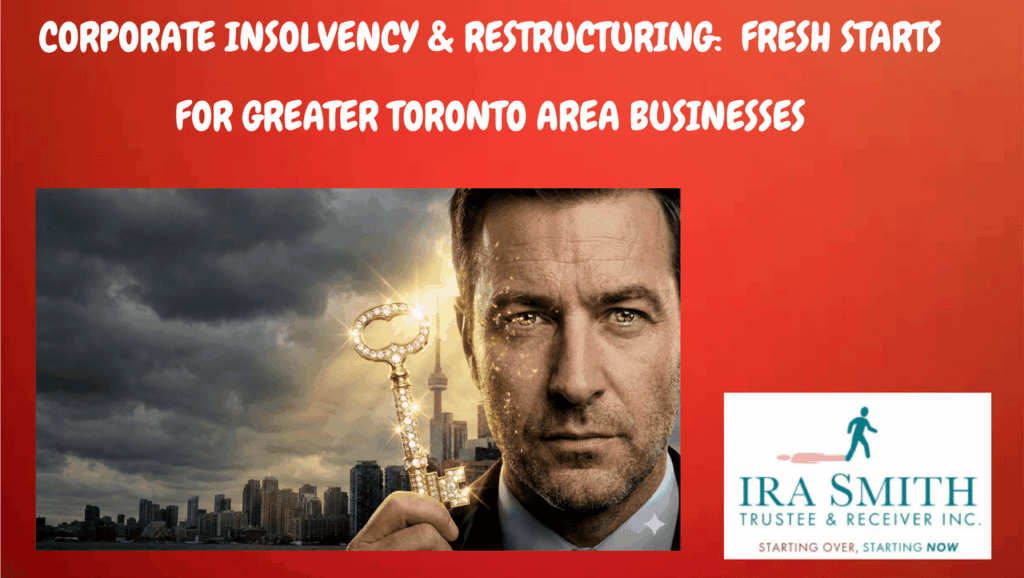
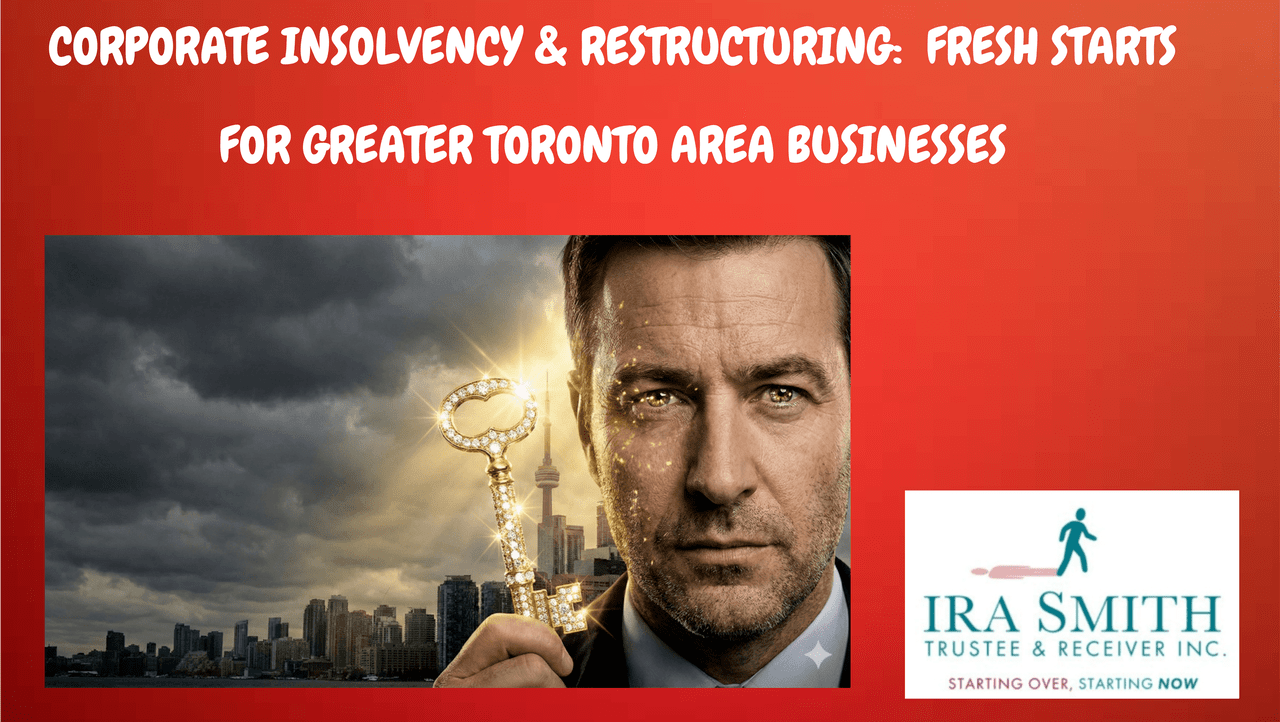
A business owner holding a key with the Toronto skyline in the background of a dark cloudy day with a beam of sunlight shining down through the clouds in the centre of the image symbolizing an entrepreneur with a financially troubled company who with the help of Ira Smith Trustee & Receiver Inc. Licensed Insolvency Trustee, has found the key to successful corporate insolvency & restructuring options for the entrepreneur's and other companies in the Greater Toronto Area.
corporate insolvency & restructuring

1. Understanding Corporate Financial Distress: Warning Signs for GTA Businesses

Understanding corporate financial distress means recognizing when your business is having trouble paying its bills. Many businesses in the Greater Toronto Area face financial struggles due to economic shifts, high operating costs, and market competition. Recognizing the warning signs early is crucial because the sooner you act, the more corporate insolvency & restructuring choices you will have to help your business recover or close in an organized way. Ignoring these signs can lead to bigger problems and fewer solutions.

1.1 What is Corporate Insolvency?

Corporate insolvency is a financial state where your business cannot meet its money obligations. Simply put, a business is insolvent when it cannot pay its bills on time, or when its total debts are greater than the current value of its total assets. It’s important to remember that insolvency is a financial condition – it’s about being unable to manage your debts. Bankruptcy, on the other hand, is a legal process that can happen because a business is insolvent. It’s one of the options, but definitely the last option, you might consider when facing insolvency.

1.2 Key Warning Signs Your Business is in Trouble

Identifying these red flags early can make a big difference in the future of your Toronto-area business. Pay close attention to these signals:

  • Cash Flow Problems: You are constantly struggling to pay your bills on time. This might mean late payments to suppliers, landlords, or employees. You might find yourself juggling payments, deciding which critical bill to pay each week.
  • Government Arrears: Falling behind on important payments to the Canada Revenue Agency (CRA) is a serious warning sign. This includes unremitted HST, payroll deductions (like income tax, Canada Pension Plan, and Employment Insurance), or other government obligations. Directors of a corporation can be held personally responsible for these specific debts, even if the business is incorporated.
  • Maxing Out Credit: Your business is always at its credit limit on lines of credit or credit cards, and you find it hard or impossible to get new loans or additional credit. This shows lenders no longer trust your business’s ability to repay.
  • Selling Assets to Survive: You are forced to sell valuable business assets like equipment, vehicles, or property just to cover daily operating costs, not to grow the business. This is a sign you are using your business’s long-term value to pay for short-term needs.
  • Creditor Pressure: You are receiving constant calls, demands for payment, threats of legal action, or demands for C.O.D. (cash on delivery) terms from your suppliers. This means your creditors are losing patience and trust.
  • Lack of Financial Information: You don’t have clear, up-to-date financial statements, budgets, or a business plan. Without this information, you can’t truly understand your business’s financial health or make smart decisions.
  • Declining Profitability: Your business is regularly showing monthly losses, or your sales are consistently dropping without clear reasons or a plan to reverse the trend. This affects your ability to generate enough money to cover costs.
  • Missed Opportunities: You can’t take advantage of new business opportunities because you lack funds or credit.

For businesses in the Greater Toronto Area, these signs can appear quickly due to the high operational costs and competitive markets. The urgency to identify and act on these issues early cannot be overstated. Waiting too long limits your corporate insolvency & restructuring choices and can make recovery much harder. If you see one or more of these signs, it’s time to seek professional advice.


2. Exploring Your Options: Corporate Insolvency & Restructuring Pathways in Ontario

When your business in Ontario faces financial distress, you have several pathways to explore, ranging from informal negotiations to formal legal corporate insolvency & restructuring processes. Understanding these options is key to making a strategic decision that best suits your company’s situation and objectives, whether you’re in Toronto, Vaughan, Markham, Mississauga, Brampton, or anywhere else in the GTA. These options represent the main ways a corporation can deal with insolvency and restructure its finances.

2.1 Informal Restructuring: The First Step Towards Recovery

Informal restructuring involves working directly with your creditors to make new payment arrangements or negotiate terms, often without formal legal proceedings. This approach is usually the first step for many businesses trying to fix financial problems.

  • What it is: This can involve calling your suppliers or landlord to ask for more time to pay, negotiating lower interest rates with a bank, or working out a temporary payment plan directly with your creditors. It’s about finding common ground and trying to solve problems outside of court.
  • Strategies: You might look at cutting unnecessary costs, improving how efficiently your business runs, finding new ways to generate income, or selling assets that aren’t essential to your core business operations. These steps aim to improve your cash flow and financial health.
  • When it Works: Informal restructuring works best for businesses with fewer creditors, especially those with whom you have good, long-standing relationships. It’s most effective when your financial issues are likely temporary, and you believe you can recover with some breathing room.
  • Limitations: The main limitation is that informal agreements may not stop legal action or prevent creditors from taking enforcement steps (like seizing assets or suing) if your problems are severe or widespread. Not all creditors may agree to new terms, and you have no legal protection from those who don’t.

2.2 Formal Restructuring under the Bankruptcy and Insolvency Act (BIA)

For many GTA businesses, informal efforts aren’t enough. That’s when formal corporate insolvency & restructuring options under federal law, specifically the Bankruptcy and Insolvency Act (BIA), become vital. These processes offer legal protection and a structured way to deal with debt.

Division I Proposals (Corporate Proposals): A Lifeline for Viable Businesses

A Division I Proposal, often called a Corporate Proposal, is a powerful tool for insolvent corporations in Ontario that have a chance to survive. The business may be financially sick, but it is still a viable business. It’s a formal, legally binding offer made by an insolvent corporation to its creditors. The offer can propose to pay back a percentage of what is owed, or extend the time to pay, or both. It is always and can only be administered by a Licensed Insolvency Trustee.

  • Definition: This process allows your business to negotiate a new payment plan with your unsecured creditors under the protection of the law. Instead of paying all your debts in full, you propose a new plan that creditors vote on. If accepted, it becomes legally binding on all unsecured creditors, even those who voted no.
  • Key Benefits:
    • Immediate Protection: Once your LIT files the paperwork, a “stay of proceedings” legally comes into effect. This immediately stops all unsecured creditors from taking collection action, garnishments, lawsuits, or other enforcement steps against your business. This gives you vital breathing room.
    • Business Continues: One of the biggest advantages is that your business can keep operating during the proposal process. This allows you to fix underlying issues, cut costs, or increase revenue, with the goal of returning to profitability.
    • Debt Reduction: In many cases, the business only pays back a portion of its unsecured debts. This can provide significant financial relief and make debts manageable.
    • Structured Plan: You work closely with an LIT to create a realistic and achievable payment plan that your business can afford based on its cash flow.
  • The Process:
  • Notice of Intention (NOI): The first step is often to file a Notice of Intention to Make a Proposal. This filing provides your business with immediate legal protection (the stay of proceedings) for an initial 30 days, which can be extended up to six months with the approval of the court. This time is used to prepare a detailed proposal.
    • Proposal Development: During this period, you and your LIT develop a formal offer to present to your creditors. This proposal outlines how much you will pay, over what period, and what terms will apply.
    • Creditor Vote: Once the proposal is prepared, a meeting of creditors is called. Creditors vote on the proposal. For it to be accepted, a majority (by number) representing two-thirds (by dollar value) of the voting unsecured creditors must agree to it.
    • Court Approval: If creditors accept the proposal, it must then be reviewed and approved by the court. Once approved, the proposal is legally binding on all unsecured creditors listed in the proposal, whether they voted for it or not.
  • Eligibility: Any insolvent corporation in Ontario and the rest of Canada that owes at least $1,000 in debt can file a Division I Proposal if it has a viable business that can be saved.

The LIT needs to file all official documents with the Office of the Superintendent of Bankruptcy.

2.3 The Companies’ Creditors Arrangement Act (CCAA): For Larger Corporations

While a Division I Proposal is suitable for most businesses, the Companies’ Creditors Arrangement Act (CCAA) is another federal law designed for corporate insolvency & restructuring.

  • Brief Explanation: CCAA proceedings are typically used for very large corporations with debts at or exceeding $5 million. It offers a more flexible and court-supervised restructuring process. The offer to the unsecured creditors to repay a portion of the debt is called a Plan of Arrangement.
  • Key Difference from BIA Proposal: CCAA proceedings are generally more complex, more costly, and involve a higher degree of court oversight. For small to medium-sized businesses in the GTA, a Division I Proposal under the BIA is almost always the more appropriate and cost-effective option.
A business owner holding a key with the Toronto skyline in the background of a dark cloudy day with a beam of sunlight shining down through the clouds in the centre of the image symbolizing an entrepreneur with a financially troubled company who with the help of Ira Smith Trustee & Receiver Inc. Licensed Insolvency Trustee, has found the key to successful corporate insolvency & restructuring options for the entrepreneur's and other companies in the Greater Toronto Area.
corporate insolvency & restructuring

3. Corporate Bankruptcy: When a Fresh Start Means Closing the Doors

Corporate bankruptcy is a formal legal process under the Bankruptcy and Insolvency Act where an insolvent corporation’s assets are taken over by an LIT, sold off, and the money is used to pay its creditors. While a Division I Proposal aims to save the business, bankruptcy means the business will close permanently. This path is usually chosen when the business is no longer viable and cannot be saved through restructuring. It provides a formal, orderly way to shut down an unviable business and manage its remaining debts.

3.1 What is Corporate Bankruptcy?

Corporate bankruptcy is the legal end of a business. It’s a process where an insolvent company’s assets are gathered by a Licensed Insolvency Trustee, sold, and the funds are distributed among its creditors according to legal priorities. The main outcome is that the corporation ceases to exist. This decision is typically made when the business has no reasonable chance of recovery and restructuring isn’t possible or practical. It provides a definite end, allowing all stakeholders to move on.

3.2 The Bankruptcy Process for a Corporation in Ontario

The process for a corporation entering bankruptcy in Ontario is structured and managed by an LIT:

  • Initiation: A corporation can voluntarily assign itself into bankruptcy by filing the necessary documents with an LIT. In some cases, creditors can petition the court to declare a corporation bankrupt, though this is less common for small and medium-sized businesses.
  • Role of the LIT: Once bankruptcy is filed, a Licensed Insolvency Trustee is appointed to manage the bankruptcy estate. The LIT takes legal possession of all the corporation’s assets, such as inventory, equipment, accounts receivable, and real estate. The LIT’s role is to sell these assets for the best possible value and distribute the funds to the creditors according to a strict legal order of priority set out in the BIA. The interest in the assets of the LIT is subject to the rights of the secured creditors.
  • No Personal Assets (Generally): For most incorporated businesses, the personal assets of the directors or owners are generally protected. This is because a corporation is a separate legal entity from its owners. However, there are very important exceptions, especially if personal guarantees were made or for specific government debts (see Section 5).
  • Termination: Once all assets are liquidated (sold) and the funds are distributed to creditors, the bankruptcy administration is completed. The corporation ceases to exist. This provides a clean break for the business and its owners.

3.3 Priority of Creditors in Corporate Bankruptcy

Understanding the order in which creditors are paid is vital for business owners, especially those in the Greater Toronto Area, dealing with many different types of debt.

  • Trust Claimants: These are creditors given a trust claim under a provincial or federal law. The most common one found in a corporate bankruptcy is the CRA for unremitted payroll source deductions. They are paid first.
  • Secured Creditors: These are creditors who have a registered claim against specific assets of the business (e.g., a bank with a loan secured by a mortgage on property, or a financing company with a lien on equipment). They are paid next from the sale of those specific assets. If the sale of the asset doesn’t cover their full debt, they become unsecured creditors for the remaining balance.
  • Preferred Creditors: Certain types of unsecured creditors are given priority over general ordinary unsecured creditors. This includes the fees and expenses of the Licensed Insolvency Trustee for administering the bankruptcy. It also includes certain unpaid wages, salaries, commissions, and the claim of landlords for rent arrears, all up to certain legal limits.
  • Unsecured Creditors: Most other creditors fall into this category. This includes suppliers, credit card companies, utility providers, and often the CRA for general income taxes (not source deductions). In a corporate bankruptcy, for unremitted HST, CRA is an unsecured creditor. These creditors share any remaining funds proportionally after trust claimants, secured and preferred creditors have been paid. In many corporate bankruptcies, unsecured creditors receive only a small percentage of what they are owed, or sometimes nothing at all.

Knowing this priority helps business owners understand what to expect and which debts might continue to be a concern if personal guarantees or director liabilities are involved.


4. Comparison Table: Division I Proposal vs. Corporate Bankruptcy in Ontario

When an Ontario business faces financial challenges, entrepreneurs in the Greater Toronto Area need to understand the key differences between a Division I Proposal and Corporate Bankruptcy. This table provides a clear overview to help you compare these two formal options.

Feature

Division I Proposal (corporate insolvency & restructuring)

Corporate Bankruptcy

Primary Goal

To allow a viable business to keep operating, restructure its debts, and return to profitability.

To liquidate assets, formally close down the business, and legally discharge its corporate debts.

Business Continues?

Yes, the business continues to operate under the terms of the approved proposal.

No, the corporation is dissolved and ceases to exist permanently.

Debt Reduction?

Creditors typically accept a reduced amount (e.g., 20-50 cents on the dollar) or extended payment terms.

The unpaid balance of corporate debts included in the Division I Proposal is legally discharged (after successful completion).

Unsecured corporate debts are legally discharged (after assets are liquidated).

Creditor Protection?

An immediate “stay of proceedings” halts all unsecured creditor actions (lawsuits, garnishments, collection calls).

An immediate “stay of proceedings” halts all creditor actions against the corporation.

Court Involvement?

Requires court approval after creditors vote to accept the proposal.

A court order often initiates (for involuntary) but not if the bankruptcy is voluntary. The LIT oversees the bankruptcy administration and applies to court at the end for approval of the Final Statement of Receipts and Disbursements and to obtain the LIT’s discharge.

Public Record?

Yes, details are part of the public record maintained by the Office of the Superintendent of Bankruptcy (OSB).

Yes, details are part of the public record maintained by the Office of the Superintendent of Bankruptcy.

Cost

Includes

LIT fees, potentially higher overall costs due to ongoing operations and the complexity of the restructuring plan.

Primarily

LIT fees; often lower overall as the focus is on liquidation, not ongoing operations.

Impact on Directors/Owners

Directors continue to manage the business and can potentially protect personal assets (if no guarantees).

No direct personal liability for corporate debt (unless personal guarantees and director liabilities exist).

Timeline

Flexible; preparation takes months, and payments can extend up to five years, but there is no statutory limit on length.

Typically, 9 to 36 months for assets to be sold and funds distributed, depending on complexity.

This comparison highlights that a Division I Proposal is for businesses that can be saved, offering a path to recovery, while corporate bankruptcy is for businesses that need an orderly closure. Your choice depends on the viability of your business and your long-term goals.

A business owner holding a key with the Toronto skyline in the background of a dark cloudy day with a beam of sunlight shining down through the clouds in the centre of the image symbolizing an entrepreneur with a financially troubled company who with the help of Ira Smith Trustee & Receiver Inc. Licensed Insolvency Trustee, has found the key to successful corporate insolvency & restructuring options for the entrepreneur's and other companies in the Greater Toronto Area.
corporate insolvency & restructuring

5. Protecting Your Personal Assets as a GTA Entrepreneur

As an entrepreneur in the Greater Toronto Area, understanding how your personal assets are protected or exposed when your business faces financial trouble is vital. Many business owners believe that incorporating their business fully shields them, but there are important exceptions.

The Power of Incorporation:

A key reason many entrepreneurs in Ontario choose to incorporate their business is to create a legal separation between the business and their personal finances. Generally, if your business is incorporated, you, as an owner or director, are not personally responsible for its debts. The corporation is a separate legal entity, meaning it is the business that owes the money, not you personally. This offers a valuable layer of protection for your home, savings, and other personal assets.

Personal Guarantees: Be Aware of the Risks

While incorporation offers protection, personal guarantees are a major exception. If you have personally guaranteed business loans, lines of credit, or leases (which is very common, especially with banks for small to medium-sized businesses in the GTA), your personal assets can be at risk if the business defaults. When you sign a personal guarantee, you are essentially promising to repay the business’s debt from your own pocket if the company cannot. This means that creditors can pursue your personal assets, such as your home, car, or personal savings, to recover the debt. It’s crucial to understand what you’ve signed and the potential personal liability involved.

Director Liabilities: Specific Debts You’re Responsible For

In Ontario (and the rest of Canada), even with an incorporated business, directors of corporations can be held personally liable for certain statutory debts. These are debts owed to the government or employees, and they are distinct from general business debts. The most common examples include:

  • Unremitted Payroll Source Deductions: Income tax, Canada Pension Plan (CPP), and Employment Insurance (EI) amounts that you’ve deducted from your employees’ paycheques but haven’t sent to the Canada Revenue Agency. These funds are considered to be held “in trust” for the government, and directors have a duty to ensure they are remitted.
  • Unremitted GST/HST: Goods and Services Tax / Harmonized Sales Tax (HST) that your business has collected but not sent to the CRA. This is also considered trust money.
  • Unpaid Employee Wages: In some cases, directors can be personally liable for a limited amount of unpaid wages owed to employees.

Always ensure these specific types of debts are paid on time. Falling behind on them can put your personal finances at significant risk, even if your corporation goes through bankruptcy.

Smart Planning:

  • Document Personal Loans: If you lend money to your business, properly document it with a loan agreement and ideally register a General Security Agreement (GSA) against the company’s assets. This could allow you to recover some of your investment in a formal insolvency.
  • Consult an LIT: To truly understand how to best protect your personal finances during business difficulties, it’s essential to consult with a Licensed Insolvency Trustee. They can review your specific situation, including any personal guarantees, and advise you on the best course of action.

6. Choosing the Right Licensed Insolvency Trustee in the Greater Toronto Area

When your business in the Greater Toronto Area is facing financial distress, selecting the right professional to guide you through corporate insolvency & restructuring is one of the most important decisions you’ll make. A Licensed Insolvency Trustee is not just a consultant; we are the only federally licensed and regulated professionals in Canada legally authorized to administer formal insolvency processes like corporate proposals or corporate bankruptcies.

Why an LIT is Essential:

An LIT plays a critical role as an impartial expert in Canadian insolvency law. We don’t represent just your creditors or just your interests; we are legally mandated to act fairly for all parties involved. This means we offer unbiased advice, explain all your available options (not just the ones that benefit us), and ensure that the process follows the strict rules set out in the Bankruptcy and Insolvency Act. We have the legal authority and expertise to provide the formal protection you need and to negotiate with your creditors on your behalf. Without an LIT, your business cannot access the legal protections and debt restructuring benefits of a formal proposal or bankruptcy.

What to Look For:

When choosing an LIT for your business in Toronto or the GTA, consider these factors:

  • Corporate Insolvency Expertise: Ensure they specialize in business debt and corporate restructuring, not just personal insolvency. Corporate insolvency has its own complexities, and you need an expert who understands the nuances of business operations and director liabilities.
  • Local Knowledge: A trustee familiar with the Greater Toronto Area market understands local economic factors, industry trends, and specific challenges that businesses in Ontario might face. This local insight can be invaluable in crafting practical solutions.
  • Empathetic & Non-Judgmental: Facing business insolvency can be incredibly stressful and isolating. You need someone who listens without judgment, treats your situation with respect, and provides reassuring guidance. A good LIT acts as a trusted advisor, not just a legal administrator.
  • Clear Communication: The world of insolvency law can be complex. Your LIT should be able to explain all your options, the processes involved, and potential outcomes in clear, simple language that you can easily understand, at a Grade 9 reading level.
  • Free Consultation: A reputable LIT will always offer a confidential, no-obligation initial consultation. This allows you to explain your situation, understand your choices, and get a sense of their approach before committing to anything.

Ira Smith Trustee & Receiver Inc.:

At Ira Smith Trustee & Receiver Inc., we have extensive experience helping entrepreneurs across the GTA navigate complex corporate financial challenges and corporate insolvency & restructuring options. We understand the unique pressures of the Toronto business landscape. We approach every situation with professionalism, compassion, and a deep commitment to finding the most strategic path forward for your business and your peace of mind. We are here to ensure you get a fair, fresh start.

A business owner holding a key with the Toronto skyline in the background of a dark cloudy day with a beam of sunlight shining down through the clouds in the centre of the image symbolizing an entrepreneur with a financially troubled company who with the help of Ira Smith Trustee & Receiver Inc. Licensed Insolvency Trustee, has found the key to successful corporate insolvency & restructuring options for the entrepreneur's and other companies in the Greater Toronto Area.
corporate insolvency & restructuring

7. Corporate Insolvency & Restructuring Frequently Asked Questions (FAQs)

Entrepreneurs in the Greater Toronto Area often have many questions when considering corporate insolvency & restructuring. Here are answers to some common concerns, providing practical information to help you understand your options and the support available.

Q1: Can a small business in Toronto file a Consumer Proposal?

A: No, a Consumer Proposal is only for individuals who owe less than $250,000 (excluding a mortgage on their principal residence). Corporations are distinct legal entities. If a corporation wants to restructure its debts and avoid bankruptcy, it must file a Division I Proposal (often called a Corporate Proposal) under the Bankruptcy and Insolvency Act. This is a different process tailored to businesses.

Q2: What happens to employees when a company goes through corporate insolvency?

A: If the business files a Division I Proposal, the goal is to continue operations. Therefore, employees usually keep their jobs, and their employment continues under the restructured business. However, it is possible that one of the reasons for the employer’s insolvency is too high payroll costs and it may be necessary to shed some employees. In a corporate bankruptcy, the company closes, and employees are terminated by the bankruptcy. In this situation, the Wage Earner Protection Program Act (WEPPA) may offer some financial protection for unpaid wages, holiday pay, and severance owed to employees, up to a certain maximum amount. The LIT is obligated to provide details to the former employees of the bankrupt company.

Q3: How long does the corporate insolvency process take in Ontario?

A: The timeline varies depending on the chosen path. A Division I Proposal typically takes a few months to get approved by creditors and the court. The payment plan under a proposal usually involves payments over a period of up to five years, but there is no statutory maximum for its length. Corporate bankruptcy typically takes 9 to 36 months to complete, depending on how complex the assets are and how long it takes to sell them and distribute funds to creditors. The more complex business problems that exist, the longer the process generally will take.

Q4: Will my credit score be affected by corporate insolvency?

A: Yes, formal insolvency proceedings (either a Division I Proposal or corporate bankruptcy) will negatively affect the corporation’s credit history. This record is permanent. If you, as a director or owner, provided personal guarantees for the business’s debts (e.g., bank loans or credit lines), your personal credit score will also be impacted.

Q5: What is the difference between a “workout” and formal restructuring?

A: A “workout” is an informal agreement made directly between a business and its creditors, outside of any legal framework. It relies on voluntary cooperation. Formal restructuring, such as a Division I Proposal or a filing under the CCAA, is a legal process under federal law. It provides specific legal protections (like a stay of proceedings) from creditors and results in a legally binding scheme of arrangement that applies to all unsecured creditors once approved. Formal restructuring offers greater certainty and protection than an informal workout.

Formal corporate restructuring in Canada is the equivalent of Chapter 11 bankruptcy protection in the United States.

Q6: What if my business debts include money owed to the Canada Revenue Agency?

A: Debts owed to the CRA, including unremitted HST and payroll source deductions, are definitely considered in both Division I Proposals and corporate bankruptcies. However, it’s crucial to understand that directors can be held personally liable for these types of corporate debts, even if the corporation enters bankruptcy or files a proposal. Addressing these critical liabilities early with your LIT is essential, as they often require special attention in any restructuring or liquidation plan.


Brandon’s Take (Expert Authority) on Corporate Insolvency & Restructuring

As a Licensed Insolvency Trustee and active insolvency practitioner serving the Greater Toronto Area, I’ve had the privilege of guiding countless entrepreneurs through their most challenging corporate insolvency & restructuring business moments.

What I’ve learned is that seeking help is never a sign of failure; it’s a profound act of leadership and courage. The landscape of business debt and insolvency can feel overwhelming, especially for dedicated business owners in Toronto and across Ontario. But you don’t have to navigate it alone. My team and I are here to provide clear, empathetic, and authoritative advice, helping you understand your unique situation and find the most strategic path forward for your business and your peace of mind. Your business deserves a chance at a fresh start.

A business owner holding a key with the Toronto skyline in the background of a dark cloudy day with a beam of sunlight shining down through the clouds in the centre of the image symbolizing an entrepreneur with a financially troubled company who with the help of Ira Smith Trustee & Receiver Inc. Licensed Insolvency Trustee, has found the key to successful corporate insolvency & restructuring options for the entrepreneur's and other companies in the Greater Toronto Area.
corporate insolvency & restructuring

Corporate Insolvency & Restructuring Conclusion

Facing corporate financial challenges in the Greater Toronto Area can be daunting, but there are proven legal pathways, from informal restructuring to formal proposals and bankruptcy, that offer a solution. The most important step you can take is to act early and seek professional guidance. Delaying action can significantly limit your options and increase stress.

Remember, the goal is not just to resolve debt, but to pave the way for a more stable future, whether that’s through a revitalized business or a dignified and orderly closure.

Don’t let uncertainty or fear prevent you from exploring your options. If your business in Toronto, Vaughan, Markham, Mississauga, Brampton, or anywhere in the wider GTA is experiencing financial difficulty, contact the insolvency practice of Ira Smith Trustee & Receiver Inc. today for a confidential, no-obligation consultation. We are here to listen, assess your situation, and help you chart the best course forward, Starting Over Starting Now.

Ira Smith Trustee & Receiver Inc. is licensed by the Office of the Superintendent of Bankruptcy and is a member of the Canadian Association of Insolvency and Restructuring Professionals.

Contact Ira Smith Trustee & Receiver Inc. Today:

  • Phone: 905.738.4167
  • Toronto line: 647.799.3312
  • Website: https://irasmithinc.com/
  • Email: brandon@irasmithinc.com

Disclaimer: This analysis is for educational purposes only and is based on the cited sources and my professional expertise as a licensed insolvency trustee. The information provided does not constitute legal or financial advice for your specific circumstances.

Every situation is unique and involves complex legal and factual considerations. The outcomes discussed in this article may not apply to your particular situation. Situations are fact-specific and depend on the particular circumstances of each case.

Please contact Ira Smith Trustee & Receiver Inc. or consult with qualified legal or financial professionals regarding your specific matter before making any decisions.

About the Author:

Brandon Smith is a Senior Vice-President at Ira Smith Trustee & Receiver Inc. and a licensed insolvency trustee serving clients across Ontario. With extensive experience in complex court-ordered receivership administration and corporate insolvency & restructuring proceedings, Brandon helps businesses, creditors, and professionals navigate challenging financial situations to achieve optimal outcomes.

Brandon stays current with landmark developments in Canadian insolvency law. He brings this cutting-edge knowledge to every client engagement, ensuring his clients benefit from the most current understanding of their rights and options.
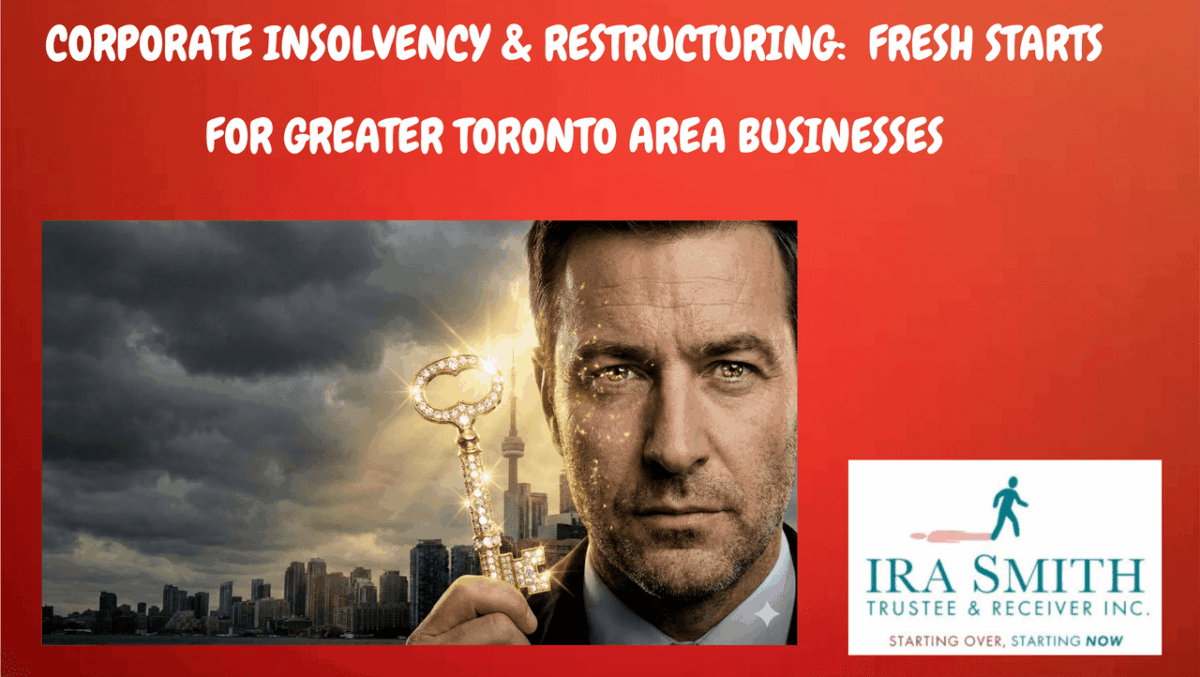
A business owner holding a key with the Toronto skyline in the background of a dark cloudy day with a beam of sunlight shining down through the clouds in the centre of the image symbolizing an entrepreneur with a financially troubled company who with the help of Ira Smith Trustee & Receiver Inc. Licensed Insolvency Trustee, has found the key to successful corporate insolvency & restructuring options for the entrepreneur's and other companies in the Greater Toronto Area.
corporate insolvency & restructuring
Categories
Brandon Blog Post

TORONTO CONDO MARKET: FROM RETIREMENT DREAMS TO DISTRESS SALES – A COMPLETE 2025 LOOK AT THE DECLINE

The Toronto condo market in 2025 has become a harsh teacher for many investors. What once seemed like a sure path to retirement wealth has turned into financial stress for thousands of people across the Greater Toronto Area.

As a licensed insolvency trustee firm with decades of experience, we’ve seen firsthand how real estate investments can go wrong. The stories I hear every day show just how quickly the Toronto condo market can change lives – and not always for the better. In my practice at Ira Smith Trustee & Receiver Inc., I’ve helped families navigate the aftermath of failed real estate investments.

The current situation reminds me of other market crashes we’ve witnessed. But this one feels different. It’s not just about market cycles – it’s about people who made what seemed like smart financial decisions that have now turned into their worst nightmares.

Toronto Condo Market: The Reality Behind the Numbers

Let me share what’s really happening in Toronto’s condo market right now. The numbers tell a clear story of a market under serious pressure, but behind each statistic is a real person facing real financial stress.

In August 2025, condo prices in Toronto decreased by 7% compared to the same month the previous year. According to its Toronto Housing Market Outlook 2025, Nesto Mortgage Experts reported that the average condo now sells for $571,500 in the city. The Toronto Regional Real Estate Board (TRREB) reveals that July saw GTA’s condo prices hit a four-year low, with the average condo selling for $651,000. Across the entire Greater Toronto Area, the average condo price fell to $642,000, down 5% from 2024. While this might sound like good news for buyers, it’s creating serious problems for people who bought at higher prices.

Here’s what makes this situation unique: there are now over 9,100 active listings for condos for sale in the Toronto area. That’s the highest number ever recorded for August. When the market trend is too many condos and not enough buyers, prices fall. It’s basic supply and demand, but the human cost is enormous.

The sales numbers tell an even more troubling story. According to TRREB, in the first quarter of 2025, Toronto condo sales dropped by 21.7% compared to the same period in 2024. That’s not a small dip – it’s a market in serious decline.

What really concerns me about this real estate market as a financial professional is the “months of supply” number. Right now, there are over seven months of available condo inventory. In a healthy market, you’d see about three to four months of supply. Such oversupply inventory levels mean sellers are competing desperately for the few buyers who are still active.

Toronto Condo Market: Understanding the Human Impact

Every week, I meet with people whose lives have been turned upside down by the Toronto condo market crash. These aren’t reckless speculators – they’re teachers, nurses, small business owners, and retirees who thought they were making smart investments.

Take Maria (not her real name), a 52-year-old teacher who came to see me last month. She bought a pre-construction condo in Mississauga in 2021 for $750,000, putting down $75,000 of her savings. The building was supposed to be finished in 2024, but construction delays pushed the completion to 2025. When she finally got the keys, similar units in the building were selling for $600,000.

Maria reluctantly was able to put down the extra cash needed in order to complete the purchase when her mortgage lender reduced the amount they were prepared to lend, given the lower value. The condo is rented out, but she still can’t afford all the monthly payments the rent doesn’t cover on her teacher’s salary, and she can’t sell without taking a massive loss. The stress has affected her health, her relationships, and her ability to do her job effectively.

Or consider James and Patricia (not their real names), who bought three pre-construction condos as their retirement plan. They figured they’d rent them out for income or sell them for profit. Instead, they’re facing monthly carrying costs that, even with all the rental income, don’t come close to covering their expenses. They’re burning through their retirement savings just to keep the properties.

These stories repeat in my office almost daily. Good people who made what seemed like reasonable financial decisions are now facing bankruptcy, divorce, and depression.

Toronto condo market crisis illustration showing a couple's transition from retirement investment dreams to real estate debt problems requiring insolvency trustee assistance
toronto condo market

Toronto Condo Market: When Dreams Turn Into Debt – The Basios Story

Take the publicly reported story of Dmitri Basios and his wife. Their story shows how quickly things can change in real estate. In 2020, they put money down on a small Toronto condo for $884,000. They planned to use it for their retirement – either as rental income or by selling it for a profit.

The plan seemed solid. Toronto condos had been rising in value for years. Interest rates were low. The future looked bright. They put down their deposit and waited for the building to be completed.

But when it came time to complete the purchase in 2024, everything had changed. Interest rates had gone up from near zero to over 5%. They couldn’t get financing based on the full purchase price, and even if they could, the monthly payments would have been crushing.

They had no choice but to sell their contract, known as an assignment sale. But they weren’t alone. Many other buyers in similar situations were all trying to sell their contracts at the same time. This flooded the market with desperate sellers.

Their $884,000 condo sold for just $590,000. That’s a loss of almost $300,000. But it gets worse – they’re still legally responsible for the difference. The developer can come after them for the shortfall, plus legal costs and interest.

Basios said it best:

“It’s causing stress and distress and misery.”

This isn’t just one person’s story. I see similar cases every week in my practice. People who thought they were making smart investments now face serious debt problems that could take decades to resolve.

Toronto Condo Market: The Ripple Effect Through Families

What many people don’t realize is how real estate debt affects entire families. When parents face financial ruin from bad condo investments, it impacts their children’s education plans, their ability to help with grandchildren, and their family relationships.

I’ve counselled families where parents lost the family home due to real estate debt. I’ve seen marriages end because of the stress of owing hundreds of thousands of dollars on properties worth far less.

The psychological impact is just as real as the financial impact. People feel ashamed, embarrassed, and angry with themselves. They often isolate themselves from friends and family, making the problem worse.

But here’s what I always tell my clients: you’re not alone, and this isn’t entirely your fault. The real estate industry, the media, and even the government promoted the idea that property values only go up. Many smart, successful people believed this message and made decisions based on it.

Toronto condo market crisis illustration showing a couple's transition from retirement investment dreams to real estate debt problems requiring insolvency trustee assistance
toronto condo market

Toronto Condo Market: Why the Toronto Condo Market Crashed

Several things happened at once to create this crisis. Understanding these factors helps explain why so many people are now in financial trouble.

Interest Rates Rose Fast The Bank of Canada raised interest rates from 0.25% in early 2022 to 5% by 2023. That’s one of the fastest rate increases in Canadian history. This made it much harder and more expensive to get a mortgage.

For someone buying a $700,000 condo, the difference between a 2% mortgage rate and a 5% rate is significant in payments. Many buyers simply couldn’t afford the higher payments.

The rate increases also affected developers. Building costs went up dramatically as financing became more expensive. Many projects became financially unviable, leading to construction delays and cancellations.

Too Many Condos, Not Enough Buyers When times were good, developers started building everywhere. The number of new condo projects reached record levels. Everyone assumed the demand would continue forever.

But demand didn’t just slow down – it collapsed. By 2025, there were over 24,000 unsold new condos in the Greater Toronto Area. That’s enough supply to last for years at current sales rates.

Some developers have cancelled projects entirely. In 2024 and 2025 combined, at least 23 major condo projects were cancelled, affecting thousands of buyers and billions of dollars in investments.

Investors Disappeared Many condo buyers were investors, not people planning to live in the units. Some estimates suggest that investors made up 60% or more of pre-construction condo sales during the boom years.

When prices started falling, these investors stopped buying. Without investor money, the whole system broke down. Developers couldn’t get the pre-sales they needed to secure construction financing. The market went into a downward spiral.

The investors who were already committed to purchases found themselves in terrible positions. Many are now trying to get out of their contracts, flooding the assignment market and driving prices down even further.

Economic Uncertainty People are worried about their jobs and the economy. Unemployment has been rising, and many industries are struggling. Even with lower interest rates now, many potential buyers are waiting to see what happens next.

This creates a vicious cycle. The more people worry about the economy, the fewer people buy condos. The fewer people who buy, the lower the prices fall. The more prices fall, the more people worry.

Toronto Condo Market: The Pre-Construction Trap – How It Really Works

One of the biggest problems I see involves pre-construction condos. This is when you put down money for a condo that hasn’t been built yet. For many people, this seemed like a great way to get into the market, but it’s turned into a financial disaster.

Here’s how it used to work: You’d put down a deposit of 15-20% of the purchase price, spread over several payments during construction. You’d wait for the building to be finished, then either move in or sell for a profit. Many people treated this like a sure thing.

The appeal was obvious. You could control an $800,000 condo with just a $120,000 deposit. If the condo went up in value by 20% during construction, you’d make $160,000 on your $120,000 investment. That’s a great return if it works.

But now, many of these deals are falling apart. When the condo is finally built, it’s worth less than what buyers agreed to pay years earlier. Some buyers owe hundreds of thousands more than their condo is worth.

Let me give you a real example from my practice. A client bought a pre-construction condo in 2019 for $950,000. He put down $190,000 in deposits over two years. The building was finally completed in 2024, but similar units in the building were selling for $750,000.

He had a choice: complete the purchase and immediately lose $200,000, or walk away and lose his $190,000 deposit. Either way, he was facing a massive loss. The legal term for this is being “underwater” on your mortgage. It’s a serious financial problem that can lead to bankruptcy if not handled properly.

Toronto condo market crisis illustration showing a couple's transition from retirement investment dreams to real estate debt problems requiring insolvency trustee assistance
toronto condo market

Toronto Condo Market: Assignment Sales – The Last Resort

When people can’t complete their pre-construction purchases, they often try to sell their contract to someone else. This is called an assignment sale. The original buyer assigns their purchase contract to a new buyer, hopefully for more than they originally paid.

During the boom years, assignment sales were profitable. People would buy pre-construction, then sell their contract for a quick profit before the building was even finished. Some people made this their full-time business.

But now, assignment sales have become desperation sales. The market is flooded with people trying to get out of contracts they can’t afford to complete. Prices for assignment sales are often 20-30% below the original contract price.

This creates a terrible situation for the original buyers. They’re not only losing their deposits, but they are also responsible for the difference between their original contract price and what the assignment buyer pays.

The legal implications can be complex and expensive. Many buyers don’t understand their rights and obligations, leading to even bigger financial problems down the road.

Toronto Condo Market: Warning Signs You’re in Trouble

As a licensed insolvency trustee, I’ve learned to spot the warning signs early. The sooner you recognize these signs, the more options you’ll have to protect your financial future.

Here are red flags that your real estate investment might be causing financial problems:

Financial Warning Signs:

  • You can’t make your mortgage payments without borrowing money
  • You’re using credit cards or loans to cover property expenses
  • You’re borrowing from retirement savings to cover real estate costs
  • You’re considering taking money from your children’s education funds
  • You’re thinking about getting a second mortgage on your family home

Emotional and Physical Warning Signs:

  • You can’t sleep at night because of money worries
  • You’re avoiding calls from your lender or real estate lawyer
  • You’re fighting with your spouse about money
  • You’re feeling depressed or anxious about your financial situation
  • You’re avoiding friends and family because you’re embarrassed

Legal and Practical Warning Signs:

  • You’re thinking about walking away from a deposit or purchase
  • You’ve received legal notices about your real estate contracts
  • You’re considering bankruptcy as your only option
  • You’re being threatened with legal action by developers or lenders
  • You’re thinking about lying on mortgage applications to qualify for loans

If any of these sound familiar, it’s time to get professional help. Don’t wait until your options are limited.

Toronto condo market crisis illustration showing a couple's transition from retirement investment dreams to real estate debt problems requiring insolvency trustee assistance
toronto condo market

Toronto Condo Market: What This Means for Different People

The Toronto condo market crash affects different groups of people in different ways. Understanding where you fit can help you make better decisions about your next steps.

For Current Condo Owners If you own a condo and can afford the payments, you might be okay in the long run. Toronto’s population is still growing, and people need places to live. The city isn’t going anywhere, and neither is the long-term demand for housing.

But if you’re struggling with payments, don’t wait until it’s too late to get help. The sooner you act, the more options you’ll have. Consider speaking with a licensed insolvency trustee before you fall behind on payments.

Some current owners are in situations where they owe more than their condo is worth, but they can still afford the monthly payments. In these cases, it might make sense to stay put and wait for the market to recover, even if that takes several years.

For Potential Buyers This might actually be a good time to buy if you plan to live in the condo for many years and you have a stable income. Prices are lower, and there are more choices than we’ve seen in years.

But make sure you can truly afford the payments, even if interest rates go up again. Don’t stretch your finances just to get into the market. The recent crash shows that property values can fall as well as rise.

First-time buyers now have some advantages. The government has increased the insured mortgage cap to $1.5 million, allowing more people to buy with less than 20% down. But remember, a smaller down payment means higher monthly payments and mortgage insurance costs.

For Investors in Trouble If you’re facing losses on real estate investments, you have options, but time is crucial. Don’t let pride or shame stop you from getting professional advice. The sooner you act, the more options you’ll have.

Some investors are trying to “ride it out,” hoping the market will recover quickly. But this strategy can be dangerous if you’re using credit or depleting savings to cover carrying costs. Sometimes it’s better to cut your losses and protect your family’s financial future.

For Pre-Construction Buyers If you have money tied up in pre-construction projects, you need to understand your rights and obligations. Some contracts allow you to walk away with minimal penalties, while others hold you responsible for the full purchase price.

Don’t assume that a project cancellation is necessarily bad news. In some cases, getting your deposit back might be better than completing a purchase that will result in immediate losses.

Toronto Condo Market: The Broader Economic Impact

The Toronto condo market crash isn’t just affecting individual investors – it’s having broader economic consequences that will be felt for years.

Construction Industry Collapse New condo construction starts in Toronto fell to their lowest level since 2009 in the first half of 2025. This means thousands of construction workers, contractors, and suppliers are losing work.

The construction industry employs over 400,000 people in Ontario. When condo construction slows down, the effects ripple through the entire economy. Equipment suppliers, material manufacturers, and service providers all feel the impact.

Municipal Revenue Shortfalls Cities rely on development charges and property taxes from new condos to fund infrastructure and services. With fewer new projects and lower property values, municipal budgets are under pressure.

This could lead to higher taxes for all residents, reduced services, or delays in important infrastructure projects. The fiscal impact will be felt for years to come.

Banking Sector Stress Banks and other lenders have billions of dollars tied up in real estate loans. While Canadian banks are generally well-capitalized, the scale of the condo market problems is creating stress in the system.

Some smaller lenders and mortgage investment corporations are facing serious difficulties. This could lead to tighter lending standards and reduced credit availability, making it even harder for the market to recover.

Toronto condo market crisis illustration showing a couple's transition from retirement investment dreams to real estate debt problems requiring insolvency trustee assistance
toronto condo market

Toronto Condo Market: Government Response and Policy Changes

Various levels of government have implemented policies to try to address the housing crisis, with mixed results.

The federal government has made several changes to mortgage rules, including increasing the insured mortgage cap to $1.5 million and extending amortization periods for some buyers.

Federal Government Initiatives They’ve also implemented stress tests for mortgages, requiring buyers to qualify at higher interest rates than their actual mortgage rate. While this protects borrowers from getting in over their heads, it also reduces the number of qualified buyers.

Provincial Measures The Ontario government has tried to increase housing supply through zoning changes and streamlined approval processes. They’ve also implemented rent control measures and foreign buyer taxes.

However, many of these policies take years to have an effect, and some may have unintended consequences that actually reduce housing supply.

Municipal Actions Toronto and other GTA municipalities have been trying to speed up the approval process for new developments and reduce development charges. But municipal budgets are tight, and there are limits to what they can do.

The reality is that government policies alone can’t fix the fundamental supply and demand imbalances in the market.

Toronto Condo Market: Getting Help Before It’s Too Late

The most important thing to understand is that you don’t have to face financial problems alone. Many people wait too long to get help because they’re embarrassed or hope things will improve on their own.

As a licensed insolvency trustee with decades of experience, we work with people to find solutions before their situation becomes desperate. Sometimes this means negotiating with creditors. Other times it involves formal insolvency proceedings like consumer proposals or bankruptcy.

Consumer Proposals: An Alternative to Bankruptcy Many people do not know about consumer proposals. These can be a good alternative to bankruptcy for people with real estate debt problems.

A consumer proposal allows you to negotiate with your creditors to pay back a portion of what you owe, typically over five years. The rest of the debt is forgiven. This can be especially helpful for people facing large shortfalls on real estate investments.

For example, if you owe $300,000 more than your condo is worth, a consumer proposal might allow you to pay back $100,000 over five years and have the rest forgiven. Your credit will be affected, but much less than with bankruptcy.

Bankruptcy: Sometimes the Best Option While bankruptcy is never anyone’s first choice, sometimes it’s the best way to get a fresh start. If you’re facing overwhelming real estate debt with no realistic way to pay it back, bankruptcy might be the right choice.

The bankruptcy process typically takes nine months for first-time filers, and it eliminates most debts, including real estate shortfalls. While there are consequences, including impacts on your credit rating, it allows you to start rebuilding your financial life.

Early Intervention: The Key to More Options The earlier you seek help, the more options you’ll have. If you’re still current on your payments but struggling, we might be able to negotiate with lenders or restructure your debts.

If you’ve already fallen behind, there are still options, but they become more limited as time goes on. Don’t wait until you’re facing legal action or foreclosure proceedings.

Toronto condo market crisis illustration showing a couple's transition from retirement investment dreams to real estate debt problems requiring insolvency trustee assistance
toronto condo market

What Comes Next for the Toronto Condo Market

Looking ahead, the Toronto condo market faces some serious challenges that will affect its recovery timeline.

Supply Pipeline Concerns Builders have cancelled many projects, which means fewer new condos will be available in the coming years. While this might eventually help prices recover by reducing supply, it also means Toronto isn’t building enough housing to meet its growing population needs.

The city needs to add about 40,000 new housing units per year to keep up with population growth. In 2025, it’s on track to build fewer than 25,000 units. This supply shortage will eventually push prices up again, but it might take several years.

Interest Rate Environment The Bank of Canada has started cutting interest rates again. But rate cuts do not work well when people worry about job security and the economy.

Lower rates help with affordability, but they don’t address the fundamental problem of too much supply and too little demand. The market needs time to absorb the excess inventory before any meaningful recovery can begin.

Demographic Trends Toronto’s population keeps growing. Immigration and people moving from other provinces cause this growth. This creates long-term demand for housing, but it might take several years for this demand to absorb the current oversupply.

The federal government has announced plans to reduce immigration targets, which could further slow housing demand in the short term.

Toronto Condo Market: Taking Control of Your Financial Future

If you’re dealing with real estate debt or other financial problems, remember that taking action is always better than doing nothing. Every day you wait, your options become more limited and your problems often get worse.

At Ira Smith Trustee & Receiver Inc., we’ve helped thousands of people in the Greater Toronto Area deal with debt problems. We understand that behind every case is a person or family trying to build a better future.

The consultation process is confidential and free. We’ll review your situation, explain your options, and help you understand the consequences of different choices. There’s no pressure to proceed with any particular course of action – our job is to give you the information you need to make the best decision for your situation.

What to Bring to Your Consultation When you come for a consultation, bring:

  • Recent statements for all your debts
  • Information about your real estate contracts and current property values
  • Your most recent tax return
  • Documentation about your income and monthly expenses
  • Any legal notices you’ve received

The more information you can provide, the better we can assess your situation and recommend appropriate solutions.

Protecting Your Family One of the most important things to remember is that your financial problems don’t have to destroy your family’s future. With proper planning and professional help, you can often protect important assets like your family home while dealing with problem investments.

Many people are surprised to learn that bankruptcy doesn’t necessarily mean losing everything. There are provincial exemptions that protect basic assets, and in many cases, people can keep their primary residence while eliminating other debts.

Toronto condo market crisis illustration showing a couple's transition from retirement investment dreams to real estate debt problems requiring insolvency trustee assistance
toronto condo market

Toronto Condo Market: Learning from the Market – Lessons for the Future

The Toronto condo market troubles in 2025 offer important lessons for everyone, whether you’re currently dealing with real estate debt or thinking about future investments.

Diversification Matters Many people put too much of their wealth into one investment. While real property can be a good investment, putting all your eggs in one basket is risky, no matter what that basket is.

A balanced approach might include some real estate, but also stocks, bonds, and other investments. This helps protect you if any one investment category performs poorly.

Understand What You’re Buying Pre-construction condos are complex financial instruments, not simple real estate purchases. They involve development risk, market risk, and legal risks that many buyers don’t fully understand.

Before making any major investment, make sure you understand all the risks involved, not just the potential returns. If you can’t afford to lose the money, you probably shouldn’t invest.

Have an Exit Strategy Many investors I meet never planned for what would happen if their investments didn’t work out. They assumed prices would always go up and never considered how they would handle losses.

Before making any investment, think about what you’ll do if it doesn’t work out. How much can you afford to lose? What’s your backup plan? Having these conversations before you invest can save you from financial disaster later.

Get Professional Advice Real estate transactions involve complex legal and financial issues. The cost of professional advice from lawyers, accountants, and financial advisors is usually much less than the cost of making expensive mistakes.

Don’t rely on advice from real estate agents, developers, or other people who have a financial interest in your purchase. Get independent professional advice before making big financial decisions.

Frequently Asked Questions About Toronto Condo Market Problems

Q: I owe more on my condo than it’s worth. What are my options?

A: You have several choices, and the best one depends on your specific situation. If you can afford the monthly payments, you might choose to stay and wait for the market to recover. If you can’t afford the payments, options include selling at a loss, negotiating with your lender, filing a consumer proposal to cover any shortfall to the lender (and to deal with any other unsecured debts), or in extreme cases, bankruptcy. The key is to get professional advice before making any decisions.

Q: Can I just walk away from my pre-construction condo contract?

A: It’s not that simple. Walking away usually means losing your deposit, but you will also be legally responsible for the difference between your contract price and what the developer eventually sells the unit for. This could be hundreds of thousands of dollars. Before walking away, you need to understand your full legal obligations. Some contracts have escape clauses, while others hold you fully responsible.

Q: What’s an assignment sale, and should I try one?

A: An assignment sale is when you sell your pre-construction contract to someone else before the building is finished. Right now, most assignment sales are happening at big losses because there are so many desperate sellers. You might recover some of your deposit money, but you’ll likely still face a significant loss. It might offer a better result than completing the purchase at full price, but you need legal advice to understand the implications.

Q: Will filing bankruptcy get rid of my real estate debt?

A: Yes, bankruptcy will eliminate any shortfall on your real estate debt, including a shortfall from the condo sale. However, bankruptcy has serious consequences, including impacts on your credit rating and potential effects on your employment. Before considering bankruptcy, explore alternatives like consumer proposals, which might achieve similar debt relief with fewer long-term consequences.

Q: What’s a consumer proposal, and how does it work for real estate debt?

A: A consumer proposal lets you negotiate with creditors to pay back a portion of what you owe over up to five years. The rest is forgiven. For example, if you owe $200,000 more than your condo is worth, you might negotiate to pay back $60,000 over five years and have the remaining $140,000 forgiven. It’s often a better option than bankruptcy for people with real estate debt problems. A consumer proposal will only deal with your shortfall to the lender after the condo is sold. It cannot deal with valid mortgage security debt.

Q: My developer cancelled my project. Is that good or bad?

A: It depends on your situation. If you would have lost money by completing the purchase, a cancellation might actually save you from bigger losses. You’ll get your deposit back, though it might take time. However, if you were counting on the condo for housing or investment, you’ll need to find alternatives in a difficult market. The key is understanding what the cancellation means for your specific situation.

Q: Should I use my retirement savings to cover condo losses?

A: Generally, no. Your retirement savings are often protected in bankruptcy and insolvency proceedings, so using them to cover real estate losses could make your overall financial situation worse. Before touching retirement funds, speak with a licensed insolvency trustee about protecting these important assets while dealing with your real estate debt.

Q: Can my spouse be affected by my condo debt problems?

A: If your spouse co-signed the mortgage or pre-construction contract, they’re equally responsible for the debt. Even if they didn’t sign, your debt problems can affect household finances and credit applications. However, each situation is different, and there are strategies to protect innocent spouses from their partner’s real estate debt problems.

Q: How long does the consumer proposal process take?

A: Once filed, a consumer proposal typically takes up to 45 days for creditors to vote on it. If accepted, you’ll make payments for up to five years. The entire process, from initial consultation to completion, usually takes about five to six years. During this time, you’re protected from creditor actions, and interest on your debts stops accumulating.

Q: Will I lose my family home if I file bankruptcy or a consumer proposal?

A: Not necessarily. There are provincial exemptions that often protect your primary residence, especially if there’s little equity in the property. The goal is usually to help you keep essential assets while dealing with problem debts. Each province has different rules, so you need advice specific to Ontario law and your particular situation.

Q: What happens to my credit rating after real estate debt problems?

A: Your credit will be affected, but the impact varies depending on what you choose to do. Missing mortgage payments hurts your credit. Consumer proposals appear on your credit report for three years after completion. Bankruptcy appears for six years after discharge. However, many people are surprised to find they can start rebuilding credit sooner than they expected, especially with professional guidance.

Q: Is it better to try to work things out with the developer or lender on my own?

A: While it’s always worth trying to communicate with creditors, real estate debt problems are complex legal and financial matters. Developers and lenders have teams of lawyers and financial experts working for them. You need professional representation to make sure your rights are protected and you’re getting the best possible outcome.

Q: Can I buy another property after dealing with real estate debt problems?

A: Yes, but it will take time to rebuild your credit and financial capacity. People who file consumer proposals often qualify for mortgages within 2-3 years of completion. Those who file bankruptcy might wait 2-4 years after discharge. The key is working with professionals who can help you rebuild your financial life properly.

A: Don’t ignore legal notices – they have strict deadlines that could affect your rights. Bring any legal documents to your lawyer immediately. They can help you understand what the notices mean and what options you have to respond appropriately.

Q: Is there any way to predict when the Toronto condo market will recover?

A: Nobody can predict market timing with certainty, but recovery will likely take several years. The market needs to absorb the current oversupply, and economic conditions need to improve. More importantly for people in financial trouble, you can’t wait for market recovery if you’re facing immediate debt problems. Focus on protecting your financial future now rather than hoping for market improvements.

Toronto condo market crisis illustration showing a couple's transition from retirement investment dreams to real estate debt problems requiring insolvency trustee assistance
toronto condo market

Conclusion: Hope After the Toronto Condo Market Storm

The Toronto condo market troubles in 2025 have caused real pain for many people, but there’s also hope in these stories. Markets are cyclical, and Toronto remains one of the world’s most desirable places to live and work.

People who get professional help early often find ways to protect their financial future and move forward with their lives. The key is recognizing when you need help and being brave enough to ask for it.

If you’re struggling with real estate debt or other financial problems, don’t wait. The sooner you act, the more options you’ll have. There’s no shame in asking for help – in fact, it’s one of the smartest things you can do.

Your current financial problems don’t define you or your future. What matters is how you respond to them. With the right help and the right plan, you can get through this crisis and build a stronger financial foundation for the future.

Remember, you’re not alone in this struggle. Thousands of people across the Greater Toronto Area are facing similar challenges. The difference between those who recover and those who don’t is often simply reaching out for professional help when they need it most.

At Ira Smith Trustee & Receiver Inc., we’re here to help you navigate these difficult times and find a path forward. Contact us today for a free, confidential consultation. Your future self will thank you for taking action now.

The information provided in this blog is intended for educational purposes only. It is not intended to constitute legal, financial, or professional advice. Readers are encouraged to seek professional advice regarding their specific situations. The content should not be relied upon as a substitute for professional guidance or consultation. The author, Ira Smith Trustee & Receiver Inc., and any contributors do not assume any liability for any loss or damage.


Brandon Smith is a Licensed Insolvency Trustee with Ira Smith Trustee & Receiver Inc., helping individuals and businesses overcome financial challenges. Brandon is a Senior Vice-President at Ira Smith Trustee & Receiver Inc. He serves the Greater Toronto Area. He gives kind and professional help to people with debt problems. He has helped many families navigate financial crises and build stronger financial futures. If you’re struggling with real estate debt or other financial issues, contact our office at (647) 799-3312 for a complimentary consultation.

Toronto condo market crisis illustration showing a couple's transition from retirement investment dreams to real estate debt problems requiring insolvency trustee assistance
toronto condo market
Call a Trustee Now!