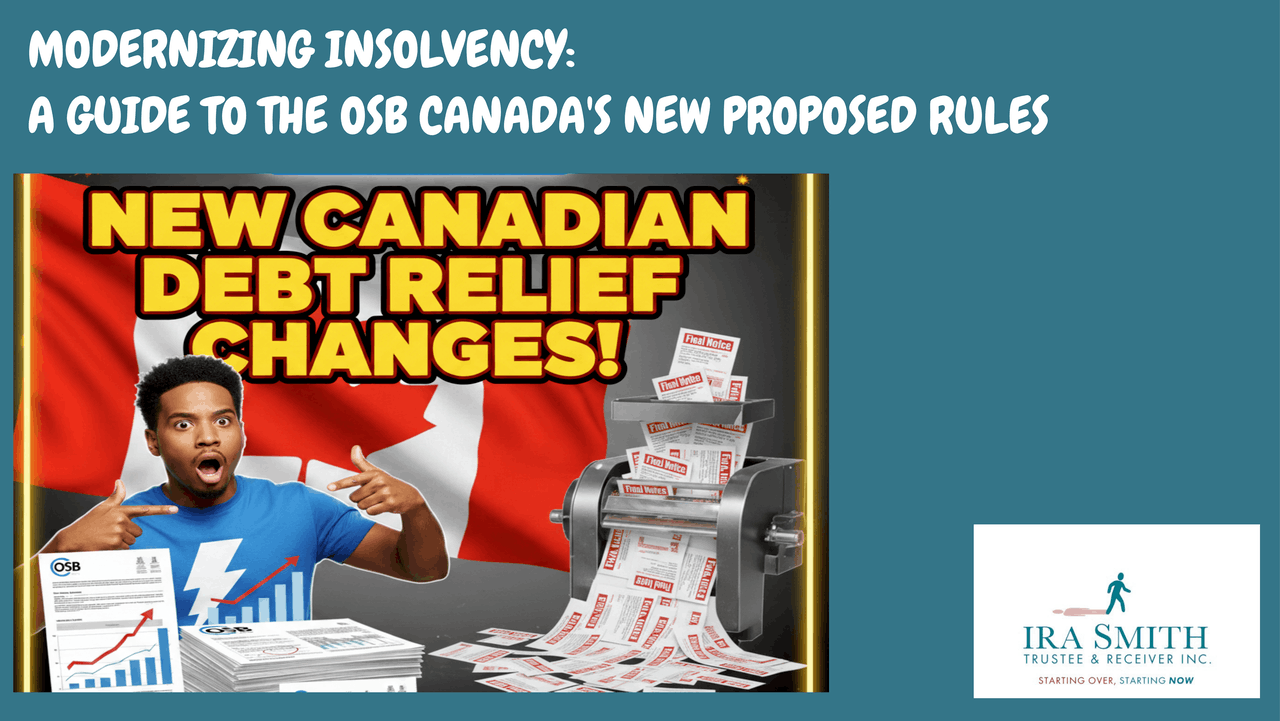
As Brandon Smith, Senior Vice-President of Ira Smith Trustee & Receiver Inc., I understand that dealing with debt can be overwhelming. That’s why I’m here to shed light on important changes happening in the Canadian insolvency space, straight from the Office of the Superintendent of Bankruptcy Canada, sometimes called the OSB. These updates are designed to make debt relief more accessible and efficient for Canadians like you or your company.
Are you feeling stressed by your or your company’s debt? You’re not alone. Many Canadians struggle with financial challenges, and finding a clear path forward can feel impossible. But there’s good news on the horizon. The Office of the Superintendent of Bankruptcy Canada has just released proposed changes to how personal and business debt will be handled. These changes aim to make debt relief more fair, modern, and easier to access for more people.
The official publication of these proposed amendments appeared in the Canada Gazette, Part 1, Volume 159, Number 48, on November 29, 2025. This marks a significant step forward in modernizing Canada’s insolvency system.
We at Ira Smith Trustee & Receiver Inc. are here to explain exactly what the main updates mean for you and your financial future. These aren’t just minor tweaks; they are significant steps to modernize Canada’s insolvency system.
Key Takeaways:
- Higher Debt Limits: The proposed changes will raise the maximum debt allowed for consumer proposals and make more bankruptcies eligible for a simpler “summary administration” process. This is good news for debtors, meaning more options for more people.
- Digital First: Say goodbye to paperwork headaches! Expect a more streamlined process with electronic documents and signatures, making debt relief quicker and easier to navigate. Canadian debt solutions are going digital!
- Fairer Fees for Expert Help: The tariff applicable to Licensed Insolvency Trustee (LIT) fees is being updated for the first time in many years to ensure you continue to receive top-notch, professional guidance. This ensures fair and expert help for all Canadians.
- Inflation Proofing: Crucially, new debt limits will be adjusted annually for inflation, so they stay relevant over time and keep pace with the cost of living.
- Official Review Completed: The public feedback period on these proposed rules just closed on January 16, 2026, and comments are now published in the Canada Gazette for transparency.
Office of the Superintendent of Bankruptcy Canada Big Changes Ahead for Canadians in Debt: What the OSB’s New Proposed Rules Mean for You
The Office of the Superintendent of Bankruptcy Canada (OSB): Your Guide to Fair Debt Solutions
The Office of the Superintendent of Bankruptcy Canada is a federal government agency that plays a crucial role in Canada’s financial system. Its main job is to oversee the Canadian insolvency system, ensuring that bankruptcies, receiverships, financial restructurings and consumer proposals are handled fairly and legally. Operating as an independent body under Innovation, Science and Economic Development Canada, the Office of the Superintendent of Bankruptcy Canada manages its oversight and administrative responsibilities separately from the federal government.
This involves protecting the rights of both debtors (people who owe money) and creditors (people or companies owed money). The Office of the Superintendent of Bankruptcy Canada is responsible for licensing and regulating all Licensed Insolvency Trustees (LITs) across Canada, setting the rules and guidelines that LITs must follow to ensure professional and ethical conduct.
Think of the OSB as the referee of the debt world. They ensure everyone plays by the regulatory framework rules and that the system works well for all Canadians. This oversight is vital for maintaining public confidence in the integrity and fairness of debt relief processes. They are constantly working to improve the system, and these proposed changes are a big part of that ongoing effort.
Why Change Now? Modernizing Canada’s Debt System
The Canadian insolvency rules haven’t been fully updated in a long time, leading to a system that needed to catch up with modern realities. The world has changed a lot since some of these rules were first put in place, especially regarding technology and the rising cost of living. For example, the last major adjustment to consumer proposal limits was back in 2009, which means the current limits haven’t kept pace with over a decade of inflation.
The Office of the Superintendent of Bankruptcy Canada proposed these changes for several important reasons:
- Keep Up with Inflation: The cost of living has gone up significantly since the last updates. Current debt limits didn’t reflect this economic reality, making it harder for many Canadians to get the right kind of debt help they truly needed. The new rules aim to fix this by implementing annual inflation adjustments.
- Improve Efficiency: Modern technology offers new ways to make the insolvency process faster, easier, and less burdensome. Moving away from paper-heavy systems to digital solutions will benefit everyone involved.
- Ensure Consistency: It’s important that the rules are clear and applied the same way across Canada, no matter where you live. These amendments aim to reduce any inconsistencies and make the system more uniform.
- Support LITs: Licensed Insolvency Trustees are vital to the system, providing essential guidance and administration. The updated tariff for fees helps ensure that LITs can continue to provide quality, professional service across the country, maintaining the health of the insolvency ecosystem.
- Increase Accessibility: Ultimately, these changes aim to make it simpler for more people to access the debt relief options they need. By raising thresholds and streamlining processes, more Canadians can find a path to a fresh financial start.
The OSB believes these updates will help Canada’s economy and ensure the insolvency system can adapt to today’s needs, providing effective and fair solutions for individuals and businesses alike.
Office of the Superintendent of Bankruptcy Canada Major Updates to Consumer Proposals: More Help for More Canadians
One of the key proposed changes to Canadian bankruptcy and insolvency rules by the Office of the Superintendent of Bankruptcy (OSB) in 2025-2026 involves consumer proposals.
What is a Consumer Proposal?
A consumer proposal is a powerful legal agreement between you and your unsecured creditors (like credit card companies, banks, or payday lenders). With the help of a Licensed Insolvency Trustee (LIT), you agree to pay back a portion of what you owe, over a period of up to five years, without any interest. When all your payments are completed, then the balance of your unsecured debt is wiped out too.
It’s an excellent way to consolidate your debts, stop collection calls, freeze interest, and allow you to avoid bankruptcy while keeping your assets. Only a Licensed Insolvency Trustee can help you file and administer a consumer proposal. It’s a formal, legally binding process that offers significant protection and relief.
The Proposed Changes:
One of the most exciting proposed changes is the increase to the maximum debt limit for a consumer proposal.
- Current Limit: Right now, your total unsecured debts (not including your mortgage on your main home, as this is a secured debt) cannot be more than $250,000.
- Proposed New Limit: The OSB suggests raising this limit significantly to $325,000.
This new limit will also be adjusted every year for inflation. This is a huge step to keep the system fair as costs continue to rise and ensure that the thresholds remain relevant to the economic realities faced by Canadians.
How This Will Affect Canadians with Debt:
This increase means that many more Canadians who are struggling with high levels of unsecured debt will now qualify for a consumer proposal. Before these proposed changes, if your unsecured debt was over $250,000, your options were more limited:
- file a Division I Proposal under the Bankruptcy and Insolvency Act (Canada) which is more costly than and not streamlined like a consumer proposal; or
- forcing you into bankruptcy even if a proposal was a better fit for your situation.
With the higher threshold, a consumer proposal becomes a viable and often preferable solution for a wider range of people. It gives you the chance to repay a manageable portion of your debt and get a fresh financial start without the full impact of bankruptcy.
Historically, when the limit was raised from $75,000 to $250,000 in 2009, there was a significant increase in the number of consumer proposals filed, helping many more individuals avoid bankruptcy. This new increase is expected to have a similar positive impact, providing a much-needed lifeline to those drowning in debt. It reinforces the idea that there’s good news for debtors: new rules mean more Canadians can access life-changing debt solutions.
Office of the Superintendent of Bankruptcy Canada: What “Summary Administration” Changes Mean for You
The Office of the Superintendent of Bankruptcy Canada’s proposed changes also extend to simplifying the bankruptcy process for many Canadians.
What is Summary Administration Bankruptcy?
In Canada, bankruptcies are generally handled in one of two ways: “summary administration” or “ordinary administration.” Summary administration is a simpler, quicker, and less expensive process designed for people with fewer assets and less complex financial situations. This is the type of bankruptcy most individual Canadians will experience if they choose this path.
Ordinary administration is reserved for more complex cases, often involving businesses or individuals with many assets or intricate financial dealings. The goal of summary administration is to provide an efficient path to debt relief for those who need it most.
The Proposed Changes:
The Office of the Superintendent of Bankruptcy Canada is proposing to raise the asset threshold for summary administration bankruptcies.
- Current Limit: A bankruptcy is handled under summary administration if the realizable assets (assets that can be sold for money to pay creditors) are less than $15,000.
- Proposed New Limit: The OSB plans to increase this threshold to $20,000 of realizable assets.
Like consumer proposals, this threshold will also be adjusted annually for inflation. This annual adjustment is crucial to ensure the threshold remains relevant as asset values and the cost of living continue to change over time.
How This Will Affect Canadians with Debt:
This change will allow more individuals who file for bankruptcy to go through the simpler, less costly summary administration process. If your realizable assets are below this new $20,000 limit, your bankruptcy will likely be faster and involve fewer steps, making the process less stressful during an already difficult time. It helps ensure that individuals with lower-value estates can still access efficient debt relief without the added complexity and cost of an ordinary administration. This is another example of how the new OSB proposed thresholds will positively affect Canadians with debt, offering a more streamlined path to a fresh start.
Office of the Superintendent of Bankruptcy Canada Embracing the Digital Age: Easier Access to Debt Relief
The Office of the Superintendent of Bankruptcy Canada is pushing for modernization, recognizing that in today’s digital world, paper-heavy processes can be slow and frustrating. The OSB’s proposed amendments aim to bring the insolvency system fully into the 21st century.
The Proposed Changes:
- Electronic Documents: Licensed Insolvency Trustees will be able to use and send more documents electronically. This includes things like notices, reports, and other required forms, making communication much faster.
- Electronic Signatures: You may be able to sign more documents digitally, reducing the need for in-person meetings, printing, scanning, or mailing physical papers. This simplifies the process for debtors and LITs alike.
- Electronic File Retention: LITs will be able to keep insolvency files electronically, reducing paper waste, improving organization, and making it easier to access information when needed. This also enhances security and reduces physical storage costs.
- Removing Outdated Requirements: Some older rules, like the unnecessary need to get a court seal for certain documents, will be removed. These changes streamline the administrative burden and focus on substance over outdated formality.
What This Means for You:
These changes mean a smoother, faster, and more convenient experience when dealing with your debt. It will make the process more accessible, especially for those in remote areas, with busy schedules, or with mobility challenges. Less paperwork, quicker turnaround times, and potentially fewer in-person visits can significantly reduce stress and make your journey to debt relief more efficient. The OSB is also focusing on cybersecurity, an important part of digital processes, and will consult on new guidelines for LITs in spring 2026 to ensure that all electronic data is handled securely and responsibly. This move embodies the “Say Goodbye to Paperwork Headaches: Canadian Debt Solutions Are Going Digital!” viral hook perfectly.
Office of the Superintendent of Bankruptcy Canada: Understanding Licensed Insolvency Trustee Fees To Ensure a Strong System
The proposed changes also include crucial revisions to the tariff on how Licensed Insolvency Trustee fees are structured, especially for summary administration bankruptcies. This is about ensuring fair and expert help for all Canadians.
The Role of a Licensed Insolvency Trustee (LIT):
Licensed Insolvency Trustees are the only professionals in Canada legally authorized to administer bankruptcies and consumer proposals. We are highly trained experts in debt solutions, regulated by the OSB, and act impartially to help both debtors and creditors. Our role is multifaceted: we provide essential financial counselling, explain all your options (not just bankruptcy), and guide you through every step of the legal process. We ensure that your rights are protected and that the insolvency system functions fairly. Without LITs, Canadians would lack access to these vital, regulated debt relief services.
Why Fee Adjustments?
The fees paid to LITs for administering summary administration bankruptcies are regulated by a tariff which hasn’t been significantly updated since 1998. Think about how much the cost of living and running a business has increased over 25 years! Over these decades, the costs of running an insolvency practice have increased dramatically, and the work involved has become more complex due to legislative changes and technological advancements. Without fair compensation, it becomes challenging to attract and keep skilled professionals in the field, which could ultimately affect the quality and accessibility of services for Canadians in need.
The Office of the Superintendent of Bankruptcy Canada’s proposed revisions aim to:
- Ensure Viability: Allow LIT businesses to remain strong and continue serving Canadians effectively across the country, including in smaller communities.
- Encourage New LITs: Attract new, bright professionals to the field, ensuring there are enough experts to help people across the country now and in the future.
- Maintain Quality Service: Guarantee that debtors continue to receive high-quality, professional, and empathetic assistance during what is often a very vulnerable and stressful time in their lives.
The Proposed Changes to Fees:
For summary administration bankruptcies, the OSB has proposed a new trustee remuneration structure. This structure would involve:
- 100% of the first $1,700 of the realizable assets.
- 45% of the remaining value up to a maximum of $20,000 in realizable assets.
It’s important to note that this new structure updates a very old system to better reflect the work and costs involved today. For consumer proposals, LIT fees are usually part of the monthly payments and are approved by the OSB, and these specific proposed changes focus on summary administration bankruptcy fees.
What This Means for You:
While LIT fees are changing, the fundamental commitment to providing you with clear, non-judgmental, and expert advice remains. These adjustments are about ensuring the long-term health of the insolvency system so that reliable, professional help is always available when you need it most. When considering a consumer proposal or bankruptcy, your LIT, like Ira Smith and Brandon Smith at Ira Smith Trustee & Receiver Inc., is legally required to explain all fees upfront during your free consultation. These fee updates are an essential part of “Ensuring Fair & Expert Help: Understanding How LIT Fees Are Changing.”
Beyond the Office of the Superintendent of Bankruptcy Canada Rules: What’s Next for Canadian Insolvency?
The proposed changes published in the Canada Gazette, Part 1, Volume 159, Number 48, on November 29, 2025, represent a significant modernization effort by the Office of the Superintendent of Bankruptcy Canada. The public feedback period on these proposed amendments officially closed on January 16, 2026, and the comments received are now publicly available in the Canada Gazette, demonstrating transparency in the process.
While some fee updates only need regulatory approval to take effect, other structural changes, particularly those that require new legal powers or definitions, may necessitate amendments to the Bankruptcy and Insolvency Act itself. This means some changes might be implemented sooner than others. The OSB can also issue Directives to guide Licensed Insolvency Trustees on how to apply the new rules. For example, they might issue guidance on updating how surplus income is calculated. These directives provide practical instructions for LITs to ensure consistent and fair application of the law.
The OSB is also actively working on other initiatives to improve the insolvency system, including finalizing cybersecurity guidelines for LITs to protect sensitive information in an increasingly digital environment. Furthermore, they are providing guidance on how LITs should use artificial intelligence tools responsibly, ensuring that new technologies enhance services without compromising ethical standards or privacy. This ongoing commitment to evolution highlights the OSB’s dedication to a robust, fair, and modern insolvency framework for all Canadians.
Comparison Table: Key Proposed Changes to Office of the Superintendent of Bankruptcy Canada Rules
Here’s a quick look at the major proposed changes and what they mean:
Feature | Current Rules (Approx.) | Proposed New Rules | Impact for Canadians |
|---|---|---|---|
Consumer Proposal Debt Limit | Up to $250,000 (unsecured debt, excluding principal residence mortgage). | Up to $325,000 (unsecured debt, excluding principal residence mortgage), indexed annually for inflation. | More Canadians qualify for this powerful debt relief option, avoiding bankruptcy while keeping assets. |
Summary Bankruptcy Assets | Realizable assets up to $15,000. | Realizable assets up to $20,000, indexed annually for inflation. | Simpler, faster bankruptcy process for more individuals, reducing stress and costs. |
LIT Fees (Summary Admin) | Set by tariff, largely unchanged since 1998. | Revised structure: 100% of the first $1,700, then 45% of the remaining value up to $20,000 in assets. | Ensures ongoing access to professional, high-quality LIT services by making the practice viable across the country. |
Process Modernization | More paper-based, some outdated requirements (e.g., court seals, physical documents). | Emphasis on digitalization (e-documents, e-signatures, e-records, removal of redundant paper requirements). Cybersecurity guidelines to be finalized. | Faster, more convenient, and accessible debt relief process, especially for remote areas or those with mobility issues. |
Consistency | Some inconsistencies in application across regions/between LITs. | Measures to improve consistency in regulatory application and interpretation through clearer rules and directives from the OSB. | Clearer, more uniform application of insolvency laws across Canada, leading to fairer outcomes. |
Inflation Adjustment | Debt limits were static for many years, falling behind economic realities. | Annual indexing for inflation for both consumer proposal debt limits and summary administration asset thresholds. | Ensures the system remains fair and relevant to the current cost of living for years to come. |
Office of the Superintendent of Bankruptcy Frequently Asked Questions (FAQ) Section
Q1: What are the key proposed changes to Canadian bankruptcy and insolvency rules by the Office of the Superintendent of Bankruptcy Canada (OSB) in 2025-2026? A1: The key proposed changes by the Office of the Superintendent of Bankruptcy Canada fall into four main categories: promoting digitalization and accessibility, ensuring consistency in rules, increasing the debt thresholds for consumer proposals and summary administration bankruptcies, and revising the fees for Licensed Insolvency Trustees (LITs). These changes aim to modernize the system, account for inflation, and make debt relief more accessible and efficient for Canadians.
Q2: How will the new Office of the Superintendent of Bankruptcy Canada’s proposed thresholds for consumer proposals and summary administration bankruptcies affect Canadians with debt? A2: The proposed changes will significantly benefit Canadians with debt. The maximum unsecured debt for consumer proposals is set to increase from $250,000 to $325,000, allowing more individuals with higher debt to access this powerful option and avoid bankruptcy. Similarly, the asset threshold for summary administration bankruptcies will rise from $15,000 to $20,000, making the bankruptcy process simpler and faster for a greater number of people. Both thresholds will also be adjusted annually for inflation, ensuring their ongoing relevance.
Q3: When will the Office of the Superintendent of Bankruptcy Canada’s proposed changes to insolvency rules, including LIT fees and digitalization, take effect? A3: The proposed amendments have been published in the Canada Gazette, Part I, Volume 159, Number 48, on November 29, 2025, and the public consultation period for feedback concluded on January 16, 2026. While the specific effective date for all changes is not yet final, regulatory approval is needed for fee updates, and some structural changes might require legislative amendments to the Bankruptcy and Insolvency Act. The OSB can also issue directives to guide implementation, meaning different aspects may come into force at different times.
The recent changes by the Office of the Superintendent of Bankruptcy Canada aim to keep the insolvency system effective and accessible, not to increase costs for individuals dealing with debt. While Licensed Insolvency Trustee fees for summary bankruptcies will be adjusted to reflect current expenses, the changes primarily support the professionals providing these essential services.
The recent changes by the Office of the Superintendent of Bankruptcy Canada aim to maintain an effective and accessible insolvency system rather than increase costs for individuals dealing with debt. While Licensed Insolvency Trustee fees for summary bankruptcies are being adjusted to reflect current expenses, the focus is on supporting professionals providing essential services.
The changes by the Office of the Superintendent of Bankruptcy Canada aim to maintain an effective and accessible insolvency system rather than increase costs for debtors. While Licensed Insolvency Trustee (LIT) fees for summary bankruptcies are being adjusted to align with current costs, the adjustments support professionals providing essential services.
The recent changes by the Office of the Superintendent of Bankruptcy Canada aim to keep the insolvency system effective and accessible, rather than increase costs for individuals dealing with debt. Although Licensed Insolvency Trustee fees for summary bankruptcies are being adjusted to reflect current expenses, the focus is on supporting professionals who provide these essential services.
Q4: Will these Office of the Superintendent of Bankruptcy Canada changes make it more expensive to deal with my debt? A4: The goal of these changes is to ensure the insolvency system remains effective and accessible, not necessarily to make it more expensive for you. While LIT fees for summary bankruptcies are being adjusted after many years to reflect current costs, these changes are aimed at supporting the professionals who provide these vital services.
A Licensed Insolvency Trustee will always discuss all fees with you upfront during your free, no-obligation consultation. The increased thresholds for consumer proposals may actually save you money by allowing you to choose a more suitable and often less costly debt solution, like a consumer proposal, instead of a more complex or impactful bankruptcy.
Q5: What are the benefits of digitalization in the insolvency process according to the Office of the Superintendent of Bankruptcy Canada? A5: Digitalization will make the debt relief process faster, more convenient, and more accessible for everyone involved. It will allow for electronic document submission, e-signatures, and digital record keeping, significantly reducing paperwork and streamlining administration. This can reduce stress, cut down on travel and printing costs, and make your journey to debt relief more efficient and easier to navigate from anywhere in Canada.
Office of the Superintendent of Bankruptcy Canada Brandon’s Take: A New Horizon for Debt Relief in Canada
As Senior Vice-President of Ira Smith Trustee & Receiver Inc., I’ve seen firsthand the toll that debt can take on companies, individuals and families. These proposed changes from the Office of the Superintendent of Bankruptcy Canada are truly a breath of fresh air. For too long, our insolvency system has needed an update to reflect the realities of modern life and the pressures of inflation. It’s an affirmation of our shared commitment to helping Canadians rebuild their financial lives.
The increase in thresholds for both consumer proposals and summary administration bankruptcies is a game-changer. It means that more Canadians will have access to effective debt relief options that are tailored to their specific situations, rather than being forced into less ideal solutions simply because of outdated limits. The commitment to annual inflation adjustments is particularly welcome, as it ensures these programs will remain relevant and fair for years to come, adapting as our economy evolves.
Furthermore, the move towards digitalization isn’t just about efficiency; it’s about accessibility. Making the process simpler and less burdensome can significantly reduce the stress associated with seeking debt solutions. It reflects a forward-thinking approach that embraces technology to better serve the public.
My team and I at Ira Smith Trustee & Receiver Inc. believe these amendments will strengthen the Canadian insolvency system, making it more robust and responsive to the needs of those struggling with financial challenges. It’s a clear signal that the system is evolving to offer better support and a clearer, more efficient path to a fresh financial start. We are excited about these changes and what they will mean for our clients.
Don’t Face Your Debt Alone: Contact Ira Smith Trustee & Receiver Inc. Today
Understanding these new rules and how they apply to your specific situation can be complex. You don’t have to navigate these changes or your debt problems on your own. At Ira Smith Trustee & Receiver Inc., we are Licensed Insolvency Trustees, and our expertise is helping Canadians just like you find the best path out of debt. We are uniquely qualified to administer consumer proposals and bankruptcies, and we stay on top of all the latest changes from the Office of the Superintendent of Bankruptcy to ensure you receive the most current and effective advice.
We offer a free, no-obligation consultation where we can discuss your unique financial situation, explain all your options – including how these new proposed rules might benefit you – and help you choose the debt solution that makes the most sense for your future. Our approach is professional, empathetic, and always non-judgmental. We are here to listen without judgment and provide clear, actionable solutions tailored to your needs.
Take the first step towards a debt-free life. The sooner you reach out, the sooner we can help you start fresh. Our experienced team is ready to provide the guidance and support you deserve.
Don’t let financial uncertainty dictate your future. If you or your business is struggling with debt, losing sleep, or facing the possibility of legal action, contact Ira Smith Trustee & Receiver Inc. today. We offer a free, confidential consultation to discuss your situation, explain your options in plain language, and help you develop a clear, actionable plan. Our team of Licensed Insolvency Trustees is dedicated to providing the compassionate, professional support you need to regain control and achieve a debt-free life. Take the first step towards a brighter financial future – call us now.
Ira Smith Trustee & Receiver Inc. is licensed by the Office of the Superintendent of Bankruptcy and is a member of the Canadian Association of Insolvency and Restructuring Professionals.
- Phone: 905.738.4167
- Toronto line: 647.799.3312
- Website: https://irasmithinc.com/
- Email: brandon@irasmithinc.com
——————————————————————————–
Disclaimer: This analysis is for educational purposes only and is based on the cited sources and my professional expertise as a licensed insolvency trustee. The information provided does not constitute legal or financial advice for your specific circumstances.
Every situation is unique and involves complex legal and factual considerations. The outcomes discussed in this article may not apply to your particular situation. Situations are fact-specific and depend on the particular circumstances of each case.
Please contact Ira Smith Trustee & Receiver Inc. or consult with qualified legal or financial professionals regarding your specific matter before making any decisions.
About the Author:
Brandon Smith is a Senior Vice-President at Ira Smith Trustee & Receiver Inc. and a licensed insolvency trustee serving clients across Ontario. With extensive experience in complex court-ordered receivership administration and corporate insolvency & restructuring proceedings, Brandon helps businesses, creditors, and professionals navigate challenging financial situations to achieve optimal outcomes.
Brandon stays current with landmark developments in Canadian insolvency law. He brings this cutting-edge knowledge to every client engagement, ensuring his clients benefit from the most current understanding of their rights and options.