

If you are reading this while navigating a complex financial restructuring or managing the pressures placed on your company by your secured lender and are fearful of corporate insolvency, please know that you are not alone. At Ira Smith Trustee & Receiver Inc., we understand that legal jargon and courtroom battles can feel overwhelming when you are simply trying to find a path forward. We are here to guide you through these technical waters with clarity and compassion.
Secured Lender Key Takeaways
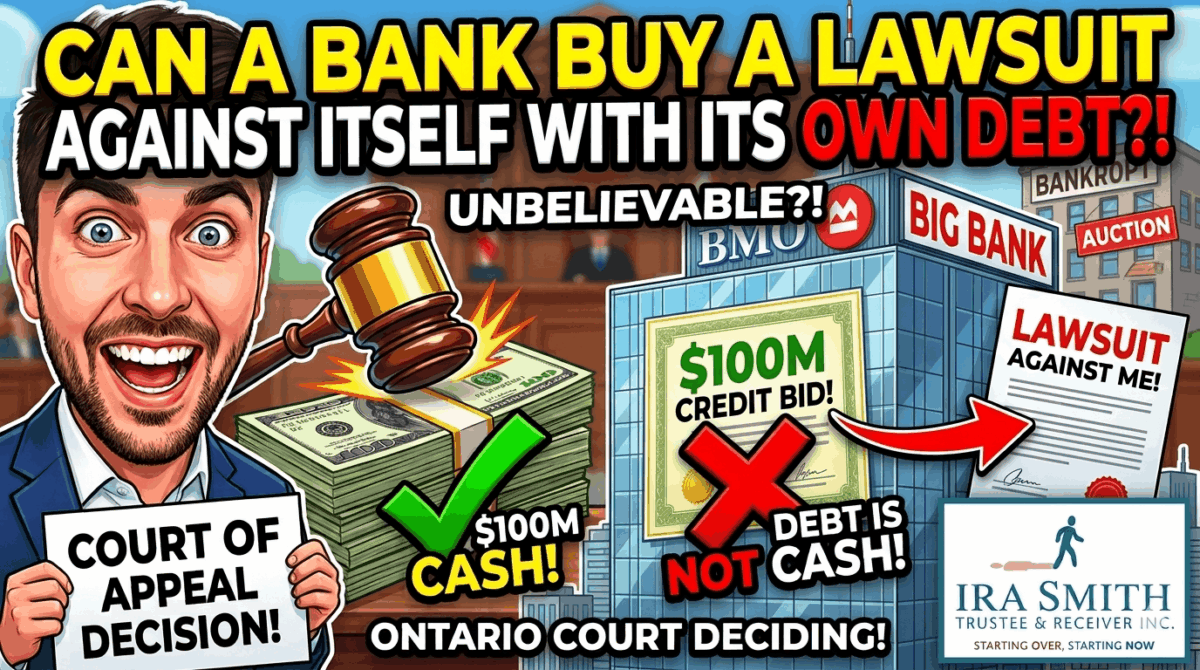
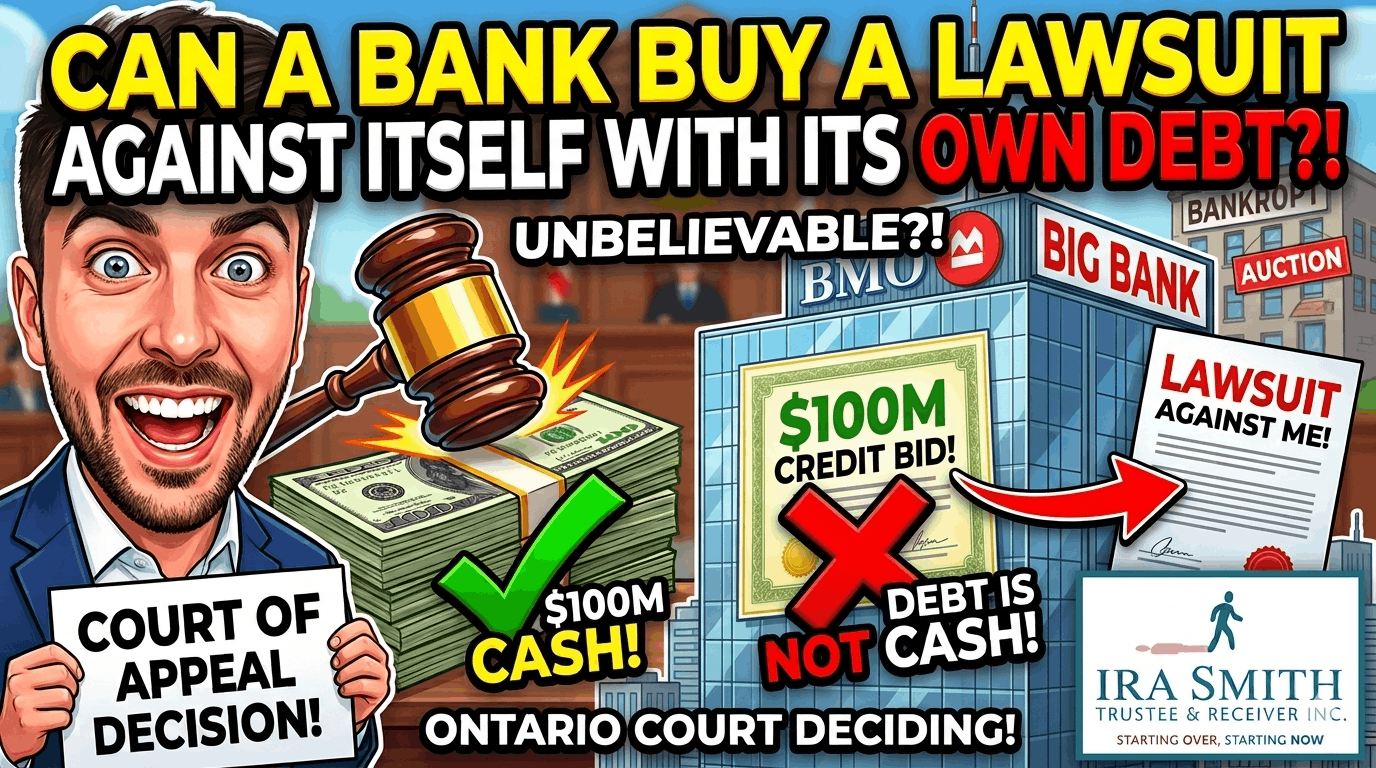
- A Landmark Question: The Ontario Court of Appeal is set to decide if a secured lender can use their debt to “buy” a lawsuit that a Licensed Insolvency Trustee could file against it.
- Credit Bidding vs. Cash: Traditionally, credit bidding allows a secured lender to bid the value of their debt. The case discussed below begins to question if that applies to assets that aren’t part of their original security.
- The Avida Case: A judge on the Ontario Commercial List recently allowed Bank of Montreal (BMO) to participate in an auction to be run by the Trustee and credit-bid to purchase a cause of action (a legal claim) against BMO, but that decision is now being appealed.
- Why It Matters: The final ruling will impact how receivers and trustees recover money for creditors and whether lenders can effectively “neutralize” legal claims without paying cash.
Secured Lender Highlights
- What is a Credit Bid?
- The Case of Avida 2015 Inc. (Re)
- The Conflict: Can a Lender Bid Debt for a Lawsuit?
- Why the Court of Appeal is Stepping In
- Comparison: Credit Bidding vs. Cash Bidding
- What This Means for You and Your Business
- Frequently Asked Questions (FAQ)
Secured Lender: What is a Credit Bid?
Before we dive into the details of the Avida 2015 Inc. (Re), 2026 ONCA 478 (CanLII) case, let’s define a term that is central to this debate. In the world of insolvency, a credit bid occurs when a secured creditor, someone who has a legal claim over specific assets, uses the money they are already owed as “currency” to buy those assets in a receiver’s or trustee’s Sale and Investment Solicitation Process (SISP).
Normally, if a business goes bankrupt, the Licensed Insolvency Trustee (the person appointed to manage the bankruptcy) tries to sell the business assets for cash. However, a secured lender often has the right to say, “Instead of you selling my collateral to someone else for cash, I will bid on all or part of the debt I am owed to take ownership of it myself.”
Assets of this type are often physical, like equipment or real estate. But what happens when the asset is a cause of action, essentially, the right to sue someone? And what happens when that someone to be sued is the secured lender itself?

Secured Lender: The Case of Avida 2015 Inc. (Re)
The story of Avida 2015 Inc. brings this technical question into sharp focus. In this bankruptcy proceeding, the Trustee identified a valuable asset: a cause of action against the Bank of Montreal (BMO). In simpler terms, the Trustee believed the estate had a legal claim to sue BMO for money.
The Trustee decided to put this lawsuit up for auction. BMO, being a secured lender and a major creditor in the bankruptcy, wanted to participate in the auction. They didn’t want to bid cash, though; they wanted to use a credit bid based on the secured debt they were already owed by Avida.
On September 22, 2025, a bankruptcy judge made a significant ruling: BMO was permitted to bid in the auction using a credit bid up to the face value of its secured debt.
This caused immediate concern for other stakeholders. If BMO could buy the lawsuit against itself using its own debt, it could effectively end the litigation without ever having to write a cheque. The appellant in this case, David Reale, argued that BMO should be required to pay cold, hard cash like any other bidder.
The Conflict: Can a Secured Lender Bid Debt for a Lawsuit?
The core of the dispute is whether a credit bid can be used to acquire an asset that does not actually fall under the lender’s security agreement.
Think of it this way: if a bank has a mortgage on a building, it makes sense that they can credit-bid for that building. But does that bank also have the right to credit-bid for a legal claim that isn’t part of that mortgage?
The appellant argues that allowing a secured lender to do this “chills” the auction. Who would want to bid cash against a bank that can bid millions of dollars in “debt” that it already holds? This could prevent the Trustee from getting the best possible value for the estate’s creditors.
Secured Lender: Why the Court of Appeal is Stepping In
This isn’t just a minor disagreement over a single auction. On June 17, 2026, a judge of the Court of Appeal for Ontario granted leave to appeal the original judge’s decision. They noted that this is “a matter of importance… to bankruptcy proceedings more generally.”
As of June 29, 2026, Justice Zarnett issued a case management ruling (2026 ONCA 478) to set the stage for the full hearing. We now have a timeline for when these big questions will be answered:
- July 15, 2026: Deadline for the appellant to perfect the appeal.
- July 31, 2026: BMO’s opportunity to file its response.
- August 19, 2026: Deadline for other interested parties to intervene.
This case will likely set a major precedent for how a secured lender interacts with receivership and bankruptcy estates in Ontario for years to come. We will keep an eye on this case and update you in a future Brandon’s Blog.

Secured Lender Comparison: Credit Bidding vs. Cash Bidding
To help you understand why this battle is so fierce, we have put together a comparison of the two bidding methods:
| Feature | Credit Bidding | Cash Bidding |
|---|---|---|
| Payment Method | Offsetting the secured debt owed by the estate. | Liquid cash payment into the estate. |
| Liquidity for Estate | Low (does not provide cash for other creditors). | High (provides immediate cash to the trustee). |
| Primary Advantage | Protects the lender’s security value. | Maximizes cash recovery for unsecured creditors. |
| Legal Status | Common practice, but subject to court discretion. | Standard procedure for all bankruptcy auctions. |
| Controversy | Disputed when used to buy a lawsuit against the bidder. | Generally undisputed if the price is fair. |
Secured Lender: What This Means for You and Your Business
Whether you are a business owner facing a corporate restructuring or a creditor trying to recover what you are owed, the Avida decision matters.
If the Court of Appeal rules that credit bidding is restricted to only the assets specifically listed in a security agreement, it gives Trustees more power to raise cash by selling the unsecured assets. This could lead to higher payouts for unsecured creditors.
On the other hand, if the court supports BMO’s position, a secured lender will have a powerful tool to protect itself from litigation costs during an insolvency administration, such as a receivership or bankruptcy proceeding. It essentially allows them to use all or a portion of the “value” of their unpaid debt to “buy” their way out of a lawsuit.
We know the tension put upon you when these legal battles occur. Our goal is to ensure you have the information you need to make practical decisions during a financial crisis.

Secured Lender Frequently Asked Questions (FAQ)
1. Can any creditor use a credit bid?
Typically, only secured creditors can credit-bid. Unsecured creditors (those without a specific lien or charge on an asset) have to pay cash if they want to buy something from a receivership or bankruptcy estate. They have no credit to bid!
2. Why would a Trustee sell a lawsuit?
Lawsuits are expensive and time-consuming. If a Trustee doesn’t have the funds to pay lawyers to fight a case, they might sell the cause of action to a third party who is willing to take the risk and pay cash upfront for the right to pursue it.
3. Is this decision final?
No. As of late June 2026, the Ontario Court of Appeal has only set the schedule for the case. We will likely not have a final decision until late 2026 or early 2027.
4. What does “perfecting an appeal” mean?
Perfecting an appeal is the technical process of filing all the necessary documents, transcripts, and legal arguments with the court so that the appeal is ready to be heard by the judges.
Secured Lender: The Path Forward
Navigating the world of bankruptcy and corporate insolvency is rarely straightforward. Cases like Avida 2015 Inc. remind us that the law is constantly evolving to find a balance between the rights of lenders and the need for a fair process for everyone.
At Ira Smith Trustee & Receiver Inc., we don’t just see numbers and legal files; we see people and businesses looking for a fresh start. We are committed to staying at the forefront of these legal developments so we can provide you with the best possible advice.
Starting Over, Starting Now
Don’t let financial uncertainty dictate your future. If you or your business is struggling with debt, losing sleep, or facing legal action, contact Ira Smith Trustee & Receiver Inc. today.
We offer a free, confidential consultation to discuss your situation, explain your options in plain language, and help you develop a clear, actionable plan. Our team of Licensed Insolvency Trustees is dedicated to providing the compassionate, professional support you need to regain control and achieve a debt-free life.
Take the first step towards a brighter financial future, call us now.
- Phone: 905.738.4167
- Toronto Line: 647.799.3312
- After hours and weekends: 289.670.7500
- Website: irasmithinc.com
- Email: brandon@irasmithinc.com
Ira Smith Trustee & Receiver Inc. is licensed by the Office of the Superintendent of Bankruptcy. Ira and Brandon Smith are members of the Canadian Association of Insolvency and Restructuring Professionals.
, , , , , , , , , , , , , , , , , , , , , , , , , , –
Disclaimer: This analysis is for educational purposes only and is based on the cited sources and professional expertise as a Licensed Insolvency Trustee. The information provided does not constitute legal or financial advice for your specific circumstances. Every situation is unique; the outcomes discussed may not apply to your particular case. Please contact Ira Smith Trustee & Receiver Inc. to discuss your specific needs.
About the Author:
Brandon Smith is a Senior Vice-President at Ira Smith Trustee & Receiver Inc. and a Licensed Insolvency Trustee serving clients across Ontario. His experience includes consumer insolvency and complex court-ordered receivership and corporate bankruptcy administration, giving him practical insight into navigating challenging financial situations to achieve optimal outcomes for businesses, creditors, and professionals. Brandon stays current with landmark developments in Canadian insolvency law, ensuring his clients benefit from a cutting-edge understanding of their rights and options.
#SecuredLenders #CreditBid #InsolvencyLaw #OntarioCourtOfAppeal #CorporateRestructuring #BankruptcyOntario #FreshStart