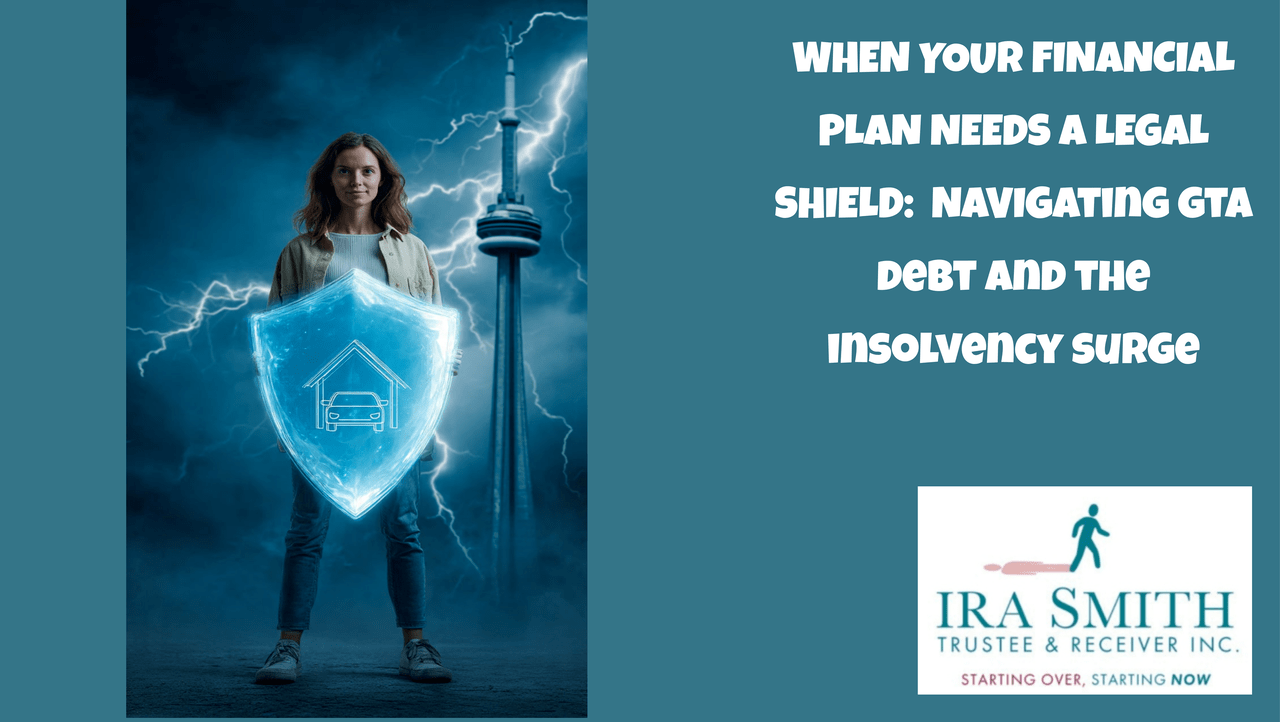
Financial Plan Introduction: The Urgent Need to Shift from Conversation to Action
November’s Financial Literacy Month encouraged Canadians to “Talk Money”, create a financial plan and break the stigma around debt. That conversation is vital. Talking openly about money helps reduce shame and encourages people to seek help. But for many households in the Greater Toronto Area (GTA), talk alone is no longer enough.
During Financial Literacy Month, the Office of the Superintendent of Bankruptcy (OSB) and the Canadian Association of Insolvency and Restructuring Professionals (CAIRP) issued a joint statement encouraging Canadians to take proactive steps toward financial wellness. The release urges those facing unmanageable debt to speak openly about their financial challenges and to seek early support through trusted resources—such as the OSB’s Debt Solutions Portal, CAIRP’s Navigating Financial Distress page, and regulated professionals like Licensed Insolvency Trustees (LITs), who are legally authorized to guide individuals through formal debt relief options.
On November 12, 2025, our national association, CAIRP, issued a media release indicating that there were 36,256 consumer insolvency filings in Q3 2025. Their media release stated that these latest insolvency statistics, as disclosed in the CAIRP media release, confirm what many families already feel: consumer insolvencies surged to their highest quarterly volume since the 2009 global financial crisis. For GTA residents already stretched by housing costs and rising living expenses, this is not just a statistic—it’s a wake-up call.
For many GTA residents, their 2026 budget process to create their updated or new budget must go beyond budgeting. It requires expert intervention from a Licensed Insolvency Trustee, the only professional legally authorized to administer authorized and Bankruptcies in Canada.
Building Your Personal Financial Foundation: The Core Components
A strong financial plan is like a well-built home—it starts with a solid foundation. Whether you’re just starting to assess or you are reassessing your finances after a turbulent year, understanding the core components of financial planning is essential.
Understanding Your Current Financial Snapshot
Begin by taking stock of your income, expenses, assets, and liabilities. This snapshot helps you see where you stand and what needs attention. Use tools like net worth calculators or budgeting apps to get a clear picture.
The Cornerstone: Budgeting and Emergency Savings
Budgeting your cash flow is the bedrock of any financial plan. It helps you allocate funds for essentials, savings, and goals. Aim to build an emergency fund covering 3–6 months of expenses. This buffer protects you from unexpected costs like car repairs or job loss.
Defining Your Financial Goals
Set short-, medium-, and long-term goals. These might include paying off debt, saving for a home, funding your child’s education, or retiring comfortably. Clear goals guide your decisions and keep you motivated.
Charting Your Future: Key Financial Planning Areas
Once your foundation is set, expand your plan to include growth, protection, and legacy strategies.
Smart Investing for Growth
Investing helps your money grow over time. Consider RRSPs, TFSAs, and diversified portfolios. Understand your risk tolerance and time horizon, and seek professional advice if needed.
Protecting What You Have: Insurance and Risk Management
Insurance safeguards your income, health, and assets. Life, disability, and home insurance are key components. Risk management also includes having legal documents like powers of attorney in place.
Securing Your Later Years: Retirement Planning
Retirement planning ensures you can maintain your lifestyle after you stop working. Contribute regularly to your RRSP and consider employer pension plans. Estimate your retirement income needs and adjust your savings accordingly. Make use of all retirement accounts available to you. The Government of Canada and others provide a Canadian Retirement Income Calculator.
Planning Your Legacy: Estate Planning Essentials
Estate planning isn’t just for the wealthy. It ensures your wishes are honoured, and your loved ones are protected. Create a will, designate beneficiaries, and consider trusts if appropriate. Legal advice is always recommended for estate planning needs.
Optimizing Your Finances: Tax Strategy
Smart tax planning can save you thousands. Use deductions, credits, and registered accounts to minimize your tax burden. Stay informed about changes in Canada’s tax laws and consult a tax professional when needed.
Your Financial Plan as a Shield: Mitigating Risks
Even the best financial plan can be undermined by external threats. In 2025, Canadians face rising risks that demand more than traditional planning.
Protecting Against Frauds and Scams
Financial scams are on the rise. Be cautious with unsolicited calls, emails, and offers for different investment accounts. Use secure passwords and monitor your accounts regularly. The Canadian Anti-Fraud Centre offers resources to stay informed.
Safeguarding Against Financial Abuse
Financial abuse—especially among seniors—is a growing concern. Watch for signs like unexplained withdrawals or pressure to sign documents. Protect yourself by involving trusted professionals and maintaining control over your finances.
The Turning Point: When a Financial Plan Requires Legal Intervention
Despite best efforts, many Canadians are finding that traditional financial planning is no longer enough. The latest data confirms a troubling trend:
- Q3 2025: 36,256 consumer insolvency filings, the highest since 2009
- 48% of Canadians are within $200 of insolvency each month. This reality dates back to an Ipsos poll conducted in 2016. This statistic has not gotten better with ongoing polls up to today.
- On November 26, 2025, Rental Market Trends reported that GTA rent averages around $2,350.
- The Canadian Bankers Association reports that residential property mortgages make up 74-75% of household debt.
These figures reveal a structural crisis. Budgeting and saving can’t solve insolvency. When debt becomes unmanageable, your financial plan must evolve into a legal solution.
Why a Licensed Insolvency Trustee Is the Expert Your Financial Plan Needs
A Licensed Insolvency Trustee is the only professional legally authorized to administer Consumer Proposals and Bankruptcies in Canada. LITs are impartial officers of the court, required to review all options before recommending a formal filing.
Consumer Proposals: The Preferred Path for GTA Clients
- Asset Protection: Keep your home and car if secured payments continue
- Fixed, Interest-Free Payments: One predictable payment over up to five years
- Immediate Legal Peace: Stops wage garnishments and creditor calls
- Credit Recovery Advantage: Removed from your credit report three years after completion
This is not failure—it’s financial maturity. A Consumer Proposal is a regulated financial plan designed for recovery.
Frequently Asked Questions (FAQs)About Your Financial Plan
Q1: Why is having a strong financial plan so urgent right now?
While talking openly about money is important, taking action on your financial plan is now crucial for many households, especially in the Greater Toronto Area (GTA). Data confirms that consumer insolvency filings surged to their highest point in Q3 2025 since the 2009 global financial crisis. High living costs, such as average GTA rent around $2,350, and large household debts (with residential property mortgages making up 74-75% of that debt), reveal a structural problem. For many, budgeting alone is no longer enough to manage these risks.
Q2: What are the core components that build a strong financial plan?
A strong financial plan is like a well-built home—it needs a solid foundation. The core components involve:
• Understanding Your Current Snapshot: You must first take stock of your assets, liabilities, income, and expenses to see where you stand.
• Budgeting and Emergency Savings: Budgeting your cash flow is the bedrock of the plan. You should aim to build up an emergency fund that covers 3 to 6 months of expenses to protect you from unexpected costs like job loss or car repairs.
• Defining Your Financial Goals: Set clear goals for the short-, medium-, and long-term, such as paying off debt or saving for retirement. These goals help guide your decisions.
Q3: How does a financial plan cover long-term growth and protection?
Once the foundation is set, your financial plan should expand to cover growth, protection, and legacy strategies. Key areas include:
• Smart Investing: This helps your money grow over time using tools like Tax-Free Savings Accounts (TFSAs) and Registered Retirement Savings Plans (RRSPs).
• Protecting What You Have: This involves insurance (like life, disability, and home insurance) and ensuring you have legal documents, such as powers of attorney.
• Retirement and Estate Planning: You need to regularly contribute to retirement savings. Estate planning ensures your wishes are honored and your loved ones are protected through documents like a will.
Q4: What should I do if my financial plan cannot handle unmanageable debt?
If debt becomes unmanageable, even the best traditional financial plan may fail. When debt becomes overwhelming, especially in the high-cost GTA market, your plan must shift into a legal solution.
You should seek early support through trusted resources. If budgeting and saving are not working, it is time to speak with a Licensed Insolvency Trustee (LIT). An LIT is the only professional legally authorized to administer formal debt relief options, such as Consumer Proposals and Bankruptcies, in Canada.
Q5: What is a Consumer Proposal, and how does it help recovery?
A Consumer Proposal is a regulated financial plan that is designed for recovery when you are overwhelmed by debt. For many people in the GTA, it is the preferred path.
Key benefits of a Consumer Proposal include:
• Immediate Legal Peace: It stops creditor calls and wage garnishments right away.
• Fixed Payments: You make one predictable, interest-free payment over a period of up to five years.
• Asset Protection: You can keep assets like your home and car, provided you continue making secured payments.
A Consumer Proposal is seen as an effective tool for getting out of debt, protecting assets, and starting fresh. Speaking with an LIT allows them to evaluate your specific situation and options.
Conclusion: From Planning to Protection
So, following the lead of November’s Financial Literacy Month, just talking about finances will not be good enough for most GTA residents’ financial future. Your financial plan should grow with your needs. Heading into 2026, that means recognizing when traditional tools aren’t enough. If you’re overwhelmed by debt, especially in the high-cost GTA market, it’s time to speak with a Licensed Insolvency Trustee.
Debt is incredibly common in Canada. Rising living costs, expensive housing, long vehicle loans, unexpected emergencies—these things affect real people every day. If you’re struggling, you’re not alone, and there’s no shame in seeking help.
A consumer debt proposal isn’t a magic solution, but for many Canadians, it’s an effective tool to get out of debt, protect assets, and start fresh. The key is getting proper advice from a Licensed Insolvency Trustee who can evaluate your unique situation.
Whether you ultimately file a proposal, pursue another option, or find you don’t need insolvency proceedings at all, the important thing is taking that first step. Understanding your options is empowering.
If you’re in the Greater Toronto Area and want to discuss your situation, I’m here to help. At Ira Smith Trustee & Receiver Inc., we’ve been helping GTA consumers, entrepreneurs and their companies with debt problems for years. Our consultations are free, confidential, and pressure-free.
You don’t have to figure this out alone. Reach out today and let’s talk about your path to financial freedom, Starting Over, Starting Now.
The time to act is now.
Contact Ira Smith Trustee & Receiver Inc. today:
905.738.4167
Toronto line: 647.799.3312
brandon@irasmithinc.com or ira@irasmithinc.com
https://irasmithinc.com/
Disclaimer: This analysis is for educational purposes only and is based on the cited sources and my professional expertise as a licensed insolvency trustee. The information provided does not constitute legal or financial advice for your specific circumstances.
Every situation is unique and involves complex legal and factual considerations. The outcomes discussed in this article may not apply to your particular situation. Court decisions are fact-specific and depend on the particular circumstances of each case.
Please contact Ira Smith Trustee & Receiver Inc. or consult with qualified legal or financial professionals regarding your specific matter before making any decisions.
About the Author: Brandon Smith is a Licensed Insolvency Trustee and Senior Vice-President at Ira Smith Trustee & Receiver Inc., serving the Greater Toronto Area. With years of experience helping Canadians overcome debt challenges, Brandon provides practical, compassionate guidance for people seeking financial relief. For a free consultation, visit irasmithinc.com.