Categories
Brandon Blog Post

WHEN YOUR FINANCIAL PLAN NEEDS A LEGAL SHIELD: NAVIGATING GTA DEBT AND THE INSOLVENCY SURGE

Financial Plan Introduction: The Urgent Need to Shift from Conversation to Action

November’s Financial Literacy Month encouraged Canadians to “Talk Money”, create a financial plan and break the stigma around debt. That conversation is vital. Talking openly about money helps reduce shame and encourages people to seek help. But for many households in the Greater Toronto Area (GTA), talk alone is no longer enough.

During Financial Literacy Month, the Office of the Superintendent of Bankruptcy (OSB) and the Canadian Association of Insolvency and Restructuring Professionals (CAIRP) issued a joint statement encouraging Canadians to take proactive steps toward financial wellness. The release urges those facing unmanageable debt to speak openly about their financial challenges and to seek early support through trusted resources—such as the OSB’s Debt Solutions Portal, CAIRP’s Navigating Financial Distress page, and regulated professionals like Licensed Insolvency Trustees (LITs), who are legally authorized to guide individuals through formal debt relief options.

On November 12, 2025, our national association, CAIRP, issued a media release indicating that there were 36,256 consumer insolvency filings in Q3 2025. Their media release stated that these latest insolvency statistics, as disclosed in the CAIRP media release, confirm what many families already feel: consumer insolvencies surged to their highest quarterly volume since the 2009 global financial crisis. For GTA residents already stretched by housing costs and rising living expenses, this is not just a statistic—it’s a wake-up call.

For many GTA residents, their 2026 budget process to create their updated or new budget must go beyond budgeting. It requires expert intervention from a Licensed Insolvency Trustee, the only professional legally authorized to administer authorized and Bankruptcies in Canada.

Building Your Personal Financial Foundation: The Core Components

A strong financial plan is like a well-built home—it starts with a solid foundation. Whether you’re just starting to assess or you are reassessing your finances after a turbulent year, understanding the core components of financial planning is essential.

Understanding Your Current Financial Snapshot

Begin by taking stock of your income, expenses, assets, and liabilities. This snapshot helps you see where you stand and what needs attention. Use tools like net worth calculators or budgeting apps to get a clear picture.

The Cornerstone: Budgeting and Emergency Savings

Budgeting your cash flow is the bedrock of any financial plan. It helps you allocate funds for essentials, savings, and goals. Aim to build an emergency fund covering 3–6 months of expenses. This buffer protects you from unexpected costs like car repairs or job loss.

Defining Your Financial Goals

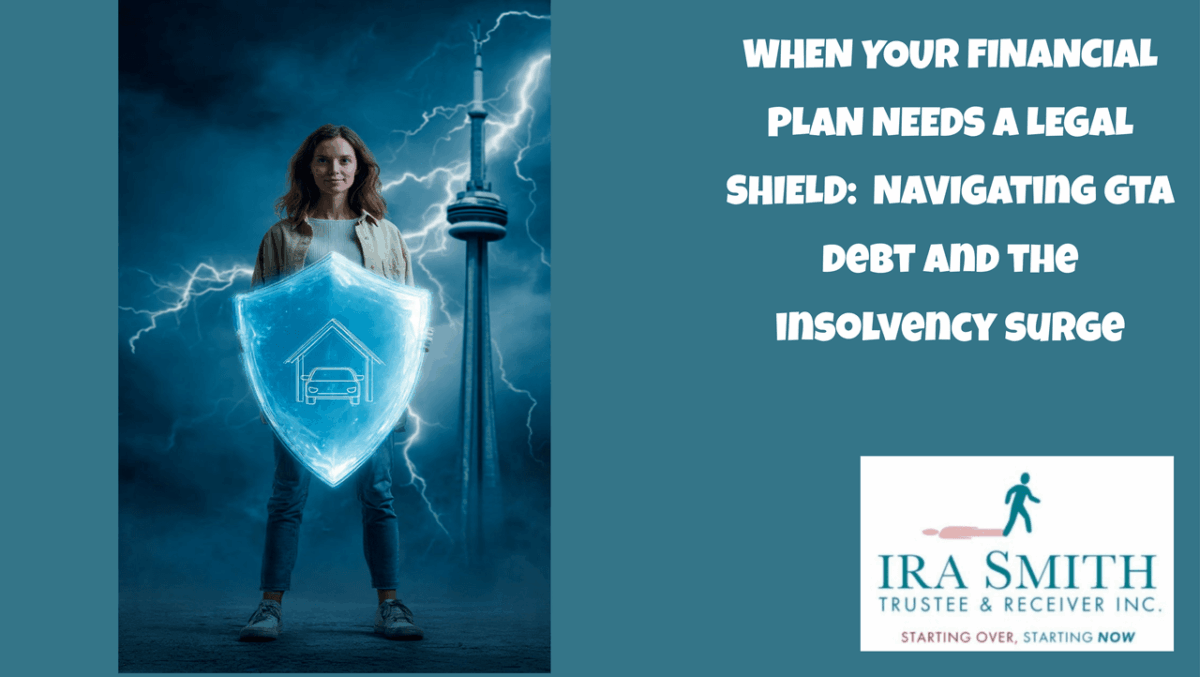
Set short-, medium-, and long-term goals. These might include paying off debt, saving for a home, funding your child’s education, or retiring comfortably. Clear goals guide your decisions and keep you motivated.Woman holding a protective financial plan shield she got by filing a consumer proposal with Ira Smith Trustee & Receiver with house and car icons against a stormy Toronto sky with CN Tower and lightning, symbolizing asset protection.

Charting Your Future: Key Financial Planning Areas

Once your foundation is set, expand your plan to include growth, protection, and legacy strategies.

Smart Investing for Growth

Investing helps your money grow over time. Consider RRSPs, TFSAs, and diversified portfolios. Understand your risk tolerance and time horizon, and seek professional advice if needed.

Protecting What You Have: Insurance and Risk Management

Insurance safeguards your income, health, and assets. Life, disability, and home insurance are key components. Risk management also includes having legal documents like powers of attorney in place.

Securing Your Later Years: Retirement Planning

Retirement planning ensures you can maintain your lifestyle after you stop working. Contribute regularly to your RRSP and consider employer pension plans. Estimate your retirement income needs and adjust your savings accordingly. Make use of all retirement accounts available to you. The Government of Canada and others provide a Canadian Retirement Income Calculator.

Planning Your Legacy: Estate Planning Essentials

Estate planning isn’t just for the wealthy. It ensures your wishes are honoured, and your loved ones are protected. Create a will, designate beneficiaries, and consider trusts if appropriate. Legal advice is always recommended for estate planning needs.

Optimizing Your Finances: Tax Strategy

Smart tax planning can save you thousands. Use deductions, credits, and registered accounts to minimize your tax burden. Stay informed about changes in Canada’s tax laws and consult a tax professional when needed.Woman holding a protective financial plan shield she got by filing a consumer proposal with Ira Smith Trustee & Receiver with house and car icons against a stormy Toronto sky with CN Tower and lightning, symbolizing asset protection.

Your Financial Plan as a Shield: Mitigating Risks

Even the best financial plan can be undermined by external threats. In 2025, Canadians face rising risks that demand more than traditional planning.

Protecting Against Frauds and Scams

Financial scams are on the rise. Be cautious with unsolicited calls, emails, and offers for different investment accounts. Use secure passwords and monitor your accounts regularly. The Canadian Anti-Fraud Centre offers resources to stay informed.

Safeguarding Against Financial Abuse

Financial abuse—especially among seniors—is a growing concern. Watch for signs like unexplained withdrawals or pressure to sign documents. Protect yourself by involving trusted professionals and maintaining control over your finances.

Despite best efforts, many Canadians are finding that traditional financial planning is no longer enough. The latest data confirms a troubling trend:

  • Q3 2025: 36,256 consumer insolvency filings, the highest since 2009
  • 48% of Canadians are within $200 of insolvency each month. This reality dates back to an Ipsos poll conducted in 2016. This statistic has not gotten better with ongoing polls up to today.
  • On November 26, 2025, Rental Market Trends reported that GTA rent averages around $2,350.
  • The Canadian Bankers Association reports that residential property mortgages make up 74-75% of household debt.

These figures reveal a structural crisis. Budgeting and saving can’t solve insolvency. When debt becomes unmanageable, your financial plan must evolve into a legal solution.Woman holding a protective financial plan shield she got by filing a consumer proposal with Ira Smith Trustee & Receiver with house and car icons against a stormy Toronto sky with CN Tower and lightning, symbolizing asset protection.

Why a Licensed Insolvency Trustee Is the Expert Your Financial Plan Needs

A Licensed Insolvency Trustee is the only professional legally authorized to administer Consumer Proposals and Bankruptcies in Canada. LITs are impartial officers of the court, required to review all options before recommending a formal filing.

Consumer Proposals: The Preferred Path for GTA Clients

  • Asset Protection: Keep your home and car if secured payments continue
  • Fixed, Interest-Free Payments: One predictable payment over up to five years
  • Immediate Legal Peace: Stops wage garnishments and creditor calls
  • Credit Recovery Advantage: Removed from your credit report three years after completion

This is not failure—it’s financial maturity. A Consumer Proposal is a regulated financial plan designed for recovery.

Frequently Asked Questions (FAQs)About Your Financial Plan

Q1: Why is having a strong financial plan so urgent right now?

While talking openly about money is important, taking action on your financial plan is now crucial for many households, especially in the Greater Toronto Area (GTA). Data confirms that consumer insolvency filings surged to their highest point in Q3 2025 since the 2009 global financial crisis. High living costs, such as average GTA rent around $2,350, and large household debts (with residential property mortgages making up 74-75% of that debt), reveal a structural problem. For many, budgeting alone is no longer enough to manage these risks.

Q2: What are the core components that build a strong financial plan?

A strong financial plan is like a well-built home—it needs a solid foundation. The core components involve:

Understanding Your Current Snapshot: You must first take stock of your assets, liabilities, income, and expenses to see where you stand.

Budgeting and Emergency Savings: Budgeting your cash flow is the bedrock of the plan. You should aim to build up an emergency fund that covers 3 to 6 months of expenses to protect you from unexpected costs like job loss or car repairs.

Defining Your Financial Goals: Set clear goals for the short-, medium-, and long-term, such as paying off debt or saving for retirement. These goals help guide your decisions.

Q3: How does a financial plan cover long-term growth and protection?

Once the foundation is set, your financial plan should expand to cover growth, protection, and legacy strategies. Key areas include:

Smart Investing: This helps your money grow over time using tools like Tax-Free Savings Accounts (TFSAs) and Registered Retirement Savings Plans (RRSPs).

Protecting What You Have: This involves insurance (like life, disability, and home insurance) and ensuring you have legal documents, such as powers of attorney.

Retirement and Estate Planning: You need to regularly contribute to retirement savings. Estate planning ensures your wishes are honored and your loved ones are protected through documents like a will.

Q4: What should I do if my financial plan cannot handle unmanageable debt?

If debt becomes unmanageable, even the best traditional financial plan may fail. When debt becomes overwhelming, especially in the high-cost GTA market, your plan must shift into a legal solution.

You should seek early support through trusted resources. If budgeting and saving are not working, it is time to speak with a Licensed Insolvency Trustee (LIT). An LIT is the only professional legally authorized to administer formal debt relief options, such as Consumer Proposals and Bankruptcies, in Canada.

Q5: What is a Consumer Proposal, and how does it help recovery?

A Consumer Proposal is a regulated financial plan that is designed for recovery when you are overwhelmed by debt. For many people in the GTA, it is the preferred path.

Key benefits of a Consumer Proposal include:

Immediate Legal Peace: It stops creditor calls and wage garnishments right away.

Fixed Payments: You make one predictable, interest-free payment over a period of up to five years.

Asset Protection: You can keep assets like your home and car, provided you continue making secured payments.

A Consumer Proposal is seen as an effective tool for getting out of debt, protecting assets, and starting fresh. Speaking with an LIT allows them to evaluate your specific situation and options.Woman holding a protective financial plan shield she got by filing a consumer proposal with Ira Smith Trustee & Receiver with house and car icons against a stormy Toronto sky with CN Tower and lightning, symbolizing asset protection.

Conclusion: From Planning to Protection

So, following the lead of November’s Financial Literacy Month, just talking about finances will not be good enough for most GTA residents’ financial future. Your financial plan should grow with your needs. Heading into 2026, that means recognizing when traditional tools aren’t enough. If you’re overwhelmed by debt, especially in the high-cost GTA market, it’s time to speak with a Licensed Insolvency Trustee.

Debt is incredibly common in Canada. Rising living costs, expensive housing, long vehicle loans, unexpected emergencies—these things affect real people every day. If you’re struggling, you’re not alone, and there’s no shame in seeking help.

A consumer debt proposal isn’t a magic solution, but for many Canadians, it’s an effective tool to get out of debt, protect assets, and start fresh. The key is getting proper advice from a Licensed Insolvency Trustee who can evaluate your unique situation.

Whether you ultimately file a proposal, pursue another option, or find you don’t need insolvency proceedings at all, the important thing is taking that first step. Understanding your options is empowering.

If you’re in the Greater Toronto Area and want to discuss your situation, I’m here to help. At Ira Smith Trustee & Receiver Inc., we’ve been helping GTA consumers, entrepreneurs and their companies with debt problems for years. Our consultations are free, confidential, and pressure-free.

You don’t have to figure this out alone. Reach out today and let’s talk about your path to financial freedom, Starting Over, Starting Now.

The time to act is now.

Contact Ira Smith Trustee & Receiver Inc. today:

905.738.4167

Toronto line: 647.799.3312
brandon@irasmithinc.com or ira@irasmithinc.com
https://irasmithinc.com/


Disclaimer: This analysis is for educational purposes only and is based on the cited sources and my professional expertise as a licensed insolvency trustee. The information provided does not constitute legal or financial advice for your specific circumstances.

Every situation is unique and involves complex legal and factual considerations. The outcomes discussed in this article may not apply to your particular situation. Court decisions are fact-specific and depend on the particular circumstances of each case.

Please contact Ira Smith Trustee & Receiver Inc. or consult with qualified legal or financial professionals regarding your specific matter before making any decisions.

About the Author: Brandon Smith is a Licensed Insolvency Trustee and Senior Vice-President at Ira Smith Trustee & Receiver Inc., serving the Greater Toronto Area. With years of experience helping Canadians overcome debt challenges, Brandon provides practical, compassionate guidance for people seeking financial relief. For a free consultation, visit irasmithinc.com.Woman holding a protective financial plan shield she got by filing a consumer proposal with Ira Smith Trustee & Receiver with house and car icons against a stormy Toronto sky with CN Tower and lightning, symbolizing asset protection.

Categories
Brandon Blog Post

HOW TO SAFEGUARD SENIORS FROM GRIPPING SENIOR FINANCIAL EXPLOITATION

Senior financial abuse: Introduction

Recent allegations made by 90-year-old US Senator Dianne Feinstein regarding the trustees for her deceased husband’s estate sheds light on the alarming prevalence of senior financial abuse. Katherine Feinstein, who instituted legal proceedings on behalf of her mother, alleges that Feinstein is being cut out of millions. In this Brandon’s Blog, we will not only examine the gravity of this issue but also present effective strategies to safeguard senior citizens from the clutches of scams and exploitation.

As the population continues to age and technology advances at a rapid pace, we must address the vulnerabilities that seniors face in today’s society. The alarming rise in cases of senior financial exploitation necessitates focused attention on preventative measures and assistance.

Through Brandon’s Blog, we aim to inform and educate readers on the multifaceted nature of elder financial abuse while offering concrete solutions to mitigate its impact. From recognizing warning signs to establishing secure financial structures, we will unravel the complexities surrounding this pressing issue.

We believe that by equipping individuals with knowledge and empowering them with practical solutions, we can create a widespread awareness that will ultimately curtail the incidence of senior financial exploitation. Join us as we unravel the layers of this critical topic and strive toward a safer future for our senior citizens.

What is elder abuse?

Elder abuse is any action or inaction that threatens the health or well-being of an older adult. Some people call it senior abuse or abuse of older adults. Older adults have the right to live safely, to be treated with respect, and to manage their affairs. When someone violates those rights and causes harm, that’s abuse. Often the person causing the harm is someone in a position of trust, like a family member, friend, or caregiver.

All abuse is an abuse of power and a violation of trust in a relationship. The harm can be physical, emotional, financial, sexual, or involve some other breach of a person’s rights and freedoms. Neglect is also a form of abuse.

If the abused person suffers from a mental impairment or some form of cognitive impairment, they may or may not realize that their rights have been violated. The person causing the harm may or may not know that their action or inaction is abusive. Bystanders might suspect something is wrong, but be unwilling to get involved or unsure about what to do.

Abuse can happen to anyone at any age. It is a myth that abuse only happens to dependent, frail, elderly people, but elder abuse is the topic in this Brandon’s Blog. Abuse often happens to capable, fully functioning older adults through the use of false pretenses. People are usually ashamed to find themselves in an abusive relationship. They might ask themselves: How did this happen to me? How did I get here?senior

Importance of protecting seniors from financial exploitation

Shielding elderly people from financial exploitation is of utmost relevance due to several reasons. To start with, elders are commonly more susceptible to fraud as well as exploitation due to factors such as diminished cognitive abilities, seclusion, and reliance on others for financial monitoring. This makes them very easy targets for fraudsters seeking to manipulate their savings as well as assets.

Senior citizens have actually worked hard throughout their lives to build economic safety and security. Succumbing to financial abuse cannot just lead to substantial economic losses but also to psychological distress and a lessened quality of life. As a result, it is vital to apply effective methods and also raise recognition to prevent senior financial exploitation to guard the financial health of our seniors.

Types of senior financial abuse

Fraudulent investment schemes

Fraudulent investment schemes are a common example of senior financial exploitation. These cunning ploys frequently set their sights on the more vulnerable elders, enticing them with alluring yet phony investment prospects. Tactics such as high-pressure sales tactics or too-good-to-be-true false stories, promising large returns, are artfully employed by wrongdoers to deftly maneuver the unsuspecting seniors. It rests upon the shoulders of the seniors and their family members to remain knowledgeable regarding these devious stratagems. The danger signals must be readily recognized, and essential measures must be undertaken to safeguard their hard-earned cash and possessions.

Credit card fraud and misuse

The realm of senior financial abuse unveils a tapestry woven with the threads of credit card misuse and manipulation, casting a shadow upon the vulnerable elderly. Within this intricate web, the unsanctioned utilization of a senior’s banking card unfurls—a symphony conducted by caregivers, kin, or assorted individuals, each choreographing their moves to orchestrate personal gain. An alternate strain of this discord emerges—a fraudulent overture composed to secure all requisite personal intricacies, orchestrating the grand theft of credit through the intricate dance of identity deception.

Concurrently, the stage may also witness the deliberate mishandling or extravagant depletion of an elder’s monetary reservoir, setting the scene for a precarious financial downfall. The ripples of these actions reverberate with a magnitude that resonates, birthing enduring economic fissures within the lives of the elderly. Recognizing the symphonies of credit card abuse necessitates the discernment of dissonant notes—a medley of peculiar charges decorating the canvas of the bank card, abrupt deviations in pecuniary rituals, and the enigmatic vanishing of funds.

Bank account mismanagement and exploitation

Amidst the labyrinthine complexities of the financial landscape, the mishandling and exploitation of bank accounts evidenced by unknown bank withdrawals showing up on bank statements emerge as a distinct manifestation of abuse, weaving a narrative intricate and multifaceted. This particular transgression entails the unsanctioned utilization of a senior individual’s bank account by another, driven by personal interests. Within this realm, lies the potential for funds to be withdrawn devoid of proper authorization, while the intricate tapestry of account particulars can be deftly manipulated.

There exists a pressing need to institute protective measures and comprehensive guidelines, serving as bulwarks against the perils of such misconduct. Awareness stands as a sentinel, with individuals poised to recognize the faintest tremors of these illicit activities, sounding the alarm and promptly conveying any semblance of dubious behaviours.

Identity theft and fraudulent activity

Within the intricate fabric of contemporary society, the spectre of identity theft and fraudulent activity stir as pressing concerns. This form of abuse is often not caught because the victim is embarrassed that they fell for a scam robbing them of their details and then their money.

In the clandestine realm of identity theft, personal information such as Social Insurance numbers and credit card details, are ruthlessly snatched, igniting a chain reaction of unauthorized acquisitions and the clandestine birth of accounts set up from the person’s identity. This modern marauder, garbed in digital shadows, breaches the sanctity of personal information, wielding the stolen arsenal to orchestrate a symphony of financial deceit.

It begins through conduits as diverse as the digital ether of phone and email scams, the beguiling façade of spurious charities, and the seductive allure of investment schemes. To fight this form of senior abuse, there must be a vigilant alliance between seniors, their family and their financial institutions. Regular account scrutiny, the safeguarding of personal financial documents and legal documents, and familiarizing oneself with the lexicon of common swindles, must be forged.

These steadfast actions become the shield and the sword, to protect against the potential ravages of financial abuse. Through their orchestrated defence, the vulnerable seniors find refuge from the looming storm, protected from the adverse winds of treacherous economic tempests.

Power of attorney misuse

Misuse of a power of attorney is another type of senior abuse. When people are provided authority through powers of attorney, they are entrusted with significant financial responsibility as well as decision-making power on behalf of the senior. Sadly, some people abuse this authority, using their power for individual gain instead of the advantage of the elderly.

This can consist of embezzlement, theft, as well as unapproved withdrawals or transfers of funds. Seniors and also their family members need to comprehend the risks associated with the power of attorney abuse as well as take steps to protect themselves from monetary exploitation. This might entail thoroughly picking as well as vetting potential power of attorney agents, developing safeguards as well as limitations on their authority, and also consistently keeping track of financial activity.

Unauthorized sale or transfer of assets or property

Yet another facet of this unfortunate mistreatment takes shape in the realm of unapproved transactions involving the trade or transference of holdings or possessions that rightfully belong to the elder person. This brand of maltreatment is especially harsh, for its consequences reverberate in a manner that can strip seniors of the lifelines that sustain their existence.

Vulnerability is often enhanced through illness, seclusion, and sundry other variables, providing the fertile ground upon which this act of transgression takes root.

Once again, senior citizens need education. Knowledge of the art of financial deception and scams is of prime importance. Diligence in establishing protective measures acting as a shield against this type of abuse is imperative. Heightened awareness and the safeguarding structures that can be built will guard against this kind of senior financial abuse.

Use of funds for self-benefit by a caregiver or relative

This particular strain of maltreatment happens when an individual occupying a place of trust exploits the financial position of an elderly person for their exclusive enrichment. The onus to comprehend the gravity of this predicament and protect against it falls upon both the senior and their family, to understand the gravity of this issue and initiate measures of due vigilance to forestall its occurrence.senior

Senior financial abuse: Unusual financial transactions or requests

Recognizing one of the pivotal indicators signalling potential exploitation of senior finances is detecting occurrences of rather unusual and perplexing financial transactions. It’s in these instances that the elderly might find themselves embroiled in monetary dealings of significant magnitude that, in comparison to their usual monthly transactions, appear strikingly atypical or even suspicious. These dealings, casting a wide net, might encompass substantial and recurrent cash withdrawals, perplexing movements of financial assets whose rationale eludes immediate comprehension, or the unforeseen emergence of new strange faces.

Elderly individuals are susceptible to being swayed towards participating in financial dealings that stray rather far from the conventional, such as bestowing money upon newfound companions or cashing investments to use those funds for strange new purposes.

Senior financial abuse: Sudden changes in financial situation

A senior’s economic circumstance might suddenly go through significant shifts, which can be a warning of financial exploitation. These changes might take the type of rather uncommon withdrawals or transfers entailing substantial amounts of money. Conversely, one may observe swift and also unforeseen adjustments made to bank and investment accounts or insurance policies, or even come across unpredicted applications for loans. To guarantee the proper protection of their assets, elderly people must make it a practice to consistently analyze their financial records and proactively look for the assistance of financial experts.

The duty falls upon both relatives and caretakers entrusted to take personal care of a senior citizen, to maintain a consistent state of watchfulness concerning any type of unusual adjustments or abnormalities within the senior’s financial picture. The early identification of such changes could efficiently ward off any additional attempts at financial exploitation, therefore protecting the financial wellness of their cherished senior.senior

Senior financial abuse: Isolation from friends and family

A strong signal of elderly financial exploitation happens when seniors remove themselves from relationships with family and friends and become isolated. Elderly people captured within the web of financial abuse very often, in a sudden and overwhelming fashion, remove themselves from the orbits of their social relationships, severing the strings that once connected them to friends and family.

This self-imposed seclusion, a calculated maneuver created by the perpetrator, works as a device of dominance over the older person, making it easy to keep the machinations of financial resources manipulation from prying eyes. It is incumbent upon family, friends and professional advisors to watch for this and be proactive when the signal is sent. The cultivation of an atmosphere for repeating social engagements, combined with the perpetuation of unblocked methods for dialogue with the aged, collectively works as an instrument for the unveiling as well as thwarting attempts at this kind of financial dominance.

Senior financial abuse: Physical or emotional abuse

Physical or emotional abuse leads to further financial exploitation of the elderly. This signal is complex, encompassing the art of intimidation, the spectre of threats, or overall intimidation. These vulnerable adults, captured within the clutches of this kind of risk of abuse, may present a range of emotions – stress, anxiety, as well as overall withdrawal from engagement.

By remaining watchful, family members and caregivers can catch this signal in its early stages and help build protection into the lives of seniors, restraining the dangerous advancement of financial abuse by another person. Within the nurturing cocoon of trust and also the embrace of emotional nourishment, this type of makeover promotes empowerment within the hearts of the elderly, strengthening them against the hazards that depend on the shadows making them susceptible to exploitation.senior

Senior financial abuse: Promoting awareness and education

In the world of guarding senior individuals against the clutches of financial abuse, the critical approach focuses on skillfully pushing education and learning. It becomes paramount to gear up the senior with insights into typical frauds and maneuvers executed by monetary predators, thus equipping them with enhanced vigilance and self-preserving capacities. Accomplishing this necessitates the creation of curricula, workshops, and also proactive community support, which equip elders with essential tools that allow them to identify the danger signals so that they can take on preemptive actions to protect their assets.

The urgency to consistently prioritize the creation of education and learning cannot be overstated, as it stands as the cornerstone for making sure that our seniors have the strength and also imperviousness to become victims of elder abuse.

Senior financial abuse: Encouraging seniors to seek independent advice

Empowering our senior population to look for independent advice stands as a crucial stride toward preventing the destructive grip of senior financial exploitation. Via the energetic promotion of this practice, a gateway opens to unadulterated and adept advice, directing elders to the path of sound financial management. This counsel, unburdened by biases or vested interests, imparts a detailed view of their fiscal terrain, arming them with an arsenal of knowledge to parse possible challenges as well as avoid the snare of possible scams or manipulation.

The result will be to empower them, as senior citizens can make educated financial decisions for themselves and not fall prey to scams and fraudsters. With a boosted understanding of their financial milieu, they will be able to set up an awesome barrier against the rough trends of financial exploitation.senior

It’s of utmost significance to establish robust legal safeguards as a way to combat the insidious scourge of elder financial abuse. These safeguards play a crucial role in protecting our respected senior citizens from the snares and traps set by unethical actors. The variety of lawful procedures incorporates not only rigorous regulations controlling financial institutions yet additionally the imperative of reporting any kind of idea of prospective abuse and also the charge of weightier penalties upon those verified culpable of preying on elders.

Moreover, the establishment of specialized systems dedicated to resolving senior misuse within the folds of law enforcement agencies becomes a critical action to guarantee the careful investigation and also attentive prosecution of instances of economic exploitation. With the release of these robust legal safeguards, we effectively broadcast an absolute message: Senior financial exploitation shall locate no quarter, as we stand unwavering in our dedication to shielding our venerable citizens from the blight of financial abuse.

Senior financial abuse: Steps to take when suspecting exploitation

The need for swift, as well as decisive activity, can not be overstated, focused on protecting seniors from further elder abuse. Whenever financial abuse situations are suspected, there needs to be the collection of any type of corroborating evidence or pertinent documentation that lends credence to these suspicions. From there, with utmost tact as well as sensitivity, one embarks upon a journey of discussion, delving into the matter at hand with the senior concerned and also their circle of friends and relatives that the senior citizen depends on.

Depending on the gravity of the abusive situation there needs to be a consultation with an appropriate legal representative fluent in the nuances of elder law. This provides the opportunity to get legal advice and figure out possible strategies. As an added layer of alertness, getting in touch with local law enforcement lays the groundwork for a thorough reporting of the claimed misuse. And at the conclusion of this intricate series, it is vital to meticulously chronicle all conversations and also actions carried out, crafting a precise backup of documentation that will stand as a testimony to the thoroughness of the query into the suspected exploitation.

If you suspect that a senior person has actually been ensnared through financial elder abuse, the onus directly rests on your shoulders to report this to the appropriate authorities. Among these, neighbourhood law enforcement agencies carry out an essential function. The Canadian Network for the Prevention of Elder Abuse opens up a wide variety of beneficial resources, prepared to work as overviews for those embarking on this essential task. Reporting these disturbing incidents to the proper authority, the quick commencement of an investigation, concurrently accompanied by the provisioning of the essential assistance that the influenced elderly warrants, is the best course of action.senior

In dealing with senior financial abuse, an important thread that must be delicately woven is the stipulation of emotional and also psychological assistance for our elders. The ordeal of falling victim to financial exploitation casts a long darkness, enveloping them in distress and susceptibility. This experience, commonly noted by a sense of betrayal and powerlessness, requires a thoughtful reaction from specialists to assist them to cope with the full range of their resulting emotional roller coaster.

The journey towards healing starts with compassion, a foundation of assistance that recognizes the discomfort as well as the chaos that the attacked senior citizens endure. It is crucial for professionals to approach this task with sensitivity, acknowledging that the emotional toll of financial abuse can be as considerable as the financial loss itself. By producing a secure and also non-judgmental space, experts lay the structure for elders to express their feelings, worries, as well as fears.

One opportunity whereby specialists can help with their assistance is via counselling services. Offering seniors access to knowledgeable therapists that concentrate on elder abuse can provide them with a space to unravel the emotions that this terrible experience has caused. Through open discussion, these counsellors can help seniors deal with their emotions, reclaim a feeling of control, and also establish strategies to cope with the aftermath.

Support groups additionally play a crucial role in the recovery trip. Assisted by professionals, these teams provide a forum where seniors can get in touch with others that have experienced similar situations. Sharing tales, insights, and also coping mechanisms within an area of understanding people can foster a feeling of camaraderie and validate elders’ emotions.

Collaboration with mental wellness professionals is similarly critical. These experts can supply customized interventions to attend to certain psychological difficulties coming from the exploitation. Strategies such as cognitive-behavioural treatment and anxiety or depression management can equip senior citizens with functional tools to use in their healing journey.

Senior financial abuse: Conclusion

In the contemporary landscape, the guarding of our seniors from the clutches of financial abuse stands as an essential that knows no compromise. The instances comparable to that entailing US Senator Dianne Feinstein’s late husband’s estate resounds as an emotional wake-up call, spotlighting the plain susceptibility that elderly people challenge. It befits us to really acknowledge the gravity of this problem and also to proactively launch strengthened defences to shield our aging populace.

It is crucial to raise awareness, educate seniors about different scams and exploitation tactics, and provide them with the necessary resources to spot and report any suspicious activities. By standing together, taking preventive measures, and advocating for stronger legal protections, we can create a safer environment for our senior citizens and ensure their financial well-being. It is imperative that we, as responsible individuals and communities, come together to take a firm stand against senior financial exploitation.

I hope you enjoyed this senior financial abuse Brandon’s Blog. Everyone needs to understand what constitutes senior abuse and especially senior financial abuse. People scammed out of their money have trouble making ends meet, regardless of age. As life becomes more expensive for everyone, it is a growing concern in Canada, affecting individuals of all ages and income levels.

Individuals must take proactive measures to address financial difficulties and promptly seek assistance when necessary. It is crucial to recognize that financial stress is a prevalent concern and seeking help is a demonstration of fortitude, rather than vulnerability. Should you encounter challenges in managing your finances and find yourself burdened by stress, do not delay in pursuing aid.

Revenue and cash flow shortages are critical issues facing people, entrepreneurs and their companies and businesses with debt problems that are in financial distress. Are you now worried about just how you or your business are going to survive? Are you worried about what your fiduciary obligations are and not sure if the decisions you are about to make are the correct ones to avoid personal liability? Those concerns are obviously on your mind.

The Ira Smith Team understands these financial health concerns. More significantly, we know the requirements of the business owner or the individual that has way too much financial debt. You are trying to manage these difficult financial problems and you are understandably anxious.

It is not your fault you can’t fix this problem on your own and it does not mean that you are a bad person. The pandemic has thrown everyone a curveball. We have not been trained to deal with this. You have only been taught the old ways. The old ways do not work anymore. The Ira Smith Team uses innovative and cutting-edge methodologies, to adeptly navigate you through the intricacies of your financial challenges, ensuring a resolution to your debt-related predicaments without resorting to the rigours of the bankruptcy process. We can get you debt relief now!

We have helped many entrepreneurs and their insolvent companies who thought that consulting with a Trustee and receiver meant their company would go bankrupt. On the contrary. We helped turn their companies around through financial restructuring.

We look at your whole circumstance and design a strategy that is as distinct as you are. We take the load off of your shoulders as part of the debt settlement strategy we will draft just for you.

The Ira Smith Trustee & Receiver Inc. team understands that people facing money problems require a lifeline. That is why we can establish a restructuring procedure for you and end the discomfort you feel.

Call us now for a no-cost consultation. We will listen to the unique issues facing you and provide you with practical and actionable ideas you can implement right away to end the pain points in your life, Starting Over, Starting Now.senior

Categories
Brandon Blog Post

FINANCIAL ABUSE STATISTICS SHOW THAT OUR SENIORS DESPERATELY NEED ELDER FINANCIAL ABUSE HELP

financial abuse statisticsFinancial abuse statistics: Introduction
How common is elder abuse? As Canadians we should be ashamed that the financial abuse statistics show it is the most common form of elder abuse in Canada. There are countless stories about seniors being financially exploited by someone close to them – spouse, child, friend, neighbour or caregiver.

The victims are typically alone, lonely, in poor health or in diminishing capacity. They’re easy prey and in many cases lose their savings and their homes, with just their pensions left to exist on. According to Lynn MacDonald, director of the Institute for Human Development, Life Course and Aging at the University of Toronto, one of the elder abuse facts is that 2.6% of Canada’s growing population of residents 55 years of age and older are financially abused. It’s very sad that we now have to educate seniors on how to protect themselves from those closest to them.

Financial abuse statistics: What is financial abuse?

Financial abuse can take many forms. The most obvious forms of financial abuse are actually theft or fraud. E.g. someone takes money out of your bank accounts for their own use without your permission.

Even if that person has power of attorney it’s still illegal because they are legally obligated to act in your interests, not theirs. Having power of attorney doesn’t mean anyone can help themselves to your money or property. Or, someone cashes your pension cheque and keeps some of the money for themselves without your permission.

Financial abuse statistics: Other forms of elderly financial abuse

Other forms of financial abuse are less obvious, but just as dangerous. According to the Government of Canada financial crimes against the elderly can include pressuring, forcing or tricking you into:

  • Lending or giving away money, property or possessions
  • Selling or moving from your home
  • Making or changing your will or power of attorney
  • Signing legal or financial documents that you don’t understand
  • Working for little or no money, including caring for children or grandchildren
  • Making a purchase you don’t want or need, or
  • Providing food and shelter to others without being paid

Financial abuse statistics: How can you protect yourself from financial abuse?

You really need to be cautious. Remember that the money and property is yours.

  • Safeguard your personal information
  • Don’t give out your online banking information or PIN numbers
  • Be cautious about opening a joint bank account because the other person can take all the money without asking or needing permission
  • Don’t co-sign credit cards or have joint credit cards. The other person can accumulate huge debts that you will be responsible for
  • Have your lawyer prepare a power of attorney appointing someone you can trust to look after you so that even if you’re ill and can’t take care of yourself, to protect your finances from others who might try to take advantage of you (pick someone who isn’t in a constant need of money)
  • Never sign any documents without legal advice from your lawyer
  • Keep detailed records of any money you give away and whether it’s a gift or loan
  • Don’t allow yourself to become isolated with only the abuser to depend on. It will give them all the power they need to take full advantage of you

Financial abuse statistics: What are the signs of financial abuse?

According to Leanne Kaufman, head of RBC estate and trust services, be vigilant for red flags such as new bills suddenly being paid or an inordinate or unusual number of financial transactions. And watch for changes in financial spending patterns or the types of places where money is spent.

Financial abuse statistics: Are facing debts you can’t cope with?

The sad reality is that everyone is vulnerable, not just the rich. If you’ve been a victim of financial abuse and/or are facing debts you can’t cope with for any reason, contact the Ira Smith Team. We give the depth of expertise found in a large company, delivered in a boutique setting that ensures high quality and cost-effective service. With a cumulative 50+ years of experience dealing with diverse issues and complex files, we deliver the highest quality of professional service. Contact us today and let us help you overcome your financial difficulties Starting Over, Starting Now.3bestaward

Call a Trustee Now!